A tapestry is a versatile piece of fabric art that can instantly change the look and feel of a room. Whether it features bold patterns, calming landscapes, or simple textures, a tapestry adds warmth, personality, and visual interest to your space. Many people use tapestries as wall decor, bed backdrops, or even room dividers because they are affordable and easy to style.
However, when it comes to how to hang a tapestry, there isn’t just one universal method. The best approach depends on several factors, including the type of wall you have, the weight of the fabric, and the look you want to achieve. A lightweight tapestry in a dorm room may need a completely different solution compared to a heavy woven piece in a living room.
This guide is designed to help you understand your options and choose the right method with confidence. By the end, you’ll know how to hang a tapestry safely, neatly, and in a way that enhances your space.
Best Ways to Hang a Tapestry
| Method | Best For | Wall Damage | Difficulty | Look Style |
| Adhesive Strips | Lightweight tapestries | No | Easy | Clean & flat |
| Push Pins/Nails | Light to medium fabric | Yes (minor) | Very Easy | Casual or neat |
| Curtain Rod | Heavy or premium pieces | Yes | Moderate | Polished & formal |
| Adhesive Hooks | Medium weight fabric | No | Easy | Slightly draped |
| Wooden Dowel/String | Small to medium pieces | Minimal | Easy | Minimalist style |
Understanding Your Tapestry Before Hanging
Before you decide how to hang a tapestry, it’s important to understand the piece itself. Not all tapestries are the same, and choosing the wrong method can lead to sagging, damage, or an uneven look.
Start by considering the fabric type and weight. Lightweight tapestries, often made from cotton or polyester, are easy to handle and can be hung with simple tools like adhesive strips or push pins. Heavier woven tapestries, on the other hand, require more support and are better suited for rods or stronger hardware.
The size and shape of your tapestry also matter. A small square piece can be hung quickly with minimal effort, while a large rectangular tapestry may need multiple anchor points to stay flat and balanced. Oversized pieces, especially, can pull on the wall if not properly supported.
Another key detail is whether your tapestry has a rod pocket. This is a sleeve stitched into the back of the fabric, designed specifically for hanging. If your tapestry includes this feature, using a curtain rod is often the easiest and most secure option. If it doesn’t, you may need clips, rings, or alternative hanging methods to hold it in place.
Taking a few minutes to evaluate your tapestry will help you avoid problems later and ensure a smoother hanging process.
Choosing the Right Hanging Method for Your Space
Once you understand your tapestry, the next step is choosing a method that works best for your space. This decision depends not only on the tapestry itself but also on your wall type and living situation.
If you’re renting or living in a dorm, you may prefer damage-free solutions that don’t leave marks on the wall. Adhesive-based methods are ideal in this case. Homeowners, on the other hand, often have more flexibility and can use nails, screws, or brackets for a more permanent setup.
Think about the look you want to achieve as well. A relaxed, draped style can be created by securing just the top corners, allowing the fabric to fall naturally. If you prefer a clean and structured appearance, you’ll need to secure the entire top edge—or even the sides—to keep the tapestry taut.
It’s also important to consider how permanent you want the installation to be. Some methods are easy to adjust or remove, while others are more fixed. Choosing the right balance between convenience and durability will help you get the result you want without unnecessary hassle.
Simple Ways to Hang a Tapestry Without Damaging the Wall
For those who want to protect their walls, there are several easy and effective ways to hang a tapestry without causing damage. These methods are especially popular among renters and students.
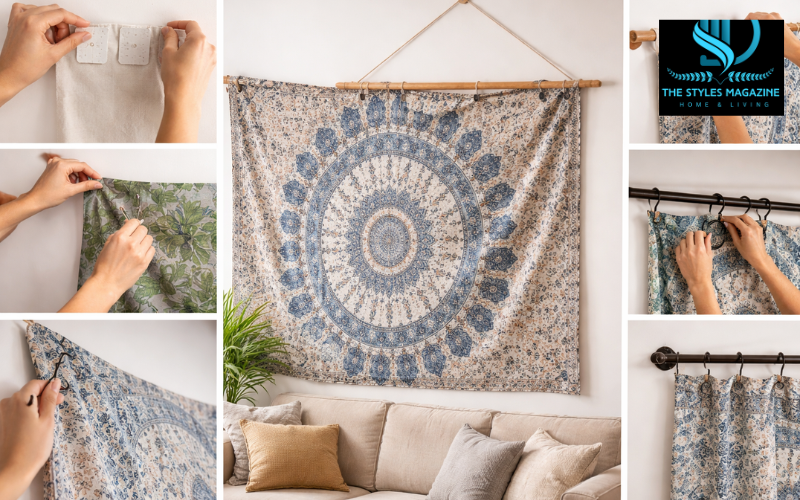
Adhesive strips or Velcro solutions are one of the most reliable options. By attaching one side to the wall and the other to the back of the tapestry, you can create a secure hold that keeps the fabric in place. This method works best for lightweight to medium-weight tapestries and provides a clean, seamless look.
Adhesive hooks are another practical choice. You can place them along the top edge of the wall and hang the tapestry using loops, clips, or even small strings. This approach allows for flexibility and can support slightly heavier fabrics if the hooks are strong enough.
To ensure a good result, always prepare the wall before applying adhesives. Cleaning the surface with rubbing alcohol helps remove dust and oils, allowing the adhesive to bond properly. Press the strips or hooks firmly and give them time to set before hanging the tapestry.
When it’s time to remove them, follow the instructions carefully to avoid peeling paint or leaving residue behind. With the right technique, these damage-free methods can be both effective and easy to maintain.
Using Nails, Push Pins, or Tacks for a Classic Look
If you’re looking for a simple and traditional way to hang a tapestry, nails, push pins, or tacks are a dependable option. This method has been used for years because it is quick, affordable, and works well in most situations.
For a casual, relaxed appearance, you can secure just the top two corners of the tapestry. This allows the fabric to drape naturally, creating a soft and laid-back look. It’s a great choice for bedrooms or informal spaces.
If you prefer a more polished finish, you can place nails or pins along the entire top edge. Spacing them evenly—about every 10 to 12 inches—helps keep the tapestry straight and prevents sagging. For larger pieces, adding support along the sides can improve stability and symmetry.
When using this method, take time to measure and mark your placement points before inserting any nails or pins. This will help you achieve a balanced and centered display. While this approach does leave small holes in the wall, it is often worth it for the secure and neat result it provides.
Hanging a Tapestry with Curtain Rods for a Polished Finish
For a more refined and decorative look, using a curtain rod is one of the best ways to hang a tapestry. This method works especially well for heavier or high-quality pieces.
If your tapestry has a rod pocket, the process is straightforward. Simply slide the rod through the sleeve and mount it on brackets attached to the wall. This creates a clean, structured appearance and distributes the weight evenly.
If there is no rod pocket, you can use clip rings to attach the tapestry to the rod. These clips hold the fabric securely while still allowing it to hang smoothly. This option is both practical and stylish, making it suitable for living rooms or featured wall displays.
Curtain rods also offer flexibility in design. You can choose from different finishes and styles to match your decor, turning your tapestry into a focal point rather than just a wall covering.
Creative Hanging Ideas to Style Your Tapestry
Beyond standard methods, there are creative ways to hang a tapestry that can transform your space and add a unique touch.
One popular idea is to create a ceiling canopy or bed backdrop. By attaching the tapestry to the ceiling, you can design a cozy and inviting nook. This works well in bedrooms and adds a soft, layered effect to the room.
Using a wooden dowel and string is another simple yet stylish option. By threading the tapestry over a dowel and hanging it from a single nail, you can achieve a minimalist and balanced display. This method is both budget-friendly and visually appealing.
For a modern look, poster hangers are a great choice. These magnetic frames hold the top and bottom edges of the tapestry, keeping it flat and giving it a sleek finish. This approach works particularly well for smaller or medium-sized pieces.
These creative methods allow you to go beyond basic installation and use your tapestry as a true design element.
How to Prepare Your Tapestry Before Hanging
Proper preparation is an important step when learning how to hang a tapestry. Skipping this stage can affect the final result, even if you choose the right method.
Most tapestries arrive with wrinkles or fold lines. To remove them, use a low-to-medium heat iron on the back side of the fabric. This helps smooth out creases without damaging the material.
It’s also a good idea to check if the tapestry needs cleaning. Dust or odors can affect its appearance, so follow the care instructions provided with the fabric.
Before hanging, measure your wall and mark the placement points. This ensures that the tapestry is centered and aligned correctly. Taking the time to plan your layout will save you from making adjustments later.
Tips to Keep Your Tapestry Looking Its Best
Once your tapestry is in place, a few simple steps can help maintain its appearance over time.
To prevent sagging or curling, make sure the tapestry is properly supported. If the bottom edges start to curl, you can add small weights or use a second rod to keep the fabric straight.
Avoid placing your tapestry in direct sunlight. Prolonged exposure can cause colors to fade, especially in delicate fabrics. Choosing a shaded area will help preserve its vibrancy.
Regular maintenance is also important. Gently dust the fabric or follow cleaning instructions to keep it fresh. With proper care, your tapestry can remain a beautiful part of your decor for years.
Common Mistakes to Avoid When Hanging a Tapestry
Even with the best intentions, there are a few common mistakes people make when figuring out how to hang a tapestry.
One of the most frequent issues is using the wrong method for the fabric weight. Lightweight solutions may not hold heavier tapestries, leading to sagging or falling.
Poor placement is another problem. Hanging a tapestry without proper measurements can result in an uneven or off-center display, which affects the overall look of the room.
Skipping wall preparation is also a mistake. Dusty or unclean surfaces can weaken adhesives, causing them to fail over time.
Being aware of these pitfalls can help you achieve a better and more lasting result.
Conclusion
Learning how to hang a tapestry doesn’t have to be complicated. The key is to choose a method that matches your wall type, the weight of your tapestry, and the style you want to create. From simple adhesive solutions to more structured rod installations, there are options for every space and need.
By taking the time to prepare your tapestry, selecting the right tools, and avoiding common mistakes, you can achieve a clean and attractive display. A well-hung tapestry not only enhances your decor but also adds a sense of comfort and personality to your room.
With the right approach, even a simple piece of fabric can transform your space into something truly special.
FAQs
What Is The Easiest Way To Hang A Tapestry?
The easiest way is using adhesive strips or Velcro. They are simple to apply, require no tools, and don’t damage the wall.
How Do You Hang A Tapestry Without Nails?
You can use adhesive hooks, command strips, or Velcro. These methods are perfect for renters and leave no marks behind.
Can I Hang A Heavy Tapestry Safely?
Yes, but it’s best to use a curtain rod or strong wall hooks. These provide proper support and prevent the fabric from sagging.
How Do I Keep My Tapestry From Sagging?
Make sure it’s evenly supported across the top. You can also add a rod or small weights at the bottom to keep it straight.
Do Tapestries Damage Walls?
Not always. Damage-free methods like adhesive strips won’t harm walls, but nails or tacks can leave small holes.
Disclaimer: This article is for informational purposes only. Results may vary depending on wall type, materials, and installation methods. Always follow product instructions and test solutions on a small area before full application.
Loved Reading This? Discover More Exclusive Stories And Updates At The Styles Magazine!