Learning how to grow cilantro is fairly simple once you understand one important fact: cilantro prefers cool growing conditions. It can produce fresh, flavorful leaves quickly, but when temperatures rise and days become longer, the plant may send up flowers and produce seeds. This process is called bolting, and it can happen much sooner during hot weather.
Cilantro is an annual herb commonly grown for its fresh green leaves. Once the plant flowers and develops seeds, those seeds are known as coriander. The two names therefore refer to different parts or stages of the same plant. If your main goal is fresh cilantro for cooking, you want to encourage leafy growth for as long as possible. If you also enjoy coriander, allowing some plants to flower can give you a second harvest.
This guide explains how to grow cilantro from seeds, how to grow it in pots and indoors, how to care for young plants, how to slow bolting, and how to harvest without wasting the crop. It also covers common growing problems and explains why growing cilantro from cuttings or leftover roots is much less dependable than starting with seed.
Quick Guide: Growing Cilantro
| Growing Factor | Quick Recommendation |
| Best season | Spring or fall |
| Starting method | Directly sow cilantro seeds |
| Planting depth | About ¼–½ inch |
| Light | Full sun; afternoon shade in hot weather |
| Soil | Fertile and well-draining |
| Water | Keep soil consistently moist, not soggy |
| Spacing | Thin established plants to about 3–6 inches |
| Harvest | Cut outer leaves and stems as needed |
| Continuous supply | Sow new seeds every 2–3 weeks |
| Main challenge | Heat can cause cilantro to bolt quickly |
Simple Step-by-Step Guide
- Choose the right location: Select a sunny spot with well-draining soil and some afternoon shade if your weather is hot.
- Sow the seeds: Plant cilantro seeds directly about ¼–½ inch deep.
- Keep the soil moist: Water regularly while the seeds germinate and seedlings establish.
- Thin the seedlings: Remove crowded seedlings once they are established, leaving enough space for healthy growth.
- Protect plants from heat: Use afternoon shade and mulch when temperatures rise.
- Harvest regularly: Cut the outer leaves and stems while leaving younger central growth intact.
- Plant again: Sow a new batch every 2–3 weeks during suitable growing weather for a steady supply.
Choose the Right Time and Growing Conditions
Timing is one of the biggest factors in successful cilantro growing. In many climates, spring and fall are the easiest seasons because temperatures are cooler. Cilantro can tolerate some cold, but its growth speeds up as conditions become warmer. Hot weather can push plants into flowering before they have produced a large amount of foliage. Oregon State University notes that both temperature and day length influence flowering, with warm, long summer conditions encouraging faster bolting.
For leafy harvests, choose a location with good sunlight during the cooler parts of the growing season. Full sun is suitable in spring and fall, while partial shade can be helpful during warmer weather. A spot that receives morning sun and some afternoon shade may help keep the root zone cooler when summer temperatures rise.
Cilantro also needs soil that drains well. Heavy, constantly wet soil can create root problems, while very dry soil can stress young plants. A fertile garden bed with good drainage gives cilantro a better environment for steady growth.
Start With Good Cilantro Seeds
The easiest and most reliable way to begin a cilantro crop is usually with seed. Look for a reputable seed supplier and choose fresh seed intended for planting. Some varieties have been selected for useful traits such as strong production or slower bolting. For example, the University of Delaware lists Calypso and Cruiser among cilantro varieties noted for slower bolting.
You may also see cilantro seeds labeled as coriander seeds. That can be confusing, but the terms are connected. Coriander is the name commonly used for the dried seeds produced by the cilantro plant, while cilantro generally refers to the fresh leaves and tender stems.
Fresh seed can provide more dependable germination than old seed. Store unused seed in a cool, dry place and follow the packet’s instructions for storage and planting. Starting with suitable seed is particularly helpful because cilantro develops a taproot, which makes unnecessary root disturbance less desirable.
How to Grow Cilantro From Seeds
For most home gardeners, how to grow cilantro from seeds is mostly a matter of choosing the right time, sowing at the proper depth, and keeping the soil evenly moist.
Direct sowing is generally preferred because cilantro has a long taproot and can be difficult to transplant without disturbing the roots. Oregon State University and Wisconsin Horticulture both recommend direct sowing as a practical approach.
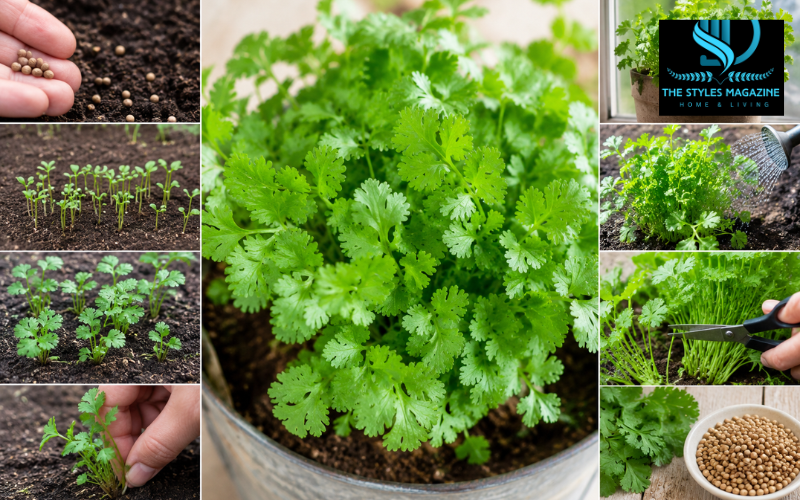
Sow the seeds about ¼ to ½ inch deep. You can place them relatively close together at first, then thin the seedlings once they are established. Wisconsin Extension recommends sowing seeds ¼ to ½ inch deep and thinning established plants to about 3 to 6 inches apart when growing for leaves.
Keep the soil consistently moist while the seeds are getting established, but do not leave the planting bed saturated. Germination time can vary with temperature and other conditions, so do not assume that a slow start always means the seed has failed.
For a more reliable harvest, do not plant your entire supply at once. Small sowings made every two to three weeks can give you plants at different stages of growth. This is especially useful because a single cilantro plant has a relatively short leafy harvest period before it begins flowering.
Growing Cilantro in Pots and Containers
Cilantro can grow well in containers, making it a useful choice for balconies, patios, small yards, or homes without garden beds. A container with drainage holes is essential, and a quality potting mix that drains well is preferable to dense garden soil. University of Maryland Extension recommends well-draining containers and lightweight potting media for herbs grown in containers.
Because cilantro does not appreciate having its roots disturbed, sowing the seeds directly in the final pot is often easier than starting them elsewhere and transplanting them later.
Place the container somewhere with enough light but protect it from excessive heat when necessary. Container soil can dry out faster than garden soil, especially in sunny or windy locations, so check the moisture regularly.
Growing cilantro in pots also makes it easier to move plants. During a hot spell, you may be able to shift the container to a location with afternoon shade. That will not completely prevent bolting if the weather remains hot, but it can reduce some heat stress.
How to Grow Cilantro Indoors
Knowing how to grow cilantro indoors can help you enjoy fresh leaves outside the normal outdoor growing season. Cilantro is considered one of the herbs that can perform reasonably well indoors, provided it receives enough light and is grown in suitable soil. Iowa State University and Pennsylvania State University both identify cilantro as a good candidate for indoor herb growing.
Choose a bright location near a window and rotate the pot occasionally so the plant grows more evenly. If natural light is limited, a suitable grow light can provide additional illumination. Indoor herbs can become thin and weak when light levels are too low.
Use a container with drainage holes and avoid keeping the roots constantly wet. Good air movement around the foliage is also helpful because overly humid, poorly ventilated conditions can encourage plant problems.
Indoor growing may reduce some of the heat-related stress found outdoors, but it does not make cilantro immune to bolting. The plant still follows its natural life cycle. Regular sowing of new plants is usually more practical than trying to keep one plant productive indefinitely.
Watering, Soil, and Everyday Cilantro Care
Cilantro prefers consistent moisture while it is actively growing. The goal is damp soil rather than soil that stays soaked. Check the surface and the deeper root zone before watering, particularly in containers where conditions can change quickly.
Watering needs depend on temperature, rainfall, soil type, and container size. A plant growing outdoors during cool weather may need much less water than one sitting in a warm container.
Soil fertility also matters, but cilantro does not need excessive feeding. A fertile growing medium usually provides enough support for a short leafy crop. Overfeeding can encourage soft growth and may not solve other problems such as excessive heat or poor drainage.
A thin layer of mulch can help reduce moisture loss and moderate soil temperatures. Keep mulch from being piled tightly against the stems. The goal is to protect the soil surface, not create a permanently wet environment.
Watch for two common extremes. If the soil dries repeatedly, plants may wilt and growth can slow. If the soil remains saturated, roots can struggle and disease problems may become more likely. Consistent, moderate care is more useful than trying to follow a rigid watering schedule.
Thin Seedlings and Give Plants Enough Space
Once seedlings are established, thinning becomes important. Although young cilantro plants can initially emerge close together, overcrowding can limit airflow and make it harder for each plant to develop well.
The final spacing depends partly on how you plan to harvest. Wisconsin Horticulture recommends approximately 3 to 6 inches between plants for leaf production and wider spacing for plants being grown primarily for seed. Oregon State University recommends even wider final spacing in some garden situations.
For a home gardener harvesting leaves, a practical approach is to remove weaker or overly crowded seedlings and leave enough room for healthy plants to develop. You do not need to make every measurement exact. The main goal is to avoid a solid mass of overcrowded stems and leaves.
If you are growing cilantro in a container, think about airflow as well as appearance. A pot filled with too many seedlings may look productive at first but can become difficult to manage as the plants grow.
Prevent Cilantro From Bolting Too Quickly
Bolting is the stage when cilantro shifts from producing mostly leaves to producing flowers and seeds. It is a natural part of the plant’s life cycle, not a disease or a sign that you did something wrong.
The challenge is that hot weather and longer days can make this transition happen rapidly. Oregon State University reports that cilantro grown under hot, long summer conditions can flower much sooner than plants grown during cooler spring or fall weather.
Planting at the right time is therefore more effective than trying to force a mature plant to remain leafy through extreme heat. In warmer climates, afternoon shade may help keep plants cooler. Succession sowing is another important strategy. Instead of relying on one planting, sow new seeds at regular intervals so another crop is already developing when older plants begin to decline.
Once a plant begins bolting, you can harvest remaining leaves, allow it to flower, or let it continue toward seed production. Removing flowers may delay seed formation briefly, but it cannot permanently stop the plant’s natural life cycle. For many gardeners, replacing an aging plant with a new sowing is the simplest solution.
How to Harvest Cilantro for the Best Continued Growth
You can begin harvesting cilantro once plants have developed enough size to provide useful leaves. Many growing guides suggest harvesting when plants are around 6 inches tall, while avoiding heavy cutting from very young seedlings.
For a continuing supply, cut individual outer stems and leaves rather than stripping the whole plant at once. This leaves younger growth closer to the center available for later harvests.
Harvesting regularly can help you make practical use of the crop before it bolts. However, it is not necessary to remove large amounts every day. Take what you need while leaving enough healthy foliage for the plant to keep growing.
Fresh cilantro is best used soon after harvest. For short-term storage, Oregon State University recommends keeping freshly harvested cilantro upright in a glass of water in the refrigerator and covering it loosely.
How to Keep a Continuous Supply of Cilantro
The secret to a long cilantro harvest is not one special fertilizer, pruning trick, or variety. It is succession planting.
Instead of making one large sowing, plant smaller batches every two to three weeks while growing conditions are favorable. This approach creates overlapping generations: one group is ready to harvest, another is developing, and another has just been planted.
The exact timing should be adjusted according to your climate. During periods of extreme heat, new plants may bolt quickly, so continuing to sow may not be worthwhile until temperatures become more suitable. In cooler periods, repeated sowings can provide fresh leaves for much longer.
Containers can make this strategy especially convenient. You can keep one pot ready to harvest while another contains young seedlings. When an older plant begins flowering, the younger pot can take its place.
If you want coriander as well as cilantro, reserve a few plants for seed production rather than harvesting everything for leaves.
How to Grow Cilantro From Cuttings, Roots, or Without Seeds
Searches for how to grow cilantro from cuttings, roots, or without seeds often come from gardeners hoping to regrow kitchen leftovers. Cilantro is different from herbs that root easily from stem cuttings. Its taproot and natural growth pattern make seed a much more dependable way to establish a new crop.
A healthy cilantro plant may continue to use its existing roots for some time after leaves are harvested, but cutting pieces from the stem and expecting them to form a vigorous new plant is unreliable. Similarly, attempting to regrow cilantro from the roots of a harvested bunch from the grocery store may fail because the roots may be damaged, dried, or no longer capable of producing strong new growth.
This does not mean you can never see fresh growth from a leftover plant. Under favorable conditions, a small amount of regrowth is possible, but it should not be confused with a dependable propagation method.
For gardeners who want a reliable crop without buying established plants, growing cilantro from seed remains the practical choice. If cilantro has matured in your own garden and produced viable seeds, you can also save those seeds for future sowing.
Common Cilantro Growing Problems and Simple Fixes
Poor germination can result from several factors, including unsuitable planting depth, poor seed quality, or moisture problems. Start with fresh seed, sow it at a sensible depth, and keep the soil evenly moist during germination.
Tall, thin seedlings may indicate that plants are crowded or not receiving enough light. Thinning the crop and improving its growing conditions can help.
Yellow leaves can have several causes. Before adding fertilizer, check whether the soil is staying too wet, whether the plant is under stress, or whether its growing cycle is already coming to an end.
Wilting is another issue where context matters. A wilted plant in dry soil may simply need water, while one sitting in wet soil may be experiencing root stress. Heat can also cause rapid wilting and accelerate bolting.
Cilantro generally does not have a long list of severe home-garden pest problems, but aphids and certain leaf and caterpillar pests can occur. Diseases such as bacterial leaf spot and powdery mildew are also documented in cilantro. Good spacing, appropriate watering, and avoiding prolonged wet foliage can reduce favorable conditions for some disease problems.
When a plant has clearly bolted and leaf quality has declined, replacing it with a new sowing is often more useful than trying to force the old plant back into leafy growth.
From Fresh Leaves to Coriander Seeds
A mature cilantro plant eventually produces flower stalks topped with small flowers. After flowering, the plant develops seeds. Those dried seeds are commonly used as coriander in cooking.
If you want to save coriander, allow selected plants to complete this stage rather than harvesting every flower immediately. Oregon State University notes that cilantro seeds can be collected, dried, and used as coriander.
The seeds are generally ready to harvest when they have changed to a mostly brown color. Oregon State University recommends cutting the seed heads with several inches of stalk and allowing them to finish drying in a paper bag kept in a cool, dry place.
Choosing between leaves and seeds is mainly a matter of harvest timing. If fresh cilantro is your priority, harvest leafy growth before extensive flowering. If coriander is the goal, let some plants complete their seed-producing stage.
Allowing a few plants to flower can also benefit the garden because cilantro flowers can attract helpful insects.
Conclusion
Successful how to grow cilantro gardening comes down to a few basic habits. Start with good seed, sow it directly into well-drained soil, keep moisture consistent, and give plants enough space to grow. Most importantly, pay attention to the season.
Cilantro naturally prefers cooler conditions, so trying to keep one planting productive through intense summer heat can be frustrating. Instead, work with its growth cycle. Plant during favorable weather, provide some afternoon protection when appropriate, and make successive sowings every few weeks for a more dependable supply.
Growing cilantro indoors or in pots gives you more control over light, location, and temperature, while letting a few outdoor plants mature can provide coriander seeds for the kitchen and future planting.
Once you understand when cilantro grows best and why it bolts, the process becomes much easier. Rather than fighting the plant’s natural cycle, use timing, regular sowing, and sensible harvesting to keep fresh leaves available for as long as your growing conditions allow.
FAQs
What Is The Best Time To Grow Cilantro?
Spring and fall are generally best because cilantro prefers cooler conditions. Hot weather can cause plants to bolt quickly, reducing the time available for harvesting fresh leaves.
How Often Should I Water Cilantro?
Keep the soil consistently moist but never waterlogged. Check the soil regularly, as container-grown cilantro can dry out faster than plants growing directly in garden soil.
Can Cilantro Be Grown Indoors?
Yes. Grow cilantro indoors in a container with drainage, place it near a bright window, and use a grow light when natural light is insufficient for healthy growth.
Why Does My Cilantro Flower So Quickly?
Heat and longer days encourage cilantro to bolt, which means the plant starts flowering and producing seeds. Planting during cooler weather and using afternoon shade can help delay this process.
Can I Grow Cilantro From Cuttings?
Cilantro is most reliably grown from seeds. Unlike some herbs, it does not consistently produce strong new plants from stem cuttings or leftover roots.
Enjoyed it? Find more exclusive content on The Styles Magazine.
Disclaimer: This article provides general gardening information for educational purposes. Growing results can vary according to climate, soil, weather, variety, and growing conditions. Always consider local gardening recommendations and product instructions before making significant changes to your garden.