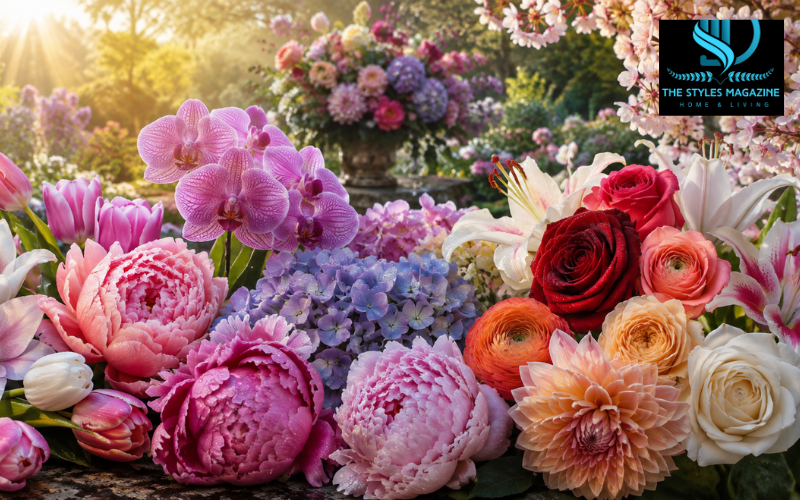
Beautiful flowers can stop us for a moment, whether they appear in a garden, a wedding bouquet, a spring landscape, or a simple vase on a table. People searching for beautiful flowers are often looking for inspiration, flower names, striking colors, romantic meanings, photography ideas, or blooms they may want to grow or give to someone.
There is no single rule that makes one flower more beautiful than another. Some people are drawn to the perfect layers of a rose, while others prefer the unusual shape of an orchid or the clean lines of a tulip. Color, symmetry, fragrance, texture, rarity, size, season, and cultural meaning can all influence how a flower is seen.
This guide explores famous blooms, beautiful flower names, roses, bouquets, flowers connected with love, garden favorites, spring blossoms, close-up details, photography, and drawing inspiration. Rather than naming one universal winner, it celebrates the many different ways flowers can be beautiful.
Quick Guide to Beautiful Flowers
| Flower | Best Known For | Common Colors | Popular Use |
| Rose | Layered petals and fragrance | Red, pink, white, yellow | Bouquets, gardens, gifts |
| Orchid | Unusual shapes and patterns | White, pink, purple, yellow | Décor, gifts, photography |
| Peony | Large, soft, layered blooms | Pink, white, red | Bouquets and gardens |
| Tulip | Simple, elegant shape | Almost every major color | Spring gardens and bouquets |
| Lily | Large, graceful flowers | White, pink, orange, yellow | Arrangements and gardens |
| Dahlia | Detailed geometric petals | Red, pink, orange, purple | Summer gardens and displays |
| Hydrangea | Large flower clusters | Blue, pink, white, purple | Gardens and arrangements |
| Lotus | Symmetrical aquatic flowers | Pink, white | Ponds, photography, symbolism |
| Cherry Blossom | Delicate spring flowers | Pink, white | Landscapes and photography |
| Ranunculus | Tightly layered petals | Pink, orange, yellow, white | Romantic bouquets |
Quick Tips for Choosing Beautiful Flowers
- For romance: Roses, peonies, tulips, and ranunculus are popular choices.
- For colorful gardens: Try dahlias, zinnias, hydrangeas, tulips, or roses suited to your climate.
- For elegant bouquets: Consider lilies, orchids, calla lilies, or soft-colored roses.
- For photography: Orchids, dahlias, roses, cherry blossoms, and dew-covered flowers offer interesting details.
- For drawing: Begin with daisies or tulips, then try roses, lilies, lotus flowers, and orchids for more detailed studies.
- For lasting garden results: Choose plants according to your local climate, sunlight, soil, drainage, and available space.
What Makes Some Flowers Look So Beautiful?
Much of a flower’s visual appeal comes from its shape and arrangement. Rounded blooms may feel soft and balanced, while pointed petals can create a sharper, more dramatic look. Roses and peonies attract attention through layers of petals, while daisies and sunflowers have a clear central pattern surrounded by evenly arranged petals. Orchids often stand out because of their unusual forms and markings.
Color also changes the way we respond to a flower. Deep red can feel bold, pale pink can appear gentle, and white often creates a clean, calm effect. Some flowers combine several shades on a single petal, while others have dark centers or delicate veins that add contrast. Petal surfaces can also affect how light is reflected, making some flowers look glossy or even slightly iridescent. Kew notes that flower color is shaped not only by pigments but also by microscopic structures on petal surfaces.
Beauty is not only visual. Fragrance can make a flower more memorable, and floral scent has an important biological role in attracting pollinators. Texture, flower size, the way blooms move in the breeze, and the season in which they appear can also shape our experience. Personal memories and cultural traditions add another layer, which is why two people may choose completely different flowers as their favorites.
Top 10 Most Beautiful Flowers in the World
Any list of the top 10 most beautiful flowers in the world is naturally subjective, but a few blooms appear again and again because of their distinctive shapes, colors, and long-standing popularity.
- Rose: Roses are loved for layered petals, a wide color range, many flower forms, and the fragrance found in numerous varieties. Their appearance can range from simple open flowers to tightly packed rosettes.
- Orchid: Orchids are admired for intricate shapes, bold markings, and an almost sculptural appearance. Their huge diversity makes them especially interesting to collectors and photographers.
- Cherry blossom: These delicate pink or white flowers create one of spring’s most recognizable displays. Their beauty is often strongest when many branches bloom together.
- Lotus: The lotus rises above the water on strong stems and has a balanced, symmetrical form. Its broad petals and visible center create a calm, elegant appearance.
- Peony: Peonies produce large flowers that may be single, semi-double, or densely double. Their soft petals and generous size give them a romantic look. The Royal Horticultural Society describes many herbaceous peonies as large, brightly colored flowers that bloom from late spring into early summer.
- Dahlia: Dahlias are known for impressive variety. Some have tightly arranged geometric petals, while others are open and simple. Their strong summer colors make them stand out in gardens and floral displays.
- Lily: Lilies have large, elegant flowers in many shapes and colors. Some, especially Oriental lilies, are strongly scented.
- Tulip: Tulips are simple at first glance but remarkably varied. Beyond the classic cup shape, there are fringed, double, lily-flowered, and parrot forms in a broad range of spring colors.
- Hydrangea: Hydrangeas create large rounded or cone-shaped displays made from many smaller flowers. Their mass of color makes them especially effective in gardens and arrangements.
- Ranunculus: Ranunculus flowers are famous for thin, tightly layered petals that can look almost like folded paper. Their neat shape and bright colors make them popular in romantic bouquets.
This is a curated selection rather than a scientific ranking. Beauty depends on the viewer, the setting, and even the stage of bloom.
Beautiful Flower Names Worth Knowing
Beautiful flower names are easier to remember when you connect them with a visible feature. Familiar favorites include the rose, with layered petals; daisy, with a clear center and simple petals; sunflower, with a large dark center; carnation, with ruffled edges; iris, with upright and falling petals; jasmine, with small fragrant blooms; lavender, with narrow purple flower spikes; and hibiscus, with broad petals and a prominent center.
Softer choices include gardenia, with creamy fragrant flowers; camellia, with smooth arranged petals; sweet pea, with delicate butterfly-like blooms; lisianthus, with rose-like flowers; and lily of the valley, with tiny hanging bells. More distinctive names include bleeding heart, protea, passion flower, bird of paradise, and anemone, each recognized by an unusual shape or contrasting flower center.
Beautiful Roses and the Features That Make Them Timeless
Few flowers are as closely linked with beauty and romance as the rose. Beautiful rose flowers can look formal, wild, delicate, dramatic, or old-fashioned depending on the type. The Royal Horticultural Society recognizes a wide range of rose forms, including shrub roses, hybrid teas, climbers, ground-cover types, patio roses, and miniatures.
Hybrid tea roses are often valued for large individual flowers on long stems, while climbing roses can cover walls, arches, and pergolas. Miniature roses bring the familiar rose form to smaller plants and containers. Garden and shrub roses may offer softer, fuller blooms and strong fragrance.
Color adds even more variety. Red roses create a classic dramatic effect, pink feels softer, white looks clean and elegant, yellow brings brightness, peach feels warm, and lavender can appear unusual and refined. Some roses are also striped, edged, or blended with several shades. Petal arrangement, fragrance, flower shape, and the way the bud opens all help explain why roses remain among the world’s most admired beautiful flowers.
Beautiful Flower Bouquets for Different Styles
A beautiful flower bouquet works best when color, size, shape, and texture feel balanced. For a classic style, roses and lilies create contrast between rounded and open blooms. A softer romantic bouquet may combine peonies, ranunculus, and lisianthus, while tulips, gerberas, chrysanthemums, or sunflowers can create a brighter, more cheerful arrangement.
Minimal designs can be equally striking. A few orchids or calla lilies in a simple container can look clean and modern. Greenery can connect different blooms without hiding them. Season matters too: flowers that are naturally abundant at a particular time often look fresher and fit the mood of the season. The strongest bouquets usually follow one clear visual direction instead of trying to include every attractive flower at once.
Beautiful Flowers and Love: Meanings Behind Popular Blooms
Flowers have long been used to express affection, remembrance, admiration, and other emotions. Roses are strongly connected with romantic love, while red tulips have historically been linked with declarations of love. Forget-me-nots are associated with remembrance and enduring affection, and orchids have been connected with elegance. Historical “language of flowers” traditions also gave peonies, lilies, violets, and many other blooms symbolic meanings.
However, beautiful flowers and love do not have one fixed dictionary. Meanings can change by culture, time period, flower color, and personal experience. Smithsonian Gardens notes that Victorian flower-language guides sometimes disagreed with one another, showing that these meanings were never completely universal.
For that reason, it is usually better to choose flowers with the recipient in mind. A bloom connected with a shared memory may carry more meaning than one selected only because a traditional guide assigns it a romantic message.
Beautiful Flowers by Color
Color is one of the simplest ways to choose flowers for a garden, bouquet, photograph, or event. Red flowers such as roses, dahlias, and tulips create bold focal points. Pink flowers such as peonies, cherry blossoms, camellias, and lilies can range from pale blush to deep magenta. White flowers, including lilies, gardenias, roses, daisies, and orchids, often look especially clear against green foliage.
For warmth, yellow and orange flowers such as sunflowers, marigolds, tulips, and dahlias bring energy. Blue and purple flowers, including lavender, iris, delphinium, hydrangea, violet, and anemone, create a cooler effect. Repeating two or three related shades often gives a calmer, more connected display than mixing every available color.
Beautiful Flowers That Transform a Garden
Beautiful flowers can change the entire character of an outdoor space, but the best choice depends on local growing conditions. Roses and peonies suit classic beds and borders, while dahlias and zinnias can provide strong summer color. Hydrangeas are useful when a larger mass of flowers is desired, and climbing plants such as clematis and wisteria can bring flowers upward over supports, fences, or pergolas. Lavender adds both purple color and fragrance.
The important point is to match the plant to the place. Sunlight, temperature, rainfall, drainage, soil, available space, and winter conditions all affect performance. For example, the RHS recommends a warm, sheltered, sunny position and free-draining soil for dahlias, while roses generally perform best in fertile, well-drained soil with good light.
Before choosing flowers only from a photograph, check whether the plant suits your climate and garden conditions. A healthy flower growing in the right place will usually create a more beautiful display than a fashionable variety struggling in unsuitable conditions.
Spring Flowers and Blossoming Trees at Their Most Beautiful
Spring is rich in beautiful flowers because many plants bloom soon after winter. Cherry blossoms cover branches with pale pink or white flowers, often for a short period, while magnolias can produce large blooms on bare or newly leafing branches.
At ground level, tulips provide clean shapes and many colors. Daffodils add familiar yellow, white, and orange tones, while hyacinths form dense, often fragrant flower spikes. Mass planting can make these blooms especially striking by carrying repeated color across a bed, path, or lawn.
Bloom dates are not fixed. Species, cultivar, climate, elevation, temperature, and local weather can all shift flowering earlier or later, so the same spring flower may peak at different times in different regions.
Beautiful Flowers Up Close: Petals, Pollen, and Dewdrops
Looking closely at beautiful flowers reveals details that are easy to miss from across a garden. A rose petal may have a fine texture and gentle color change toward its edges. A daisy shows a complex center made from many tiny structures. Dahlias reveal repeating petal patterns, while orchids often contain spots, stripes, ridges, and unusual shapes.
The center of a flower can be just as interesting as the petals. Stamens, pollen, and contrasting colors create natural patterns that become especially clear in close-up views. Early in the morning, small drops of dew may collect on petals and leaves, reflecting light and emphasizing surface texture.
Roses, orchids, daisies, dahlias, lilies, and many other flowers reward close observation. Even a common garden bloom can look completely different when viewed from just a few centimeters away.
Beautiful Flowers Photos: Ideas for Capturing Their Best Details
Beautiful flowers photos work best when the image has a clear subject. A full-flower portrait can show the overall shape, while macro photography brings attention to petal texture, pollen, veins, and water droplets. Wider photographs can capture a bed of tulips, a rose garden, or a flowering tree and show how individual blooms work together as a landscape.
Soft natural light is often easier to work with than harsh midday sun. A simple background helps prevent leaves, pots, fences, or other objects from competing with the flower. When photographing pale petals, watch for lost detail in bright areas; with dark flowers, make sure the center is not hidden in shadow. Accurate color is generally more useful than heavy editing when the photograph is intended to help readers recognize a flower.
For websites, image presentation matters too. Google recommends using relevant, high-quality images near related text, along with short descriptive filenames and useful alt text. Alt text should describe the image in context rather than repeat keywords unnaturally. Original photographs can also make a flower article more useful by showing readers exactly what the writer is describing.
Beautiful Flowers Drawing Inspiration
Flowers are excellent drawing subjects because they offer both simple and complex forms. Beginners can start with daisies, tulips, or sunflowers, breaking each bloom into a center, petals, stem, and leaves.
Roses are useful for practicing overlapping layers, while orchids, lilies, and lotus flowers offer more challenging curves and petal positions. Botanical-style drawing goes further by observing realistic leaves, stems, buds, centers, and connections between plant parts.
Beautiful flowers photos make useful references, but a real flower lets you turn the subject, study shadows, and notice details hidden in a single image. Observation usually produces a more convincing beautiful flowers drawing than copying a generic flower symbol.
Conclusion
Beautiful flowers appear in countless forms, from the layered petals of roses and peonies to the clean shapes of tulips, the unusual detail of orchids, and the brief clouds of spring cherry blossom. Their appeal can come from color, fragrance, symmetry, texture, scale, rarity, personal memories, or the setting in which they are seen.
No flower can objectively be named the most beautiful in the world. A gardener may love a dahlia glowing in summer sun, a photographer may prefer a dew-covered orchid, and someone choosing a meaningful gift may value a simple rose or forget-me-not more than a rare bloom.
Flowers can be enjoyed in gardens, bouquets, photographs, drawings, seasonal landscapes, and personal celebrations. Their variety is what keeps them endlessly interesting. From familiar garden favorites to unusual blossoms, beautiful flowers remind us how much color, form, texture, and meaning can be found in even the smallest parts of the natural world.
FAQs
What Are Considered The Most Beautiful Flowers In The World?
Roses, orchids, peonies, cherry blossoms, lotus flowers, dahlias, lilies, tulips, hydrangeas, and ranunculus are often admired worldwide. However, flower beauty is subjective and depends largely on personal taste.
Which Beautiful Flowers Are Best For A Bouquet?
Roses, peonies, lilies, ranunculus, tulips, lisianthus, orchids, and hydrangeas work well in bouquets. The best combination depends on season, color scheme, flower size, occasion, and personal preference.
Which Beautiful Flowers Represent Love?
Roses are strongly associated with romantic love, while tulips, peonies, orchids, and forget-me-nots can also carry affectionate meanings. Flower symbolism varies between cultures, traditions, colors, and personal relationships.
What Are The Best Beautiful Flowers For Photography?
Roses, orchids, dahlias, daisies, lilies, cherry blossoms, and sunflowers are excellent photographic subjects. Their distinctive petals, centers, textures, colors, and patterns can work well in both close-up and wider garden photographs.
Which Beautiful Flowers Are Easy To Draw?
Daisies, tulips, and sunflowers are good starting points because their basic shapes are easy to understand. Roses, lilies, orchids, and lotus flowers provide more detailed subjects as drawing skills improve.
Enjoyed it? Find more exclusive content on The Styles Magazine.
Disclaimer: The information in this article is provided for general educational and inspirational purposes. Flower appearance, blooming season, fragrance, growth, availability, and symbolic meanings can vary by species, cultivar, climate, region, and cultural tradition. If you plan to grow a particular flower, check reliable local gardening guidance to confirm that it suits your climate, soil, sunlight, and growing conditions.