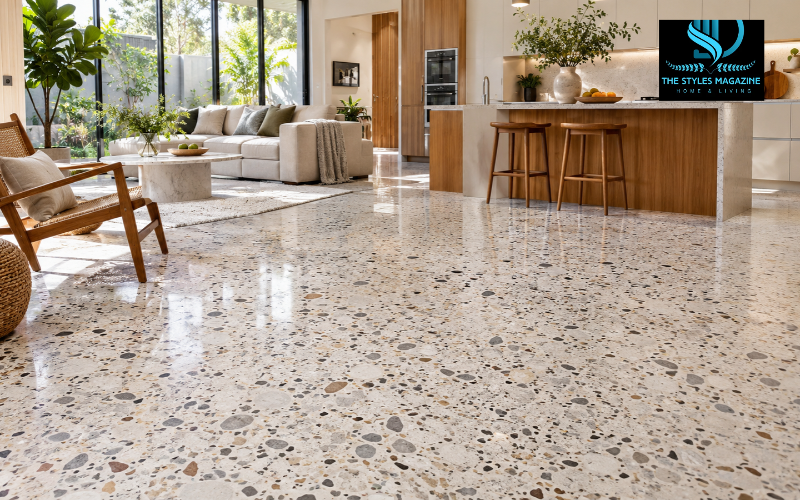
A terrazzo floor is a decorative, hard-wearing surface made by combining small pieces of stone, marble, glass or other materials with a cement or resin-based binder. Once the mixture has hardened, the surface is ground and polished to reveal the colourful pieces inside. The result is a distinctive floor with a speckled appearance that can suit both traditional and modern homes.
Terrazzo has been used for centuries, but it has found a fresh place in contemporary interior design. Homeowners appreciate its ability to bring different colours and textures into a room without relying on separate decorative patterns. Depending on the materials and design, a terrazzo floor can look subtle and understated or become a noticeable feature.
There are several ways to introduce this flooring into a home. Poured-in-place terrazzo creates a continuous surface, while precast terrazzo tiles offer a more familiar tiled installation. Porcelain terrazzo-look tiles provide another option for people who like the appearance but prefer a different material with generally simpler maintenance.
This flooring can work in kitchens, bathrooms, hallways and living areas, provided the correct product and finish are selected. However, factors such as installation costs, moisture protection, surface texture and ongoing care deserve attention before making a decision. Understanding these details will help you choose a terrazzo floor that looks attractive and performs well in everyday use.
Quick Answer:
A terrazzo floor is a decorative flooring surface made by setting marble, granite, quartz, glass or other aggregates in a cement or resin binder, then grinding and finishing the surface.
Terrazzo Flooring Comparison Table
| Flooring type | Main features | Best suited for |
| Cement terrazzo | Traditional appearance with natural stone chips | Living areas and hallways |
| Epoxy terrazzo | Wide colour choices and a less porous binder | Kitchens and commercial-style interiors |
| Precast terrazzo tiles | Factory-made tiles with decorative aggregates | Bathrooms and residential floors |
| Porcelain terrazzo-look tiles | Terrazzo-inspired appearance with easy maintenance | Kitchens, bathrooms and busy homes |
Quick Guide: How to Choose the Right Terrazzo Floor
- Consider the room: Choose flooring according to the room’s moisture exposure, foot traffic and everyday use.
- Select the right material: Compare cement terrazzo, epoxy terrazzo, precast tiles and porcelain alternatives.
- Choose a suitable finish: Consider polished, honed or textured surfaces according to appearance and safety requirements.
- Check the installation requirements: Make sure the existing subfloor is suitable and properly prepared.
- Compare the overall cost: Include materials, labour, preparation, finishing and future maintenance.
- Understand cleaning needs: Check whether the flooring requires sealing and which cleaning products are recommended.
How Terrazzo Flooring Is Made: Materials and Manufacturing Process
Terrazzo is made using two main ingredients: decorative aggregates and a binding material. Aggregates are the visible pieces that give the floor its characteristic appearance. These commonly include marble, granite, quartz and glass, although other suitable materials can also be used. The binder holds everything together and creates the solid flooring surface.
The two most common binder options are cement and epoxy resin. In cement-based terrazzo, the decorative chips are mixed with a cement mixture, sometimes containing pigments to create a particular background colour. Epoxy terrazzo uses resin instead, allowing manufacturers and installers to achieve a wider selection of colours and detailed designs.
For poured flooring, the prepared mixture is spread across the floor and levelled. It must then cure according to the system manufacturer’s instructions. Once sufficiently hardened, specialist equipment grinds the surface to expose the decorative aggregates. Small holes or gaps left during grinding may be filled with a compatible material before further grinding and polishing.
The final stage produces the chosen appearance, which might be smooth and polished or have a more restrained finish. A suitable protective treatment may also be applied, depending on the terrazzo system.
Factory-made terrazzo tiles follow a different production route. They are manufactured and finished away from the property before being transported for installation. This makes them easier to handle as individual flooring units, although grout lines will usually remain visible.
Main Types of Terrazzo Flooring for Modern Homes
Choosing the right type of terrazzo is important because different systems have different installation requirements, appearances and maintenance needs.
Cement-based terrazzo is the traditional option. It uses a cement binder mixed with decorative stone chips and can create a beautiful, natural-looking finish. Its appearance can be customised through different aggregate combinations and cement colours. However, cement-based terrazzo is generally more absorbent than epoxy systems, so appropriate sealing and regular care are important.
Epoxy terrazzo flooring uses a resin binder instead of traditional cement. It is popular in modern projects because it supports a broad range of colours, decorative patterns and aggregate combinations. It can also be installed as a relatively thin topping compared with some traditional cement systems. Its low-permeability binder makes routine maintenance easier, although the condition and moisture level of the underlying floor must be checked before installation.
Precast terrazzo is produced in a factory and supplied as ready-made tiles or other flooring elements. It can contain genuine marble, glass or other decorative aggregates. Since the material arrives in individual pieces, installation is similar to conventional tiling, with suitable adhesive and grout.
Porcelain terrazzo-look tiles recreate the familiar speckled appearance using porcelain rather than genuine terrazzo. They are generally less demanding to maintain and usually do not require sealing themselves. However, grout may have separate care requirements depending on its type.
The best choice depends on your budget, preferred appearance, room conditions and willingness to maintain the surface.
Terrazzo Floor Styles, Colours and Aggregate Designs
One of the most appealing features of a terrazzo floor is the variety of designs available. The size, colour and arrangement of the decorative pieces can completely change the finished appearance.
Classic fine-chip terrazzo uses relatively small pieces of stone distributed across the surface. This creates a detailed, balanced pattern that works particularly well in rooms where a subtle decorative finish is preferred. White, cream and light grey backgrounds are popular choices because they create a calm appearance.
Venetian terrazzo uses larger-than-standard aggregates to create more noticeable stone patterns. The larger pieces provide greater contrast and give the surface a distinctive traditional character. It can also work in contemporary interiors when paired with simple furniture and natural materials.
Modern large-aggregate terrazzo makes decorative chips a more noticeable part of the overall design. Larger pieces of marble, glass or stone can create bold patterns, particularly when combined with warm neutral or darker backgrounds.
Palladiana terrazzo is different from ordinary chip-based designs. It uses larger, irregular pieces of stone or marble set into a cement or resin binder. The result resembles a collection of stone fragments arranged within a continuous surface.
Colour choices also influence the atmosphere of a room. Beige and cream create warmth, while grey and white offer a cleaner, more contemporary appearance. Dark backgrounds with contrasting chips can make a stronger statement. When selecting a design, consider how it will look alongside your furniture, cabinets, wall colours and natural lighting.
Benefits of Installing Terrazzo Flooring in Your Home
Durability is one of the main reasons people consider terrazzo flooring. A properly designed and installed system can withstand considerable everyday foot traffic, making it suitable for busy areas such as entrances, hallways and kitchens. Its long service life can also make it an attractive choice for homeowners planning a lasting renovation.
Another advantage is design flexibility. Unlike flooring with a limited selection of printed patterns, terrazzo can combine different aggregates, background colours and chip sizes. This makes it possible to create a finish that complements almost any interior style, from traditional homes to modern open-plan spaces.
Terrazzo can also be easier to maintain than some flooring materials. Regular dust removal, gentle cleaning and prompt attention to spills help keep the surface in good condition. Poured installations can provide a largely continuous appearance without the repeated grout lines found in tiled floors, although divider strips and movement joints may still be required.
An additional benefit is the possibility of professional restoration. Rather than automatically replacing an older floor when its surface becomes dull or scratched, a suitable terrazzo system may be reground, polished or repaired.
Some terrazzo products also incorporate recycled glass or reclaimed stone pieces. This can make use of materials that might otherwise become waste, although the environmental impact depends on the complete product and its manufacturing process.
Disadvantages of Terrazzo Flooring You Should Consider
Despite its attractive appearance and durability, terrazzo is not suitable for every homeowner or renovation budget. One of its biggest disadvantages is the initial installation expense. Poured terrazzo requires specialist materials, preparation and skilled labour, making it more expensive than many standard flooring options.
The installation process can also take time. Cement-based and epoxy systems require appropriate preparation, curing and finishing. It is not usually a suitable first-time DIY project because mistakes in mixing, levelling or polishing can affect the final result.
Another consideration is its hard surface. Terrazzo does not provide the softness of carpet or the warmer feel of some vinyl floors. Standing for long periods can be less comfortable, and dropped glass or ceramic items may break easily.
Cracking is another possible problem. If the underlying concrete moves, develops cracks or has not been properly prepared, damage may appear in the terrazzo surface. Correct joint placement and substrate preparation help reduce this risk, but they cannot eliminate every possibility.
Some cement-based surfaces can also absorb liquids and develop stains if they are not adequately protected. Finally, polished terrazzo may become slippery when wet, depending on its surface texture and finish. Repairs can be difficult to match because the original aggregate sizes, colours and binder may no longer be available.
These disadvantages do not necessarily make terrazzo a poor choice. They simply mean that the material should be selected with realistic expectations and the right installation plan.
Terrazzo Floor Tiles: Sizes, Finishes and Choosing the Right Option
A terrazzo floor tile is a practical way to introduce this decorative material without commissioning a complete poured installation. Genuine terrazzo tiles contain decorative aggregates within a cement or resin-based binder, while porcelain alternatives reproduce the same visual effect using a different material.
Tiles are available in various formats, including smaller squares, rectangular shapes and larger square designs. Large-format tiles can create a more open appearance because they reduce the number of visible joints. Smaller tiles may be more suitable for complicated layouts or areas where a different pattern is desired.
The finish is equally important. Polished terrazzo has a smooth surface that reflects light and highlights the decorative chips. Honed finishes have a softer, less reflective appearance. Matte and textured options can provide a more understated look and may be suitable for areas where wet-floor safety needs particular attention.
However, a matte finish should not automatically be considered slip-resistant. Always check the manufacturer’s technical information and relevant wet slip-resistance test results before selecting tiles for a bathroom or kitchen.
Before purchasing, check the tile dimensions, thickness, recommended adhesive, intended application and maintenance instructions. Also consider grout colour and joint width, as these details influence the finished appearance.
If you are comparing genuine terrazzo with porcelain terrazzo-look tiles, remember that their composition and care requirements are different. The lower-maintenance alternative may be more practical for some households.
Terrazzo Flooring in the Kitchen: Style and Everyday Practicality
A terrazzo floor can be a good choice for a kitchen because it combines a decorative appearance with a hard surface that can handle regular household activity. Kitchens experience frequent foot traffic, food spills and everyday mess, so choosing a suitable terrazzo system and finish is important.
For a modern kitchen, a light terrazzo floor with small grey or beige chips can complement wooden cabinets, white worktops and neutral walls. If you prefer a more noticeable design, larger stone pieces or contrasting colours can create an interesting feature without requiring complicated decoration elsewhere.
However, kitchen spills should not be ignored. Oils, coffee, sauces and acidic ingredients such as lemon juice can leave marks on some terrazzo surfaces, particularly cement-based versions that have not been properly sealed. Wiping spills promptly and using a suitable pH-neutral cleaner will help protect the finish.
The surface should also be chosen with everyday safety in mind. A highly polished floor may become slippery when wet, so consider the available slip-resistance information before purchasing.
If you are planning a kitchen renovation with underfloor heating, check that the selected terrazzo system, adhesive and subfloor arrangement are suitable for it. Compatibility should be confirmed with the manufacturer and installer rather than assumed.
Terrazzo Flooring in Bathrooms: Moisture, Finishes and Safety
Bathrooms are another popular place to use terrazzo because its decorative appearance works well with contemporary fittings, natural wood, glass screens and simple colour schemes. A terrazzo floor can give a bathroom a coordinated appearance, particularly when similar finishes are used on the walls or around a vanity unit.
However, moisture protection requires careful planning. Cement-based terrazzo can absorb moisture through its binder, making suitable sealing important. Epoxy terrazzo has a less absorbent binder, but this does not mean the entire bathroom floor is automatically waterproof.
A properly designed bathroom or wet-room installation needs an appropriate waterproofing system beneath the finished surface. This is particularly important in shower areas, where water exposure is more frequent. The installer should ensure that drainage, floor falls, joints and waterproofing details are suitable for the intended use.
Slip resistance deserves equal attention. A smooth, glossy surface may look attractive, but it is not necessarily the safest option when wet. Check the product’s technical information and wet barefoot slip-resistance performance before choosing a bathroom floor.
Porcelain terrazzo-look tiles can be a practical alternative because they are generally easy to clean and have low water absorption. Nevertheless, the grout and waterproofing system still need proper attention.
With the correct material, surface finish and installation, terrazzo can create an attractive bathroom floor without overlooking everyday safety and moisture protection.
Terrazzo Floor Installation: Preparation, Process and Finishing
Terrazzo floor installation requires careful preparation because the final appearance depends heavily on the quality of the surface beneath it. Whether you choose poured terrazzo or individual tiles, the installer must first assess the existing floor and confirm that it can support the selected system.
For poured terrazzo, the concrete substrate needs to be stable, sufficiently flat and suitable in terms of moisture content. Existing cracks, movement joints and uneven areas should be investigated before work begins. This is particularly important for epoxy terrazzo because excessive moisture beneath a relatively impermeable resin topping can cause installation problems.
Once preparation is complete, the installer may apply suitable primers or membranes where required. Divider strips are then positioned according to the design and necessary movement-joint arrangements. These strips can separate different colours and help accommodate planned joints within the flooring system.
The cement or epoxy mixture is prepared with the selected decorative aggregates and spread across the floor. After curing for the period specified by the manufacturer, the surface is mechanically ground to reveal the stone and glass pieces. Any small holes or gaps are filled with compatible material before further grinding and polishing.
A suitable sealer or protective treatment may be applied as the final stage, depending on the system.
Precast terrazzo tiles follow a more familiar installation process. The prepared floor receives the appropriate adhesive, tiles are positioned carefully, and the joints are filled with suitable grout.
Professional installation is strongly recommended for poured terrazzo. Before hiring a contractor, ask to see examples of completed work and confirm their experience with the exact system you intend to use.
Terrazzo Floor Cost in the UK: Materials, Labour and Other Expenses
The terrazzo floor cost in the UK depends on the type of material, the size of the area and the complexity of the installation. Poured terrazzo generally requires a larger initial investment than many tiled alternatives because it involves specialist preparation, mixing, grinding and polishing.
As an indicative guide, a July 2026 article from Homebuilding & Renovating puts professionally installed and finished poured terrazzo at approximately £250–£300 per square metre or more. Genuine terrazzo tiles are reported to start at around £100 per square metre, although the final price depends on the product and installation requirements. These are estimates rather than fixed national prices.
Material selection is one of the biggest cost factors. Standard aggregates may be more affordable than unusual stone combinations, decorative glass or specially selected marble pieces. Bespoke colours and complicated patterns can also increase the amount of labour involved.
Preparation costs should not be overlooked. An uneven or damaged subfloor may need grinding, levelling or crack repairs before the new flooring can be installed. Removing existing flooring, transporting materials and dealing with difficult room layouts can add further expenses.
Finishing and future care should also be included in your budget. Depending on the terrazzo system, you may need protective treatments, periodic sealing or occasional professional polishing.
When comparing quotations, check whether the price includes materials, labour, floor preparation, finishing, waste removal and VAT. Ask for the proposed system and its specifications in writing. Comparing quotations on the same basis will give you a much clearer idea of the actual cost.
Terrazzo Floor Cleaning and Everyday Maintenance
Regular terrazzo floor cleaning does not need to be complicated. The main aim is to remove dust, dirt and small particles before they scratch the surface or affect its appearance.
For everyday care, use a soft broom, dust mop or suitable vacuum cleaner. Fine grit brought indoors on shoes can gradually mark the finish, so removing it regularly is worthwhile. In busy areas, more frequent cleaning may be necessary.
For damp cleaning, use clean water and a pH-neutral floor cleaner that is suitable for your particular terrazzo system. Avoid strong acidic products such as vinegar, lemon-based cleaners and limescale removers, especially on cement-based terrazzo containing marble. Bleach, ammonia and harsh abrasive products should also be avoided unless the manufacturer specifically approves them.
Spills should be wiped up promptly. This is particularly important for coffee, oils, wine and acidic liquids, which can affect some surfaces if left for too long. After cleaning, remove excess water and allow the floor to dry properly.
Sealing requirements depend on the binder and the protective treatment used. Cement terrazzo commonly benefits from suitable sealing, while epoxy systems have a less absorbent binder and may require less protection. However, exposed aggregates and the chosen finish still need appropriate care.
Always follow the manufacturer’s maintenance instructions rather than applying a generic cleaning product or sealer. The National Terrazzo & Mosaic Association also recommends neutral cleaning products and warns against harsh chemicals that can damage the surface.
Terrazzo Floor Restoration: Repairing, Polishing and Renewing Old Surfaces
An older terrazzo floor does not necessarily need replacing when it starts looking worn. Professional terrazzo floor restoration can often improve its appearance and extend its useful life.
Common signs that restoration may be needed include surface scratches, dull patches, small cracks, chipped areas and stains that ordinary cleaning cannot remove. However, it is important to identify the cause of the damage before starting any repair work. For example, cracks caused by movement in the underlying concrete may return if the original problem is not addressed.
The restoration process usually begins with inspecting and cleaning the existing surface. Damaged areas are then prepared, and suitable repair materials are selected to match the original binder and decorative aggregates as closely as possible.
Small cracks and holes may be filled with a compatible cement or resin-based material. Where larger sections are damaged, replacement terrazzo may be required. Matching the original colour, stone size and pattern can be challenging, particularly in older installations.
Once repairs have been completed, the floor may be reground to create a more even appearance. Further polishing can restore its original finish, while an appropriate protective treatment helps maintain the renewed surface.
Not every floor needs extensive grinding. Some surfaces may only require professional cleaning, buffing or resealing. A terrazzo specialist can assess the condition and recommend the least invasive suitable treatment.
Conclusion
A terrazzo floor can be a worthwhile investment for homeowners who want distinctive flooring with good durability and plenty of design possibilities. Its different materials, colours and aggregate patterns make it suitable for a wide range of interior styles.
However, the right choice depends on more than appearance. Cement and epoxy terrazzo have different characteristics, while precast tiles and porcelain alternatives offer their own practical advantages. Installation quality, moisture protection, slip resistance and maintenance requirements should all influence your decision.
Before choosing a product, consider where it will be installed, how much you want to spend and how much maintenance you are comfortable with. Compare suitable options, check technical specifications and speak to an experienced installer.
With the right planning and care, terrazzo can provide an attractive and practical flooring surface that remains part of your home’s design for many years.
Frequently Asked Questions
Is Terrazzo Flooring Suitable For Residential Homes?
Yes, terrazzo flooring can work well in residential homes because of its durability, decorative appearance and design flexibility. It is suitable for several rooms when the correct material and finish are selected.
Is Terrazzo Flooring Expensive In The Uk?
Terrazzo flooring can be expensive, particularly poured-in-place systems that require specialist installation. Precast terrazzo tiles and porcelain alternatives may offer more affordable options depending on materials and labour.
Can Terrazzo Flooring Be Installed In Bathrooms?
Yes, terrazzo can be installed in bathrooms. However, proper waterproofing, suitable surface finishes and appropriate wet-area slip resistance are essential for safe and reliable performance.
How Do You Clean A Terrazzo Floor?
Clean terrazzo using a soft broom or vacuum and a suitable pH-neutral floor cleaner. Wipe spills promptly and avoid acidic or abrasive products that could damage the surface.
How Long Does A Terrazzo Floor Last?
A properly installed and maintained terrazzo floor can last for many decades. Its lifespan depends on the materials, installation quality, underlying surface conditions and ongoing maintenance.
Disclaimer: The information in this article is provided for general educational and informational purposes. Terrazzo flooring materials, installation methods, costs and maintenance requirements can vary depending on the product, manufacturer and property conditions. Always check the manufacturer’s instructions before purchasing or maintaining a flooring system. For installation, restoration, waterproofing or structural concerns, consult a qualified flooring professional to ensure the chosen solution is suitable for your home.
Enjoyed it? Find more exclusive content on The Styles Magazine.