A nectarine is a sweet, juicy summer fruit known for its smooth skin, colourful appearance, and refreshing flavour. It belongs to the same fruit family as peaches, plums, cherries, and apricots. With its natural sweetness and slightly tangy taste, a ripe nectarine makes a delicious snack and a versatile ingredient for everyday cooking.
Nectarines are a type of stone fruit, meaning they contain a hard central stone surrounded by soft, edible flesh. They are closely related to peaches and share the scientific name Prunus persica. Their ancestry traces back to China, where peaches have been cultivated for thousands of years.
One reason nectarines are popular is their convenience. Unlike peaches, they have smooth skin without a fuzzy coating, making them particularly pleasant to eat fresh. They also work well in fruit salads, homemade desserts, and simple summer dishes.
Understanding the different varieties, nutritional benefits, and storage methods can help you choose better fruit and enjoy nectarines at their best.
Quick Answer:
A nectarine is a smooth-skinned stone fruit closely related to the peach. Known for its sweet, juicy flesh and refreshing flavour, it provides fibre, vitamins, and minerals and can be enjoyed fresh, cooked, or grown at home.
Nectarine vs Peach: Quick Comparison Table
| Feature | Nectarine | Peach |
| Skin | Smooth and glossy | Soft and fuzzy |
| Taste | Often sweet with a tangy note | Often sweet and mellow |
| Texture | Frequently firmer | Frequently softer |
| Flesh colour | White or yellow | White or yellow |
| Calories | About 44 per 100g | About 39 per 100g |
| Uses | Fresh snacks, salads, baking | Fresh snacks, desserts, baking |
| Growing needs | Warm, sunny conditions | Warm, sunny conditions |
Step-by-Step Guide: How to Choose and Store Nectarines
- Check the skin: Choose nectarines without mould, deep bruises, or damaged areas.
- Test the firmness: A ripe nectarine should yield slightly when gently pressed.
- Check the aroma: A pleasant fruity fragrance can indicate ripeness.
- Ripen naturally: Leave firm nectarines at room temperature until they soften.
- Refrigerate when ripe: Store ripe fruit in the fridge and enjoy it within a few days.
Nectarine vs Peach: What Makes Them Different?
The main difference between a nectarine and a peach is their skin. Peaches have a soft, fuzzy surface, while nectarines have thin, smooth skin. This difference is caused by an inherited genetic variation that prevents nectarines from developing the tiny hairs found on peaches.
Although they look slightly different, both fruits belong to the same species and have very similar nutritional characteristics. Their flesh can be white or yellow, depending on the variety.
Nectarines often have a firmer texture and a more noticeable sweet-and-tart flavour. Peaches are frequently described as softer and more delicately sweet. However, these characteristics are not fixed. A fully ripe nectarine can be extremely soft, while certain peach varieties remain firm.
Another difference is their appearance. Nectarines usually have a glossy surface with shades of red, yellow, and orange. Peaches display similar colours, but their fuzzy covering creates a softer appearance.
For cooking, the two fruits are largely interchangeable. Both can be grilled, baked, added to salads, or enjoyed fresh. The best choice depends on the flavour and texture you prefer.
What Does a Nectarine Look and Taste Like?
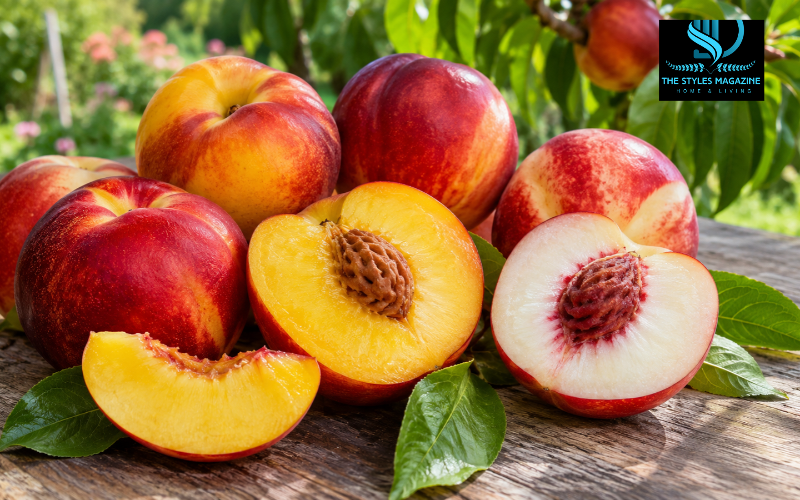
A nectarine is generally round with a small indentation where the stem attaches. Its thin, smooth skin can display a mixture of deep red, golden yellow, and warm orange colours. Some varieties have pale cream or yellow backgrounds beneath their red colouring.
Inside, the flesh is juicy and tender, surrounding a hard brown stone. Depending on the variety, the flesh may be golden yellow, pale white, or cream-coloured, sometimes with reddish colouring near the stone.
The flavour of a nectarine depends on its variety and ripeness. Yellow-fleshed nectarines commonly offer a refreshing balance between sweetness and acidity. White-fleshed varieties are often milder and less acidic.
A ripe nectarine should taste pleasantly sweet, with enough natural acidity to keep the flavour fresh. An underripe fruit may taste sharp and feel unusually hard.
Ripeness also affects texture. Firm nectarines provide a satisfying bite, while fully ripe ones become softer and release more juice. However, skin colour alone cannot reliably indicate ripeness because different varieties develop different colour patterns.
Different Types of Nectarines: White, Yellow, and Orange
Nectarines come in several varieties, mainly distinguished by their flesh colour, flavour, and how easily the stone separates from the fruit.
Yellow nectarines are among the most familiar types. Their flesh ranges from golden yellow to deep yellow, with a sweet flavour balanced by noticeable acidity. They are suitable for eating fresh and for recipes where a slightly tangy taste is desirable.
White nectarines have pale flesh and generally contain less acidity than yellow varieties. This often makes them taste sweeter, even when their actual sugar levels are similar. Their delicate flavour makes them particularly enjoyable when eaten fresh.
Orange nectarines usually refers to nectarines with orange-toned skin or golden-orange flesh rather than a separate official category. The colour alone does not establish how sweet or ripe the fruit will be.
Nectarines are also divided into freestone and clingstone types. In freestone varieties, the flesh separates relatively easily from the central stone, making them convenient for slicing and cooking.
Clingstone nectarines have flesh that remains attached to the stone. They can be equally delicious, but removing the stone requires more care.
Choosing between these types is largely a matter of personal preference and intended use.
Nectarine Calories and Nutritional Value
Nectarines provide natural sweetness, water, fibre, and several important nutrients while containing relatively few calories.
According to nutritional information reported by Cleveland Clinic, one medium nectarine, weighing approximately 142 grams, provides roughly:
- Calories: 63 kcal
- Carbohydrates: 15 grams
- Natural sugars: 11 grams
- Dietary fibre: 2.4 grams
- Protein: 1.5 grams
- Fat: 0.45 grams
- Potassium: 285 milligrams
- Vitamin C: 7.7 milligrams
These figures are approximate and can vary with fruit size and variety.
Nectarines also contain smaller amounts of copper, niacin, vitamin A compounds, and other nutrients. Their high water content contributes to their refreshing texture.
A 100-gram serving contains approximately 44 calories, making nectarines a practical choice for people who want to enjoy naturally sweet foods without adding many calories to their daily diet.
Whole nectarines are generally preferable to sugary fruit desserts because they provide fibre without needing added sugar.
Nectarine Benefits for Health and Everyday Nutrition
Nectarines can contribute to a healthy, balanced diet by providing fibre, vitamins, minerals, and naturally occurring plant compounds.
One important benefit is their fibre content. Dietary fibre supports normal digestion and helps maintain regular bowel movements. Eating whole fruit also provides more fibre than drinking strained fruit juice.
Nectarines contain vitamin C, which supports normal immune function and helps the body produce collagen. They also provide potassium, a mineral involved in normal muscle and nerve function and the regulation of blood pressure.
Their high water content makes them a refreshing snack, particularly during warmer weather. Nectarines also contain naturally occurring antioxidants, although they should not be viewed as treatments or cures for medical conditions.
In the UK, the NHS recommends eating at least five portions of different fruits and vegetables daily. An adult portion of fresh fruit is approximately 80 grams, so a medium nectarine can comfortably contribute one portion towards this recommendation.
Enjoying nectarines alongside other fruits, vegetables, whole grains, and protein-rich foods provides greater nutritional variety than relying heavily on any single fruit.
When Are Nectarines in Season?
Nectarines are primarily summer fruits, although their availability depends on the country where they are grown.
In the UK, home-grown nectarines usually ripen between July and September, depending on the variety and weather conditions. Warm, sunny summers generally provide better conditions for the fruit to develop its characteristic flavour.
Most nectarines sold in British supermarkets are imported. Countries such as Spain, Italy, and France supply fruit during the European growing season, while imports from the Southern Hemisphere help extend availability into the colder months.
According to the Royal Horticultural Society, nectarine trees need plenty of sunshine and warmth to produce well-ripened fruit.
Seasonal nectarines are often particularly enjoyable because they can be harvested closer to their ideal ripeness. However, their quality still depends on the variety, harvesting conditions, transportation, and storage.
How to Choose Fresh and Ripe Nectarines
Choosing a good nectarine is easier when you know what to look for. Appearance matters, but texture and fragrance often provide better clues about ripeness.
Start by examining the skin. A healthy nectarine should have relatively smooth, unbroken skin without large bruises, mould, or leaking areas. Red colouring is attractive, but it does not necessarily mean the fruit is ripe.
Gently press the fruit near its stem. A ripe nectarine should yield slightly without feeling mushy. Very hard fruit may need more time to soften, while excessively soft areas can indicate damage or overripeness.
A pleasant, fruity fragrance is another useful sign. Some ripe varieties have a noticeable sweet aroma, although others are less fragrant.
When purchasing several nectarines, consider choosing fruit at different stages of ripeness. You can enjoy the softer ones immediately and allow the firmer ones to ripen naturally at home.
How to Ripen and Store Nectarines at Home
Proper storage helps maintain the flavour and texture of nectarines while reducing unnecessary food waste.
If your nectarines are firm, leave them at room temperature, away from direct sunlight. Depending on their initial ripeness and the room temperature, they may soften within a few days.
A loosely closed paper bag can encourage ripening by trapping some of the ethylene gas naturally released by fruit. Check them daily to prevent overripening.
Once a nectarine becomes ripe, move it to the refrigerator if you are not planning to eat it immediately. Refrigeration slows further softening and helps preserve its quality.
The University of Maine Cooperative Extension suggests storing ripe nectarines in the refrigerator’s fruit drawer for approximately five days. Actual storage life depends on their condition when purchased.
Avoid tightly stacking nectarines because their delicate flesh bruises easily. Wash them shortly before eating rather than before storage.
If you have more ripe nectarines than you can use, slice and freeze them for smoothies or cooked dishes.
How to Eat Nectarines and Enjoy Their Flavour
One of the simplest ways to enjoy a nectarine is to eat it fresh, just like an apple. Its smooth skin is completely edible, so peeling is optional.
Before eating, rinse the fruit thoroughly under clean running water. Gently rub the surface to remove visible dirt, and dry it with a clean towel. There is no need to use soap or special fruit-washing products.
To slice a nectarine, carefully cut around the central stone and separate the flesh. Freestone varieties may twist apart easily, while clingstone types are better cut into smaller wedges around the stone.
The hard stone and its inner seed should not be eaten.
Fresh nectarine slices make an excellent addition to breakfast bowls, porridge, yoghurt, and fruit salads. Their natural sweetness also pairs well with leafy greens, soft cheese, and nuts.
For a warm dessert, try grilling nectarine halves briefly until lightly caramelised. You can serve them with plain yoghurt or use sliced nectarines in homemade crumbles, cakes, and fruit tarts.
Slightly overripe but still sound nectarines work particularly well in smoothies, sauces, and cooked fruit toppings. Their sweetness can reduce the amount of additional sugar needed in some recipes.
Growing a Nectarine Tree in Your Home Garden
Growing a nectarine tree at home can be rewarding, particularly if you have a sunny, sheltered garden.
Nectarine trees require warmth, sunlight, and fertile, well-drained soil. In the UK, a south-facing or south-west-facing wall is often an excellent position because it provides extra warmth and protection from cold winds.
Choose a variety suited to your local growing conditions. Compact varieties such as ‘Nectarella’ are suitable for containers, making them useful for smaller gardens and patios.
For container growing, select a generously sized pot with drainage holes and use suitable soil-based potting compost. The tree will need regular watering during the growing season.
Garden-grown trees benefit from soil that retains moisture without becoming waterlogged. In colder UK regions, an unheated greenhouse or polytunnel can improve growing conditions.
Nectarine trees are self-fertile, meaning a single tree can produce fruit without needing another compatible tree nearby. However, successful pollination still depends on suitable conditions during flowering.
Buying a healthy, established tree from a reputable nursery is generally more reliable than growing one from a fruit stone.
Nectarine Tree Care and Common Growing Problems
Regular care helps a nectarine tree remain healthy and produce a better harvest.
Watering is especially important for newly planted trees and those grown in pots. Keep the soil reasonably moist during dry periods, particularly when the fruit is developing, but avoid leaving the roots in waterlogged conditions.
Container-grown trees may benefit from a suitable high-potassium feed during the growing season. Established trees growing in healthy garden soil often need less additional feeding.
Pruning also matters. Nectarines produce most of their fruit on growth made during the previous year, so careful pruning encourages productive replacement shoots.
In the UK, significant pruning is best carried out during suitable dry weather in the growing season, rather than during winter when stone-fruit trees are more vulnerable to certain diseases.
One common problem is peach leaf curl, a fungal disease that causes leaves to become thickened, twisted, and sometimes reddish.
Keeping rain off emerging leaves from late autumn through spring can substantially reduce the risk. Other possible problems include aphids, brown rot, and damage to flowers caused by late frost.
Protecting blossom during cold weather, maintaining good airflow, removing damaged fruit, and checking the tree regularly can help prevent avoidable problems.
Conclusion
Nectarines are delicious summer fruits that combine refreshing flavour, natural sweetness, and useful nutrients. Their smooth skin, juicy flesh, and different varieties make them easy to enjoy in everyday meals.
Whether you prefer white or yellow nectarines, choosing fruit at the right stage of ripeness and storing it properly can noticeably improve your eating experience.
Nectarines are also an interesting option for home gardeners who can provide enough warmth, sunshine, and protection from cold weather.
From fresh snacks to homemade desserts and garden harvests, a nectarine offers plenty of simple ways to enjoy seasonal fruit as part of everyday life.
Frequently Asked Questions
What Is The Difference Between A Nectarine And A Peach?
The main difference is their skin. Nectarines have smooth skin, while peaches have a fuzzy covering. Both belong to the same species and offer similar nutrients, although their flavour and texture can vary.
What Are The Main Health Benefits Of Nectarines?
Nectarines provide dietary fibre, vitamin C, potassium, and water. These nutrients contribute to normal digestion, immune function, and hydration. Eating nectarines as part of a varied diet supports overall nutritional balance.
How Many Calories Are In One Nectarine?
A medium nectarine weighing approximately 142 grams contains around 63 calories. The exact amount depends on the fruit’s size and variety. Nectarines also provide natural sugars, fibre, and several important nutrients.
Can You Grow A Nectarine Tree In The UK?
Yes, nectarine trees can grow in the UK, especially in sunny, sheltered locations. They prefer well-drained soil and warmth. Growing them against a south-facing wall or under cover can improve results.
Are White Nectarines Sweeter Than Yellow Nectarines?
White nectarines often taste sweeter because they generally contain less acidity. Yellow nectarines usually have a stronger balance of sweetness and tartness. However, actual flavour depends on the variety and ripeness.
Disclaimer: This article provides general information about nectarines, including their nutrition, health benefits, storage, and home cultivation. Nutritional values may vary depending on fruit size and variety. Health information is not a substitute for professional medical or dietary advice. Growing results may differ according to local climate, soil conditions, and tree care.
Enjoyed it? Find more exclusive content on The Styles Magazine.