Starting seeds indoors can seem simple: fill a tray, plant the seeds, add water, and wait. But temperature plays an important role in whether those seeds germinate quickly and evenly. A room that feels comfortable to you may still leave the seed-starting mix cooler than many seeds prefer.
This is where a seedling heat mat can help.
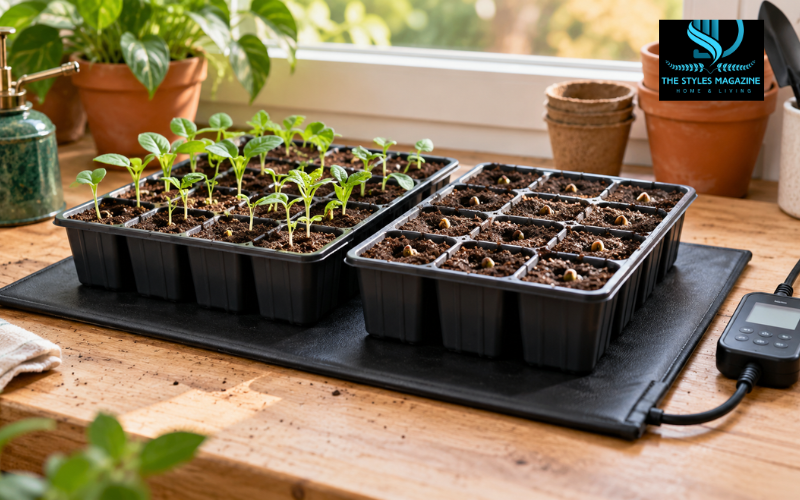
So, what is a seedling heat mat? It is a low-wattage electric warming mat made to sit underneath seed trays and provide gentle bottom heat. Instead of heating the whole room, it warms the growing medium around the seeds. This can create better germination conditions, particularly for warmth-loving plants or seeds being started in a cool basement, garage, or other indoor space.
University of Georgia Extension explains that temperature affects both the percentage of seeds that germinate and the speed at which they do so. It recommends moisture-proof heating mats as one way to raise the temperature of seed-starting containers when needed.
A heat mat is not essential for every gardener or every type of seed. However, it can be a useful tool when natural indoor temperatures are below the preferred germination range. Understanding how it works, the right temperature to use, when to remove it, and how to manage moisture will help you decide whether one belongs in your seed-starting setup.
Quick Guide Table
| Topic | Quick Guide |
| Main purpose | Provides gentle bottom heat for seed germination |
| Best for | Tomatoes, peppers, eggplants, and other warmth-loving seeds |
| Typical range | Depends on the plant; many seeds germinate well around 65–75°F |
| Thermostat | Helpful for maintaining a more precise temperature |
| Placement | Under the seed tray on a suitable flat surface |
| After germination | Reduce or remove heat when it is no longer needed |
| Main caution | Avoid overheating and check moisture regularly |
Simple Steps for Using a Seedling Heat Mat
- Place the heat mat on a dry, stable, level surface.
- Put the prepared seed tray directly on the mat as instructed by the manufacturer.
- Connect a thermostat if your setup uses one.
- Set the temperature according to the needs of the seeds you are growing.
- Check the growing-medium temperature and moisture regularly.
- Provide good light as soon as seedlings emerge.
- Reduce or remove bottom heat when the seedlings no longer need it.
What Is a Seedling Heat Mat and How Does It Work?
A seedling heat mat is an electric mat specifically designed to provide gentle warmth underneath seed trays, pots, or propagation containers. When plugged in, heating elements inside the mat produce steady bottom heat.
The important point is that the mat mainly warms the tray and the growing medium above it. It is not designed to heat your entire room.
This answers the common question, what is a seedling heat mat for plants? Its main purpose is to create a warmer root-zone environment during seed germination. Seeds respond to the temperature around them, so warming the growing medium can be more useful than simply increasing the temperature of the surrounding air.
A seedling mat should not be confused with an ordinary household heating pad. Gardening mats are made for seed-starting environments where moisture and regular watering are expected. A household heating pad may not be designed for those conditions or for continuous use underneath planting trays.
Always use a product intended for horticultural seed starting and follow its manufacturer’s instructions, especially around water and electrical connections.
What a Seedling Heat Mat Is Good For
If you are wondering what a seedling heat mat is good for, its biggest benefit is helping create suitable germination temperatures when the growing area is too cool.
Seeds germinate through biological processes that are affected by temperature, moisture, oxygen, and, for some species, light. When the growing medium is colder than a seed prefers, germination may take longer or become less consistent.
Bottom heat can be particularly helpful in winter and early spring, when many gardeners start plants indoors while their homes, garages, or basements are still cool.
University of Minnesota Extension notes that indoor potting mix can sometimes be several degrees cooler than the surrounding indoor air. It also explains that many seeds germinate sooner when their potting mix is warm.
However, a heat mat is only one part of successful seed starting. It cannot fix old or poor-quality seed, incorrect planting depth, overwatering, underwatering, unsuitable growing mix, or insufficient light after seedlings emerge.
Think of it as a temperature-management tool rather than a shortcut that guarantees germination.
Seeds and Plants That Benefit Most From Bottom Heat
Warm-season vegetables are among the plants most likely to benefit from a seedling heat mat. Tomatoes, peppers, and eggplants are commonly started indoors because they need a longer warm growing season than many climates naturally provide.
Tomatoes often respond well to warm germination conditions. University of Minnesota Extension recommends maintaining about 75°F to 85°F in the germination flat for tomato seeds until seedlings emerge.
Peppers generally prefer even warmer germination conditions. Minnesota Extension recommends around 80°F to 90°F until pepper seedlings emerge, while University of New Hampshire guidance also notes that peppers germinate best in warm growing media.
That does not mean every seed tray should be kept at those temperatures. Different plants have different requirements. Some cool-season vegetables and flowers germinate perfectly well at lower temperatures and may not benefit from extra heat.
The safest approach is to check the seed packet or reliable plant-specific growing guidance before choosing a temperature.
Seedling Heat Mat Temperature: Finding the Right Range
There is no single seedling heat mat temperature that is correct for every plant.
One reason temperature advice can become confusing is that three different temperatures may be involved: the room temperature, the heat mat’s surface temperature, and the actual temperature inside the seed-starting medium.
The temperature around the seed is the most useful one to know.
For many commonly grown seeds, a growing-medium temperature somewhere around 65°F to 75°F works well. University of Georgia Extension describes this as a useful general germination range for many seeds, while also making clear that individual species can have more specific requirements.
Warm-season plants may need more heat. For example, University of New Hampshire Extension lists about 80°F as an optimum germination temperature for tomato seeds.
This is why guessing based only on how warm the room feels is not ideal. A thermometer placed in the growing medium can provide a much better picture. A thermostat with a temperature probe offers even more control because it can turn the mat on and off as needed to maintain a chosen temperature.
How to Use a Seedling Heat Mat Correctly
Learning how to use a seedling heat mat is straightforward, but careful setup makes it more useful.
Start by choosing a stable indoor location with access to electricity and enough room for your seed trays and lighting. Place the mat on a suitable dry, flat surface according to its instructions, then place the seed tray on top.
Prepare your seed-starting mix, sow the seeds at the correct depth, and water gently. The seed packet should tell you whether the particular seed has any special planting or germination requirements.
If your mat uses a thermostat, position the temperature probe according to the controller manufacturer’s directions so it measures conditions where the seeds are growing. Set an appropriate target for the crop rather than simply choosing the highest available temperature.
During germination, check the growing medium regularly. Added warmth can increase moisture loss. University of Georgia Extension specifically warns that seedlings and growing media can dry faster when additional heat is used.
Once seedlings emerge, give them adequate light promptly. Warmth alone cannot produce strong seedlings.
Using a Seedling Heat Mat With a Thermostat
Some seedling heat mats simply begin heating when they are plugged in. Others can be connected to a separate thermostat, while certain systems include temperature control as part of the product.
A thermostat gives you much better control over the temperature surrounding your seeds.
A typical setup uses a probe to measure temperature in or around the growing medium. When the temperature falls below the chosen setting, the thermostat supplies power to the mat. Once the desired temperature is reached, it reduces or switches off the heat according to its design.
This can be especially useful in basements, garages, or other spaces where room temperatures change between day and night.
Illinois Extension discusses both simple plug-in mats and thermostat-controlled systems. Its seed-starting guidance notes that temperature-controlled mats can be adjusted according to the germination needs of the particular seed.
For most gardeners, precise temperature control is more valuable than simply buying the hottest mat available.
When to Stop Using a Heat Mat for Seedlings
Knowing when to stop using a heat mat for seedlings is just as important as knowing when to switch it on.
Seeds often need warmer conditions for germination than young plants need after they emerge. Once most seedlings in a tray have broken through the growing medium, continued high bottom heat may no longer be necessary.
University of Georgia Extension advises gradually lowering temperatures after germination and moving seedlings into a bright location where they can continue developing.
Do not rely only on a fixed number of days. Germination speed varies according to plant type, seed quality, temperature, moisture, and growing conditions.
If different varieties are sharing the same heat mat and they germinate at different times, managing them separately may be easier. You can move the germinated tray away from the heat while leaving slower seeds in suitable germination conditions.
Some plants may still benefit from moderate warmth after emergence, so plant-specific guidance should take priority over a universal rule.
Light also becomes especially important after seedlings emerge. Excessively warm conditions combined with poor light can contribute to weak, stretched growth.
Common Seedling Heat Mat Mistakes to Avoid
One common mistake is assuming that every seed needs heat. Many seeds germinate perfectly well at ordinary indoor temperatures, particularly if the growing medium is already within their preferred range.
Another mistake is making the medium hotter than necessary. More heat does not automatically mean faster or healthier germination. Temperatures outside the suitable range can reduce germination performance.
Moisture problems are equally important. Heat can cause seed-starting mix to dry faster, so trays require regular checking. At the same time, adding too much water is not the answer. University of New Hampshire Extension explains that water-saturated growing media can reduce the oxygen available to seeds and interfere with germination.
Gardeners should also avoid leaving newly emerged seedlings in poor light. Once green growth appears, strong, suitable lighting becomes essential.
Finally, do not substitute random household heating equipment for a seed-starting mat or ignore the instructions supplied with the product.
Seedling Heat Mat Safety and Moisture Management
Electricity and watering are both part of many indoor seed-starting setups, so basic safety matters.
Use a heat mat made for horticultural use. Before setting it up, inspect the mat, cord, and plug for visible damage. Follow the manufacturer’s instructions about placement, operating conditions, thermostat compatibility, cleaning, and exposure to moisture.
Terms such as moisture-resistant or waterproof should never be taken to mean that plugs, controllers, extension connections, or other electrical parts can safely sit in water. Keep electrical connections away from spills and tray runoff.
Moisture management is also important for plant health. Seed-starting mix should normally remain evenly moist during germination, but it should not become waterlogged.
Illinois Extension recommends maintaining uniform moisture while avoiding overly wet growing media. It also notes that excessively wet conditions can contribute to seedling problems.
Good drainage, suitable seed-starting mix, controlled watering, and gentle airflow all work together with proper temperature.
Choosing the Right Seedling Heat Mat Size
Seedling heat mats come in different sizes because gardening setups vary widely.
A small gardener starting one tray may only need a compact mat. Someone starting several trays at once may prefer a larger model that covers more bench or shelf space.
The important step is to measure your trays and growing area before buying.
A seedling heat mat 48” x 20”, for example, is a relatively large format that may make sense for a multi-tray growing station. It would be unnecessary for someone starting only a handful of seeds in a small tray.
Try to match the heated area reasonably closely to the containers you plan to use. A much larger mat may take up valuable shelf space and provide heated surface area that you never use.
Also consider where lights, trays, drainage containers, thermostat cables, and electrical outlets will sit. A good mat should fit the whole setup, not just the seed tray itself.
What to Look for in a Seedling Heat Mat With a Thermostat
Searching for the best seedling heat mat with thermostat does not have to mean finding one particular model that is best for everyone.
A better choice is one that matches your plants, number of trays, growing space, and need for temperature control.
Look for a thermostat that can maintain the temperature range required by the crops you plan to start. The probe should be easy to position correctly, and the mat and controller should be designed to work together safely.
Size also matters. A highly rated large mat is not useful if it does not fit your shelf or tray.
Construction intended for humid seed-starting environments, clear safety instructions, suitable electrical specifications, an appropriate cord length, and dependable manufacturer support are also worth considering.
If you regularly start warmth-loving seeds, precise thermostat control may be worth paying more for. For occasional seed starting in a reasonably warm room, a basic horticultural mat may be enough.
Do You Need a Seedling Heat Mat, and Where Can You Find One?
Not every indoor gardener needs a heat mat.
It tends to be most useful when you start warmth-loving seeds in a cool basement, garage, spare room, or other location where the growing medium struggles to reach the seed’s preferred germination temperature.
It can also be helpful when tomatoes, peppers, eggplants, and similar crops must be started indoors before outdoor temperatures become warm enough.
On the other hand, if your growing medium naturally stays within the recommended range for the seeds you are planting, adding extra heat may provide little advantage.
Before searching for a seedling heat mat nearby, first decide what size and level of temperature control you actually need. Garden centers, nurseries, hydroponic suppliers, home-and-garden stores, and other horticultural retailers commonly carry seed-starting equipment, although local availability varies.
When comparing options, check the dimensions, thermostat compatibility, voltage and electrical requirements, intended horticultural use, and operating instructions rather than buying based only on price.
A simple thermometer can also help you determine whether a heat mat is needed at all. If your seed-starting mix is already at the correct temperature, there is little reason to add unnecessary heat.
Conclusion
Understanding what a seedling heat mat is makes it easier to decide whether this simple gardening tool is useful for your indoor seed-starting setup.
Its main job is to provide controlled bottom warmth when the growing medium is colder than the temperature seeds need for good germination. This can be particularly useful for warm-season crops such as tomatoes and peppers or for gardeners starting seeds in cool indoor spaces.
A heat mat works best when it is treated as one part of a complete growing setup. Correct planting depth, suitable seed-starting mix, steady moisture, enough oxygen, proper temperature, and strong light after germination all matter.
There is also no need to make the growing medium hotter than the plant requires. Check the needs of the particular seeds you are growing, monitor the temperature rather than guessing, and consider a thermostat when better control is needed.
Once seedlings emerge, reassess whether bottom heat is still necessary and make sure they receive the light and growing conditions needed for healthy development.
For gardeners who regularly struggle with cool germination conditions, a seedling heat mat can be a practical addition. If your indoor growing area is already warm enough, however, good seed-starting practices may be all you need.
FAQs
Do All Seedlings Need A Heat Mat?
No. Many seeds germinate well without extra heat when the growing medium is already warm enough. Heat mats are most useful for warmth-loving seeds or cool indoor growing areas.
How Warm Should A Seedling Heat Mat Be?
There is no single temperature for every seed. Many seeds germinate well around 65–75°F, while crops such as tomatoes and peppers may prefer warmer germination conditions.
Can I Leave A Seedling Heat Mat On All The Time?
It depends on the crop and setup. Once most seedlings emerge, they often need less bottom heat. A thermostat can also help prevent the growing medium from becoming unnecessarily warm.
Does A Seedling Heat Mat Help Seeds Germinate Faster?
It can help when low temperature is limiting germination. Keeping the growing medium within the seed’s preferred temperature range may improve both the speed and consistency of germination.
Can I Use A Normal Heating Pad Instead Of A Seedling Heat Mat?
It is better to use equipment designed for seed starting. Horticultural heat mats are intended for use around trays, moisture, and growing environments, while household heating pads may not be.
Enjoyed it? Find more exclusive content on The Styles Magazine.
Disclaimer: This article is for general informational and educational purposes only. Seed germination temperatures and heating needs vary by plant, growing environment, and equipment. Always follow the seed supplier’s recommendations and the heat mat manufacturer’s safety instructions. This content is provided only to help readers understand seedling heat mats and is not promotional or advertising content.