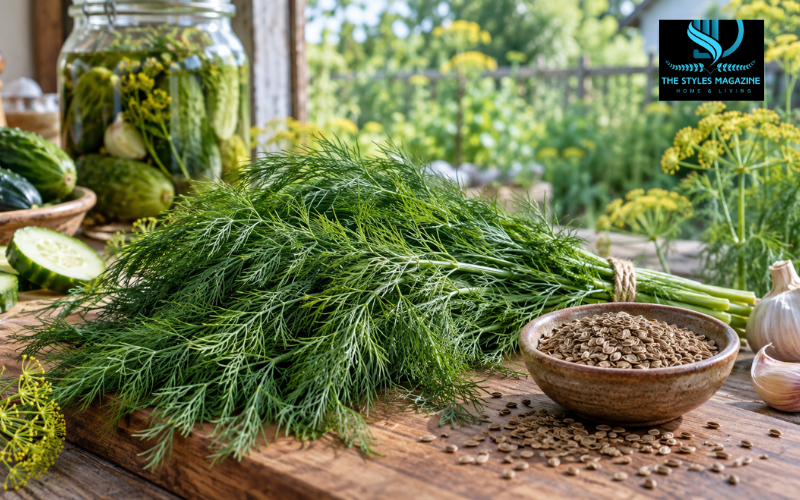
Known botanically as Anethum graveolens, dill is an aromatic annual herb in the Apiaceae family, which also includes carrots, celery, parsley, and fennel. Its feathery leaves have a fresh green aroma, while its seeds offer a stronger, warmer flavour.
Two parts are used most often in cooking. Fresh dill leaves, also called dill weed or dill fronds, suit salads, sauces, fish, potatoes, eggs, and dips. Dill seeds are commonly used for pickling, baking, spice blends, and slow-cooked dishes.
This guide covers dill’s flavour, uses, nutrition, storage, common names, and practical growing and harvesting tips.
Quick Guide: Dill Leaves vs. Dill Seeds
| Feature | Fresh Dill Leaves | Dill Seeds |
| Part used | Soft, feathery leaves | Dried fruits commonly called seeds |
| Taste | Fresh, grassy, slightly citrusy | Warmer, stronger, slightly bitter |
| Best for | Fish, salads, potatoes, dips | Pickles, breads, stews, spice blends |
| When to add | Near the end of cooking | Earlier during cooking |
| Available as | Fresh or dried | Usually dried whole or ground |
| Storage | Refrigerate or freeze | Store airtight in a cool, dry place |
Simple Ways to Use Dill
- Chop fresh dill into potato or cucumber salads.
- Stir it into yogurt, sour cream, or creamy dips.
- Add fresh leaves to salmon, fish, eggs, and soups.
- Use dill seeds in pickling brines, breads, and stews.
- Add fresh dill near the end of cooking to preserve its aroma.
- Freeze extra fresh dill if you cannot use it quickly.
What Is Dill? Meaning, Origin, and Common Names
Dill is grown for its leaves, flowers, and so-called seeds. Its botanical name is Anethum graveolens, and it belongs to the Apiaceae family. Botanical references associate it with western or southwestern Asia and the Mediterranean region. It is now cultivated widely.
“Dill herb” usually means the fresh or dried leaves used for seasoning. The leaves may also be sold as “dill weed.” The plant produces edible flower heads and fruits commonly called dill seeds.
Names differ by language and region. In Hindi and neighbouring South Asian languages, dill may be known as sowa, soya, soa, or similar regional spellings; Sanskrit names include forms such as shatpushpa or satapushpi. Because local names vary, checking the botanical name can help avoid confusion. In Spanish, dill is called eneldo.
The Dill Plant: Leaves, Flowers, Stems, and Seeds
A mature dill plant has an airy appearance. Its blue-green to green foliage is divided into fine, thread-like sections, while the stems are upright, slender, and often hollow. Some varieties can become quite tall.
As the plant matures, it produces flat or gently rounded clusters of tiny yellow flowers. These umbrella-shaped flower heads are known botanically as umbels. They are not only attractive but also useful in the garden because their nectar can draw pollinating insects. The Royal Horticultural Society notes that dill flowers are attractive to pollinators, making the plant useful beyond the kitchen.
After flowering, the plant develops flat, oval fruits that dry to a tan or brown colour. These are sold and used in cooking as dill seeds. Because dill is an annual, it completes its life cycle in one growing season, moving from seed to leafy growth, flowers, and then mature seed.
Fresh Dill and Dill Leaves
Fresh dill is easy to recognise by its soft, feathery fronds and clean herbal smell. Dill leaves, dill fronds, and dill weed generally refer to the same leafy part; “dill weed” is especially common on dried-herb labels.
Its flavour is bright, grassy, lightly sweet, and gently citrus-like, with a mild anise note.
Because its aroma is delicate, fresh dill is generally best added near the end of cooking or just before serving. Long cooking can reduce the fresh character that makes the herb distinctive. It works particularly well with fish, potatoes, cucumber, yogurt, eggs, salads, and light soups. Purdue Extension also lists cucumber, sour cream, salmon, fish, eggs, potatoes, and yogurt among natural dill pairings.
Tender upper stems can also be chopped into dishes. Thicker mature stems are better for stocks or pickling liquids where they can be removed later.
Dill Seeds and How Their Flavour Differs
Dill seeds look very different from the leaves. They are small, flat, oval, and usually light brown to tan when dry. Strictly speaking, the culinary “seeds” are dried fruits of the dill plant, but the name dill seed is firmly established in cooking.
Their flavour is warmer, stronger, and more pungent than fresh leaves, sometimes with a slightly bitter or caraway-like edge. Dill seed also handles longer cooking well.
Dill seeds are commonly used in pickles and brines, savoury breads, soups, stews, vegetable dishes, and spice mixtures. Heating the seed helps release its aroma, which is one reason it works well in cooked food.
Culinary and planting seeds come from the same type of plant but are sold for different purposes. For reliable growing, choose seed specifically packaged for sowing.
Dill Weed vs. Dill Seed: Quick Comparison
Although dill weed and dill seed come from the same plant, they are not the same ingredient. Their flavour, texture, and best uses are different.
| Feature | Dill Weed / Leaves | Dill Seed |
| Plant part | Fine leaves and tender fronds | Dried fruit commonly called seed |
| Appearance | Soft, feathery, green | Flat, oval, tan to brown |
| Flavour | Fresh, grassy, lightly citrusy and anise-like | Stronger, warmer, sharper and slightly bitter |
| Aroma | Light and fresh | More pungent and spicy |
| Best uses | Salads, fish, potatoes, dips, sauces, garnish | Pickles, breads, stews, brines, spice blends |
| When to add | Near the end of cooking | Earlier in cooking or during pickling |
| Common forms | Fresh or dried | Usually dried whole or ground |
They should not be replaced in equal amounts. Dill seed is more assertive and has a different flavour, so a creamy cucumber sauce made with seed will not taste like one made with fresh fronds.
Is Dill a Vegetable or an Herb?
People sometimes search for “dill vegetable,” but dill is generally treated as a culinary herb rather than a vegetable. Botanically, it is a herbaceous annual plant, meaning it has soft rather than woody stems and completes its life cycle within a year.
In cooking, the word “herb” usually refers to leafy plant parts used mainly to add flavour. That description fits dill well because its leaves are normally used as seasoning rather than as the main bulk of a meal.
The confusion arises because some cuisines cook dill leaves generously with vegetables, legumes, or other greens. Even then, its usual culinary role remains that of an herb.
What Does Dill Taste Like?
Fresh dill has a clean, green flavour with grassy, slightly sweet, citrus-like notes and a gentle suggestion of anise. Some people also notice similarities to parsley, celery, or fennel, but dill has its own recognisable aroma.
Dill seed tastes warmer and stronger, with a slightly bitter, caraway-like edge. That is why leaves suit fresh sauces and garnishes while seeds work well in pickling and longer cooking.
Dill pairs especially well with cucumber, potatoes, salmon and other fish, eggs, yogurt, sour cream, lemon, garlic, and root vegetables. Its bright flavour can lift rich ingredients such as creamy dressings, while its mild anise character works naturally with seafood and vegetables.
Popular Ways to Use Dill in Cooking
Pickling may be the use most strongly associated with dill. Flower heads, leaves, and seeds can all contribute flavour to pickled cucumbers and other vegetables. The seed is especially useful when a stronger flavour is needed in a brine.
Fresh dill is also excellent in potato salad, boiled new potatoes, cucumber salad, egg dishes, and green salads. Chopped leaves can be stirred into yogurt or sour cream to make cooling dips and sauces. They also pair naturally with salmon, trout, and other fish.
Dill also works in light soups and chilled yogurt- or cucumber-based dishes. Dill seed can be baked into breads and savoury doughs.
For cooked dishes, timing matters. If fresh dill is the main flavour, add most of it near the end and, if desired, keep a little for garnish. This helps preserve its aroma. Dried dill and dill seed can usually be added earlier because they need more time to release their flavour.
Fresh Dill, Dried Dill, and Useful Substitutions
Fresh dill has the brightest aroma, softest texture, and best colour, so it suits salads, garnishes, and cold sauces. Dried dill is less vibrant but useful when fresh bunches are unavailable.
As a general herb substitution rule, dried herbs are used in smaller amounts than fresh ones. Mayo Clinic gives a broad guide of about one tablespoon fresh herbs for one teaspoon dried herbs, although individual herbs and personal taste can vary. With dill, it is sensible to start modestly and adjust rather than rely on an exact formula.
If no dill is available, fennel fronds can provide a similar feathery texture and mild anise note. Tarragon can work in some fish, egg, and creamy dishes, though its flavour is more strongly anise-like. Parsley can provide freshness and colour, especially when combined with another aromatic herb, but it does not taste like dill.
No substitute is exact, especially when dill is the defining flavour of the dish.
Dill Nutrition and Potential Health Benefits
Fresh dill is usually eaten in small portions, so it is best viewed as a flavourful herb rather than a major nutrient source. It provides small amounts of vitamins and minerals and contains naturally occurring antioxidant compounds.
Dill has a long history of traditional use for digestive comfort, but traditional use is not the same as strong clinical proof. Modern research has looked at concentrated dill powders and supplements rather than ordinary culinary portions.
A systematic review and meta-analysis of seven randomised controlled trials involving 330 adults found that dill supplementation was associated with reductions in LDL cholesterol, insulin, and a measure of insulin resistance, but it did not significantly improve several other outcomes, including total cholesterol, triglycerides, HDL cholesterol, and fasting blood glucose overall. The researchers concluded that more studies were needed. Another systematic review also reported some favourable lipid findings but stressed the need for better-quality trials.
These findings do not mean culinary dill treats diabetes, high cholesterol, or other conditions. The studies used supplements, and the evidence remains limited. Dill should not replace proven medical care.
Safety and Practical Considerations
For most people, normal culinary amounts of dill are well tolerated, although allergic reactions can occur. LactMed notes occasional allergic skin reactions, particularly after contact with fresh dill.
Culinary use should not be confused with concentrated supplements, essential oils, or medicinal extracts, which may deliver much larger amounts of plant compounds.
Anyone who is pregnant, breastfeeding, taking regular medication, managing a medical condition, or considering a concentrated dill supplement should seek suitable professional advice rather than assuming that a natural product is automatically harmless.
Dill is sometimes promoted as a herb that increases breast-milk production. Current LactMed information states that scientifically valid clinical trials do not support dill itself as a proven galactagogue. That makes it important not to present this traditional claim as an established benefit.
Growing, Harvesting, and Storing Dill
Dill prefers a sunny position and well-drained soil. The University of Minnesota recommends at least six to eight hours of direct sun outdoors, while both it and the Royal Horticultural Society note that dill dislikes root disturbance and is well suited to direct sowing.
Seeds can be sown directly where the plants are expected to grow. Gardeners who want a steady supply of fresh leaves can make small repeat sowings through the growing season. Dill grows quickly, and leaves can be harvested while the plant is green and actively growing.
For leaf harvests, choose healthy fronds before the plant has put all its energy into mature seed. For seed, allow the flower heads to develop and wait until the fruits begin to turn tan or brown. Cut the heads and finish drying them in a well-ventilated place before storing the seed dry.
When buying fresh dill, choose green, feathery leaves and firm stems without yellowing or wilting. Purdue Extension recommends refrigeration, either wrapped with a damp paper towel in a bag or with stems kept in water. Dill can also be frozen whole or chopped.
Drying is another option, although the leaves lose much of their fresh aroma after drying. University of Minnesota Extension notes that dill foliage loses flavour quickly and that drying reduces much of its flavour, so using fresh leaves soon after harvest gives the brightest result. Dried, fully mature seed keeps its character much better when stored in an airtight container away from heat and light.
Conclusion
Dill is a versatile herb with more to offer than its familiar connection with pickles. Its delicate leaves bring a fresh, grassy and lightly anise-like flavour to fish, potatoes, salads, eggs, soups, and creamy sauces, while dill seeds provide a stronger, warmer taste suited to brines, breads, spice blends, and longer cooking.
Understanding the difference between the leaves and seeds makes dill much easier to use successfully. Fresh fronds are usually best when their bright aroma can remain noticeable, while the seeds perform better when they have time to release their flavour.
Dill can also be a rewarding plant to grow at home, particularly in a sunny spot with well-drained soil. Whether you buy it fresh, keep dried dill in the cupboard, collect the seeds, or grow your own plant, choosing the right form for the dish is the simplest way to get the best from this distinctive herb.
FAQs
What Is Dill Used For?
Dill is commonly used to flavour fish, potatoes, cucumber, eggs, soups, salads, yogurt sauces, and pickled vegetables. Fresh leaves provide a delicate herbal flavour, while dill seeds work well in brines and cooked dishes.
Is Dill A Herb Or A Vegetable?
Dill is generally classified and used as a culinary herb. Its leaves are mainly used for flavour rather than as a main vegetable, although some cuisines cook larger amounts of dill with other ingredients.
What Does Fresh Dill Taste Like?
Fresh dill has a light, grassy and slightly sweet taste with mild citrus and anise-like notes. Its delicate flavour works especially well with cucumber, potatoes, fish, eggs, yogurt, lemon, and creamy sauces.
Are Dill Seeds The Same As Dill Leaves?
They come from the same plant but taste different. Dill leaves are soft and fresh-tasting, while dill seeds have a stronger, warmer flavour and are better suited to pickling, breads, spice blends, and longer cooking.
Can You Eat Dill Every Day?
Dill can generally be enjoyed regularly in normal food amounts as part of a balanced diet. Concentrated dill supplements or extracts are different and may require professional advice, particularly for people taking medicines or managing health conditions.
Enjoyed it? Find more exclusive content on The Styles Magazine.
Disclaimer: This article is provided for general informational and educational purposes only. Information about dill, nutrition, traditional uses, growing, storage, and possible health effects should not be considered medical advice or a substitute for professional healthcare. Research on some potential health benefits of dill and dill supplements remains limited, and results may not apply to normal culinary amounts. Anyone who is pregnant, breastfeeding, taking medication, has allergies, or is considering concentrated herbal supplements should consult a qualified healthcare professional before use.