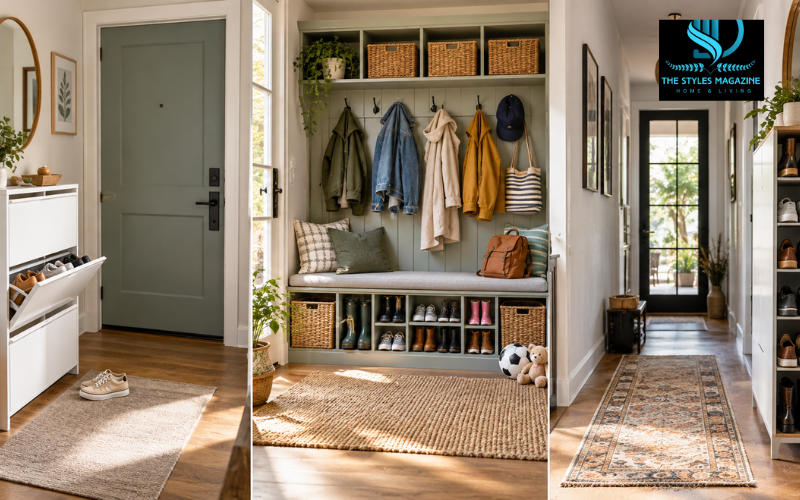
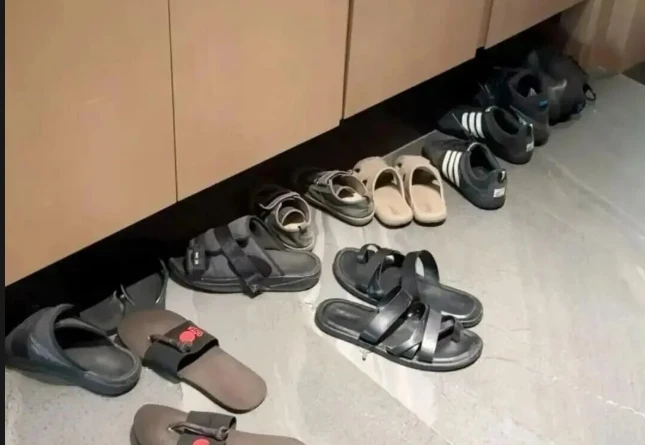
Every time you walk in the door, a small mountain of shoes greets you. Finding your everyday sneakers means digging through the pile, and guests see the clutter the second they step inside. You don’t need to renovate—smart, space-saving entryway shoe cabinet storage can fit 30 pairs in even a small entryway while keeping things tidy. Here are three tested solutions for entryways of any size.
1. Built-In Shoe Cabinet (Best for Larger Entryways)
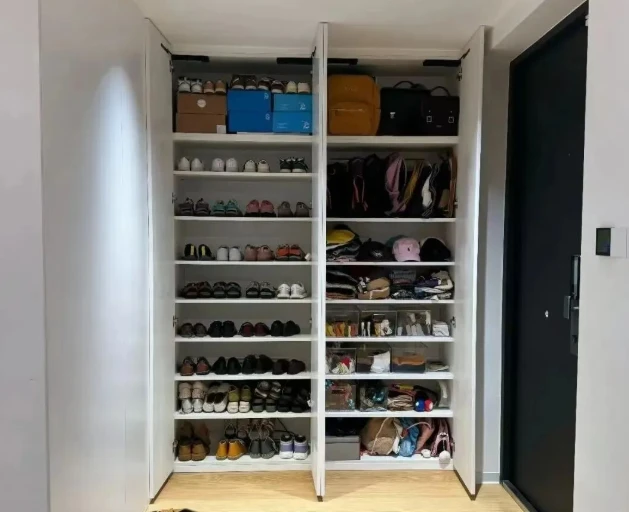
If you have a full wall to work with, a custom floor-to-ceiling shoe cabinet is the “solve it once” option. It maximizes vertical space, tucking away shoes you rarely wear while keeping your daily pairs easily accessible at the bottom.
Sizing: Aim for 14–16 inches of depth — enough for chunky sneakers and ankle boots without eating up floor space. Build it floor-to-ceiling, using the top shelves for luggage or off-season shoe boxes. Even a wall as narrow as 4 feet can fit a functional cabinet.
Layout: Leave the bottom 6–8 inches open for the shoes you wear that day — no bending down to open doors. A middle open shelf (12–16 inches) is perfect for keys, bags, and masks, and doubles as display space for a lamp or artwork. Inside, use adjustable shelving — taller sections for boots, shorter ones for flats — plus a hanging rod for shoehorns and umbrellas.
Nice-to-haves: LED strip lighting inside makes finding shoes in the dark easier. A soft-touch, easy-wipe cabinet finish resists fingerprints. Cedar blocks or a moisture absorber inside keep things fresh and odor-free.
The trade-off: this option needs wall space and is usually custom-built, so it works best for a new renovation and a larger budget.
2. Shoe Rack With Bench (Best for Small Spaces or Renters)
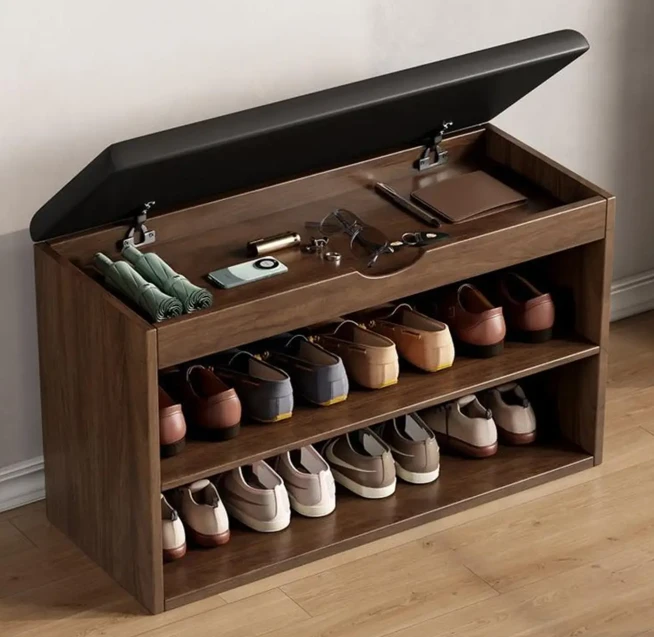
For renters or tight entryways, a shoe rack paired with a storage bench is flexible and damage-free — no wall-mounting required. The bench gives you a spot to sit while putting on shoes, with hidden storage underneath, while the rack holds your everyday pairs.
Choosing a rack: A foldable, multi-tier rack is great since it collapses when not needed. If you have a lot of shoes, go with an adjustable-height metal rack (about 6 inches per shelf) — rust-resistant and sturdier-looking than wood. Keep the rack under 4 feet tall so the entryway doesn’t feel cramped.
Choosing a bench: look for a flip-top entryway bench with shoe storage — the seat lifts to reveal space for 5–8 pairs of off-season shoes like slippers or sneakers. A water-resistant, easy-clean fabric (like performance textile) handles spills well. Aim for an 18-inch seat height so your knees aren’t strained while sitting.
Layout tip: Place the rack closest to the door for easy drop-off, with the bench right beside it. A wall-mounted key hook above the rack keeps keys from getting lost in the shuffle.
3. Over-the-Door Shoe Rack (Best for Ultra-Tight Spaces)
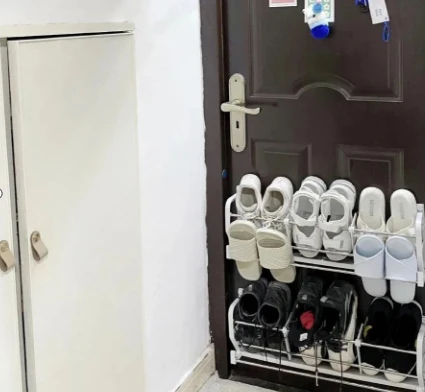
If you have no wall space at all — think studio apartments or entryways under 100 square feet — an over-the-door rack makes use of vertical space behind the door itself, taking up almost zero floor space.
Installation is as simple as hanging it over the door, then sorting shoes by tier however you like. The upside is minimal cost and setup; the downside is limited capacity, so it’s not ideal for households of three or more. It’s also fully visible once the door closes, which isn’t the most polished look, and the added weight can occasionally get in the way when opening or closing the door.
And that should solve your shoe clutter problem. If it’s still overflowing, though, the real fix might just be letting go of the shoes you never actually wear.
Enjoyed it? Find more exclusive content on The Styles Magazine.