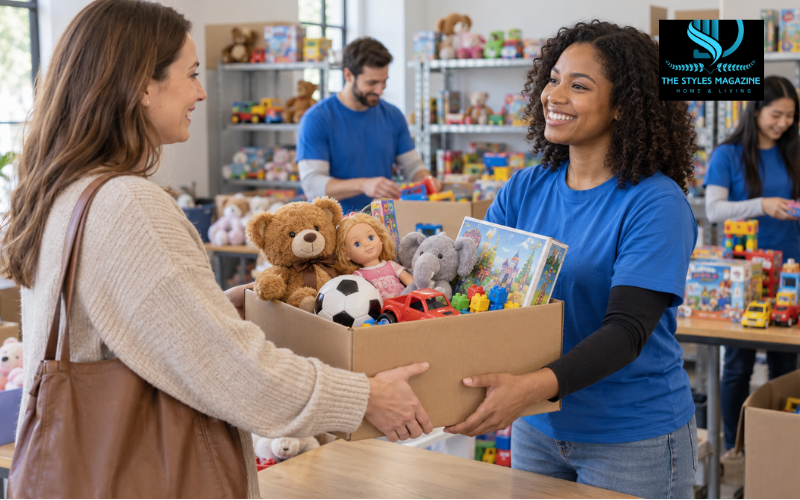
If you are wondering where to donate toys, the best choice depends on the condition of the toys, the age group they suit, and the rules of the organization you want to support. Brand-new toys may be welcomed by hospitals, holiday drives, shelters, and children’s programs, while gently used toys are more likely to be accepted by thrift stores, reuse organizations, and selected community groups.
The important point is that donation rules are not the same everywhere. A hospital may accept only new, unwrapped items for infection-control reasons, while a local thrift shop may accept clean used toys in good working order. Some organizations also pause in-kind donations when storage space is limited.
This guide explains where to donate toys near you, where to give toys to children in need, how Toys for Tots works, options around Georgetown and Washington, DC, and what to know about toy donation pickup. Before travelling, always check the organization’s current website or call first because wish lists, hours, and acceptance policies can change.
Simple Steps Before Donating Toys
- Separate new toys from gently used toys.
- Clean used toys and make sure they are safe and complete.
- Check older toys for recalls or safety problems.
- Find a local charity, shelter, thrift store, hospital, or toy drive.
- Read the organization’s current donation guidelines.
- Confirm the drop-off hours or pickup availability.
- Do not wrap toys unless the organization specifically requests it.
Quick Guide: Where Different Types of Toys Can Go
The table below gives a practical starting point. It is not a universal acceptance list, because each organization decides what it can safely store and distribute.
| Type or condition of toy | Possible donation destination | New or used? | Drop-off or pickup? | What to check first |
| Brand-new toys | Hospitals, shelters, holiday drives | Usually new | Mostly drop-off | Packaging and safety rules |
| Gently used toys | Thrift stores, reuse groups, community nonprofits | Often used | Varies | Cleanliness and condition |
| Stuffed animals | Selected charities or hospitals | Often new only | Usually drop-off | Hygiene restrictions |
| Board games and puzzles | Community groups, thrift stores | New or complete used sets | Varies | Missing pieces |
| Baby and toddler toys | Family programs, reuse groups | Varies | Varies | Age and safety standards |
| Sports toys/equipment | Youth groups, thrift stores, community programs | Varies | Varies | Condition and size |
| Electronic or battery toys | Selected charities and reuse programs | Varies | Varies | Working condition and batteries |
When in doubt, check the organization’s current donation page before packing the car. A toy that is useful to one group may be unsuitable for another.
Where to Donate Toys Near Me
For most people, the fastest way to find where to donate toys near me is to start with organizations that already serve children and families in the local area. Look at children’s charities, family shelters, homelessness programs, community centers, churches or faith-based outreach programs, and nonprofit thrift stores. Some schools, daycare centers, and youth programs may also request toys at certain times of year.
Hospitals can be another option, but they often have strict rules. Search for the hospital’s “child life,” “wish list,” or “in-kind donations” page rather than arriving with a box of toys without notice.
Seasonal toy drives are common in the months before Christmas and other holiday periods. Local government offices, fire departments, businesses, and community groups may host collections, but dates and accepted items can change each year.
Use an organization’s official website as your main source. Older directory pages, social posts, and map listings may show outdated hours or donation rules.
Best Places to Donate Brand-New Toys
Brand-new toys are usually the easiest type to place because they can meet the stricter hygiene and safety requirements used by hospitals and some children’s programs. Good possibilities include pediatric hospitals, family shelters, holiday toy drives, children’s charities, and community organizations that maintain current wish lists.
Hospitals are especially careful because toys may enter patient rooms or shared play areas. MedStar Georgetown University Hospital, for example, currently says all donated toys, including stuffed animals, must be brand new. It does not accept wrapped gifts, and donors are asked to make arrangements with the Child Life Program before delivery.
Keeping a new toy in its original packaging can make it easier for staff to confirm age guidance, contents, and safety information. However, “new” does not automatically mean “accepted.” Some organizations need specific items, have limited storage, or avoid particular products. A current wish list is usually the best guide.
Where to Donate Gently Used Toys
Gently used toys can still have plenty of life left, but they need the right destination. Charity shops, nonprofit thrift stores, community programs, family-assistance groups, and toy-reuse organizations are often better choices than hospitals. A donated toy should be clean, complete, safe, and in working condition. Games and puzzles should have all important pieces, and electronic toys should work properly.
Not every organization serving children accepts used items. Bright Beginnings in Washington, DC currently says it cannot accept used toys because of space limitations. Playtime Project likewise says its current in-kind needs should be brand new and that used toys, puzzles, and books are not needed.
Second Chance Toys is designed around recirculating toys, but availability is seasonal. Its current site says donation matching takes place in April and again in November and December, and matching is closed at the time of this September 2026 check. This is a good example of why current verification matters.
Where to Donate Toys to Children in Need
If your goal is to find where to donate toys to children in need, consider giving through an established organization rather than trying to distribute toys directly. Children’s shelters, homelessness programs, domestic-violence support organizations, family resource centers, and community nonprofits can match donations with current needs while protecting families’ privacy.
This also helps organizations avoid receiving too many toys for one age group and too few for another. Many programs use wish lists so donors can see what families or children actually need at that time.
In the Washington area, Playtime Project partners with shelters, schools, and community sites and focuses on children and families experiencing housing insecurity. Its current donation guidance asks donors to contact the organization before delivering goods because space is limited and says current in-kind donations should be brand new and in season.
Giving through a program like this may feel less direct, but it allows staff to distribute items thoughtfully and safely.
Donating Through Toys for Tots
Toys for Tots is one of the best-known options for people searching where to donate toys during the holiday season. The U.S. Marine Corps Reserve program runs local campaigns across the country, including the District of Columbia. Its local campaigns collect new, unwrapped toys and distribute them to children in the communities they serve. The Anacostia-Washington, DC campaign states that the main collection season runs during October, November, and December.
To find a drop-off point, use the official Toys for Tots local campaign search and select your state and county or city. Local pages provide collection details and contact information.
The national FAQ says most local chapters support children up to age 12, although some communities may extend the age limit. It also says realistic-looking weapons and gifts containing food are not distributed.
Because campaign locations and deadlines are local, check the relevant campaign page each season rather than relying on last year’s drop-off list.
Where to Donate Toys Near Georgetown and Washington, DC
People searching where to donate toys near Georgetown, Washington or where to donate toys near Washington, DC have several different types of options.
MedStar Georgetown University Hospital accepts brand-new toys for its Child Life Program under specific safety rules and asks donors to arrange delivery in advance. The hospital does not provide pickup for these donations.
St. Alban’s Opportunity Shop at 3001 Wisconsin Avenue NW accepts children’s non-battery toys that are clean and in good condition. Its current page lists donation hours from Wednesday through Saturday and asks donors to use the rear door before the stated cutoff time.
Playtime Project accepts selected brand-new, in-season goods according to its current needs and asks people to contact the organization before delivery.
For a seasonal option, Central Union Mission’s 2026 Operation Christmas Miracle is collecting new, unwrapped gifts for children from infancy through age 14. Its current page says donations are due December 11, 2026. Toys for Tots also operates an Anacostia-Washington, DC campaign.
Always recheck these details before going, especially for seasonal programs.
Toy Donation Pickup and Free Donation Pick-Up in DC
Toy donation pickup can be convenient when you have several large items, but it is not offered by every charity and should not be assumed to be free. Some organizations are drop-off only, some arrange pickup within a limited distance, and commercial hauling services may charge a fee even when part of the load is donated.
Second Chance Toys provides a useful example of how much pickup rules can vary. Its current DC listings show some participating organizations as drop-off only, while others are listed as able to pick up within a stated radius. For example, the District of Columbia National Guard Family Program is listed as no pickup, while Lifelong Learning Corporation and Smart from the Start are shown with pickup ranges. However, Second Chance Toys also says its matching program is currently closed and normally opens in April and in November–December.
If you search for donation pick up DC or free donation pick-up DC, confirm three things before booking: whether toys are accepted, whether your address falls inside the pickup area, and whether the service is actually free. Do not assume a general household-donation pickup will take every type of toy.
What Toys Are Usually Suitable for Donation?
Toys in clean, safe, and usable condition have the best chance of being accepted. Common possibilities include dolls, action figures, building toys, arts-and-crafts materials, educational toys, sports items, age-appropriate books, and complete games or puzzles. Baby and toddler toys may also be useful when a program specifically requests them.
For new-toy programs, unopened items with clear age guidance are often easier to process. Battery-powered toys should work, and it is helpful to check whether the receiving organization accepts electronics or battery toys at all. St. Alban’s, for example, specifically lists children’s non-battery toys rather than electronic toys.
Safety matters just as much as condition. Before donating an older toy, check that it has not been recalled. The U.S. Consumer Product Safety Commission maintains a searchable recalls and product-safety-warnings database that is updated as new recalls are announced.
A toy should be something you would feel comfortable handing to another family, not simply an item you want to clear out.
Toys That May Not Be Accepted
Organizations commonly turn away toys that are broken, heavily stained, incomplete, unsafe, or difficult to clean. Recalled products should never be passed on for another child to use. Toys with loose parts, exposed wiring, leaking batteries, sharp edges, or other obvious hazards should also be kept out of donation boxes.
Used stuffed animals are another item to check carefully. Some groups accept them, some accept only new ones, and others do not need them at all. MedStar Georgetown requires even stuffed animals to be brand new, while Playtime Project currently lists stuffed animals among items it does not need.
Programs may also exclude certain themes or materials. Toys for Tots says realistic-looking weapons and gifts with food are not distributed.
There is no universal donation rule covering every toy donation. The receiving organization’s current policy is the rule that matters, so check it before leaving home.
How to Prepare Toys Before Donating
A little preparation makes your donation more useful. For gently used toys, clean them according to the manufacturer’s care instructions and make sure they are dry before packing. Check for cracks, loose pieces, damaged cords, exposed battery compartments, or anything else that could make the toy unsafe.
For puzzles, games, construction sets, and toys with accessories, confirm that the important pieces are present. Test electronic toys and remove any personal information from connected devices or children’s electronics before giving them away. Batteries should be handled according to the receiving organization’s rules.
Keep new items in their original packaging when a program requests unopened toys. Do not wrap gifts unless the organization specifically asks you to do so; MedStar Georgetown, for example, does not accept wrapped gifts.
If a charity asks donors to sort items by age range or type, following that request can save staff time. Pack toys securely so they arrive clean and undamaged.
Check the Donation Rules Before You Leave Home
Even if you have donated to an organization before, check its current rules again. Donation needs can change because of storage space, safety policies, seasonal campaigns, or the number and ages of children being served.
Before you travel, confirm whether the organization is currently accepting toys, whether items must be new, whether used toys are allowed, and whether there are age or product restrictions. Check the exact drop-off location and opening hours, and find out whether an appointment is required. If you need toy donation pick up, confirm both availability and cost.
For seasonal drives, look for the current year’s deadline. Central Union Mission, for example, currently lists December 11, 2026 as the deadline for its 2026 Operation Christmas Miracle. For year-round programs, a current wish list may be more useful than an old general donation page.
If you need a donation acknowledgment or receipt, ask the organization what it can provide. The simplest rule is to use official websites or direct contact information rather than assuming that an old listing is still correct.
Conclusion
Knowing where to donate toys becomes much easier once you separate them by condition and think about who can use them. Brand-new toys may fit hospitals, shelters, wish-list programs, and holiday drives. Clean, gently used toys may be better suited to thrift stores, reuse programs, and community organizations that specifically accept second-hand items.
The best destination also depends on the child’s age range, the organization’s safety rules, your location, and whether you need drop-off or pickup. If you are looking for where to donate toys near me, start with verified local charities and official program pages, then check the latest requirements before you travel.
A few minutes spent checking condition, recalls, opening hours, and acceptance rules can prevent a wasted trip and make the donation more useful. When a safe, complete toy goes to an organization that genuinely needs it, it has a much better chance of being enjoyed again instead of simply becoming another item the charity cannot use.
FAQs
Where Can I Donate Toys Near Me?
Search for local children’s charities, family shelters, nonprofit thrift stores, community centers, hospitals, and seasonal toy drives. Check each organization’s official website or call before visiting because donation rules can change.
Can I Donate Gently Used Toys?
Yes, some thrift stores, reuse programs, and community organizations accept gently used toys. They should normally be clean, safe, complete, and working. Hospitals and some children’s charities may accept only new toys.
Does Toys For Tots Accept Used Toys?
Toys for Tots generally collects new, unwrapped toys rather than used items. Local campaign details and collection dates can vary, so check the official Toys for Tots campaign page for your area.
Can Someone Pick Up Toy Donations From My Home?
Some charities and donation organizations offer toy pickup, but availability depends on your location, the type of toys, and the organization. Always confirm whether pickup is available and whether there is any charge.
What Toys Should Not Be Donated?
Avoid donating broken, recalled, heavily stained, incomplete, or unsafe toys. Some organizations also restrict used stuffed animals, battery-powered toys, realistic weapons, or other specific items because of hygiene and safety policies.
Enjoyed it? Find more exclusive content on The Styles Magazine.
Disclaimer: This article is provided for general informational purposes only. Toy donation policies, accepted items, drop-off hours, pickup services, seasonal deadlines, and wish lists can change at any time. thestylesmagazine.co.uk is not affiliated with the charities, hospitals, nonprofits, or donation programs mentioned in this guide. Always check the receiving organization’s official website or contact it directly before donating toys, especially when donating used items, arranging pickup, or travelling to a drop-off location.