Learning how to reduce water usage does not mean making daily life uncomfortable or avoiding water when you genuinely need it. The reduce water consumption meaning is simple: use the amount of water you need while cutting out waste. Water efficiency goes one step further by getting the same useful result with less water, such as using an efficient showerhead or washing machine.
The easiest place to begin is with habits and maintenance. Turn off water that is running for no reason, repair leaks, use appliances wisely, and avoid overwatering outdoors. Upgrades can help too, but they should usually come after the simple, low-cost changes. In the United States, EPA WaterSense describes water efficiency as the smart use of water through efficient products and everyday actions, and notes that more than half of indoor household water use takes place in the bathroom.
Quick Guide: How to Reduce Water Usage
| Area | Practical Change | Why It Helps |
| Bathroom | Take shorter showers and turn off unused taps | Reduces unnecessary running water |
| Toilets | Check for leaks and repair faulty parts | Prevents continuous hidden water loss |
| Kitchen | Run appropriately full dishwasher loads and scrape dishes | Avoids unnecessary pre-rinsing and inefficient cycles |
| Laundry | Wash suitable full loads and choose the correct cycle | Reduces unnecessary wash cycles |
| Fixtures | Use recognized water-efficient showerheads, faucets, and toilets | Delivers the required function with less water |
| Garden | Water according to soil, weather, and plant needs | Helps prevent overwatering and runoff |
| Outdoors | Sweep hard surfaces instead of routinely hosing them | Avoids using treated water for simple cleaning |
| Rainwater | Collect rainwater where local rules allow | Can reduce demand for tap water for suitable non-drinking uses |
EPA WaterSense recommends fixing leaks, reducing unnecessary tap use, choosing efficient fixtures, and improving outdoor watering practices. ENERGY STAR also recommends scraping rather than pre-rinsing dishes and running full dishwasher loads when possible.
Simple Step-by-Step Water-Saving Plan
- Check for waste first. Look for dripping taps, leaking toilets, damaged hoses, and unexplained water use.
- Change everyday habits. Turn off taps when they are not needed and avoid unnecessarily long showers.
- Use appliances efficiently. Combine suitable laundry and dishwasher loads instead of repeatedly running small loads.
- Improve outdoor watering. Check soil and weather conditions before irrigating, and repair leaking or poorly aimed sprinklers.
- Upgrade only when useful. When fixtures need replacing, compare recognized water-efficiency labels and choose products suited to your home and local standards.
5 Easiest Ways to Save Water
- Turn off the tap while brushing your teeth or shaving.
- Repair dripping taps and leaking toilets promptly.
- Keep showers reasonably short.
- Run dishwashers and washing machines with suitable, efficient loads.
- Water plants according to actual weather, soil moisture, and plant needs.
How to Reduce Water Usage at Home: Start With a Simple Water Check
Before buying new fixtures, find out where your water is going. Review several recent water bills and look for changes that cannot be explained by guests, seasonal gardening, or other normal differences. If your home has a water meter or a utility app that shows hourly or daily use, use it to spot unusual patterns.
Then walk through the property. Check toilets for silent leaks, look under sinks, inspect taps and showerheads, and check washing-machine hoses, dishwasher connections, outdoor taps, irrigation lines, and visible pipes. A simple meter test can also help: when no water is being used for a period, the meter should not continue moving. EPA specifically recommends comparing meter readings when all water use is stopped as a way to investigate leaks.
This simple check helps separate necessary water use from waste. A family that already takes reasonable showers may gain more by fixing a leaking toilet than by making showers uncomfortably short.
10 Simple Ways to Save Water in Daily Life
If you want practical changes that do not require renovation, these 10 ways to save water are a strong starting point:
- Turn off the tap while brushing your teeth, shaving, or doing anything that does not need continuous flow.
- Keep showers reasonably short and avoid standing under running water longer than necessary.
- Repair dripping taps, leaking toilets, and faulty outdoor connections promptly.
- Run the dishwasher when it has an appropriate full load.
- Combine suitable laundry into efficient loads instead of repeatedly washing a few items.
- Scrape food from plates rather than routinely rinsing every dish before loading the dishwasher.
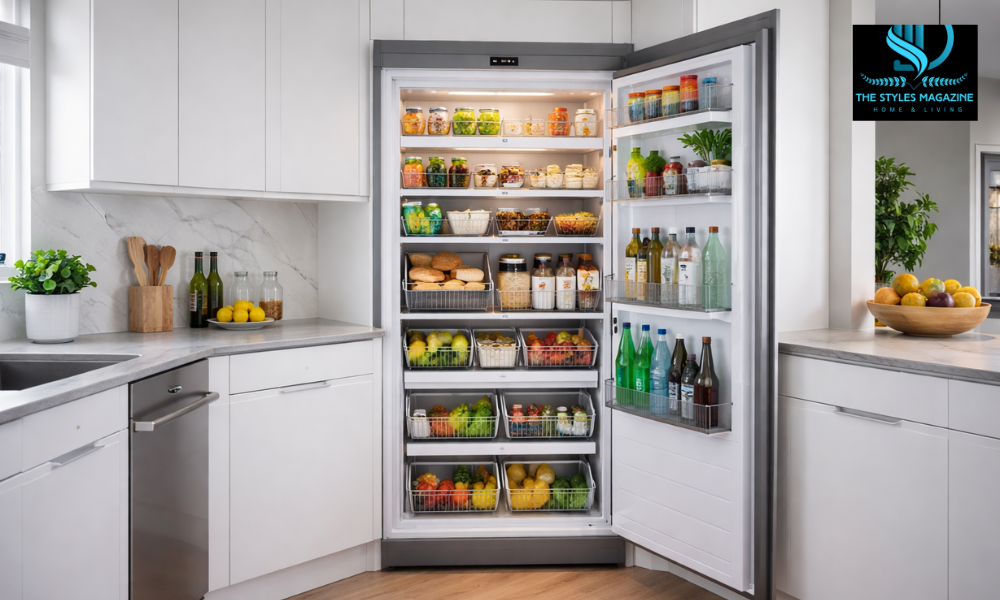
- Keep a jug or bottle of drinking water in the refrigerator instead of running the tap until it feels cold.
- When hand-washing dishes or produce, use a bowl, basin, or filled sink where practical.
- Sweep patios, paths, and driveways rather than automatically cleaning them with a hose.
- Water plants according to soil moisture, weather, season, and plant needs rather than a fixed daily habit.
ENERGY STAR advises running full dishwasher loads when possible and scraping rather than pre-rinsing dishes because unnecessary rinsing increases water and energy use.
For anyone who wants only 5 ways to save water at first, start with turning off unused taps, shortening showers, fixing leaks, running full appliance loads, and avoiding unnecessary outdoor watering. These changes are easy to remember and can become part of normal daily life.
Make the Bathroom Your First Water-Saving Priority
The bathroom deserves attention because showers, toilets, and taps are used every day. Start with shower time. A shower can be efficient when it is reasonably short, but a long shower can use more water than expected. There is no need to chase an uncomfortable time limit; the useful habit is to wash normally and avoid extra minutes of running water.
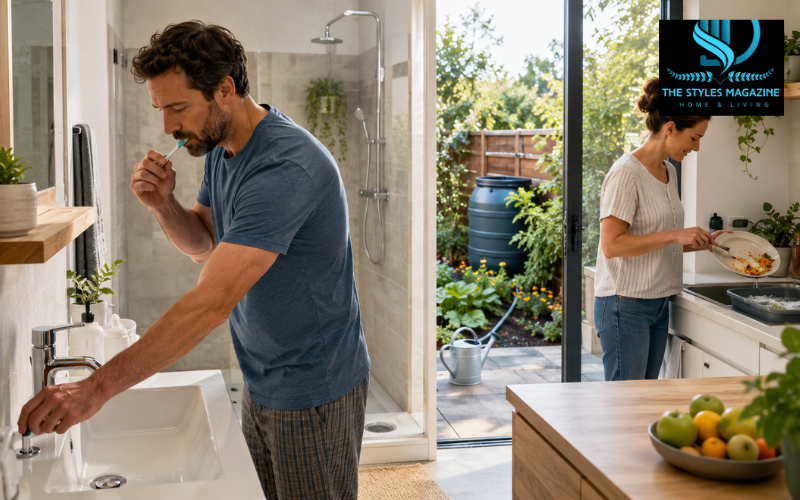
The same idea applies at the sink. Turn off the tap while brushing your teeth or shaving, and do not leave it running while you search for toiletries or wait between steps. EPA specifically recommends turning off bathroom taps when brushing or shaving.
Baths and showers should be judged by actual water use rather than a blanket rule. A short shower with an efficient showerhead is often a sensible choice, while a very long shower may cancel that advantage. Small habits matter most when they are easy enough to repeat every day.
Stop Toilet and Plumbing Leaks Before They Waste More Water
Some leaks are obvious, but toilet leaks can be almost silent. One easy check is the dye test. Add a few drops of food coloring to the toilet tank, wait about 10 minutes without flushing, and look at the bowl. If color appears, water is leaking from the tank into the bowl. Flush afterward so the coloring does not stain. EPA currently recommends this method for checking toilet leaks.
Also check for dripping taps, damp pipe joints, loose showerhead connections, wet areas around appliances, and leaking outdoor taps. If you suspect a hidden leak, compare the water meter before and after a period when nobody uses water.
Simple jobs such as replacing a worn toilet flapper, washer, or aerator may be manageable for a confident homeowner. Call a qualified plumber when a leak is hidden, persistent, linked to damaged pipework, or beyond your ability to repair safely.
Choose Water-Efficient Toilets, Showerheads, and Faucets
Once leaks and habits are under control, efficient fixtures can reduce water use without requiring you to think about every drop. Low-flow showerheads limit the amount of water delivered while still aiming to provide a useful spray. Faucet aerators mix air into the stream and can reduce flow at suitable sinks.
In the United States, WaterSense-labeled showerheads, bathroom faucets, faucet accessories, and toilets must meet EPA efficiency and performance criteria. WaterSense showerheads, for example, are limited to a maximum flow of 2.0 gallons per minute, while labeled bathroom faucets and accessories are designed to reduce flow without sacrificing normal performance.
Outside the United States, look for the recognized water-efficiency label or standard used in your country. If an existing fixture works well, a compatible aerator or showerhead replacement may be enough. Avoid placing bottles, bricks, or other objects inside modern toilet tanks. They can interfere with flushing, damage components, or create repeat flushes that defeat the purpose.
Reduce Water Waste in the Kitchen
Kitchen water savings are mostly about avoiding unnecessary running water. If you have a modern dishwasher, use it as designed, load it correctly, and run an appropriate full load. Scrape off food scraps rather than automatically rinsing every plate. ENERGY STAR guidance says dishwashers use about the same amount of water for a cycle regardless of how many dishes are inside, which is why fuller loads are generally more efficient.
When washing by hand, fill a sink or basin instead of leaving the tap running continuously. The same idea works for washing fruit and vegetables when appropriate. Keep drinking water chilled in the refrigerator if you regularly run the tap waiting for cold water.
Plan ahead when defrosting frozen food. Refrigerator thawing avoids the need to run water and is one of the safe thawing methods recommended by the USDA Food Safety and Inspection Service. Cold-water and microwave thawing are also recognized methods when handled correctly; hot-water thawing is not recommended.
Make Laundry and Water-Using Appliances More Efficient
A washing machine can be used more efficiently by matching the cycle and water level to the load. For machines that automatically sense the load, follow the manufacturer’s instructions and avoid overpacking the drum. For other models, select a suitable water level. Where practical, combine compatible items so you are not running several small washes that could have been one sensible load.
Eco or water-saving cycles can be useful, but the correct setting depends on the appliance and how dirty the items are. Avoid repeat washes caused by overloading, too much detergent, or the wrong program.
When it is time to replace a washing machine or dishwasher, compare water use as well as purchase price and energy use. In the United States, dishwashers and clothes washers are among the appliance categories that can earn ENERGY STAR certification rather than the WaterSense label. Regularly inspect hoses, seals, filters, and connections so a small fault does not become a hidden source of water loss.
Use Less Water in the Garden and Around the Home
Outdoor water use can rise quickly when irrigation is based on routine rather than need. Check the soil before watering, consider recent rainfall, and learn what your plants actually require. Plants suited to the local climate usually fit local growing conditions better, and grouping plants with similar water needs makes irrigation easier to manage.
Mulch can reduce evaporation and help soil hold moisture for longer. EPA landscaping guidance also recommends healthy soil management and notes that mulch can reduce evaporation and the need for frequent watering.
If you use irrigation, inspect it for leaks, broken heads, overspray, and runoff. Drip or micro-irrigation can be useful in suitable planting areas, while weather- or soil-moisture-based controllers can prevent watering when conditions do not require it.
Sweep hard surfaces instead of routinely hosing them. If you have a swimming pool, a properly used cover can greatly reduce evaporation and the need for replacement water.
Collect Rainwater and Reuse Water Safely
Rainwater collection can reduce the need to use treated tap water for suitable non-drinking purposes. Depending on local rules and the system you use, collected rainwater may be useful for garden irrigation or other approved outdoor tasks. Rain barrels are simple options for small gardens, while larger tanks need more careful design, overflow control, screening, and maintenance.
Greywater is different from rainwater. It generally refers to wastewater from selected household sources, such as certain sinks, showers, or laundry, rather than toilet waste. Reuse systems may collect and treat greywater, rainwater, stormwater, or other sources for non-potable uses. EPA emphasizes treatment and appropriate end use in onsite non-potable reuse systems.
Do not assume untreated reused water is safe for drinking, cooking, or every garden use. Rules differ by location, and safe systems may require treatment, separate plumbing, backflow protection, or permits. Check local health, building, and water regulations before setting up anything beyond simple approved rainwater collection.
How to Reduce Water Usage in the Workplace
The same basic principles that work at home also work in offices and other workplaces: measure use, find leaks, reduce unnecessary flow, and improve equipment when it makes practical sense. Check toilets, taps, kitchens, cleaning areas, irrigation systems, and any equipment that uses water. Unusual increases in meter readings or bills can point to leaks or equipment problems.
EPA guidance for commercial and institutional buildings recommends developing a water-management plan, assessing water use, repairing leaks promptly, using efficient bathroom fixtures, and improving landscaping and irrigation practices.
Staff habits matter, but endless reminder signs are rarely enough by themselves. Make the efficient option easy: repair faults quickly, set equipment correctly, provide clear reporting for leaks, and use cleaning methods that do not depend on running water unnecessarily. For larger workplaces, regular meter or submeter checks can help identify abnormal use before it becomes expensive.
How Lower Water Use Helps the Environment
Reducing water use is not only about lowering a household bill. Fresh water often has to be collected, treated, pumped, distributed, and, after use, treated again. Hot water also requires energy to heat. Using water more efficiently can therefore reduce both demand on water supplies and some of the energy connected with water treatment, movement, and heating. EPA WaterSense specifically links water efficiency with water and energy savings.
Conservation becomes especially valuable during droughts, dry seasons, and periods of high demand, but it still matters when local supplies appear healthy. Avoiding waste can reduce pressure on treatment and delivery systems and leave more flexibility for communities as conditions change.
Outdoors, careful irrigation can also reduce runoff caused by applying water faster or more often than the soil can absorb it. The environmental goal is not to stop using water. It is to use it where it provides a real benefit and avoid losing it through leaks, evaporation, overwatering, or unnecessary flow.
Water-Saving Mistakes That Can Work Against You
Good intentions can still lead to poor results. One common mistake is assuming that every shower uses less water than every bath. Flow rate and shower length matter, so a long shower can use more water than a carefully filled bath.
Another mistake is treating an eco setting as permission to run an appliance half-empty. Efficient programs help, but sensible loading still matters. Overloading can also be counterproductive if dishes or clothes need to be washed again.
Outdoors, watering on the same schedule regardless of rain, season, or soil moisture can waste water and harm plants. Hidden leaks are another easy problem to miss because a small drip or silent toilet leak may continue for weeks.
Avoid improvised tricks such as putting bricks or random containers in modern toilet cisterns. Choose compatible, tested fixtures instead. Be equally careful with greywater and rainwater: reuse can be useful, but only when the water is suitable for the intended purpose and the system follows local safety rules. Finally, do not replace working equipment simply because a product is marketed as “water-saving.” Check recognized efficiency information, actual performance, compatibility, and whether replacement is genuinely needed.
Conclusion
The most practical answer to how to reduce water usage is to work in a sensible order: find waste, fix leaks, improve everyday habits, and then consider efficient upgrades. This approach avoids turning water conservation into a complicated project and helps you focus first on changes that cost little or nothing.
Check your bills or meter from time to time so you can see whether your habits are working and notice unusual increases early. Keep showers reasonable, turn off unused taps, run appliances efficiently, water plants according to real conditions, and repair leaks when you find them.
The goal is not to use the smallest possible amount of water at all times. It is to stop wasting water while still meeting normal household, hygiene, food, cleaning, and garden needs. When simple water-saving habits become part of your routine, they are far more likely to last than strict rules that are difficult to maintain.
Frequently Asked Questions
What Is The Easiest Way To Reduce Water Usage At Home?
Start by stopping unnecessary running water and checking for leaks. Turning off taps when they are not needed, shortening showers, and repairing leaking toilets or faucets require little effort and no major renovation.
Which Part Of The Home Should I Focus On First?
The bathroom is a sensible starting point because toilets, showers, and faucets are used frequently. EPA WaterSense reports that more than half of indoor household water use occurs in the bathroom.
Does Using A Dishwasher Save Water?
An efficient dishwasher can be a water-smart option when used correctly. Avoid routinely pre-rinsing dishes, scrape off food instead, and run appropriately full loads because dishwasher water use changes little with load size.
How Can I Reduce Water Usage In The Garden?
Water according to weather, soil moisture, and individual plant needs rather than following the same schedule every day. Mulch can also reduce evaporation and help soil retain moisture for longer.
Do Water-efficient Fixtures Really Make A Difference?
Yes. Efficient fixtures are designed to provide normal performance while using less water. Look for recognized efficiency standards in your country; in the United States, WaterSense products meet EPA efficiency and performance requirements.
Enjoyed it? Find more exclusive content on The Styles Magazine.
Disclaimer: The information in this article is provided for general water-conservation guidance. Water quality, plumbing systems, drought restrictions, rainwater collection rules, greywater regulations, and approved efficiency standards vary by location. Follow local water-authority, health, building, and plumbing requirements, and consult a qualified professional for leaks, plumbing repairs, or water-reuse systems that require specialist installation.