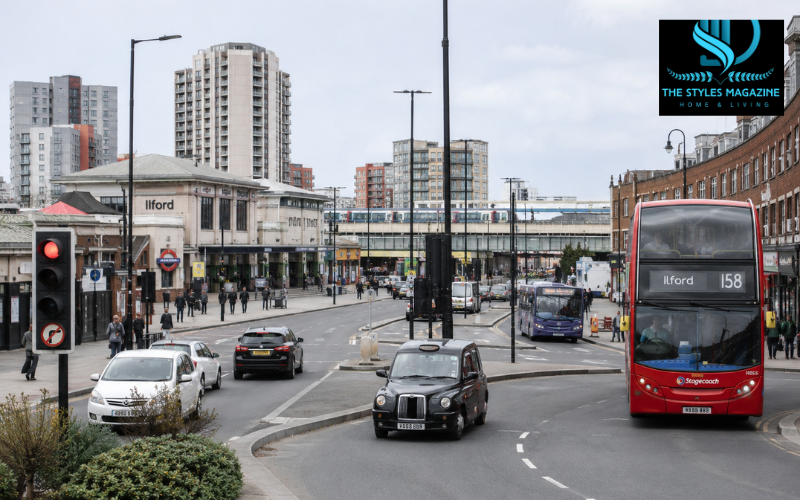
Ask any tenant viewing a flat near Ilford station what sold them on the area, and the answer almost always comes back to the same thing before they’ve even mentioned the flat itself. It’s the journey time. Ilford station now sits on the Elizabeth Line, putting Liverpool Street around 17 to 18 minutes away and Canary Wharf within roughly 24 minutes, and that single fact has reshaped the local rental market more than almost anything else in the past few years. Anyone speaking to lettings agents in Ilford for residential properties will hear the same thing repeated constantly — transport isn’t just one factor among many here, it’s the factor most tenants lead with.
Why The Commute Changes Everything
A sub-20-minute run into the City or Canary Wharf puts Ilford in a genuinely different category to most outer London locations. Average rents here sit around £1,693 a month, which is considerably below what a tenant would pay for similar space closer to central London, while still offering a commute that’s realistically shorter than plenty of inner-London postcodes manage on a bad day. That gap between cost and convenience is really the entire story. Tenants doing the maths quickly work out that paying less for a flat here, while still reaching Liverpool Street in under 20 minutes, beats paying considerably more to shave off another five or ten minutes elsewhere.
Rental growth in the area has reflected this too, running close to 9% annually in recent reporting, well above what a lot of comparable outer London locations have managed. That’s not something happening in isolation — it’s tied directly to the Elizabeth Line’s arrival and the ongoing regeneration work that’s followed it into the town centre.
Not Every Tenant Wants The Same Thing
It’s worth being honest that “close to the station” doesn’t mean the same thing to everyone renting in Ilford. Young professionals and couples chasing the fastest possible commute tend to cluster tightly around the main station itself, often in newer flats built specifically with that tenant in mind. Turnover on these streets tends to be quicker too — people move on for job changes, relationships, or simply upgrading once they’ve saved enough, so landlords here see a fairly steady churn of new tenants rather than long, settled tenancies.
Move a bit further out towards Gants Hill or Newbury Park and the picture shifts. These areas lean more on the Central Line than the Elizabeth Line, and the tenant profile changes with it — more families, more people prioritising proximity to Valentines Park and decent schools over shaving a few extra minutes off the commute. It’s a genuinely different kind of demand, and treating the whole of Ilford as one rental market misses this distinction entirely.
What’s Actually Being Built, And Were
Landlords and developers have followed the tenant demand fairly predictably. New apartment blocks have concentrated heavily around the station itself, aimed at single renters and couples who want low-maintenance living within walking distance of the platform. Streets feeding directly into the station also see a noticeably higher concentration of shared housing and houses in multiple occupation, which makes sense given how many of the tenants drawn here are young, working, and not necessarily looking to rent a whole property to themselves.
This isn’t universally popular locally, worth saying. Some residents on quieter streets near the station have raised concerns about the density of shared housing changing the character of roads that were previously more settled family homes. It’s a tension that comes up in most well-connected commuter towns eventually, and Ilford is no exception.
What This Means For Landlords Weighing Up Where To Invest
For anyone looking at buy-to-let in the area, proximity to a station on the Elizabeth Line corridor tends to be the single strongest predictor of both occupancy and achievable rent. Properties within a ten-to-fifteen-minute walk of Ilford, Seven Kings, or Goodmayes stations consistently see stronger demand than equivalent properties further out, and that premium tends to hold up even when the wider market softens.
That said, chasing the absolute closest street to the station isn’t automatically the smartest move. The areas slightly further out, appealing more to families than commuters, often deliver steadier, longer tenancies with less turnover and fewer void periods between lets. It really depends on what kind of landlord someone wants to be — high turnover with strong yields near the station, or a calmer, more settled letting further into the surrounding streets.
The Bigger Picture
None of this is likely to reverse any time soon. The Elizabeth Line isn’t going anywhere, and the regeneration work tied to it across Ilford town centre is still ongoing rather than finished. For tenants, that means the affordability gap between Ilford and more central postcodes should hold for a while yet. For landlords, it means the fundamentals driving demand here are structural rather than a passing trend — which is exactly the kind of thing worth building a long-term letting strategy around.
Enjoyed it? Find more exclusive content on The Styles Magazine.