Learning how to clean slate tiles correctly can help you keep their natural color, texture, and finish looking good for years. Slate is durable, but it is still a natural stone. Its uneven surface can trap dust and dirt, while some cleaning products or rough tools may damage the finish, sealer, or surrounding grout.
The safest routine is simple. First, remove loose dust and grit with a soft broom or suitable vacuum attachment. Next, clean the surface with warm water and a pH-neutral cleaner made for natural stone. Use only a damp mop or cloth rather than soaking the tiles. After cleaning, rinse away any remaining cleaner and dry the slate well.
Vinegar, lemon juice, abrasive powders, stiff brushes, and other aggressive cleaners are best avoided. Natural-stone care guidance generally recommends neutral or mild cleaners instead.
The exact method may vary slightly for rough floors, bathrooms, showers, outdoor slate, black tiles, and stained areas. The following sections explain each situation.
Quick Guide Table
| Cleaning Need | Recommended Method | Avoid |
| Regular cleaning | Soft broom + pH-neutral cleaner | Harsh chemicals |
| Rough slate | Soft-bristled brush | Wire brushes |
| Shower slate | Stone-safe cleaner + rinse | Acidic bathroom cleaners |
| Black slate | Light cleaner + microfiber drying | Excess soap |
| Stains | Stone-safe spot treatment | Aggressive scrubbing |
| Outdoor slate | Sweep, rinse, gentle stone cleaner | Unnecessary harsh cleaners |
Quick Step-by-Step Guide
- Sweep or vacuum loose dust and grit.
- Mix warm water with a pH-neutral stone cleaner.
- Damp mop or wipe the slate gently.
- Rinse with clean water to remove residue.
- Dry with a soft microfiber cloth.
- Treat stains separately if needed.
Why Slate Tiles Need Special Cleaning
Slate is a natural stone formed in layers. It often has a slightly rough or cleft surface instead of the smooth, even finish found on many ceramic tiles. Those small dips, ridges, and grooves give slate its attractive appearance, but they can also collect grit, soap residue, moisture, and dirty cleaning water.
Slate also varies from one installation to another. Some types are dense and absorb very little water, while others are more porous. A penetrating sealer may be applied to reduce staining and moisture absorption, especially in areas exposed to spills or regular water.
Sealed slate still needs careful cleaning. A sealer does not make the stone completely stain-proof, and harsh products can affect the protective treatment. Slate is also softer than harder stones such as granite, making scratches and abrasion a concern.
For this reason, gentle tools, limited moisture, and stone-compatible cleaners are usually the safest choices.
What You Need to Clean Slate Tiles
You do not need a large collection of cleaning products to maintain slate.
Start with a soft-bristled broom or a vacuum fitted with a soft floor or brush attachment. Avoid allowing a rotating beater bar to scrape across the stone. For wet cleaning, have a microfiber mop or soft cloth, a bucket, clean water, and a soft-bristled hand brush for textured areas.
For the cleaning solution, warm water mixed with a small amount of mild liquid dish soap may be suitable for basic cleaning. A better choice when you are unsure is a commercial pH-neutral natural-stone cleaner used according to its label.
The Natural Stone Institute recommends neutral cleaners, stone soap, or mild liquid dishwashing detergent with warm water for routine natural-stone care. It also notes that using too much cleaner can leave film and streaks.
Avoid wire brushes, scouring powders, strongly acidic products, and cleaners not labeled as suitable for natural stone.
Step-by-Step Method for Cleaning Slate Tiles
For most indoor slate floors and walls, a simple cleaning routine works well.
- Remove loose dirt first. Sweep with a soft broom or vacuum carefully to collect sand, hair, crumbs, and grit. Do not skip this step because loose particles can scratch the surface when moved around by a wet mop.
- Prepare the cleaner. Add the recommended amount of pH-neutral stone cleaner to warm water. If you are using mild dish soap, use only a small amount. Too much soap can leave a dull-looking film.
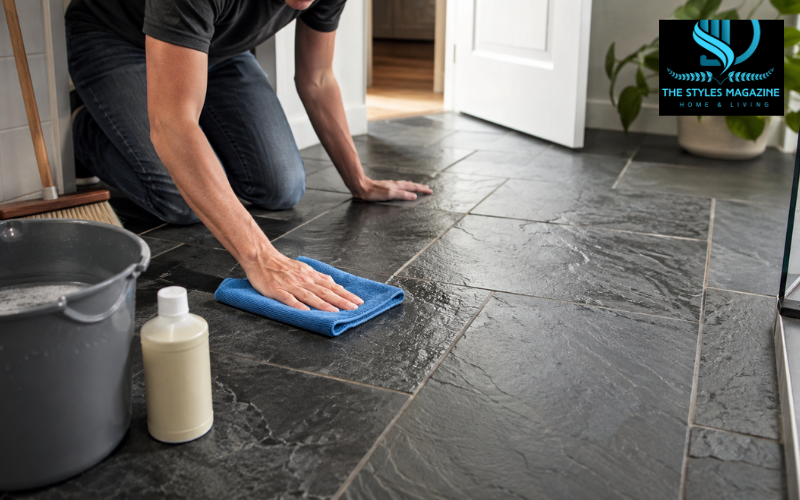
- Damp clean the slate. Wet your microfiber mop or cloth and wring it out thoroughly. The material should be damp, not dripping. Work in manageable sections and rinse the mop regularly rather than spreading dirty water across the floor.
- Rinse the surface. Go over the slate again with clean water to remove soap or cleaner residue.
- Dry the tiles. Use a soft microfiber towel or allow good airflow to dry the surface. Drying helps reduce water spots and streaks.
This basic process is also recommended by current slate-care guidance from tile specialists.
How to Clean Rough Slate Floor Tiles
Understanding how to clean rough slate floor tiles is especially important because textured slate holds more dirt than a smooth surface.
Begin by sweeping or vacuuming carefully in more than one direction. This helps lift grit trapped between raised areas. When dry cleaning is not enough, apply a small amount of diluted pH-neutral stone cleaner and gently work it into the textured surface with a soft brush.
Do not scrub aggressively. Slate can have naturally layered edges, and repeated hard scrubbing may scratch the surface or loosen small flaky areas.
Use only enough cleaning solution to wet the area being cleaned. On deeply textured flooring, excess dirty water can settle into low spots or grout lines. Mop or wipe it up frequently and replace dirty rinse water as needed.
After cleaning, rinse with fresh water and absorb remaining moisture with clean towels. Allow the floor to dry completely before replacing rugs or moving heavy items back into position.
How to Clean Slate Tiles in a Bathroom
If you are wondering how to clean slate tiles in a bathroom, the main challenge is usually a mixture of dust, water marks, soap residue, cosmetics, and everyday grime.
Start by removing loose hair and dust. Clean the slate with a damp microfiber cloth or mop and a pH-neutral cleaner that is approved for natural stone. Pay particular attention to grout joints, edges around the bathtub, and areas close to the sink where residue can collect.
Avoid assuming that every bathroom cleaner is safe for slate. Many products are designed for ceramic tile and may contain acids or aggressive ingredients. Check the label before applying a cleaner to natural stone or a sealed surface.
Moisture control also makes future cleaning easier. Dry obvious puddles, use an exhaust fan where available, and allow the room to ventilate after bathing. This reduces the amount of moisture that remains on the tiles and in the grout.
How to Clean Slate Tiles in a Shower
The method for how to clean slate tiles in shower areas needs to deal with soap film and body-product residue while remaining gentle on the stone.
Rinse the shower with clean water first to loosen surface debris. Apply a non-acidic, natural-stone-safe cleaner and allow it to work for the amount of time stated on the product label. Use a soft brush or cloth on textured tiles, grout lines, corners, and areas where soap tends to accumulate. Avoid abrasive pads that can scratch the surface.
Rinse thoroughly when finished. Leaving cleaner behind can create a cloudy film, especially on darker slate.
The Natural Stone Institute recommends using a squeegee in bath and other wet areas to reduce soap-scum buildup. It also advises choosing a non-acidic product when soap scum needs cleaning.
Regular rinsing, drying, and ventilation usually make heavy scrubbing less necessary.
How to Clean Slate Tiles Outdoors
Outdoor slate is exposed to soil, leaves, rain, dust, foot traffic, and sometimes moss or algae. The safest way to approach how to clean slate tiles outdoor is to begin with the least aggressive method.
Sweep away leaves, loose soil, sand, and plant debris. Pay attention to joints and natural grooves where organic material collects. Rinse lightly with clean water if appropriate for the installation, then clean stubborn dirt with a product labeled for exterior natural stone.
Use a soft or medium-soft brush rather than a metal brush. If moss, algae, or staining remains, select a treatment specifically approved for the type of natural stone you have and follow its dilution and safety directions.
Outdoor cleaning should also address the reason dirt keeps returning. Poor drainage, shaded damp areas, leaking gutters, or standing water can encourage repeated buildup.
Before resealing exterior slate, allow the surface to dry properly and check whether the existing sealer actually needs renewal.
How to Clean Black Slate Tiles Without Leaving Streaks
Black and other dark slate tiles can make cleaning residue particularly noticeable. Dust, hard-water deposits, soap film, and dried droplets may leave pale marks that stand out against the dark surface.
When learning how to clean black slate tiles, using less cleaner is often better than using more. Dilute a pH-neutral stone cleaner according to its instructions and avoid pouring concentrated product directly onto the floor.
Clean a small section at a time. Rinse the mop or cloth frequently so dirty water is not spread across the slate. Once the area is clean, use fresh water for a final rinse.
Finish by drying and gently buffing the surface with a clean microfiber cloth. This removes remaining droplets before they dry into visible spots.
If black slate still looks cloudy after cleaning, cleaner buildup may be responsible. Repeated rinsing with clean water can sometimes improve the appearance without adding another cleaning chemical.
How to Clean Stains from Slate Tiles
There is no single method for how to clean slate tiles stains because stain removal depends on what caused the mark.
First, determine whether you are dealing with oil, grease, food, drinks, cosmetics, organic material, rust, paint, or simple surface dirt. Blot fresh spills instead of rubbing them farther across the stone.
For ordinary food or drink residue, begin with a pH-neutral natural-stone cleaner. Oil-based stains can soak below the surface and may require a product designed to draw oil from stone. The Natural Stone Institute explains that identifying the stain is an important first step and that deeper staining may require a poultice rather than normal surface cleaning.
Always test a stain treatment in a hidden area before applying it widely. This is especially important on dark, multicolored, sealed, or enhanced slate.
If a stain has penetrated deeply, keeps returning, or cannot be identified, professional stone cleaning may be safer than repeatedly trying stronger household chemicals.
Can You Clean Slate Tiles With Vinegar?
A common question is how to clean slate tiles with vinegar, since vinegar is often suggested as a general household cleaner. For natural slate, however, it is safer to choose another product.
Slate itself can have relatively good chemical resistance, but natural slate varies in mineral content, finish, grout, and sealer. Acidic cleaners may also affect components of the installation even when the stone appears unaffected.
For that reason, current slate and natural-stone care guidance recommends avoiding vinegar, lemon juice, and other acidic cleaning solutions. The Tile Shop specifically advises against acidic cleaners such as vinegar and lemon juice when cleaning slate, while the Natural Stone Institute recommends neutral products for routine natural-stone care.
Instead, use warm water with a small amount of suitable mild soap or, preferably, a pH-neutral cleaner labeled for natural stone. For heavy buildup, choose a specialized non-acidic stone cleaner rather than making the solution stronger.
Choosing the Best Slate Floor Cleaner
The best slate floor cleaner is not necessarily the strongest one. For regular maintenance, look for a pH-neutral product clearly labeled for use on natural stone.
Read the directions carefully. Some cleaners are concentrated and must be diluted before use. Using too much product can create sticky residue or streaks instead of making the floor cleaner.
Also check whether the cleaner is compatible with your particular finish and sealer. This matters if the slate has been treated with a color enhancer, topical coating, or penetrating sealer.
Warm water and a very small amount of mild dish soap can work for light routine cleaning when suitable for the installation. A dedicated stone cleaner is often a better choice for larger floors, repeated cleaning, or situations where you do not know how the stone will react to a general-purpose product.
Current slate-care guidance continues to recommend pH-neutral natural-stone cleaners and thorough rinsing rather than acidic solutions.
Keeping Slate Tiles Clean and Properly Sealed
Good maintenance reduces the need for deep cleaning. Sweep or vacuum slate regularly so sand and grit are removed before they can scratch or become trapped in textured areas.
Deal with spills quickly, especially oil, drinks, cosmetics, and strongly colored liquids. Blot first, then clean the spot with a suitable product.
Slate sealing requirements are not identical for every floor. Natural-stone sealers generally make stone more stain resistant rather than completely stain-proof, and some slate may need sealing more often than other types. The Natural Stone Institute recommends following the stone supplier or sealer manufacturer’s guidance instead of assuming every surface needs the same schedule.
A simple water-drop test can provide a useful clue. Place a few drops of water on clean, dry slate. If the stone quickly darkens as the water absorbs, the existing protection may need to be checked. If water continues to bead, resealing may not yet be necessary. MSI also recommends this type of test as part of slate maintenance.
Avoid adding new coats simply because a calendar date has arrived. Follow the instructions for the specific sealer already used.
Conclusion
Knowing how to clean slate tiles is mostly about using gentle methods consistently. Remove loose grit before washing, choose a pH-neutral or otherwise stone-safe cleaner, keep the mop or cloth damp rather than soaking wet, rinse away residue, and dry the surface well.
Avoid vinegar, lemon juice, abrasive powders, hard scrubbing tools, and cleaners that are not suitable for natural stone. For stains, identify the cause before applying treatment, and use specialist help when a mark has penetrated deeply.
The best cleaning routine also depends on where the slate is installed. Shower slate needs good rinsing and ventilation, outdoor tiles need regular debris removal, and black slate benefits from careful rinsing and drying to reduce streaks.
With routine maintenance and sensible sealing practices, slate usually does not need aggressive deep cleaning. Gentle, regular care is the safer way to preserve its natural appearance.
FAQs
What Is The Best Way To Clean Slate Tiles?
Sweep away loose dirt, then clean slate with warm water and a pH-neutral natural-stone cleaner. Rinse afterward and dry the tiles to reduce streaks and water marks.
Can You Use Vinegar To Clean Slate Tiles?
Vinegar is generally not recommended for slate installations because its acidity may affect natural stone, grout, or sealers. A pH-neutral stone cleaner is a safer choice.
How Do You Clean Rough Slate Floor Tiles?
Vacuum or sweep first, then use a soft-bristled brush with diluted stone-safe cleaner to loosen dirt from grooves. Rinse carefully and remove dirty water before it settles.
How Do You Remove Stains From Slate Tiles?
Identify the type of stain first. Begin with a pH-neutral stone cleaner and use a suitable stone stain treatment when necessary. Test any treatment on a hidden area.
How Often Should Slate Tiles Be Cleaned?
Sweep or vacuum slate regularly and damp clean it whenever dirt or residue becomes visible. High-traffic floors, bathrooms, and showers may need more frequent routine cleaning.
Enjoyed it? Find more exclusive content on The Styles Magazine.
Disclaimer: Slate types, finishes, grout, and sealers vary. Always check product instructions and test any cleaner on a small hidden area before treating the entire surface.