Heat pump maintenance is the routine care that helps a heat pump heat and cool a home efficiently throughout the year. It includes simple homeowner tasks, such as checking filters and keeping the outdoor unit clean, as well as professional inspections of electrical parts, refrigerant performance, coils, controls, and airflow.
Because a heat pump can operate during both summer and winter, it may work for more months of the year than a cooling-only air conditioner. Keeping it clean and checking it regularly can reduce unnecessary strain, support steady indoor temperatures, and help prevent small problems from turning into expensive repairs.
ENERGY STAR recommends checking heat pump filters every month and cleaning or replacing them when dirty. It also recommends professional pre-season HVAC maintenance to keep equipment operating properly.
This guide explains a practical heat pump maintenance routine, what homeowners can safely do themselves, when professional help is needed, typical maintenance costs, and warning signs that should not be ignored.
Quick Heat Pump Maintenance Guide
| Maintenance Task | Recommended Timing | Who Should Do It |
| Check air filter | Monthly | Homeowner |
| Clean or replace filter | When dirty, often every 1–3 months | Homeowner |
| Clear outdoor unit debris | Monthly or seasonally | Homeowner |
| Check vents and returns | Monthly | Homeowner |
| Inspect condensate drainage | Seasonally | Homeowner |
| Full system inspection | At least annually | HVAC technician |
| Refrigerant/electrical checks | During professional service | HVAC technician |
Simple Heat Pump Maintenance Checklist
- Check and clean or replace the air filter.
- Keep indoor vents and return openings clear.
- Remove leaves, grass, and debris around the outdoor unit.
- Look for water leaks, unusual ice, odors, or noises.
- Keep visible condensate drainage areas clear.
- Schedule regular professional HVAC maintenance.
- Follow the maintenance instructions provided by the heat pump manufacturer.
Why Regular Heat Pump Maintenance Matters
A heat pump depends on steady airflow and good heat transfer. Dust, blocked filters, dirty coils, leaves around the outdoor unit, and neglected components can interfere with both.
A dirty air filter, for example, slows airflow and forces the system to work harder to move heated or cooled air through the home. ENERGY STAR notes that dirty filters can increase energy use and contribute to early equipment problems.
Regular residential heat pump maintenance can also help homeowners notice changes before the system stops working. Weak airflow, unusual sounds, water around the indoor unit, or unexpected changes in energy use may be early signs that attention is needed.
Maintenance cannot prevent every breakdown, and an older component can still fail unexpectedly. However, routine care gives the system a better chance of operating reliably and efficiently throughout its expected service life.
Heat Pump Maintenance Checklist for Homeowners
A useful heat pump maintenance checklist does not need to be complicated. Most homeowner tasks involve keeping the system clean, maintaining airflow, and watching for unusual changes.
A simple routine includes:
- Check the air filter every month and clean or replace it when necessary.
- Keep supply vents and return-air openings fully open and free from furniture, rugs, curtains, or other objects.
- Remove leaves, weeds, grass clippings, snow, and other debris from around the outdoor unit.
- Look at accessible condensate drainage areas for standing water or obvious blockage.
- Check the indoor and outdoor units for unusual moisture or ice.
- Listen for new rattling, grinding, buzzing, or other unusual sounds.
- Pay attention if the home suddenly takes longer to reach the thermostat setting.
These checks are mainly observational. Homeowners generally do not need to open electrical compartments, handle refrigerant lines, or disassemble the system.
Keeping this checklist somewhere easy to find—or turning it into a simple heat pump maintenance PDF for personal use—can make monthly and seasonal checks easier to remember.
How Often a Heat Pump Should Be Maintained
Maintenance frequency depends on the system, household conditions, climate, and manufacturer instructions. However, a few general intervals are useful.
ENERGY STAR advises checking HVAC filters every month, especially during periods of heavy heating or cooling. If a filter is dirty, it should be cleaned or replaced according to the equipment and filter instructions. Some filters may last up to three months, while homes with pets, construction dust, heavy system use, or other airborne particles may need more frequent attention.
Homeowners can also give the indoor and outdoor units a quick visual check each month.
Professional service is commonly recommended at least once each year. Since heat pumps provide both heating and cooling, many contractors recommend inspections before the major cooling and heating seasons. ENERGY STAR specifically recommends pre-season checkups, with cooling equipment checked in spring and heating equipment in fall.
Always give the maintenance schedule in the equipment owner’s manual priority when it differs from general guidance.
Cleaning and Replacing Heat Pump Air Filters
The air filter is one of the easiest parts of a heat pump system to maintain, but it has an important job. It helps keep dust and other particles from building up inside the equipment while allowing air to move through the system.
When a filter becomes heavily loaded with dirt, airflow can fall. The heat pump may then run longer or struggle to maintain comfortable temperatures.
Check the filter monthly and look for visible dust buildup. Disposable filters should be replaced with the correct size and type recommended for the system. Reusable filters should be cleaned according to the manufacturer’s directions and allowed to dry properly before being reinstalled.
Do not assume that a thicker or more restrictive filter is automatically better. A filter that is not suitable for the equipment can restrict airflow. Similarly, installing the filter backward or using the wrong dimensions can cause problems.
ENERGY STAR recommends cleaning heat pump filters when visibly dirty or when the unit’s filter indicator signals that cleaning is needed.
Outdoor Heat Pump Unit Maintenance
The outdoor unit needs open airflow to exchange heat with the outside air. Leaves, weeds, grass clippings, snow, and dirt around the cabinet can reduce that airflow.
Regularly remove loose debris from around the unit and trim back nearby plants. The exact clearance requirement depends on the manufacturer and installation, so the owner’s manual should be the final guide. As a practical rule, the surrounding area should remain open enough for unrestricted airflow and technician access.
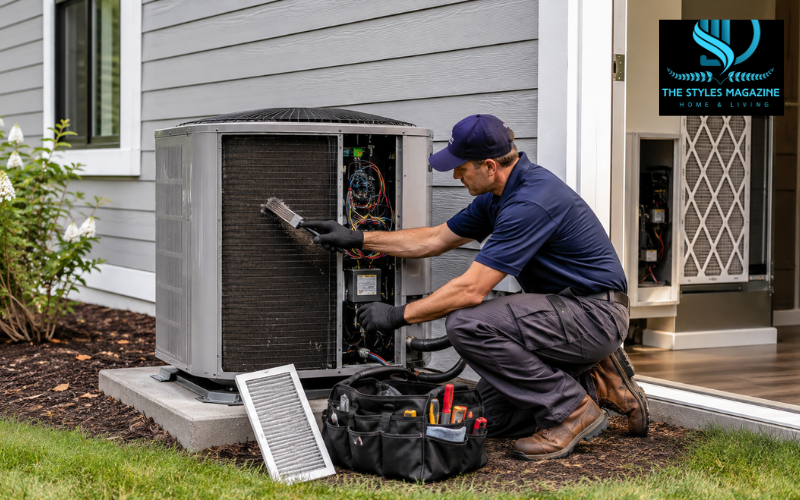
If the outside coil has light surface dirt, some systems can be gently rinsed after the power has been safely switched off. Avoid strong pressure, aggressive brushes, or anything that might bend the thin coil fins. Never remove electrical panels or disturb refrigerant tubing during routine DIY cleaning.
During winter, check for leaves, heavy snow, or other material blocking the unit. A short period of frost followed by a defrost cycle can be normal, but a unit that stays heavily iced may need professional attention.
Indoor Unit, Vents, and Condensate Drain Care
Indoor airflow deserves the same attention as the outdoor unit. Supply registers should remain open, and return-air openings should not be covered by furniture or other household items.
Look for heavy dust around accessible vents and the indoor unit. Cleaning normal household dust from registers is reasonable, but deeper blower or coil cleaning is usually better left to a trained technician.
When a heat pump operates in cooling mode, moisture can collect on the indoor coil and drain away through the condensate system. A blocked drain can lead to water buildup, humidity problems, or property damage. ENERGY STAR includes condensate-drain inspection as part of professional HVAC maintenance.
Homeowners can watch for standing water, unusual dripping, damp areas, or a drain that appears to be backing up. Avoid pouring chemicals into the drainage system unless the equipment manufacturer specifically recommends a safe method.
Repeated leaks or water around electrical components should be handled professionally.
What Professional Heat Pump Maintenance Includes
Professional heat pump maintenance goes beyond basic cleaning. A technician can inspect parts that homeowners should not normally service themselves.
A typical appointment may include checking thermostat operation, electrical connections, system controls, condensate drainage, blower performance, coils, and overall heating and cooling operation. The technician may also evaluate refrigerant performance and look for signs of leakage or an incorrect charge.
ENERGY STAR’s maintenance checklist includes checking electrical connections, controls, condensate drainage, coils, refrigerant level, and blower components.
For heat pumps used in cold weather, the technician may also verify that the reversing valve and defrost system operate correctly. These components allow the equipment to switch between heating and cooling and manage frost that develops on the outdoor coil.
Not every modern motor or component requires lubrication, so maintenance should follow the specific equipment design rather than applying the same procedure to every heat pump.
Heat Pump Maintenance Cost and What Affects the Price
Heat pump maintenance cost varies considerably by location, system type, service package, and whether repairs are required.
Recent 2026 U.S. cost data from Angi places basic heat pump maintenance at roughly $80 to $150 in one HVAC maintenance guide, while another heat-pump-focused guide gives broader professional service ranges. This variation shows why local written estimates are more useful than relying on a single national figure.
A simple inspection and tune-up usually costs less than a visit that requires extensive cleaning, diagnosis, or replacement parts. Older equipment, difficult access, larger systems, multiple indoor units, and high local labor rates can also increase the price.
Maintenance plans may include one or two scheduled visits, priority appointments, or repair discounts. They can be convenient, but homeowners should compare what is actually included with the price of individual service calls.
Ask whether repairs, filters, refrigerant work, and replacement parts are included before agreeing to a plan.
DIY Maintenance vs Professional Heat Pump Service
There is a useful middle ground between ignoring maintenance and attempting to repair everything yourself.
Homeowners can usually handle basic tasks such as checking filters, cleaning accessible registers, removing debris around the outdoor unit, and watching for water, ice, unusual sounds, or changes in performance.
Professional service becomes important when the job involves electrical testing, refrigerant, internal controls, motors, sealed components, or detailed diagnosis. Opening the wrong panel or using aggressive cleaning methods can damage equipment and may create an electrical or mechanical hazard.
Refrigerant problems are especially unsuitable for guesswork. A heat pump does not normally “use up” refrigerant like fuel. If the charge is low, a leak or another problem may need to be found rather than simply adding more refrigerant.
The best maintenance routine combines simple homeowner care with periodic professional inspection. That approach keeps DIY work limited to tasks that are easy to perform safely.
Signs Your Heat Pump Needs Maintenance or Repair
A heat pump does not always stop working completely when something goes wrong. Performance often changes first.
A sudden rise in electricity use can be one clue, especially if weather and thermostat habits have not changed. Weak airflow, rooms that no longer stay comfortable, unusually long operating cycles, or frequent starting and stopping can also indicate a problem.
New grinding, rattling, buzzing, or scraping sounds deserve attention. Burning or electrical odors are more urgent and may justify turning the equipment off and arranging professional service.
Some frost on an outdoor unit during cold weather can be normal because heat pumps periodically use a defrost cycle. Thick ice that remains on the coil, however, should not simply be chipped away.
Water leaks, repeated drain problems, electrical faults, loss of heating or cooling, and persistent icing are more likely to require repair rather than ordinary cleaning. Early diagnosis can sometimes keep a smaller fault from causing additional damage.
Finding Heat Pump Maintenance Near Me
Searching for heat pump maintenance near me may produce many local companies, but the closest or cheapest option is not automatically the best choice.
Start by confirming that the contractor works regularly with heat pumps and with your specific system type. Check applicable state or local licensing requirements, insurance, customer feedback, and manufacturer qualifications where relevant.
ENERGY STAR suggests working with contractors who hold recognized HVAC installation credentials, such as certifications associated with NATE or ACCA, where applicable.
Before scheduling service, ask what the maintenance visit includes. A clear answer should explain which components will be inspected, tested, and cleaned.
For expensive repairs, requesting a written estimate can make comparisons easier. Compare the full scope of work rather than choosing only by the lowest advertised tune-up price.
Also check the heat pump’s warranty paperwork. Some manufacturers require specific maintenance or documentation to preserve certain warranty protections.
Heat Pump Ownership Costs, Comparison, and Long-Term Care
Maintenance is only one part of the overall heat pump estimated cost. Installation, electricity use, repairs, filter replacement, professional servicing, and eventual equipment replacement all contribute to long-term ownership expenses.
For context, Angi’s March 2026 U.S. data placed professional heat pump installation at about $4,237 to $7,943 for many projects, although system type, capacity, efficiency, climate needs, ductwork, and local labor can push costs outside that range.
When considering a heat pump vs heater, remember that the terms are not exact opposites. A heat pump can both heat and cool a home, while a furnace, boiler, or resistance heater mainly provides heat. This means a heat pump may replace or reduce reliance on separate heating and cooling equipment.
Among the maintenance-related pros and cons of heat pumps, one advantage is having one system provide year-round comfort. The tradeoff is that the same equipment can accumulate operating hours during both heating and cooling seasons, making regular checks important.
A simple printed or digital heat pump maintenance PDF checklist can help homeowners record filter changes, service dates, problems noticed, and completed repairs.
Conclusion
Good heat pump maintenance is mainly about consistency. Check the filter regularly, keep vents open, remove debris from the outdoor unit, watch the condensate area, and pay attention to changes in sound, airflow, temperature, or energy use.
These simple habits do not replace professional servicing. A qualified technician can inspect electrical components, controls, coils, refrigerant performance, drainage, airflow, and other areas that are difficult or unsafe for homeowners to evaluate themselves.
ENERGY STAR recommends monthly filter checks and annual pre-season professional HVAC maintenance, with spring and fall being useful times to prepare equipment for periods of heavy use.
Instead of waiting until the heat pump stops working, make maintenance a normal part of home care. A small amount of regular attention can support efficient operation, more dependable comfort, and a longer useful life for the system.
FAQs
How Often Should A Heat Pump Be Maintained?
Homeowners should inspect filters and visible components regularly, while professional heat pump maintenance is generally recommended at least once a year. Systems used heavily year-round may benefit from spring and fall service.
How Much Does Heat Pump Maintenance Cost?
Heat pump maintenance cost varies by location, system type, age, accessibility, and service level. A basic tune-up usually costs less than visits involving deep cleaning, diagnosis, repairs, or replacement parts.
Can I Maintain A Heat Pump Myself?
You can handle simple tasks such as checking filters, clearing outdoor debris, and keeping vents open. Refrigerant work, electrical testing, internal repairs, and advanced cleaning should normally be handled by a qualified technician.
What Happens If A Heat Pump Is Not Maintained?
Neglected maintenance can lead to restricted airflow, reduced efficiency, uneven temperatures, higher energy use, and greater strain on system components. It may also allow small problems to develop into more expensive repairs.
What are signs a heat pump needs service?
Common warning signs include weak airflow, unusual noises, persistent icing, water leaks, frequent cycling, rising energy use, or difficulty reaching the thermostat setting. These symptoms may require maintenance or professional repair.
Enjoyed it? Find more exclusive content on The Styles Magazine.
Disclaimer: This article provides general heat pump maintenance information. Always follow your manufacturer’s instructions and use a qualified HVAC technician for electrical, refrigerant, or complex repair work.