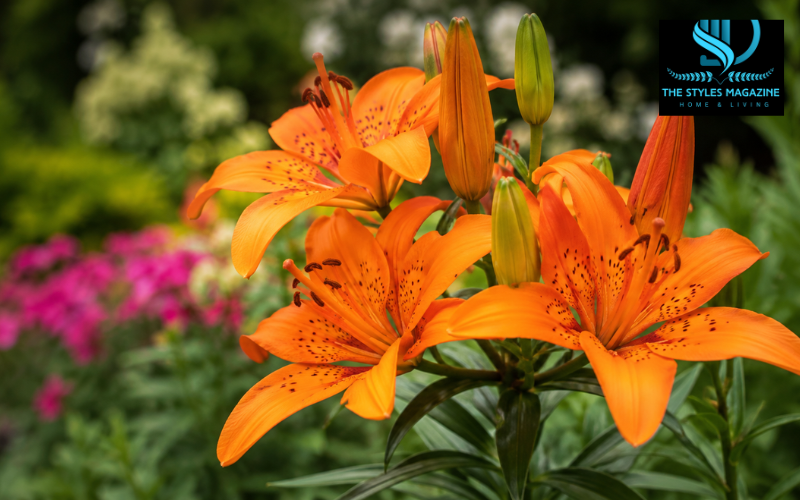
An orange lily brings strong colour and a warm, lively feel to a garden, bouquet, or painting. However, the name does not always describe one exact plant. It may refer to the European species Lilium bulbiferum, an orange Asiatic hybrid, the spotted tiger lily, or the orange daylily often seen beside roads and old properties.
This difference matters because these plants do not all grow in the same way. True lilies belong to the genus Lilium and grow from scaly bulbs. Daylilies belong to the genus Hemerocallis and grow from fleshy roots. Their flowers can look similar, but their leaves, stems, flower direction, and bloom life make them easier to separate.
This guide explains the main orange lily types, identification, symbolism, care, common problems, and uses. It also includes an essential safety warning for households with cats.
Orange Lily Quick Guide
| Feature | Details |
| Common types | Fire lily, Asiatic lily, tiger lily, orange daylily |
| Typical height | About 2 to 4 feet |
| Bloom season | Late spring through summer |
| Light needs | Full sun to partial shade |
| Soil | Fertile, moist, and well-drained |
| Flower appearance | Orange blooms that may be plain or dark-spotted |
| Growth type | True lilies grow from bulbs; daylilies grow from fleshy roots |
| Meaning | Confidence, warmth, energy, pride, and bold affection |
| Cat safety | True lilies and daylilies are highly dangerous to cats |
Simple Orange Lily Care Steps
- Plant bulbs in well-drained soil during autumn or early spring.
- Choose a sunny location with some afternoon shade in hot climates.
- Water when the upper soil starts to feel dry.
- Avoid leaving bulbs in wet or waterlogged ground.
- Support tall stems if they grow in a windy location.
- Remove faded flowers but keep the green foliage after blooming.
- Cut stems down only after the leaves naturally turn yellow or brown.
What Is an Orange Lily?
In botanical use, the name orange lily most closely refers to Lilium bulbiferum, a true lily in the family Liliaceae. It is also called the fire lily. Kew Science recognizes it as an accepted species native mainly from Central Europe to Romania, with Corsica also included in its range. It is a bulb-forming perennial suited to temperate conditions.
The plant produces upright stems with narrow leaves and bright orange flowers near the top. The blooms often face upward and may show reddish-brown dots. Unlike many Oriental lilies, they are usually not strongly scented. Some forms also produce small bulbils in the leaf joints that can develop into new plants.
In everyday gardening language, “orange lily” is broader. Nurseries may use it for orange Asiatic hybrids, tiger lilies, or other Lilium cultivars. Some people also use it for orange daylilies. The easiest first check is the foliage: true lilies have leaves attached along one upright stem, while daylilies form fans of long leaves from the ground.
Main Types of Orange Lily Flowers
The European orange lily, Lilium bulbiferum, is known for clear orange, upward-facing flowers and a strong vertical form. It often blooms in late spring or early summer, although timing varies by climate.
Asiatic orange lilies are garden hybrids rather than one species. They come in shades from apricot to deep burnt orange. Their flowers may face upward, outward, or slightly downward, and many bloom earlier than Oriental lilies. Compact and tall cultivars are widely available.
The orange tiger lily is usually Lilium lancifolium. Its flowers commonly hang downward, with petals that curve strongly backward. Dark spots cover much of the orange surface. Kew accepts Lilium lancifolium as the current species name, while Lilium tigrinum is treated as a synonym.
The orange daylily, Hemerocallis fulva, is not a true lily. It forms clumps of strap-like leaves and sends up mostly leafless flower stalks. Each bloom normally lasts for one day, although several buds open in sequence. It is often naturalized along roadsides and in older gardens.
Orange Lily Plant Appearance and Growth
A typical orange lily plant has a straight, unbranched stem rising from an underground bulb. Leaves grow along the stem rather than forming a low fan. Many plants reach about 2 to 4 feet tall, although height depends on the species, cultivar, soil, and light.
The flowers usually have six petal-like segments called tepals. To most readers, they simply look like six petals. Their shape may be open, star-shaped, trumpet-like, or strongly curved backward. Colour ranges from yellow-orange and tangerine to copper and dark amber. Some blooms are plain, while others carry dark spots or brush marks.
True orange lilies generally flower from late spring into summer. Asiatic hybrids often begin earlier, while tiger lilies tend to bloom later. A healthy bulb can return each year and produce stronger growth as it becomes established.
Orange Lily With Black Spots
An orange lily with black spots is often perfectly healthy. Dark spotting is a natural feature of several lily species and hybrids. These marks look like part of the petal pattern rather than damaged tissue.
Tiger lilies are the most familiar spotted type. Their orange petals usually carry many dark purple-brown or nearly black spots. Some forms of Lilium bulbiferum also have reddish-brown freckles, but their flowers tend to face upward and their petals do not usually curve back as sharply. Orange Asiatic hybrids may have only a few marks near the centre.
Natural spots should not be confused with disease. Fungal problems such as botrytis usually create irregular brown patches on leaves, buds, or petals. Diseased areas may enlarge or appear after long periods of damp weather. Removing affected material, improving airflow, and watering at soil level can reduce the risk.
Orange Lily vs Tiger Lily
The orange lily and tiger lily are related, but they are not two names for the same plant. Lilium bulbiferum is a European species commonly called orange lily or fire lily. The tiger lily is generally Lilium lancifolium. Both are true lilies, yet their flower position and petal shape are usually different.
The orange lily commonly holds its blooms upward, making the centre easy to see. Its petals are orange to yellow-orange and may carry scattered reddish-brown spots. Tiger lily flowers usually nod downward or outward, and the petals sweep back strongly. Their heavier spotting creates the classic tiger-like appearance.
Tiger lilies commonly develop small dark bulbils where the leaves meet the stem. North Carolina State Extension lists these bulbils as a clear feature of Lilium lancifolium. Some forms of Lilium bulbiferum can also produce bulbils, so gardeners should consider this sign together with flower direction and petal shape.
Asiatic Orange Lily Characteristics
An Asiatic orange lily belongs to a large group of hybrids bred from several Asian Lilium species. These plants are known for clear colours, upright stems, and reliable early-summer flowers. Depending on the cultivar, blooms may face upward, outward, or downward and may be plain or spotted.
Most Asiatic hybrids have little or no noticeable fragrance. This suits gardeners who enjoy lilies but find strong floral scents uncomfortable. Their flowers are often smaller than those of Oriental hybrids, yet one mature stem can carry several buds.
Asiatic lilies are available in many sizes. Dwarf cultivars work well at the front of a border or in pots, while taller forms rise above lower perennials. They generally prefer full sun or light shade and freely draining soil.
Orange Lily vs Orange Daylily
The orange daylily is often mistaken for a true orange lily. Hemerocallis fulva produces large orange trumpet-shaped flowers, but it does not belong to the genus Lilium. Instead of a bulb, it grows from a crown with thick, fleshy roots. Its leaves rise from the base in arching fans.
A true orange lily grows from a bulb and has upright stems with leaves attached along them. Each bloom often lasts for several days. A daylily sends up separate, mostly leafless flower stalks from the leafy clump. Each flower usually opens for only one day, although new buds continue the display.
Orange daylilies are tough and adaptable. They can spread into broad colonies and survive in neglected sites. The Missouri Botanical Garden describes Hemerocallis fulva as a vigorous colonizer commonly seen along roads and in old gardens. For identification, check the leaves and stems before relying only on flower colour.
How to Grow an Orange Lily Plant
Plant true orange lily bulbs in autumn or early spring while the soil is workable. Choose a site with full sun or light partial shade. In hot climates, afternoon shade can reduce stress, while stronger sun is usually helpful in cooler regions. Mulch or low-growing companion plants can keep the root area cooler.
Drainage is essential. Lilies perform poorly in heavy, waterlogged ground because the bulbs can rot. Improve dense soil with organic matter and use a raised bed or container where needed. The Royal Horticultural Society recommends fertile, well-drained conditions and notes that many lilies grow well in full sun or light shade.
Planting depth depends on the type and bulb size. Many garden lilies are planted with roughly 10 to 15 centimetres of soil above the bulb and spaced about 20 to 30 centimetres apart. Follow the supplier’s instructions when available. Containers should be deep, stable, and fitted with open drainage holes.
Orange Lily Care Through the Seasons
In spring, watch for new shoots and protect them from slugs and snails. Apply a balanced bulb or general garden feed as growth begins, especially in pots or poor soil. A thin organic mulch can hold moisture, reduce weeds, and keep the root area cool.
During active growth, water when the upper soil begins to dry. Aim water at the ground instead of soaking the foliage. Soil should stay lightly moist during dry weather without becoming saturated. Tall stems may need support in exposed gardens.
After flowering, remove faded blooms if seed is not needed, but leave the green stem and leaves in place. They continue feeding the bulb. Cut the plant down only after the foliage turns yellow or brown naturally. In colder areas, winter mulch can protect bulbs from repeated freezing and thawing.
Common Orange Lily Problems
Aphids may gather around tender shoots and buds, while slugs and snails can damage new growth. Scarlet lily beetles are troublesome in some regions and can strip leaves quickly. Regular inspection helps gardeners act before damage becomes severe. Hand removal may be enough for a small planting.
Botrytis causes spotting and browning above ground, especially in cool, wet, crowded conditions. Give stems enough space, remove infected debris, and water at soil level. Avoid composting badly affected material if the disease may survive in the pile.
Soft bulbs, a bad smell, or shoots that fail soon after appearing may point to rot caused by poor drainage. Yellow leaves can result from excess water, drought, low light, or the natural end of the season. A repeatedly weak plant may need a sunnier position, fresher soil, division, or better drainage rather than extra fertilizer.
Orange Lily Meaning and Symbolism
The orange lily meaning is commonly linked with confidence, energy, warmth, and strong emotion. Its bright colour can suggest enthusiasm, pride, creativity, and courage. Orange lilies are therefore often chosen for congratulations, celebrations, housewarmings, and encouraging messages.
In a romantic setting, the flower may communicate attraction or bold affection rather than the softer mood associated with pale pink or white flowers. In a mixed bouquet, it can add movement and optimism. The message still depends on the occasion and the other flowers.
Flower symbolism is not a fixed botanical rule. Meanings change across cultures, traditions, and personal experience. An orange lily may represent joy to one person, remembrance to another, or simply admiration for a beautiful flower.
Orange Lily Bouquets, Gardens, and Paintings
An orange lily bouquet creates a strong focal point for summer celebrations. The blooms pair well with cream roses, white daisies, blue-purple flowers, and soft greenery. Removing exposed anthers can reduce pollen stains, but the petals should be handled gently.
In gardens, orange lilies stand out against dark foliage and combine well with ornamental grasses, blue salvia, purple alliums, white flowers, and bronze leaves. Compact Asiatic lilies suit pots, while taller tiger lilies and species lilies add height near the middle or back of a border.
The orange lily is also a popular subject in painting and botanical art. Its strong shape, dark anthers, curved petals, and changes from yellow to red-orange give artists clear detail to study. An orange lily painting can bring warmth into a room without requiring a living plant indoors.
Cat owners should avoid bringing true lilies or daylilies into the home. Plants in both the Lilium and Hemerocallis genera can cause severe kidney injury in cats, and dangerous exposure may involve leaves, petals, pollen, or vase water. Any suspected contact or ingestion requires immediate veterinary help.
Conclusion: Understanding and Enjoying Orange Lilies
The name orange lily can describe several plants, so correct identification is the best place to begin. Lilium bulbiferum is the classic European orange lily, Asiatic hybrids offer many garden-friendly choices, and Lilium lancifolium is the familiar spotted tiger lily. The roadside orange daylily, Hemerocallis fulva, looks similar but grows from fleshy roots and produces blooms that normally last one day.
Once you know which plant you have, care becomes easier. True lilies generally need good light, free-draining soil, steady moisture during growth, and foliage that remains until it dies back naturally. Spots on the petals are often a normal identifying feature, while damaged leaves and spreading brown patches may signal a problem.
Whether used in a border, bouquet, or orange lily painting, these flowers are valued for their warmth and visual energy. Their beauty should always be balanced with safe handling around cats. With the right identification and conditions, an orange lily plant can provide a vivid summer display for many years.
Frequently Asked Questions
What Is The Most Common Orange Lily?
The name often refers to Lilium bulbiferum, also called the fire lily. However, Asiatic lilies, tiger lilies, and orange daylilies are also commonly described as orange lilies.
Is An Orange Lily The Same As A Tiger Lily?
No. The orange lily usually has upward-facing flowers, while tiger lilies commonly have downward-facing blooms, sharply curved petals, and many dark spots across their orange surface.
What Does An Orange Lily Symbolize?
Orange lilies commonly symbolize confidence, warmth, passion, energy, pride, and encouragement. Their exact meaning may change depending on the culture, occasion, bouquet, and personal message.
How Can I Identify An Orange Lily Plant?
True lilies grow from bulbs and have leaves attached along upright stems. Orange daylilies grow from fleshy roots and form fans of long leaves near the ground.
Are Orange Lilies Poisonous To Cats?
Yes. True lilies and daylilies can cause severe kidney injury in cats. Petals, leaves, pollen, and vase water may be dangerous, so suspected exposure needs urgent veterinary attention.
Enjoyed it? Find more exclusive content on The Styles Magazine.
Disclaimer: This article provides general gardening and plant-identification information. Plant features and care needs may vary by species and climate. Contact a veterinarian immediately if a cat is exposed to any lily.