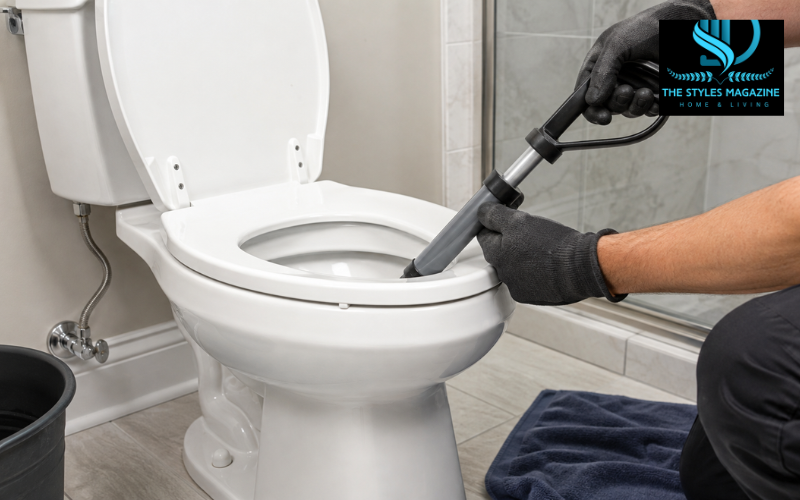
A toilet auger is a hand-operated plumbing tool made to clear clogs inside a toilet’s curved drain passage. It is also called a closet auger. Unlike a general drain snake, it has a shaped guide tube and a protective guard that help the cable enter the toilet trap without rubbing bare metal against the porcelain.
A plunger is usually the best first tool for a simple toilet clog because it uses pressure and suction to move soft waste and toilet paper. When several careful plunging attempts do not work, a toilet auger can reach farther into the trap and make direct contact with the blockage. This makes it useful for stubborn paper clogs, some wipes, and other material caught inside or just beyond the bowl.
Correct use matters because too much force can kink the cable, push an object deeper, or mark the toilet. This guide covers tool sizes, safe use, troubleshooting, and buying or rental choices.
Toilet Auger Quick Guide
| Feature | Best Use |
| 3-foot toilet auger | Common clogs inside the toilet trap |
| 6-foot toilet auger | Blockages just beyond the toilet |
| Protective bowl guard | Prevents metal from scratching porcelain |
| Manual crank | Provides controlled cable movement |
| Heavy-duty auger | Frequent or difficult toilet clogs |
How to Use a Toilet Auger
- Retract the cable into the guide tube.
- Place the protected elbow inside the toilet drain.
- Turn the handle clockwise while pushing gently.
- Continue cranking when you feel the blockage.
- Retract the cable and remove any debris.
- Test the toilet with one careful flush.
What a Toilet Auger Is and How It Works
A toilet auger consists of a curved guide tube, a flexible spring cable, a crank handle, and a working tip. The guide tube rests near the toilet drain opening and supports the cable as it enters the trap. Many models include a vinyl or rubber guard where the tube contacts the bowl. Current 3-foot and 6-foot RIDGID models, for example, use protective guards intended to reduce accidental scratching.
As you turn the crank and gently push the handle, the cable rotates and moves through the toilet’s tight internal bends. The tip may bore into soft material, break a blockage into smaller pieces, push it into a wider drain, or catch part of it so it can be pulled back. Toilet paper may break apart, while a wipe or small cloth may wrap around the head.
A hard object may not move safely at all. The tool is designed mainly for the toilet trap, so it may not reach a blockage deep inside a branch line or main sewer.
When You Should Use a Toilet Auger
Use a toilet auger after a toilet plunger fails to restore normal flow. It is helpful when the bowl drains slowly, water rises during a test flush, or the clog quickly returns. Oatey also recommends trying an auger when plunging does not clear a deeper blockage.
A toilet auger is most effective when the problem is inside the built-in trap or only a short distance beyond it. Typical causes include too much toilet paper, waste, or an accidentally flushed item that the head can break apart or catch.
It can also be a better choice than pouring a general chemical drain opener into the bowl. Product labels differ, and some common gel drain cleaners specifically state that they should not be used in toilets. Never mix cleaning chemicals. Do not insert an auger into a bowl containing an unknown chemical because turning the cable may cause dangerous splashing.
Main Parts of a Toilet Auger
The guide tube is the rigid or semi-rigid outer section that helps aim the cable into the toilet trap. Its curved lower end is often called the elbow. A vinyl sleeve, plastic boot, or rubber guard covers the area most likely to touch the porcelain.
Inside the tube is a flexible spring cable. Its end may have a bulb head for general clearing, an open hook for catching material, or a drop head designed to move through difficult bends.
The crank rotates the cable while a separate grip provides control. On a toilet auger 6ft model, a lock, button, or sliding part releases the additional cable. Some professional models accept a cordless drill, but manual operation usually gives a beginner better control.
Types and Sizes of Toilet Augers
A standard 3-foot toilet auger is the common household option. It is usually long enough to travel through the toilet’s internal trap and address clogs close to the bowl. Current professional 3-foot models use thick inner-core cable and a bowl guard, while lower-cost residential models use a similar basic design.
A 6-foot teletube or telescoping auger begins with about three feet of usable cable and then extends another three feet. It can help when the blockage is located just beyond the toilet. Current 6-foot models from major manufacturers and retailers continue to use this extendable design.
Heavy-duty commercial augers may have thicker cables, stronger tubing, replaceable parts, larger handles, or powered-drive options. They suit plumbers, maintenance workers, landlords, and facilities that deal with frequent clogs. A basic manual model is usually easier to control and store for occasional household use.
Preparing the Toilet and Work Area
If the water is rising, stop it before doing anything else. Remove the tank lid and close the flapper if water is still flowing into the bowl. Then turn the shutoff valve behind or beside the toilet clockwise. Oatey’s emergency guidance also recommends shutting off the toilet’s water supply before attempting to clear an overflow risk.
Place towels or a washable mat around the toilet and wear waterproof gloves. Add eye protection if splashing is possible. If the bowl is nearly full, transfer some of the water into a bucket so it cannot spill onto the floor.
Inspect the toilet auger before use. Confirm that the protective guard is secure, no sharp metal can touch the bowl, the crank is attached, and the cable retracts smoothly. Do not use a tool with a badly damaged guard, bent tube, or severely rusted cable.
How to Use a Toilet Auger Step by Step
- Retract the cable. Pull the handle upward until the working head sits near the opening of the guide tube. This keeps exposed cable away from the visible porcelain.
- Set the elbow in the drain. Place the protected curved end in the toilet outlet at the bottom of the bowl. Keep it seated so the tube supports and guides the cable.
- Crank while pushing gently. Turn the handle clockwise while applying light, steady downward pressure. Current RIDGID guidance follows this same retract, position, push, and clockwise-turn method.
- Work slowly. A bend in the toilet trap may feel firm even when you have not reached the clog. Use controlled turns instead of trying to force the cable through.
- Retract the cable. Once the cable passes the resistance or catches material, continue turning while slowly pulling the handle upward. Draw the cable back into the guide tube.
- Remove and test. Lift the tool out carefully. Make one controlled test flush while watching the water level. Be ready to stop the water if the bowl begins to rise again.
What to Do When the Auger Reaches the Clog
A bend in the toilet trap usually gives steady resistance that changes as the rotating cable finds its path. A clog may feel softer, uneven, or may stop the cable at the same point each time.
Keep the guide tube firmly seated and continue using slow clockwise turns. For soft toilet paper and waste, the head may drill through the blockage. Once the cable moves farther with less resistance, retract it and test the toilet.
A wipe or small cloth may catch on the auger head. Pull the cable back slowly while continuing to turn so the material is less likely to fall off.
Hard objects such as toys, bottles, grooming products, or phones can become tightly wedged. Do not assume the auger can retrieve every object. Force may push it beyond reach or damage the toilet. In these cases, removing the toilet may be safer than continuing to crank.
Toilet Auger vs Snake: Important Differences
The toilet auger vs snake comparison comes down to design and purpose. A closet auger has a short, curved, protected guide tube made for the toilet trap. It normally has a thicker and shorter cable than a small drum snake.
A general drain snake usually has a longer, thinner cable intended for sinks, tubs, showers, and branch drains. Feeding an unprotected metal cable directly through a toilet may scratch the porcelain, twist inside the trap, or become stuck. One current drum-auger listing specifically warns against toilet use because of possible porcelain damage and cable twisting.
Neither tool is suitable for every blockage. A clog in the main sewer may require a larger drain-cleaning machine used through a proper cleanout. A solid object lodged in the toilet may require removal of the fixture rather than more snaking.
Common Toilet Auger Mistakes to Avoid
One of the most damaging mistakes is allowing exposed cable or bare metal tubing to scrape against the bowl. Keep the protected elbow in position and avoid dragging the tool across visible porcelain.
Do not treat force as the answer. If the cable stops moving, pull it back slightly and continue turning. Hard pushing can kink the cable or drive a foreign object deeper into the drain.
Follow the cranking direction stated by the manufacturer. Many manual models advance when turned clockwise. Repeatedly reversing the direction may release caught material or cause the cable to bind.
Do not keep flushing while the toilet remains blocked. Each flush adds more water and increases the risk of an overflow.
Use a powered drill only if the auger is designed for it. Follow the manufacturer’s speed limit and operating instructions, as powered rotation gives you less time to react if the cable catches.
Troubleshooting When the Toilet Is Still Clogged
If the first pass does not work, clean the auger head, retract the cable, and try again more slowly. Keep the guide tube seated in the toilet outlet and rotate the cable continuously as you advance.
A 3-foot auger may pass through the toilet but fail to reach a clog located just beyond it. In that situation, a 6-foot model may help. If the full cable enters easily but the bowl still does not drain, the blockage may be farther down the branch line.
Think about whether something was dropped into the toilet before the problem began. A hard object may allow some water to pass while repeatedly catching paper. Stop forcing the auger if a toy, bottle, or other item may be lodged inside.
When nearby tubs, showers, sinks, or toilets also drain slowly or back up, the problem is unlikely to be limited to one toilet. This pattern may point to a blocked branch drain or main sewer line.
Cleaning, Disinfecting, and Storing the Auger
Clean the tool immediately after use. While wearing gloves, remove caught debris with disposable towels and place it in the trash rather than flushing it again. Rinse the cable and guide tube according to the manufacturer’s care directions.
Use a suitable household disinfectant according to its label. Never mix disinfectants, bleach, acids, or drain cleaners. Wipe the handle, outer tube, protective guard, and cable.
Dry the auger thoroughly before putting it away. Moisture can encourage corrosion, even when a cable is described as rust-resistant. Retract and secure the cable, then store the tool in a dry, ventilated place away from children and household chemicals.
Buying or Renting the Right Toilet Auger
Choose the simplest model that can reach the likely clog. A 3-foot auger handles many blockages inside the toilet trap. A toilet auger 6ft model reaches just beyond the bowl, while professional-grade tools are built for repeated use.
Buying usually makes sense for homeowners who want a reusable emergency tool. Renting may be practical when you need a stronger commercial model for one job and have a nearby rental counter. Home Depot currently lists toilet auger rental equipment with a protective bowl guard, although prices and local availability depend on the selected store.
Searches such as “toilet auger near me,” “toilet auger Home Depot,” or “toilet auger Lowe’s” can help you check local pickup stock. Home Depot and Lowe’s currently list both 3-foot and 6-foot options.
Amazon currently displays both 3-foot and 6-foot toilet auger listings, while Target’s search results also include toilet-auger products and third-party marketplace options. Sellers, prices, warranties, return terms, and stock can change, so check the full product details before ordering.
Before buying, look for a complete bowl guard, kink-resistant cable, comfortable grip, secure extension locks, clear instructions, useful warranty coverage, and available replacement parts.
When to Stop and Call a Plumber
Stop when careful passes with the correct toilet auger do not improve drainage. More force will not solve a blockage located beyond the cable’s reach.
Call a plumber when several fixtures back up, sewage appears in a tub or shower, drains make repeated gurgling sounds, or the same clog returns soon after clearing. These signs may indicate a branch-drain or main-sewer problem rather than a simple toilet-trap clog.
Professional help is also the safer choice when a solid object is lodged inside the toilet, the cable becomes stuck, the porcelain is cracked, or chemical cleaner is present in the bowl. A plumber may remove the toilet, inspect the line, or access the blockage through a cleanout.
Conclusion: Using a Toilet Auger Safely and Effectively
A toilet auger is the right tool when a plunger cannot clear a stubborn blockage located inside or just beyond the toilet trap. Its curved guide tube and protective guard make it safer for porcelain than a general-purpose drain snake when used correctly.
Good results come from control rather than force. Seat the guarded elbow in the drain, crank with gentle pressure, retract the cable carefully, and perform one controlled test flush. A 3-foot model handles many common household clogs, while a 6-foot toilet auger provides extra reach.
If the tool cannot reach the clog, a hard object is trapped, or other fixtures are backing up, stop before causing damage. Choosing the correct toilet auger and knowing when to call a plumber can turn a messy problem into a safer and more manageable repair.
Frequently Asked Questions
Can A Toilet Auger Damage The Toilet?
A toilet auger should not damage the bowl when its protective guard is correctly positioned. However, exposed cable, excessive force, or a damaged guide tube may scratch or crack the porcelain.
Is A Toilet Auger Better Than A Plunger?
A plunger is usually better for simple, soft clogs. A toilet auger is more useful when plunging fails and the blockage is lodged deeper inside or just beyond the toilet trap.
What Is The Difference Between A Toilet Auger And A Drain Snake?
A toilet auger has a curved, protected tube designed for toilet traps. A regular drain snake usually has exposed cable intended for sinks and drains, which may scratch toilet porcelain.
Should I Buy A 3-foot Or 6-foot Toilet Auger?
A 3-foot model handles many common toilet clogs. Choose a 6-foot auger when you need additional reach for a blockage located slightly beyond the toilet’s built-in trap.
When Should I Call A Plumber?
Contact a plumber when repeated auger attempts fail, several fixtures back up, sewage appears, a solid object is trapped, or the toilet continues clogging after it has been cleared.
Enjoyed it? Find more exclusive content on The Styles Magazine.
Disclaimer: This article provides general plumbing guidance. Follow the tool manufacturer’s instructions and contact a licensed plumber if the blockage is severe, recurring, or unsafe to handle.