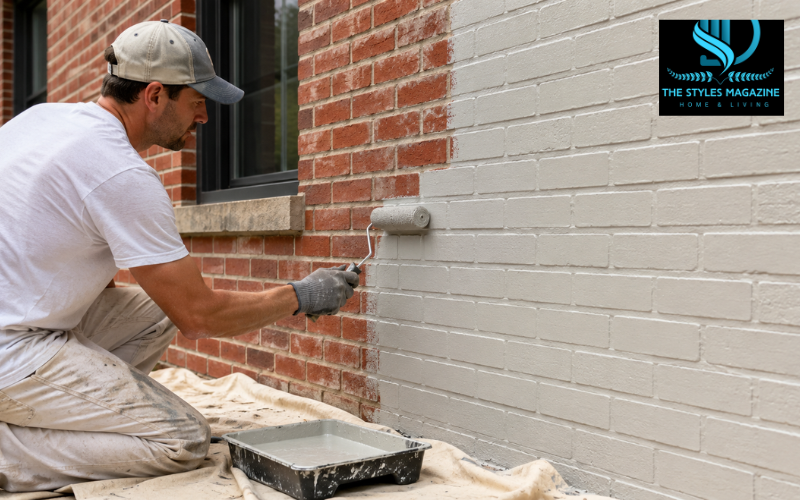
Brick paint is a coating made or approved for brick and other masonry surfaces. It can change the color, create a more even finish, cover stubborn stains, or update brick that looks dated. It is commonly used on house exteriors, garden walls, interior feature walls, chimneys, and decorative fireplace surrounds. It may also be used to refresh previously painted masonry when the old coating is still firmly attached.
Brick is different from drywall, wood, or metal because it contains many small pores. These pores absorb water and allow water vapor to move through the wall. The selected coating must therefore suit both the brick and the way the wall handles moisture. A poorly matched product may peel, blister, or hide a water problem rather than solve it. The Brick Industry Association warns that moisture in masonry can interfere with coating performance, while current manufacturer guidance often favors breathable mineral systems for exterior brick.
Choosing the right brick paint involves more than finding an attractive color. You must consider whether the surface is indoors or outdoors, bare or previously painted, dry or affected by moisture, and smooth or deeply textured. Preparation, application, and future maintenance matter just as much as appearance.
Quick Guide to Brick Paint Options
| Brick coating | Best for | Appearance | Main consideration |
| Mineral or silicate paint | Bare exterior masonry | Natural, flat finish | Highly breathable but requires a compatible surface |
| Masonry acrylic paint | Interior or exterior brick | Smooth, solid color | Must be specifically approved for masonry |
| Limewash | Traditional or aged designs | Soft, weathered finish | May fade naturally and provide varied coverage |
| Elastomeric coating | Exposed exterior walls | Thick, uniform finish | Choose only when suitable for the wall and climate |
| Masonry stain | Preserving brick texture | Natural color variation | Changes color without fully covering the surface |
Brick Painting Steps
- Inspect the brick and mortar for leaks, cracks, loose joints, and moisture damage.
- Remove dirt, mold, soot, efflorescence, and peeling paint.
- Allow the cleaned or repaired brick to dry fully.
- Apply a masonry primer or conditioner when the product requires one.
- Apply the brick paint evenly with a brush, thick-nap roller, or suitable sprayer.
- Keep drainage openings and weep holes clear.
- Allow each coat to dry according to the manufacturer’s instructions.
Should You Paint Brick?
Painting can give faded, heavily stained, or mismatched brick a cleaner, more consistent appearance. Light colors can brighten an exterior, while black or charcoal may create a strong modern look. Indoors, painted brick can help an old fireplace or feature wall fit more naturally with the room.
However, painting is usually a long-term change. Removing paint from porous brick can be slow and costly, and a painted surface may require cleaning, touch-ups, and eventual recoating. The Brick Industry Association notes that some traditionally painted brickwork may need repainting every few years, although the real interval depends on the coating, exposure, preparation, and workmanship.
Painting is not always the best first step. Dirty brick may only need safe cleaning. Weak mortar should be repaired rather than hidden. Brick stain may change the color while retaining more natural texture, and limewash can create a softer, aged finish.
Never paint over an active leak, unstable crack, damaged mortar, or recurring efflorescence. Efflorescence is the white salt deposit left when moisture moves through masonry and evaporates. When it returns after cleaning, the moisture source should be found before the wall is coated.
Main Types of Brick Paint and Coatings
Mineral or silicate paint is a strong option for compatible bare masonry. It uses a silicate binder that bonds with the mineral surface instead of simply forming a plastic-like film over it. The finish is usually matte and highly open to water vapor. Some modern mineral products can also cover certain previously painted surfaces, but only when the manufacturer confirms compatibility.
Masonry acrylic paint is a water-based coating designed for brick, block, stucco, or concrete. It provides solid color and should not be confused with ordinary wall paint. A good masonry acrylic product may offer vapor permeability, alkali resistance, and weather protection.
Not every acrylic coating automatically traps damaging moisture. Sherwin-Williams explains that suitable latex films can remain open to water vapor, although adding more coats reduces vapor movement. The complete coating system, product quality, and film thickness therefore matter.
Limewash is mainly made from lime and water. It soaks into compatible porous masonry and creates a chalky, gently varied finish. It is breathable and useful when some original brick color and texture should remain visible. It does not normally create the perfectly even coverage associated with conventional paint.
Elastomeric masonry coating forms a thicker, flexible layer that can bridge very small surface cracks and resist wind-driven rain. Some products are vapor permeable and approved for brick, but they do not suit every wall. Choose one according to the wall design, climate, moisture conditions, and technical instructions. It cannot replace the proper repair of moving cracks or structural damage.
Best Brick Paint for Different Projects
There is no single best brick paint for every project. A compatible mineral or silicate coating is often a good choice for bare exterior brick where breathability is important. A masonry-approved acrylic may suit an interior wall that needs solid, even color. Limewash works better for a soft, weathered appearance, while a suitable elastomeric coating may help exposed masonry resist wind-driven rain.
Read the product label and technical data sheet before buying. Check whether it is approved for bare brick, old painted masonry, interior use, exterior use, or both. Some mineral coatings require an absorbent mineral base and may not bond over glossy or sealed paint. Some masonry coatings are direct-to-surface, while others need a primer, conditioner, or base coat.
Also consider the finished appearance and future care. Mineral coatings usually create a flat, natural look. Acrylic masonry paint provides more uniform coverage. Limewash is intentionally varied and may weather over time. The best option is the one that matches the surface, exposure, desired finish, and maintenance plan.
Interior Brick Paint and Finish Options
Interior brick paint is commonly used on accent walls, chimney breasts, and the outer face of decorative fireplaces. Although indoor brick is protected from rain, it can hold dust, soot, grease, loose material, old sealers, or hidden moisture. These issues must be removed or addressed so primer and paint can bond evenly.
Flat and matte finishes generally suit brick because they reduce glare and keep the natural texture visible. Satin finishes may be easier to wipe, but they can highlight rough joints, repairs, and uneven areas. Mineral-style coatings create a soft, natural look, while acrylic masonry paint gives more consistent color.
Fireplaces need special care. Paint intended for decorative outer brick may not be safe for the firebox, hearth, or surfaces exposed to direct flame or extreme heat. Benjamin Moore recommends cleaning away soot and loose material, priming the porous brick, coating the mortar lines carefully, and using a second coat for even coverage. Confirm the product’s heat limits and approved location before use.
Choosing Paint for Brick Exterior Surfaces
Exterior brick paint must handle rain, sunlight, dirt, temperature changes, algae, and moisture moving from within the wall. A surface can feel dry while still holding moisture, so painting soon after rain or washing may lead to poor adhesion and blistering. Sherwin-Williams recommends confirming that masonry is dry enough before coating rather than relying only on touch.
Bare brick and previously painted brick require different preparation. Bare brick may be highly absorbent, while old paint may be chalky, glossy, peeling, or incompatible with the new system. Loose paint should be removed, and a small test area is sensible when the existing coating is unknown.
Repair leaking gutters, damaged flashing, failed sealant, open cracks, and weak mortar before applying exterior brick paint. Paint cannot stop water that is entering from another part of the building.
Keep weep holes and other drainage openings clear. These openings are commonly found near the bottom of brick veneer walls and allow water to leave the wall system. Filling them with primer, paint, or sealant can interfere with drainage.
Masonry Paint for Brick: Features That Matter
The product label should clearly state that the paint is suitable for brick or masonry. Useful features may include vapor permeability, alkali resistance, adhesion, resistance to wind-driven rain, weather durability, and mildew resistance.
Vapor permeability describes how easily water vapor can pass through a dry coating. It does not make a wet wall safe to paint, and it does not repair a leak. A wall must still be properly designed, maintained, and allowed to dry.
Alkali resistance matters because fresh mortar and other cement-based materials can damage unsuitable coatings. Strong adhesion is also important on rough, absorbent, chalky, or previously painted surfaces.
A masonry primer or conditioner may control uneven absorption, bind a slightly chalky surface, improve adhesion, or block stains. However, primer is not always required. Some high-build masonry coatings are designed for direct application, while other systems require a separate primer. Follow the instructions for the exact product instead of assuming every brick surface needs the same system.
Brick Paint Colors: Black, Red, and Exterior Choices
Brick paint colors should work with the whole building. Compare samples with the roof, trim, doors, gutters, stone, paving, and landscaping. Warm whites and creams can soften a traditional exterior. Greige and muted green often suit natural surroundings, while charcoal creates stronger contrast.
Black brick paint gives exteriors, fireplaces, and feature walls a bold, modern appearance. It can make simple architectural lines look sharper, but it may also show dust, mineral marks, or fading. Very dark colors can dominate a small home, so test them across a large area before making a final choice.
Brick paint red can refresh faded or mismatched brick while keeping a traditional red-brick appearance. Compare the red with the existing mortar because the contrast can change how both colors look. In some cases, a masonry stain may appear more natural than fully opaque red paint.
Exterior brick paint colors can change noticeably throughout the day. Test large samples on more than one side of the building, then check them in morning light, midday sun, shade, and evening light. Brick texture creates shadows that can make a color look darker or more varied than it appears on a small paint chip.
Preparing Brick Before Painting
Inspect the brick closely for cracks, weak mortar, damaged units, leaks, peeling paint, and white salt deposits. Complete suitable repairs first. Widespread damage, bulging, or movement should be assessed by a masonry professional.
Clean away dirt, chalk, algae, mildew, soot, and loose paint without harming the brick face. A stiff non-metallic brush and masonry-safe cleaner may be enough for many surfaces. Always follow the cleaner manufacturer’s dilution, rinsing, and safety directions.
Low-pressure washing can work outdoors, but aggressive pressure may damage soft brick, open mortar joints, or drive water deeper into the wall. Sherwin-Williams recommends removing loose efflorescence, rinsing the surface thoroughly, and delaying painting when the deposits continue to return.
Allow cleaned and repaired masonry to dry fully. There is no universal waiting period for every new wall or mortar repair. Cure time depends on the mortar, coating, weather, and product requirements. Some products can be used on relatively new masonry, while others require a longer curing period.
Use the current technical data sheet for the selected coating instead of automatically waiting a fixed number of days or one full year. The manufacturer’s instructions should also state acceptable moisture levels and application conditions.
How to Apply Brick Paint Correctly
Protect windows, doors, floors, roofing, plants, fixtures, and nearby surfaces before beginning. For exterior work, check the weather forecast and remain within the temperature, humidity, rain, and drying limits listed by the manufacturer.
Apply the specified primer or conditioner when needed. Because brick is uneven and absorbent, work the coating into joints, pits, and textured faces rather than covering only the raised surface.
A masonry brush provides good control around mortar joints and edges. A thick-nap roller can cover rough brick more efficiently. Spraying may help on large areas, but the coating may need to be worked into the surface with a roller or brush immediately afterward. Follow the product instructions for the chosen application method.
Apply even coats at the stated coverage rate. Paint spread too thin may leave weak or patchy areas, while an overly heavy layer may dry poorly and reduce vapor movement.
Keep weep holes, vents, and drainage openings clear. Allow the full recommended drying time before applying another coat, especially in cool, damp, or shaded conditions.
Brick Paint Mistakes That Cause Early Failure
The biggest mistake is painting brick while it is damp or while water is still entering the wall. Moisture can carry salts toward the surface, weaken adhesion, and cause bubbling or peeling. Painting over recurring efflorescence hides the warning sign without correcting its cause.
Other problems include using ordinary wall paint outdoors, choosing a coating that is not approved for masonry, skipping repairs, or failing to remove loose and chalky material. Even a high-quality product may fail when applied to an unstable or contaminated surface.
Mineral paint may not bond correctly over an incompatible sealed or glossy coating. In contrast, applying an overly thick film-forming coating can reduce vapor transmission and make future peeling more noticeable.
Poor coverage in deep mortar joints is also common. The wall may appear finished from a distance while pits and joints remain partly bare. Examine the surface from several directions before the paint dries.
Paint should never be treated as a structural repair. Wide cracks, bulging walls, weak mortar, damaged flashing, and repeated water entry require proper correction before painting begins.
Cleaning and Maintaining Painted Brick
Inspect exterior painted brick once or twice a year and after severe weather. Pay particular attention to areas around windows, roof edges, downspouts, the bottom of walls, and shaded sections where moisture may remain longer. Interior brick can be checked during normal cleaning, especially around fireplaces.
Start cleaning with a soft brush, vacuum, or mild soap solution, depending on the coating. Avoid harsh chemicals, abrasive tools, and high-pressure washing unless the paint manufacturer allows them. Test any cleaner in a hidden area before applying it widely.
A small chip caused by impact can usually be cleaned, primed if necessary, and touched up with matching paint. Feather the edges carefully so the repair blends into the surrounding finish.
Bubbling, widespread peeling, recurring salt deposits, brown staining, mold, or large damp areas require further investigation before repainting. These signs may point to a leak, poor drainage, coating incompatibility, or moisture behind the paint.
Recoating failed brick paint without solving the underlying problem usually leads to another failure. When damage affects a large area, it may be necessary to remove loose material, investigate moisture, complete repairs, and rebuild the coating system rather than simply adding another topcoat.
Conclusion: Making the Right Brick Paint Decision
Successful brick paint starts with sound, clean, dry masonry. The coating must be approved for the exact surface and location, whether it is bare exterior brick, old painted masonry, an interior wall, or the decorative face of a fireplace.
Mineral and silicate paints are valuable because they bond with compatible masonry and allow strong vapor movement. Some modern acrylic and elastomeric masonry coatings can also perform well when their technical information confirms suitable adhesion, weather protection, and vapor permeability. The safest choice is based on the whole coating system, not one product name or category alone.
Test the color, follow current technical instructions, and do not rush preparation. A suitable brick paint applied to a properly repaired surface will perform far better than a fashionable color placed over damp, dirty, or damaged masonry.
Frequently Asked Questions
What Type Of Paint Is Best For Brick?
The best brick paint is a breathable coating approved for masonry. Mineral, silicate, masonry acrylic, limewash, and some elastomeric products may work, depending on the brick’s condition and location.
Do You Need To Prime Brick Before Painting?
Some brick surfaces require a masonry primer or conditioner, especially when they are porous, chalky, stained, or uneven. Other coating systems are self-priming, so always check the product instructions.
Can Ordinary Exterior Paint Be Used On Brick?
Ordinary exterior paint may not bond properly or manage moisture correctly. Choose a product that clearly states it is suitable for brick or masonry and follow its preparation requirements.
Is Black Brick Paint A Good Exterior Choice?
Black brick paint can create a bold, modern exterior, but it may show dust, fading, and mineral marks. Test a large sample and compare it with the roof, trim, and landscaping.
How Long Does Painted Brick Last?
The lifespan of painted brick depends on surface preparation, coating quality, weather exposure, moisture control, and maintenance. Regular inspections and early repairs can help the finish remain attractive for longer.
Enjoyed it? Find more exclusive content on The Styles Magazine.
Disclaimer: This article provides general brick painting guidance. Product requirements and wall conditions vary, so follow the manufacturer’s instructions and consult a qualified masonry professional when moisture, cracking, or structural damage is present.