ChipDrop is an online service that connects people who need large amounts of wood-chip mulch with arborists and tree-care companies that need a nearby place to unload it. Gardeners, homeowners, schools, farms, and community gardens can submit a request, while participating tree crews can view suitable drop locations near their current jobs.
The idea benefits both sides. A tree company may avoid a long drive or disposal fee, and the recipient may receive a full truckload of fresh arborist chips without paying the normal retail price for bagged or bulk mulch. ChipDrop acts mainly as the platform that brings the two sides together rather than as the company cutting the trees or driving the truck.
The offer comes with important limits. You cannot choose an exact delivery date, precise quantity, uniform color, or neatly screened product. ChipDrop is therefore best for a large project with accessible space and enough labor to move the pile.
ChipDrop Quick Guide
| Topic | What to Know |
| Cost | Requests can be free, with optional payment to improve delivery chances |
| Load size | A delivery may contain about 4–20 cubic yards |
| Material | Fresh chips may include leaves, twigs, bark, and needles |
| Delivery time | It may arrive quickly, take several weeks, or never arrive |
| Drop location | A firm, wide, truck-accessible area is required |
| Best for | Large gardens, paths, lawn conversion, and sheet mulching |
| Not ideal for | Small yards or projects needing clean, matching decorative mulch |
| Logs | Accept only if you can safely cut, split, and move them |
How ChipDrop Works from Sign-Up to Delivery
The process begins by creating an account through the official ChipDrop website. You verify your contact details and address, then place one active request describing whether you want wood chips, logs, or both. Clear written directions and useful photos help a tree crew understand where the truck can enter, turn, raise its dump box, and unload safely.
Once the request is active, participating arborists working in the area can see it. A crew may select your property when its truck is full and your location is convenient. This is not a traditional scheduled mulch order. The arborist chooses a site based on practical factors such as distance, access, material preferences, and whether the recipient has offered to help cover the drop fee.
After a completed delivery, ChipDrop automatically removes the request so that the recipient does not receive repeated truckloads. Anyone who needs another load can sign in and submit a new request.
Is ChipDrop Legit?
Yes, ChipDrop is a real matchmaking service for wood-chip deliveries. Its official terms explain that the platform lists information so tree-care companies and people seeking chips can connect. However, ChipDrop does not promise a delivery, guarantee a particular quality, or control every action of the independent tree crew completing the drop.
It is not the same as buying screened mulch from a landscape supplier. The recipient must provide accurate information, choose a safe drop site, protect the property, and prepare for natural variation. Arborists are expected to follow stated restrictions and avoid prohibited materials.
ChipDrop is most suitable when flexibility matters more than appearance or timing. A person who needs an exact quantity of matching decorative mulch on a fixed date will usually be better served by a conventional supplier.
What You May Receive in a ChipDrop Delivery
A typical ChipDrop contains fresh material produced during tree work. It may include chipped branches, bark, leaves, pine needles, small twigs, and chips of different shapes and sizes. The mixture may be green and leafy when it arrives, or it may already be warming and beginning to break down.
This material is different from dyed or screened mulch sold in bags. Retail mulch is processed for a more even appearance, while arborist chips reflect whatever trees were handled on that job. The color, smell, texture, moisture level, and tree species can therefore vary from one load to another.
ChipDrop’s current expectations say a typical load may contain roughly equal parts wood chips and green leafy material or needles. A small amount of unchipped brush, sticks, dirt, gravel, or incidental litter may also appear, although excessive garbage, large rocks, landscaping fill, and prohibited wood are not allowed.
It is raw landscaping material, not a direct substitute for clean playground chips or matching decorative bark.
Understanding ChipDrop Load Size
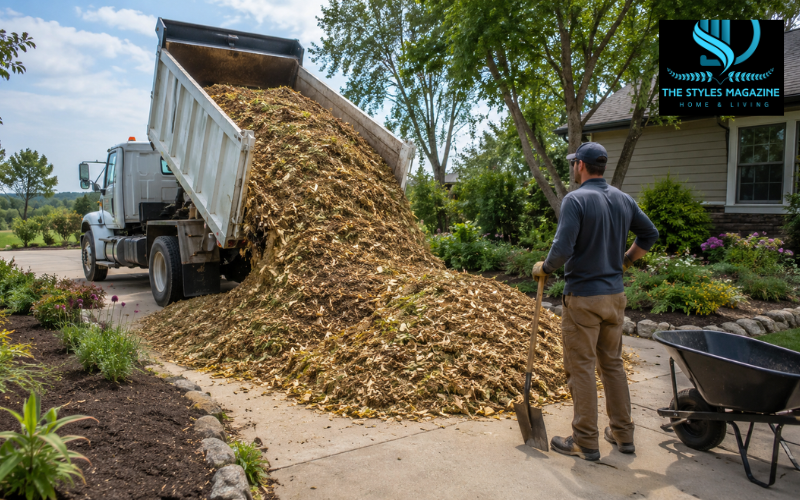
Load size is one of the most important facts to understand. ChipDrop does not let recipients order a measured number of cubic yards. The delivery is an entire truckload, which may be as little as about 4 cubic yards or as much as approximately 20 cubic yards. Partial loads are generally not offered.
Even the lower end creates a substantial pile. Before requesting one, measure the available space and estimate how much mulch the project can use. As a rough guide, 10 cubic yards spread 4 inches deep covers about 810 square feet; 20 yards covers about 1,620 square feet. Actual coverage varies as fresh material settles.
Plan how the pile will be moved. Shovels, wheelbarrows, gloves, closed shoes, dust protection, and helpers make the job safer. Many homeowners will need several days to move it by hand.
Wood Chips, Logs, and Tree-Species Preferences
Users can normally request chips, logs, or both. Accepting logs may make a location more useful to arborists, but it creates extra work. Logs can be long, wide, heavy, and unsplit. ChipDrop does not guarantee a certain length or diameter, so people accepting them should have suitable cutting and splitting equipment and know how to use it safely.
If you only need mulch, do not select logs simply to get a faster delivery. A few large trunk sections can be extremely difficult to move without a chainsaw, log splitter, lifting tools, and a safe work area.
Recipients may exclude certain wood species, but they cannot design an exact blend. The load depends on local tree work, and strict limits may reduce delivery chances.
Preparing a Safe and Accessible Drop Location
The unloading area must be easy for a large truck to reach without a phone call. ChipDrop advises providing a space at least 8 feet wide and 15 feet long, with room for the vehicle to maneuver. The raised dump box may reach about 20 feet high, so overhead wires, tree limbs, roofs, and other obstacles must be checked carefully.
A firm driveway is usually safer than wet soil or soft grass. Remove cars and fragile items, and avoid any position that blocks a neighbor, covers beds, traps a vehicle, or spills into a busy road.
Written instructions should be simple enough for a driver to follow while you are away. Mark the exact spot with a visible cone or tarp, upload clear photos, and include a safe second choice in case the main location cannot be used. Because the service may not provide advance notice, the site should remain clear throughout the active request period.
ChipDrop Login, Account Setup, and Request Management
Use the official ChipDrop website for account creation and login. Enter a working phone number, email address, and correct delivery location. Inaccurate contact details or confusing directions can prevent a delivery or cause material to be placed in the wrong area.
Review the active request whenever access changes. If you cannot accept a load, cancel it and submit a new request later; ChipDrop currently recommends this instead of a temporary pause.
Keep login details private. The official terms state that users are responsible for activity under their accounts, making password security especially important when a request could lead to a large physical delivery.
ChipDrop Map, Locations, and Local Availability
ChipDrop availability is based on participating tree companies, not simply on whether a city appears on a service list. The official local activity tool lets users enter a city or ZIP code to get an idea of nearby activity. Low activity does not make a delivery impossible, but it may mean a longer wait or no delivery at all.
The public-facing ChipDrop map is designed to show rough locations rather than exact home addresses. ChipDrop says detailed address and contact information is generally available to registered tree-care professionals handling requests, unless a gardener chooses to share information through another feature.
For searches such as “ChipDrop Santa Cruz,” check the activity tool with the city or ZIP code rather than assuming every neighborhood has equal coverage.
Delivery Times, Free Requests, and Optional Payments
A load may arrive on the day a request is submitted, but the typical stated delivery window is about one to five weeks. Rural areas, newer service areas, and winter conditions may involve longer waits. ChipDrop also notes that it may contact users after 25 days to confirm that they still want to remain active.
There is no simple first-come, first-served queue. Arborists choose practical drop sites near their work, so a newer request may be selected before an older one. Distance, access, log acceptance, previous site notes, and payment status may influence the decision.
A free request remains available. Users may also voluntarily offer payment to improve the chance of being selected sooner. Under the policy updated in June 2026, the card is charged only after a confirmed delivery; no delivery means no charge. Paying does not guarantee service and does not improve the quantity, quality, or type of material.
Best Uses for a Large ChipDrop Load
ChipDrop works best for projects that can absorb plenty of natural mulch, including lawn conversion, broad paths, woodland areas, large beds, farms, schools, and community gardens.
Spread on the soil surface, wood chips can reduce evaporation, limit many weeds, soften temperature changes, and add organic matter as they break down. They are especially practical around established trees and shrubs when applied correctly. They can also help turn worn lawn areas into lower-maintenance landscapes.
The service is less practical for a small flower bed, a narrow townhouse yard, or any project needing only a few bags. Buying a measured amount may cost more per yard, but it avoids the risk of an oversized pile and gives the customer greater control over appearance and delivery timing.
Using Fresh Arborist Chips Responsibly
Fresh chips should be used as surface mulch rather than mixed deeply into the soil around growing plants. Keep the material away from trunks, root flares, soft stems, siding, vents, and wooden structures. Deep piles pressed against trees can hold moisture against bark and contribute to decay or pest problems. University extension guidance recommends leaving the root flare uncovered and preventing mulch from touching the trunk.
Large piles naturally heat as they decompose. White fungal growth or a dusty appearance does not automatically mean the chips are unusable; decomposition and fungal activity are normal. However, dust from a disturbed pile should not be inhaled. ChipDrop recommends a dust mask and says people with asthma, breathing conditions, or known plant or wood allergies should have someone else spread the material.
Work in manageable sessions, wear gloves and eye protection, and avoid allowing children to climb on a hot or unstable pile. Spread the material rather than leaving it heaped for longer than necessary, especially when the driveway must remain accessible.
ChipDrop Reviews, Complaints, and Common Surprises
Positive ChipDrop reviews often come from people who understood the service before signing up. They had enough space, needed a large volume, accepted a mixed appearance, and were willing to wait. For these users, receiving local mulch can reduce landscaping costs and save the tree company a longer trip to another disposal site.
ChipDrop reviews and complaints often focus on the same features from the opposite viewpoint: a pile larger than expected, too many leaves or needles, uncertain timing, unwanted sticks, difficult cleanup, or material that does not match decorative mulch. These experiences do not always mean the service failed. Sometimes they show that the recipient expected a retail product rather than a raw arborist load.
Some complaints involve incorrect placement or material outside the rules. Clear photos reduce that risk but cannot remove it. Compare reviews with the published expectations and with the size of your own project.
ChipDrop Prank Concerns and Request Security
The phrase “ChipDrop prank” usually refers to concern that someone could submit a false or unauthorized request for another property. A full truckload can block access and create major cleanup work, so creating a delivery request as a joke is irresponsible.
Protect the account with a unique password and do not share login information. If a tree truck arrives unexpectedly, speak with the driver before unloading begins when it is safe to do so. Confirm the address and request details rather than assuming someone else in the household placed the order.
If an unauthorized delivery has already happened, photograph the pile, truck information if available, location, and any damage. Contact ChipDrop support promptly and preserve messages or camera footage. The platform’s terms say delivery disputes are generally between the users involved, although ChipDrop may help connect the parties or respond to reports of misconduct.
Conclusion: Is ChipDrop the Right Choice for Your Project?
ChipDrop can be an excellent source of free or low-cost arborist mulch, but only when the project matches the service. The strongest candidates have a large area to cover, a firm and accessible unloading spot, flexible timing, realistic expectations about raw material, and enough labor or equipment to move as much as 20 cubic yards.
Before signing up, picture the driveway covered by a full truckload rather than imagining a small mulch pile. Decide whether you can accept leaves, sticks, uneven chips, natural decomposition, and an uncertain arrival date. Review log and species choices carefully, keep the site open, and cancel the request if circumstances change.
For large-scale mulching, paths, lawn conversion, or community landscaping, ChipDrop may provide substantial value. For a small, appearance-focused, or time-sensitive job, a measured delivery from a landscape supplier is usually the safer choice. The best decision is not based only on whether the mulch is free, but on whether your space, project, and schedule can handle what ChipDrop actually provides.
Frequently Asked Questions
Is Chipdrop Really Free?
ChipDrop allows users to request wood chips without a traditional mulch charge. Optional payments may make the request more attractive to arborists, but paying does not guarantee delivery.
How Much Mulch Does Chipdrop Deliver?
A ChipDrop delivery may contain roughly 4–20 cubic yards. You cannot order an exact amount, so prepare for a full truckload and a large pile.
How Long Does A Chipdrop Delivery Take?
Delivery may happen within a day or take several weeks, depending on local tree work and arborist activity. ChipDrop does not promise a fixed delivery date.
Can I Choose The Type Of Wood Chips?
You may exclude certain tree species, but you cannot request an exact mixture, color, or chip size. Each load depends on the trees being handled locally.
What Are The Most Common Chipdrop Complaints?
Common complaints include oversized loads, uncertain delivery timing, leaves, sticks, uneven chips, unwanted logs, and difficult cleanup. Reading the service rules beforehand helps prevent surprises.
Enjoyed it? Find more exclusive content on The Styles Magazine.
Disclaimer: This article is for general information only. ChipDrop rules, pricing, availability, and delivery conditions may change, so check the official website before signing up.