Learning how to wash a hat the right way can help you keep it clean without ruining its shape, color, or fit. A hat may look simple, but different hats need different care. The safest cleaning method depends on the hat’s material, age, brim type, stitching, and how dirty it is. A cotton baseball cap with a plastic brim can usually handle more cleaning than a vintage cap, wool hat, straw hat, or leather hat.
For most baseball caps, snapbacks, trucker hats, and everyday casual hats, hand washing is usually the safest method. It gives you more control, helps protect the brim, and reduces the risk of shrinking or warping. Washing machines and dishwashers may seem faster, but they can be rough on hats. Hot water, strong detergent, bleach, and dryer heat can fade colors, bend the brim, weaken stitching, or change the hat’s fit.
This guide explains how to wash a hat by hand, how to pre-treat sweat stains, how long to soak it, how to rinse it properly, and how to dry it without losing its shape. It also covers washer methods, dishwasher risks, hat cages, spot cleaning, and common mistakes to avoid.
Quick Guide Table: Best Way to Wash a Hat
| Hat Cleaning Method | Best For | Risk Level | Quick Tip |
| Hand washing | Baseball caps, snapbacks, trucker hats, casual hats | Low | Safest method for most modern hats |
| Spot cleaning | Vintage, wool, straw, leather, delicate hats | Very low | Best when the hat should not be soaked |
| Washer method | Sturdy modern cotton/polyester caps | Medium | Use cool water, gentle cycle, and a hat cage |
| Dishwasher method | Some sturdy modern caps only | High | Avoid heat, strong detergent, and heated dry |
| Hat cage/hat washer | Protecting cap shape during washing | Medium | Helpful, but not safe for every hat |
| Air drying | All washable hats | Low | Shape the crown over a bowl, towel, or hat form |
Why Washing a Hat the Right Way Matters
A hat sits close to your hair and skin, so it naturally collects sweat, body oils, dust, sunscreen, hair products, and odor over time. The inner sweatband often becomes the dirtiest part because it absorbs moisture directly from your forehead. If the hat is not cleaned properly, stains can become harder to remove and unpleasant smells can build up.
Washing a hat the right way helps protect its shape, brim, stitching, and color. A good cleaning method removes grime without putting too much stress on the fabric. This is important because many hats are structured to hold a certain form. The crown, brim, and front panels can bend or collapse if the hat is washed too harshly.
The wrong method can cause common problems like shrinking, fading, warping, or a bent brim. For example, using hot water on some fabrics can shrink the hat. Putting it in a dryer can damage the fit and structure. Scrubbing too hard can wear down embroidery or loosen threads. This is why the best way to wash a hat is not always the fastest way. It is the method that cleans the hat while keeping it wearable.
Check the Hat Label, Material, and Brim First
Before using water or detergent, always check the manufacturer’s care label if the hat has one. The label may tell you whether the hat can be washed, what water temperature is safe, and whether it should be spot-cleaned only. This small step can prevent serious damage.
Next, look at the material. Cotton and polyester hats are usually easier to clean than wool, straw, felt, leather, or suede. Wool can shrink or lose its texture if soaked in the wrong water temperature. Straw can weaken or lose shape when too wet. Leather and suede need special care and should not be washed like regular fabric hats.
The brim is also important. Many modern baseball caps have plastic brims, which are usually safer to hand wash. Older vintage caps, especially those made before the early 1980s, may have cardboard brims. These hats should not be submerged because cardboard can soften, bend, and lose shape when wet. If you are not sure what kind of brim your hat has, avoid soaking it and choose spot cleaning instead.
How to Wash a Hat by Hand
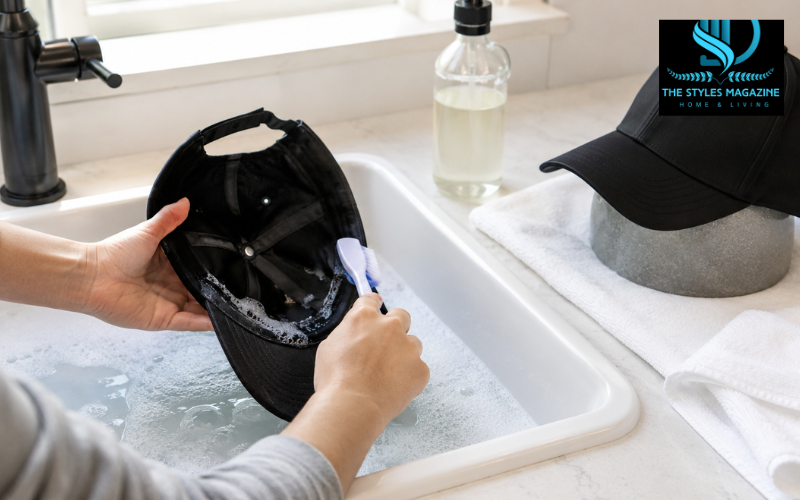
The safest answer for how to wash a hat by hand is to use cool or lukewarm water, mild detergent, and gentle movement. Start by filling a clean sink, basin, or bucket with cool or warm water. Avoid hot water because it may shrink the fabric or cause colors to fade. Add a small amount of mild laundry detergent and mix it into the water until it is evenly dissolved.
Place the hat into the water and gently move it around. Focus on the sweatband, crown, brim, and outer panels. Use your fingers or a soft cloth to clean general dirt. For stubborn areas, use a soft-bristled toothbrush, but scrub lightly. The goal is to lift dirt, not damage the threads.
Pay special attention to the sweatband because this is where sweat, oil, and odor collect most. Gently press the soapy water through the fabric instead of twisting or squeezing the hat aggressively. Avoid harsh cleaners, bleach, and rough brushes. These can fade colors, weaken fabric, or damage embroidery.
Hand washing works well because it gives you control. You can clean the areas that need attention without putting the whole hat through rough spinning or high heat.
How to Pre-Treat Sweat Stains, Salt Rings, and Odor
Before washing the whole hat, it is a good idea to pre-treat visible stains. Sweat stains, salt rings, and body oils are common, especially around the inner sweatband and front panels. These stains may not come out with a quick rinse, so treating them first makes the washing process more effective.
For salt rings, dab a small amount of white vinegar onto the stained area and let it sit for a few minutes. Vinegar can help loosen the buildup without being too harsh when used carefully. For body oils and greasy marks, apply a small amount of mild dish soap or an enzymatic stain remover to the sweatband. These cleaners can help break down oily residue.
Use a soft toothbrush or clean cloth to gently work the cleaner into the stained area. Move in small circles and avoid heavy scrubbing. If the hat has embroidery, printed designs, or delicate stitching, be extra careful around those spots.
Before using any cleaner, test it on a hidden part of the hat. This helps you check whether the color bleeds or fades. If the fabric reacts badly, stop and use a gentler spot-cleaning method.
How Long to Soak a Hat Before Rinsing
Soaking can help loosen dirt and sweat that are deep in the fabric, but it should only be used for hats that can safely handle water. For sturdy modern cotton or polyester caps, a short soak is usually enough. Let the hat sit in soapy water for about 15 to 30 minutes if it has light dirt or mild sweat marks.
For heavier sweat buildup, you may allow a longer soak, but avoid leaving the hat in water for too long without checking it. If the water becomes dirty, gently move the hat around and look at the stained areas. A long soak is not always better, especially if the hat has bright colors, delicate stitching, or a structured crown.
Some hats should not be soaked like regular caps. Wool hats, straw hats, leather hats, felt hats, and vintage hats with cardboard brims need more careful cleaning. These are better cleaned with spot treatment or a material-specific method. If you are unsure, choose the safer option and avoid full soaking.
How to Rinse a Hat Without Damaging It
After washing, rinse the hat with cool, clean water until all detergent is removed. Leftover soap can leave marks, attract more dirt, or irritate your scalp when you wear the hat again. Hold the hat under a gentle stream of water and use your fingers to press the fabric lightly.
Do not twist or wring the hat. Twisting can bend the brim and warp the front crown panels. Instead, gently press the fabric to help release the soap. Be careful around the brim because too much pressure can change its shape.
The rinse step is just as important as the wash step. Even if the hat looks clean, trapped detergent can dry into the fabric. Take your time and rinse until the water runs clear and the hat no longer feels slippery.
How to Dry a Hat So It Keeps Its Shape
Air drying is the safest way to dry a hat. Never place a baseball cap, snapback, or trucker hat in a clothes dryer. Dryer heat can shrink the fabric, fade the color, and ruin the shape. Even a sturdy hat can come out smaller, bent, or uncomfortable to wear.
After rinsing, place the hat on a clean towel and gently pat it to remove extra water. Do not crush the crown or press the brim too hard. Once the dripping has slowed, reshape the hat with your hands.
To help the crown keep its form, place the hat over an upside-down bowl, a large coffee can, a small ball, or a hat form. You can also pack the inside with clean microfiber towels. The support helps the hat dry in the same rounded shape it has when worn.
Keep the hat in a well-ventilated area away from harsh direct sunlight. Sunlight may fade darker colors. Let it dry fully before wearing it again, because wearing a damp hat can stretch the fabric or create odor.
How to Wash a Hat in the Washer
Many people search for how to wash a hat in the washer because it seems quick and easy. A washing machine can work for some sturdy modern hats, but it is riskier than hand washing. It is not a good choice for vintage hats, wool hats, leather hats, straw hats, delicate caps, or hats with cardboard brims.
If you want to know how to wash baseball cap in washing machine, start by checking the label and material. Use only cool water, mild detergent, and a gentle cycle. Place the hat inside a laundry bag or hat cage to reduce movement. Wash it with lightweight items, not heavy towels or jeans, because heavy items can crush the hat.
Avoid bleach, hot water, strong spin cycles, and fabric softeners. Once the wash is done, remove the hat immediately and reshape it for air drying. Never put it in the dryer.
Even when the washer method is possible, hand washing is still safer for most hats. The machine saves time, but it gives you less control over the hat’s shape and fabric.
Using a Hat Washer or Hat Cage
A hat washer or hat cage is a plastic frame made to hold a cap in shape during cleaning. It can help protect the crown and brim while the hat is being washed in a machine or, in some cases, a dishwasher. It is useful because hats can get crushed or twisted when they move around freely.
If you are learning how to wash a hat with a hat cage, remember that the cage is only a support tool. It does not make every hat safe to wash. A delicate wool cap, straw hat, leather hat, or vintage cardboard-brim hat can still be damaged even inside a cage.
For modern baseball caps, a hat cage can reduce the risk of warping. Use it with cool water, mild detergent, and a gentle cleaning method. After washing, remove the hat and let it air dry on a mold or towel support. Some people leave the hat in the cage while it dries, but make sure it has enough airflow.
How to Wash a Hat in the Dishwasher
Some people recommend dishwasher cleaning, but it should be treated as an alternative method, not the best method. If you are wondering how to wash a hat in the dishwasher, understand the risks first. Dishwashers may use hot water, strong detergent, and heated drying. These can damage fabric, fade colors, bend the brim, or weaken the structure.
There is also the issue of food residue. A dishwasher is made for dishes, not clothing or hats. If the machine is not clean, food particles or grease can transfer to the hat. Dishwasher detergent can also be too harsh for some fabrics.
This method may work only for sturdy modern caps if done very carefully. If used, place the hat in a hat cage on the top rack, use a gentle or cool setting if available, and avoid the heated dry cycle. Do not wash the hat with dirty dishes. Once the cycle finishes, reshape the hat and air dry it.
For most people, hand washing is still the better choice because it is gentler and easier to control.
How to Wash a Hat Without Washing It
Sometimes the best method is not a full wash. If your hat is delicate, vintage, lightly dirty, or made from straw, wool, leather, or felt, spot cleaning may be safer. Learning how to wash a hat without washing it can help freshen it up without soaking or risking damage.
Start by brushing away loose dust with a soft brush or lint roller. For small stains, use a damp cloth with a tiny amount of mild soap. Gently dab the area instead of rubbing hard. For odor, sprinkle a small amount of baking soda inside the hat, let it sit for a while, and then brush or shake it out carefully.
For sweatband odor, use a lightly damp cloth to wipe the inside band. You can also use a fabric-safe deodorizing spray if it is suitable for the material. Always test first on a hidden area.
Spot cleaning is especially helpful for hats that are not washable. It keeps cleaning focused only on the dirty areas and protects the rest of the hat.
Common Mistakes to Avoid When Washing a Hat
One of the biggest mistakes is using hot water. Hot water can shrink some materials and cause colors to fade. Cool or lukewarm water is safer for most washable hats. Another common mistake is putting the hat in a clothes dryer. The heat and tumbling can ruin the structure quickly.
Scrubbing too hard is also a problem. It may seem helpful when removing stains, but aggressive scrubbing can damage embroidery, loosen threads, and roughen the fabric. Use gentle pressure and repeat the cleaning process if needed.
Do not soak vintage hats with cardboard brims. Once cardboard absorbs water, it can lose its shape and become soft. You should also avoid bleach unless the care label clearly allows it, because bleach can discolor the fabric and weaken fibers.
Another mistake is treating every hat like a cotton baseball cap. A wool beanie, straw hat, leather cap, and structured snapback all need different levels of care. When in doubt, choose the gentlest method first.
What People Often Say Online About Washing Hats
Many people search how to wash a hat reddit because they want real experiences from other hat owners. Online discussions often compare hand washing, dishwasher cleaning, washing machine methods, and hat cages. Some people say they have washed caps in the dishwasher without problems, while others report bent brims, fading, or damaged shapes.
The reason advice varies so much is that hats are not all made the same. A method that works for one modern polyester cap may ruin a vintage cap or wool hat. The hat’s age, material, brim type, stitching, and structure all matter.
Online tips can be helpful, but the safest choice is to base your method on your actual hat. Check the label, look at the brim, consider the fabric, and choose the gentlest cleaning option that can still remove the dirt.
Conclusion
Knowing how to wash a hat properly helps you clean sweat, stains, dust, and odor without ruining the shape, color, or fit. For most everyday caps, hand washing with cool or lukewarm water and mild detergent is the safest and most effective method. It lets you clean the sweatband, crown, brim, and stained areas gently while keeping control over the hat’s structure.
Before washing any hat, check the care label, material, and brim. Pre-treat sweat stains and salt rings carefully, rinse out all soap, and air dry the hat with proper support. Avoid twisting, wringing, bleach, hot water, and dryer heat.
Machine washing, dishwasher cleaning, and hat cages can be useful in some cases, but they are not safe for every hat. If the hat is vintage, delicate, wool, straw, leather, or has a cardboard brim, spot cleaning is usually the better choice. With the right method, you can keep your hat fresh, comfortable, and ready to wear without damaging the look you like.
FAQs
What Is The Safest Way To Wash A Hat?
The safest way to wash a hat is by hand using cool or lukewarm water and mild detergent. This helps clean stains while protecting the hat’s shape, brim, and color.
Can I Wash A Hat In The Washing Machine?
Yes, some sturdy modern hats can be washed in the machine, but it is risky. Use a gentle cycle, cool water, mild detergent, and a hat cage for better protection.
Can I Wash A Hat In The Dishwasher?
You can wash some modern caps in the dishwasher, but it is not the safest method. Heat, strong detergent, and food residue can damage the hat or change its shape.
How Do I Dry A Hat After Washing It?
Pat the hat with a towel, reshape it, and air dry it over a bowl, towel, ball, or hat form. Never put it in a clothes dryer.
How Do I Clean A Hat Without Washing It?
Use spot cleaning for delicate or vintage hats. Gently wipe stains with a damp cloth, mild soap, or soft brush, and use baking soda to help reduce odor.
Enjoyed it? Find more exclusive content on The Styles Magazine.
Disclaimer: This article is for general cleaning guidance only. Always check your hat’s care label and test any cleaner on a hidden area first. Delicate, vintage, leather, wool, straw, or valuable hats may need professional cleaning.