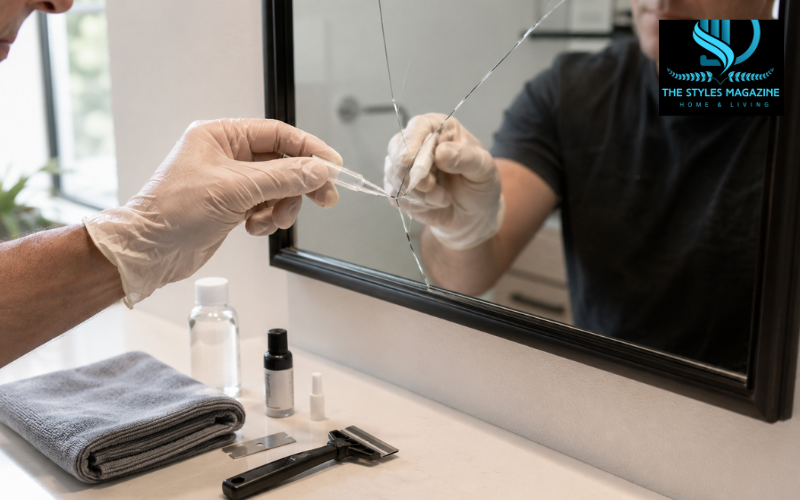
A cracked mirror can be frustrating, especially when the mirror is part of a bathroom wall, closet door, vanity, dresser, or full-length frame. At first, the damage may look small, but even a thin crack can become more noticeable over time if the mirror is moved, cleaned roughly, or exposed to pressure. That is why many homeowners search for how to fix a cracked mirror before deciding whether to repair it, cover it, or replace it.
The first thing to understand is simple: cracked glass cannot truly be restored to its original condition. Once a mirror has cracked, the glass layer has physically broken. No glue, resin, repair liquid, or household trick can make it exactly like new again. However, that does not mean every cracked mirror must be thrown away.
Small cracks, chips, and light surface damage can often be stabilized. In many cases, you can make the crack less visible, stop it from spreading quickly, or hide it in a creative way. The most common options include using a mirror repair kit, clear resin, two-part epoxy, decorative coverings, or full replacement when the damage is too large or unsafe.
This guide explains how to fix a cracked mirror at home in a practical and safe way. You will learn which method works best, which popular tricks are not worth relying on, and when replacing the mirror is the smarter choice.
Quick Guide Table
| Mirror Damage Type | Best Fix | Good For | Avoid This |
| Small hairline crack | Mirror repair kit | Minor cracks and chips | Pressing hard on the glass |
| Thin surface crack | Clear resin | Making cracks less visible | Using too much resin |
| Deeper small crack | Clear two-part epoxy | Stronger filling and sealing | Rushing drying time |
| Crack near edge | Repair only if stable | Temporary stabilization | Ignoring spreading cracks |
| Large or loose crack | Replace the mirror | Safety and long-term use | Super glue or toothpaste |
| Cosmetic crack | Decorative cover-up | Hiding visible damage | Covering unsafe broken glass |
Understanding What Type of Mirror Crack You Have
Before choosing a repair method, look closely at the crack. Not all mirror cracks are the same, and the right fix depends on the size, depth, and location of the damage.
A hairline crack is usually thin, straight, and not very deep. This is the easiest type to improve with a mirror repair kit or resin. A chip is a small missing piece of glass, often near the edge or corner. Chips can sometimes be filled, but they may still remain visible.
A deep crack is more serious. If you can feel the crack clearly with your fingernail, or if the mirror looks split across the surface, the repair will mostly be cosmetic. A spreading crack, especially one that runs from the edge toward the center, needs careful attention because edge cracks can weaken the whole mirror.
You should also check the mirror backing. If the reflective coating behind the glass is damaged, black, peeling, or missing, front-side resin will not fully fix the look. Repair kits can improve cracks in the glass, but they cannot restore damaged silvering behind the mirror.
When a Cracked Mirror Can Be Repaired and When It Should Be Replaced
A cracked mirror can usually be repaired at home only when the damage is small, stable, and not in a high-risk area. For example, a short hairline crack near a corner of a framed mirror may be worth fixing with resin or a repair kit. A small chip on the edge of a decorative mirror may also be filled or hidden.
Replacement is usually better when the crack is long, deep, branching, or running from one edge to another. If the mirror feels loose, wobbly, or unsafe in its frame, do not try to rely on glue alone. Large bathroom mirrors, closet door mirrors, and full-length mirrors can be dangerous if cracked glass breaks further.
A mirror should also be replaced if it is shattered into several pieces. Even if the pieces are glued together, the reflection will not look normal, and the mirror may remain unsafe. Current DIY guidance generally treats repair kits as useful for small cracks and chips, but not as a full structural repair for badly broken mirrors.
Safety Steps Before Fixing a Cracked Mirror at Home
Safety should come before appearance. A cracked mirror has sharp edges, even when the crack looks small. Before touching it, wear gloves and eye protection. Keep children and pets away from the area while you work.
Do not press hard on the glass. Pressure can make the crack spread or cause pieces to loosen. If the mirror is hanging on a wall, make sure it is firmly attached. If it moves when touched, repair may not be safe until the mirror is removed and supported properly.
Clean the area gently. Use a microfiber cloth and rubbing alcohol to remove dust, grease, and tiny glass particles. Avoid soaking the crack with water, especially if the mirror backing is exposed. Moisture can damage the reflective layer and may cause dark spots later.
If you see loose shards, do not try to push them back with your fingers. Use tape to secure the area temporarily, or consider replacing the mirror instead of repairing it.
Tools and Materials Needed for Mirror Crack Repair
For most small mirror repairs, you only need simple items. A basic repair setup may include rubbing alcohol, microfiber cloths, disposable gloves, painter’s tape, a razor blade scraper, clear resin, epoxy, or a glass repair kit.
A mirror repair kit or windshield repair kit usually includes clear resin, an applicator, curing strips, and sometimes a syringe. These kits are made to fill cracks in glass and reduce the appearance of damage. They work best on clean, small cracks.
If you choose epoxy, use a clear two-part epoxy rather than regular household glue. For decorative fixes, you may need vinyl stickers, mirror film, trim, tiles, or metallic powder mixed with resin.
The goal is not to overload the mirror with product. A thin, careful application usually looks better than a thick layer of glue or resin.
How to Fix a Cracked Mirror with a Mirror Repair Kit
Using a mirror repair kit is one of the most practical DIY methods for small cracks. It works by pushing clear resin into the crack so light passes through the damaged area more evenly. The crack may not disappear completely, but it can become less noticeable.
Start by cleaning the mirror with rubbing alcohol and a soft cloth. Let it dry fully. Place the stabilizer film or adhesive patch from the kit over the crack, following the kit instructions. This helps hold the resin in place while it fills the damaged line.
Next, apply the resin through the applicator or syringe. Work slowly so the liquid enters the crack instead of spreading across the mirror surface. Once the resin is applied, allow it to cure for the recommended time. Some products cure in sunlight, while others need a UV light or a longer indoor drying period.
After curing, remove the film and gently scrape away extra resin with a razor blade held at a shallow angle. Do not dig into the glass. Clean the surface again with glass cleaner.
This method is best for hairline cracks, small chips, and minor surface damage. It is not suitable for mirrors with loose glass or large broken sections.
How to Fix a Cracked Mirror with Resin
Clear resin is another useful option when you want to fill a crack and make it less visible. Many people search for how to fix a cracked mirror with resin because resin can flow into narrow gaps and harden into a clear finish.
The process is similar to using a repair kit. Clean the mirror first, then protect the surrounding area with painter’s tape if needed. Apply a small amount of clear resin directly into the crack. A toothpick, fine brush, or small applicator can help you guide the resin neatly.
Let the resin settle into the crack. If bubbles appear, gently tap near the area or use the applicator to release them. Bubbles can make the repair more visible after curing. Once the resin has hardened, scrape off the excess carefully and polish the surface with a clean cloth.
Resin is helpful for making cracks less obvious, but it will not make the glass strong like new. It is best for mirrors that are not under pressure and are not handled often.
How to Fix a Cracked Mirror with Clear Epoxy
Clear two-part epoxy can be useful for deeper cracks or small chips because it forms a strong bond after curing. It is thicker than many resins, so it may not flow as easily into a very thin crack, but it can work well when applied carefully.
To use epoxy, clean and dry the mirror first. Mix the resin and hardener according to the product instructions. Do not guess the ratio, because incorrect mixing can leave the epoxy sticky or cloudy.
Apply a very small amount into the crack using a toothpick or fine applicator. Keep the layer narrow and controlled. Too much epoxy can leave a raised patch that is hard to remove.
Let the epoxy cure completely. Many products need several hours, and some need a full day. Once dry, gently scrape excess material from the surface. Clear epoxy is a better choice than super glue for most mirror cracks because it is more durable and gives you more control during application.
Can You Fix a Cracked Mirror with Super Glue?
Super glue can hold small things together, but it is not the best answer for how to fix a cracked mirror. It dries quickly, which sounds helpful, but that can actually make the repair harder. It may not flow deeply into the crack, and it can leave cloudy marks or rough patches on the glass.
Super glue may temporarily stop a tiny edge chip from worsening, but it is not ideal for visible mirror cracks. It also does not give the same clear finish as glass resin or epoxy. If too much glue is used, the repair may look worse than the original crack.
If you only need a temporary hold on a hidden edge, super glue may help for a short time. For a cleaner and longer-lasting result, a mirror repair kit, resin, or clear epoxy is usually a better option.
Can You Fix a Cracked Mirror with Toothpaste?
Toothpaste is often mentioned online as a quick mirror repair trick. Some people even search for how to fix a cracked mirror with toothpaste after seeing short videos or DIY posts. The truth is that toothpaste does not fix a cracked mirror.
Toothpaste may slightly polish very light surface marks on glass, but it cannot fill a real crack. It does not bond broken glass, stabilize the mirror, or stop a crack from spreading. At best, it may make a tiny scratch look a little softer for a short time.
If your mirror has an actual crack, toothpaste is not the right repair method. Use a proper glass repair product instead. Toothpaste is also messy and can leave residue inside the crack, making it harder for resin or epoxy to bond later.
How to Fix a Cracked Mirror Closet Door Safely
A cracked mirror closet door needs extra care because it moves every time the door opens or closes. That movement can make cracks spread faster. If the mirror is attached to a sliding closet door, do not slam or force the door while the glass is damaged.
First, check whether the crack is small and stable. If the crack is long, deep, or near the edge, replacement is usually safer. Closet door mirrors are large, and broken glass can be dangerous if it loosens from the backing.
For a small crack, clean the area gently and apply a glass repair kit or clear resin. Let it cure fully before using the door normally. You can also add clear safety film over the mirror to help hold the surface together. This will not repair the crack, but it can reduce the risk of loose pieces falling.
If the mirror is cracked across a large section, contact a glass professional or replace the mirror panel. Safety matters more than saving a damaged closet mirror.
How to Stop a Mirror Crack from Spreading
To stop a mirror crack from spreading, reduce pressure and movement first. Do not push on the glass, hang heavy items from the frame, or clean the crack with force. If the mirror is loose, secure the frame or remove the mirror carefully.
A glass repair kit or clear resin can help stabilize a small crack by filling the gap. This may slow down spreading, especially when the crack is clean and dry. For edge cracks, you can also use clear tape as a short-term safety measure until you decide on repair or replacement.
Avoid heat changes when possible. Placing a cracked mirror near strong sunlight, heaters, or cold drafts can stress the glass. Sudden temperature changes may make existing cracks worse.
The most important point is to act early. A small crack is easier to manage than a long crack that has already spread across the mirror.
Decorative Ways to Hide a Crack in a Mirror
Sometimes the best solution is not to make the crack invisible, but to hide it or turn it into part of the design. This works especially well when the mirror is decorative and the crack is near the edge or corner.
You can apply a vinyl design over the cracked area, add a decorative border, or use small glass tiles around the edge. If the crack is near the bottom of a wall mirror, a vase, plant, or tray may hide the damage naturally.
Another creative option is a kintsugi-style design. Instead of pretending the crack is gone, you apply clear epoxy mixed with gold or metallic powder along the crack line. This creates an intentional decorative seam. It will not restore the mirror, but it can make the damage look artistic.
Decorative fixes are best for mirrors that are still stable and safe. If the glass is loose or badly cracked, decorate only after the mirror has been replaced or secured.
Common Mistakes to Avoid When Repairing a Cracked Mirror
One common mistake is expecting the mirror to look brand new after repair. Even good resin work may leave a faint line, especially in bright light. A realistic goal is to make the crack safer and less noticeable.
Another mistake is using the wrong product. Regular glue, toothpaste, nail polish, or random “mirror repair liquid” may not give a strong or clear result. Choose products made for glass repair whenever possible.
Do not skip cleaning. Dust, grease, and glass particles can stop resin or epoxy from bonding properly. Also, do not rush curing time. If the product needs several hours, give it the full time before scraping or cleaning.
Finally, do not repair a mirror that should clearly be replaced. Large cracks, loose pieces, and shattered mirrors are safety risks.
How Much Does It Cost to Fix or Replace a Cracked Mirror?
The cost depends on the mirror size, damage, and repair method. A DIY repair using resin, epoxy, or a mirror repair kit is usually the cheapest option. Recent cost guides commonly place basic DIY materials around the lower-cost range, while professional repair and full replacement can cost much more depending on size and installation.
A small repair kit may cost less than replacing a large bathroom or closet mirror. However, if the crack is serious, spending money on a repair product may only delay replacement.
Professional repair may make sense for antique, custom, or expensive mirrors. For standard mirrors, replacement is often more practical when the damage is large. Large wall mirrors, shaped mirrors, and closet door mirrors usually cost more to replace because of cutting, handling, and installation.
Best Repair Method Based on Crack Size and Location
For a small hairline crack, a mirror repair kit is usually the best first choice. It is made for glass cracks and gives a cleaner result than household glue.
For a deeper crack or small chip, clear resin or two-part epoxy may work better. Resin flows into thin spaces, while epoxy can fill slightly larger damaged spots.
For a crack near the edge, repair may help, but watch it carefully. Edge cracks can spread because the edge of the glass carries stress. If the crack runs from edge to edge, replacement is usually safer.
For a cracked mirror closet door, safety film, resin, or replacement may be needed depending on the size of the crack. Since the door moves often, do not ignore the damage.
For a large, branching, or loose crack, replacement is the best option. No DIY method can make badly broken glass fully safe again.
Conclusion
Learning how to fix a cracked mirror starts with understanding what repair can and cannot do. A small crack, chip, or light surface mark can often be stabilized or disguised at home. A mirror repair kit, clear resin, or clear epoxy can make the damage less visible and may help stop the crack from spreading.
However, cracked glass cannot be fully restored to new condition. Toothpaste and super glue are not reliable choices for real mirror cracks. They may seem convenient, but they do not offer the same clean and stable result as products made for glass repair.
If the mirror has a large crack, deep break, edge-to-edge split, loose glass, or shattered pieces, replacement is the safer choice. For small and stable cracks, a careful DIY repair can be worth trying. Choose the method that matches your mirror’s damage, work slowly, and always put safety before appearance.
FAQs
Can A Cracked Mirror Be Fully Repaired?
No, a cracked mirror cannot be restored to brand-new condition. However, small cracks can often be filled, stabilized, or hidden using resin, epoxy, or a mirror repair kit.
What Is The Best Way To Fix A Cracked Mirror At Home?
The best way is to use a mirror repair kit or clear resin for small cracks. These options help fill the crack and reduce its visibility without making the damage worse.
Can Toothpaste Fix A Cracked Mirror?
No, toothpaste cannot fix a real mirror crack. It may slightly polish tiny surface scratches, but it cannot fill broken glass, stop spreading, or strengthen the mirror.
Can I Use Super Glue On A Cracked Mirror?
Super glue is not recommended for visible mirror cracks. It can dry cloudy, leave marks, and may not fill the crack properly. Clear resin or epoxy works better.
When Should I Replace A Cracked Mirror?
Replace the mirror if the crack is large, deep, spreading, edge-to-edge, or if the glass feels loose. In these cases, repair is usually unsafe and only temporary.
Enjoyed it? Find more exclusive content on The Styles Magazine.
Disclaimer: This article is for general home improvement information only. Mirror repair results may vary depending on the crack size, mirror type, and product used. If the mirror is large, loose, deeply cracked, or unsafe to handle, contact a professional glass repair expert or replace the mirror.