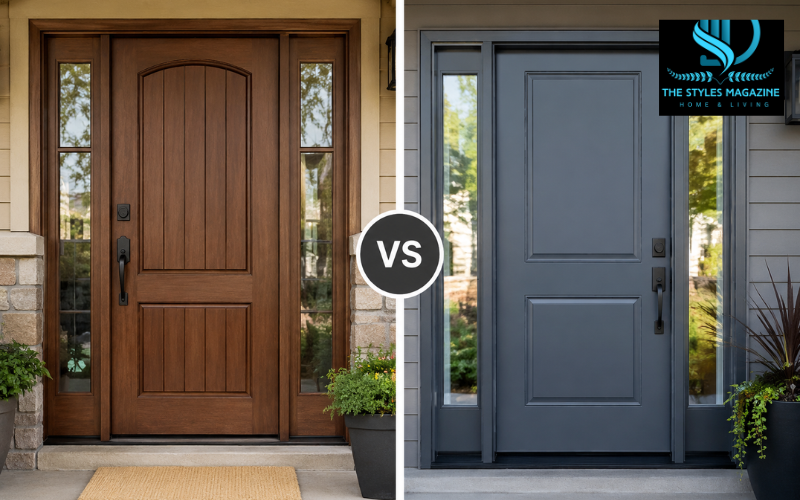
Choosing the right entry door is more important than many homeowners realize. Your front door is not only the first thing people see, but it also plays a major role in your home’s security, comfort, and energy efficiency. When comparing options, the debate often comes down to fiberglass vs steel door—two of the most popular and practical choices available today.
Fiberglass doors are known for their durability, low maintenance, and ability to mimic the look of real wood. Steel doors, on the other hand, are widely appreciated for their affordability and strong security features. Both options have their own strengths, and the right choice depends on your priorities.
This comparison matters because homeowners today are looking for doors that offer long-term value. Rising energy costs, changing weather conditions, and the need for better home security all influence buying decisions. Factors like cost, durability, insulation, appearance, and maintenance requirements are now more important than ever.
In this guide, we’ll break down everything you need to know about fiberglass vs steel doors in simple terms. By the end, you’ll have a clear understanding of which option suits your home, your budget, and your lifestyle.
Fiberglass vs Steel Door
| Feature | Fiberglass Door | Steel Door |
| Price | Higher upfront cost | More affordable |
| Durability | Won’t dent, rust, or rot | Strong but can dent and rust |
| Maintenance | Very low | Moderate (needs touch-ups) |
| Energy Efficiency | Excellent insulation | Good but conducts heat |
| Security | Strong, but can crack under force | Very strong, hard to break |
| Appearance | Realistic wood look | Smooth, limited wood-like options |
| Lifespan | Longer-lasting overall | Durable but may show wear earlier |
Understanding Fiberglass and Steel Doors
To make the right choice, it’s important to first understand what fiberglass and steel doors actually are and how they are made.
A fiberglass door is made from reinforced fiberglass panels that are molded over a solid core, usually filled with insulating foam. This construction makes the door strong, lightweight, and resistant to moisture. One of the biggest advantages of fiberglass is its ability to replicate the natural look of wood grain, giving homeowners a premium appearance without the drawbacks of real wood.
A steel door, as the name suggests, is built with an outer layer of steel. Inside, it typically has a foam core for insulation. The steel panels are strong and provide excellent resistance against forced entry. Most steel doors also have a protective coating or paint finish to prevent rust and corrosion.
In terms of construction, fiberglass doors focus more on flexibility and resistance to environmental damage, while steel doors prioritize strength and security. Both use insulated cores, but the outer materials behave very differently when exposed to impact, moisture, and temperature changes.
Fiberglass vs Steel Door Cost Breakdown
Cost is often one of the first things homeowners consider when choosing a door. In the comparison of fiberglass vs steel door cost, there is a clear difference in upfront pricing.
Steel doors are generally more affordable. Basic models can start at a lower price point, making them a popular choice for homeowners on a tight budget. Even higher-quality steel doors tend to remain within a reasonable range compared to other materials.
Fiberglass doors, however, come with a higher initial price. The advanced materials and realistic finishes contribute to the cost. While they may seem expensive at first, many homeowners see them as a long-term investment.
Installation costs for both types are usually similar, although heavier steel doors may sometimes require additional labor. The real difference becomes more noticeable over time. Fiberglass doors require very little maintenance, which can save money in the long run. Steel doors may need repainting or repairs if they get scratched or dented, especially if rust begins to form.
When looking at overall value, steel doors are budget-friendly upfront, while fiberglass doors often provide better long-term savings due to lower maintenance and longer lifespan.
Durability and Lifespan Comparison
Durability is a key factor when comparing fiberglass vs steel doors, especially if you want a door that will last for many years.
Fiberglass doors are highly resistant to common issues like dents, rust, and rot. They handle moisture extremely well, which makes them a great option for humid or coastal environments. Unlike wood or steel, fiberglass does not swell or warp when exposed to changing weather conditions. However, under a strong impact, fiberglass can crack or chip.
Steel doors are known for their strength, but they are not completely damage-proof. They can dent if hit with enough force, and once dented, the surface can be difficult to repair. If the protective coating gets scratched, the exposed metal may start to rust over time, especially in areas with high humidity.
In extreme climates, fiberglass tends to perform better because it does not expand or contract as much as steel. Steel doors can become very hot in direct sunlight or cold in winter, which may affect comfort.
In terms of lifespan, both types can last for many years with proper care. However, fiberglass doors generally maintain their appearance and performance longer, while steel doors may show visible wear sooner.
Energy Efficiency and Insulation Performance
Energy efficiency is another important consideration, especially with rising utility costs. When comparing fiberglass vs steel doors energy efficiency, both options perform well, but there are some differences.
Fiberglass doors are often considered the better insulator. They usually have a thick foam core that helps keep indoor temperatures stable. The outer fiberglass material does not conduct heat easily, which improves overall insulation.
Steel doors also include an insulated core, but steel itself is a conductor of heat. This means that external temperatures can transfer more easily through the door’s surface. While modern steel doors are still energy-efficient, they may not match the performance of high-quality fiberglass models.
The difference in insulation can affect your energy bills over time. A well-insulated fiberglass door can help reduce heating and cooling costs, especially in areas with extreme temperatures. It also improves indoor comfort by minimizing drafts.
Overall, if energy efficiency and insulation are top priorities, fiberglass doors tend to have a slight advantage.
Security Strength and Protection Levels
Security is often one of the biggest concerns for homeowners, and both door types offer strong protection. In the comparison of fiberglass vs steel door security, steel doors are usually seen as the stronger option.
Steel doors are extremely tough and difficult to break through. They are widely used in both residential and commercial settings because of their strength. In most cases, a steel door will bend under extreme force rather than break, which adds to its security advantage.
Fiberglass doors are also secure, especially when paired with high-quality locks and frames. However, under very strong impact, fiberglass can crack, which may make it slightly less resistant than steel in extreme situations.
It’s important to remember that security does not depend only on the door material. The quality of the frame, locks, and installation also plays a major role. A well-installed fiberglass door can still provide excellent protection for most homes.
In general, if maximum security is your top priority, steel doors are often the preferred choice. For standard residential use, both options can provide reliable safety.
Appearance, Style, and Design Flexibility
The look of your door can greatly impact your home’s curb appeal. When it comes to style, fiberglass doors have a clear advantage.
Fiberglass doors are designed to closely mimic the appearance of real wood. They come in a wide range of textures, finishes, and colors, allowing homeowners to achieve a high-end look without the maintenance of wood. This makes them a popular choice for those who want both beauty and durability.
Steel doors usually have a smoother and simpler appearance. While they are available in different colors and designs, they do not replicate wood grain as realistically as fiberglass. This can make them feel more basic or modern, depending on the style.
In terms of customization, fiberglass offers more flexibility. Homeowners can choose from various finishes, stains, and decorative options to match their home’s design.
If appearance and design are important to you, fiberglass doors provide more variety and a more natural look.
Maintenance Requirements and Long-Term Care
Maintenance is another key factor when comparing fiberglass vs steel doors. Homeowners often prefer options that require less effort over time.
Fiberglass doors are very low maintenance. They do not rust, rot, or warp, and they only need occasional cleaning with soap and water. The finish usually lasts for many years without needing repainting.
Steel doors require a bit more attention. While they are durable, they can develop scratches or dents. If the paint is damaged, it’s important to repair it quickly to prevent rust. Over time, steel doors may need repainting to maintain their appearance and protect the surface.
In terms of repair, fiberglass doors can be more difficult to fix if they crack, while steel doors can sometimes be patched, although dents may remain visible.
Overall, fiberglass doors are easier to maintain, making them a convenient choice for busy homeowners.
Pros and Cons of Fiberglass vs Steel Doors
When looking at the pros and cons of fiberglass vs steel doors, each option has its own strengths and weaknesses.
Fiberglass doors offer excellent durability, low maintenance, and superior insulation. They also provide a wide range of design options and closely resemble real wood. However, they come with a higher upfront cost and may crack under heavy impact.
Steel doors are more affordable and provide strong security. They are widely available and offer good value for money. On the downside, they can dent, may rust if damaged, and typically require more maintenance over time.
This balanced comparison shows that neither option is perfect. The best choice depends on what matters most to you—whether it’s cost, appearance, durability, or security.
Fiberglass vs Steel Door vs Wood: How Do They Compare?
While fiberglass and steel are popular choices, wood doors are still an option worth considering in some cases.
Wood doors offer a classic and natural appearance that many homeowners love. However, they require regular maintenance to prevent issues like warping, cracking, and moisture damage. They are also usually more expensive than steel and may not last as long as fiberglass in harsh climates.
Compared to wood, fiberglass doors provide a similar look with much less maintenance. Steel doors, while not as visually appealing, offer better security and lower cost.
In terms of durability and maintenance, fiberglass is often the most practical option, while wood is chosen mainly for its traditional appearance.
Wood may still be a good choice for homeowners who prioritize style and are willing to invest time and effort into maintenance.
Which Door Is Right for Your Home?
Choosing between fiberglass vs steel door ultimately depends on your specific needs.
If you are working with a limited budget, a steel door may be the best option. It provides solid security at an affordable price, making it a practical choice for many homeowners.
For those who prioritize security above all else, steel doors remain a strong option due to their resistance to forced entry.
If energy efficiency and comfort are important, fiberglass doors are often the better choice. Their insulation properties help maintain indoor temperatures and reduce energy costs.
Homeowners who care about appearance and curb appeal may also prefer fiberglass, as it offers more design options and a realistic wood look.
Climate is another important factor. In areas with high humidity or extreme weather, fiberglass doors tend to perform better and last longer.
Conclusion
The choice between a fiberglass vs steel door comes down to understanding your priorities. Fiberglass doors offer long-lasting durability, excellent insulation, and attractive designs, making them a great investment for homeowners who want a low-maintenance, high-quality option. Steel doors, on the other hand, provide strong security and affordability, making them a practical choice for budget-conscious buyers.
Both options have their advantages, and neither is universally better than the other. By considering factors like cost, durability, energy efficiency, and style, you can choose a door that fits your home and lifestyle.
In the end, the best door is the one that meets your needs today while continuing to perform well for years to come.
FAQs
Which Is Better, Fiberglass Or Steel Door?
Fiberglass is better for durability, insulation, and low maintenance, while steel is better for budget and security. The best choice depends on your priorities and home conditions.
Do Fiberglass Doors Last Longer Than Steel Doors?
Yes, fiberglass doors generally last longer because they resist rust, dents, and weather damage better than steel doors, which can wear over time if not properly maintained.
Are Steel Doors More Secure Than Fiberglass Doors?
Steel doors are usually more secure because they are harder to break through. However, fiberglass doors still offer strong security when installed with quality locks and frames.
Which Door Is More Energy Efficient?
Fiberglass doors are more energy efficient because they provide better insulation and do not conduct heat as much as steel doors, helping maintain indoor temperature.
Is Fiberglass Worth The Higher Cost?
Yes, fiberglass is often worth the cost due to its long lifespan, minimal maintenance, and better insulation, making it a smart long-term investment for many homeowners.
Enjoyed it? Find more exclusive content on The Styles Magazine.
Disclaimer: This content is for informational purposes only. Prices, performance, and durability may vary based on brand, installation, and environmental conditions. Always consult a professional before making final purchasing or installation decisions.