If your shower has started to feel weaker than usual or the water sprays in odd directions, there’s a good chance your shower head needs cleaning. Over time, shower heads naturally collect mineral buildup, limescale, and even mold. These deposits can block the small holes where water flows through, reducing pressure and affecting your overall shower experience.
Knowing how to clean a shower head properly is important not only for maintaining strong water flow but also for keeping your bathroom hygienic. A dirty shower head can harbor bacteria and mold, which is not ideal for something you use daily.
There are several simple ways to clean a shower head. Some methods use common household items like vinegar, while others involve removing the fixture for a deeper clean. There are also options for those who prefer not to use vinegar at all. In this guide, you’ll learn all the effective methods, when to use each one, and how to keep your shower head clean for longer.
Easy Comparison
| Method | Best For | Time Needed | Tools Required |
| Vinegar Soak (Bag Method) | Light to medium buildup | 30–60 mins | Vinegar, plastic bag |
| Deep Clean (Remove Head) | Heavy blockage | 1–2 hours | Wrench, bowl, vinegar |
| Baking Soda + Vinegar | Stubborn limescale | 45–60 mins | Baking soda, vinegar |
| Without Vinegar | Sensitive finishes | 30 mins | Lemon, mild cleaner |
| Toothpick Cleaning | Clogged holes | 10–15 mins | Toothpick |
Why Shower Heads Get Dirty and Lose Pressure
Shower heads are constantly exposed to water, and if your home has hard water, minerals like calcium and magnesium can build up quickly. This buildup, often called limescale, forms a hard, white layer that clogs the tiny spray holes.
In addition to minerals, moisture creates the perfect environment for mold and bacteria. Over time, this can lead to dark spots or slimy residue forming on or inside the shower head.
As these deposits grow, they restrict water flow. This is why your once powerful shower may start to feel weak or uneven. Cleaning your shower head regularly helps prevent these issues and keeps your water flowing smoothly.
Signs Your Shower Head Needs Cleaning
It’s usually easy to tell when your shower head needs attention. One of the most common signs is reduced water pressure. If the water isn’t flowing as strongly as before, buildup is likely blocking the openings.
You may also notice visible white or green residue around the nozzles. This is a clear sign of mineral deposits. In some cases, water may spray in different directions instead of flowing evenly, which means some holes are clogged while others remain open.
Another sign is an unusual smell or discoloration, which could indicate mold or bacteria. If you notice any of these issues, it’s time to clean your shower head.
How to Clean a Shower Head Without Taking It Off
One of the easiest ways to clean a shower head is without removing it. This method works well for regular maintenance or light buildup.
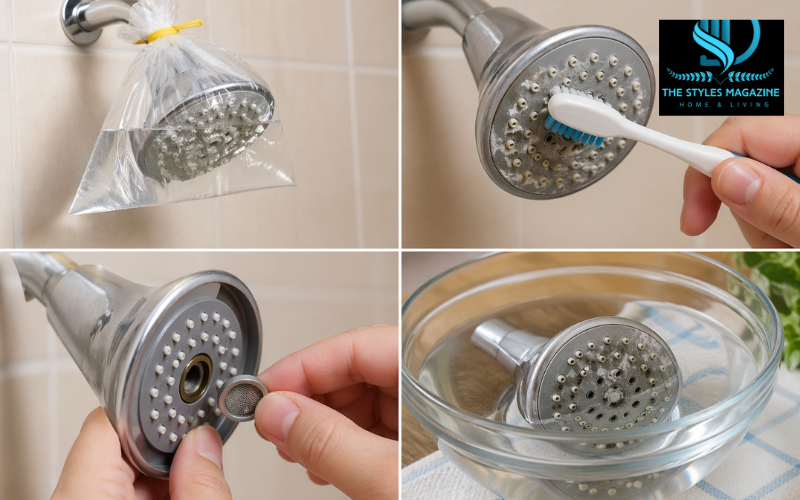
To do this, you can use a simple bag-and-soak method. Fill a plastic bag with distilled white vinegar and place it over the shower head so that the entire fixture is submerged. Secure the bag tightly with a rubber band or string to hold it in place.
This method is ideal when you want a quick and effective solution without dealing with tools. It allows the vinegar to break down mineral deposits while the shower head remains attached. After soaking for about 30 minutes to an hour, remove the bag, gently scrub the nozzles, and run hot water to flush out any loosened debris.
How to Clean a Shower Head With Vinegar
Vinegar is one of the most effective and widely used solutions for cleaning shower heads. Its natural acidity helps dissolve limescale and mineral buildup without the need for harsh chemicals.
When learning how to clean a shower head with vinegar, the key is soaking. For mild buildup, a short soak of 30 to 60 minutes is usually enough. For more stubborn deposits, you can leave it for a few hours.
However, it’s important to be careful with certain finishes. Shower heads made from brass or those with gold or nickel plating can be sensitive to acid. In these cases, limit the soaking time to avoid damage.
After soaking, a gentle scrub with a toothbrush helps remove any remaining residue. Running hot water afterward ensures everything is flushed out properly.
Deep Cleaning by Removing the Shower Head
Sometimes, surface cleaning isn’t enough, especially if the buildup has affected internal parts. In this case, removing the shower head allows for a deeper clean.
Unscrewing the shower head gives you access to areas that are not reachable otherwise. Inside, you may find a small filter screen that traps debris. Cleaning this part can significantly improve water pressure.
Soaking the entire shower head in a vinegar and water solution helps loosen buildup both inside and outside. After soaking, use a soft brush to clean the surfaces and rinse thoroughly.
When reattaching the shower head, make sure it is secured properly to prevent leaks. Adding fresh plumber’s tape can help create a tight seal.
How to Clean a Shower Head With Baking Soda and Vinegar
For tougher buildup, combining baking soda and vinegar can provide extra cleaning power. This method is useful when vinegar alone doesn’t fully remove the deposits.
Baking soda acts as a gentle abrasive, while vinegar dissolves mineral buildup. When combined, they create a reaction that helps loosen stubborn residue.
To use this method, apply a paste made from baking soda and a small amount of water directly to the nozzles. Then add vinegar to activate the cleaning process. After letting it sit, gently scrub the surface to remove buildup.
This approach works well for heavily clogged shower heads and restores both appearance and water flow.
How to Clean a Shower Head Without Vinegar
Not everyone prefers using vinegar, especially because of its strong smell or its effect on certain finishes. Fortunately, there are alternative methods.
Lemon juice is a popular option because it contains natural acids that work similarly to vinegar. It can help break down limescale while leaving a fresh scent. Mild household cleaners can also be used for light cleaning.
When using alternatives, it’s best to choose gentle solutions that won’t damage the surface of the shower head. These methods are especially useful for delicate materials that require extra care.
How to Clean Shower Head Without Vinegar or Baking Soda
If you prefer to avoid both vinegar and baking soda, simple cleaning can still be effective. Warm water combined with brushing can remove light buildup and keep the shower head functioning properly.
Using mild soap is another option for regular maintenance. It helps clean dirt and residue without introducing strong chemicals.
This method works best when cleaning is done regularly before heavy buildup forms. It’s a simple way to maintain cleanliness without using acidic or abrasive substances.
How to Clean a Shower Head With a Toothpick
Sometimes, even after soaking, small particles remain stuck inside the nozzles. In such cases, using a toothpick can help clear blockages.
Gently inserting a toothpick into each hole allows you to remove debris that soaking may not fully loosen. This method is particularly useful when water sprays unevenly.
It’s important to be careful and avoid using too much force, as this could damage the nozzles. When done gently, this technique can restore proper water flow quickly.
Choosing the Right Shower Head Cleaner
There are many cleaning options available, from natural solutions to commercial products. Natural cleaners like vinegar and lemon are safe, affordable, and effective for most situations.
Commercial descalers are stronger and can remove heavy buildup more quickly. These are useful when the shower head hasn’t been cleaned for a long time.
Choosing the right cleaner depends on the level of buildup and the material of your shower head. For regular maintenance, natural methods are usually enough. For severe cases, stronger products may be needed.
Is Mold on a Shower Head Dangerous?
Mold on a shower head is not just unpleasant to look at; it can also pose health risks. While small amounts may not be harmful, prolonged exposure can affect people with allergies or respiratory issues.
Mold thrives in damp environments, making shower heads a common place for it to grow. Regular cleaning helps prevent mold from forming in the first place.
If mold buildup is extensive and difficult to remove, replacing the shower head may be a safer option. Keeping your bathroom well-ventilated also helps reduce moisture and prevent mold growth.
How Often Should You Clean Your Shower Head
Cleaning frequency depends on how often the shower is used and the type of water in your home. In areas with hard water, buildup can form quickly, so cleaning once a month is recommended.
For homes with softer water, cleaning every couple of months may be enough. Regular maintenance prevents heavy buildup and makes cleaning easier.
A simple routine, such as a quick soak or rinse, can keep your shower head in good condition and maintain strong water pressure.
Tips to Keep Your Shower Head Clean Longer
Keeping your shower head clean doesn’t require much effort if you follow a few simple habits. Wiping it down occasionally and running hot water after use can help prevent buildup.
Installing a water filter or softener can reduce mineral deposits, especially in areas with hard water. This not only protects your shower head but also improves overall water quality.
Regular light cleaning is the best way to avoid deep buildup. By staying consistent, you can keep your shower head working efficiently for a long time.
Conclusion
Learning how to clean a shower head is a simple but important part of home maintenance. Whether you choose to use vinegar, remove the fixture for deep cleaning, or try alternative methods, each approach can help restore water flow and improve cleanliness.
Regular cleaning prevents buildup, keeps your shower hygienic, and ensures a better experience every day. By choosing the method that suits your needs and maintaining a simple routine, you can keep your shower head in excellent condition without much effort.
FAQs
How Often Should I Clean My Shower Head?
You should clean your shower head at least once a month, especially if you have hard water. Regular cleaning prevents buildup and keeps water pressure strong.
Can I Clean A Shower Head Without Removing It?
Yes, you can easily clean it using a vinegar-filled plastic bag attached to the shower head. This method works well for regular maintenance and light buildup.
What Is The Best Cleaner For A Shower Head?
Vinegar is the most effective natural cleaner for removing limescale. For heavy buildup, commercial descalers can also be used for faster results.
Is Mold On A Shower Head Harmful?
Mold can cause health issues, especially for people with allergies. Regular cleaning helps prevent mold growth and keeps your shower safe to use.
Can I Clean A Shower Head Without Vinegar Or Baking Soda?
Yes, you can use warm water, mild soap, or lemon juice for gentle cleaning. These methods work best for light maintenance and sensitive finishes.
Enjoyed it? Find more exclusive content on The Styles Magazine.
Disclaimer: This article is for general informational purposes only. Cleaning methods may vary depending on your shower head material and condition. Always test cleaning solutions on a small area first to avoid damage.