The Eagleston Holly Tree is a popular evergreen tree that many homeowners and landscapers choose for its beauty, structure, and reliability. Known for its glossy green leaves and bright red berries, this tree adds color and life to landscapes throughout the year. Its neat shape and dense growth make it especially useful for privacy screens, decorative plantings, and formal garden designs.
This tree is a hybrid holly, created by crossing two well-known species: the American holly and the Dahoon holly. The result is a plant that combines the strength and adaptability of both parents. Because it stays green in every season and grows into a balanced pyramidal shape, the Eagleston Holly Tree often becomes a standout feature in gardens, yards, and commercial landscapes.
Many property owners choose this tree because it is relatively easy to care for and offers long-lasting visual appeal. Its leaves are smoother and less spiny than those of many traditional hollies, making it safer for areas where people walk or gather. The vibrant berries that appear in fall and winter also attract birds and add seasonal interest to the landscape.
In this guide, you will learn everything important about the Eagleston Holly Tree, including its appearance, growth habits, ideal growing conditions, and how to care for it properly. By the end of the article, you will have a clear understanding of why this evergreen tree has become a favorite choice for both residential and commercial landscaping.
Eagleston Holly Tree Overview
| Feature | Details |
| Botanical Name | Ilex × attenuata ‘Eagleston’ |
| Plant Type | Evergreen Holly Tree |
| Mature Height | 15–25 feet |
| Mature Width | 8–15 feet |
| Growth Rate | Moderate (12–24 inches per year) |
| Sun Requirement | Full sun to partial shade |
| Hardiness Zones | USDA Zones 6–9 |
| Soil Preference | Well-drained, slightly acidic soil |
| Berry Production | Female trees produce red berries |
| Main Landscape Use | Privacy screens, hedges, specimen tree |
What Is the Eagleston Holly Tree?
The Eagleston Holly Tree, scientifically known as Ilex × attenuata ‘Eagleston’, is a hybrid evergreen tree developed from the Dahoon holly (Ilex cassine) and the American holly (Ilex opaca). This hybrid combines the attractive appearance of traditional hollies with improved adaptability and growth performance.
One of the main features that distinguishes the Eagleston Holly Tree from other holly varieties is its softer foliage. Many holly trees have sharp, pointed leaves that can be uncomfortable to touch. In contrast, the leaves of this hybrid are smoother and have fewer spines, which makes the tree more “user-friendly” in areas where people may brush against it.
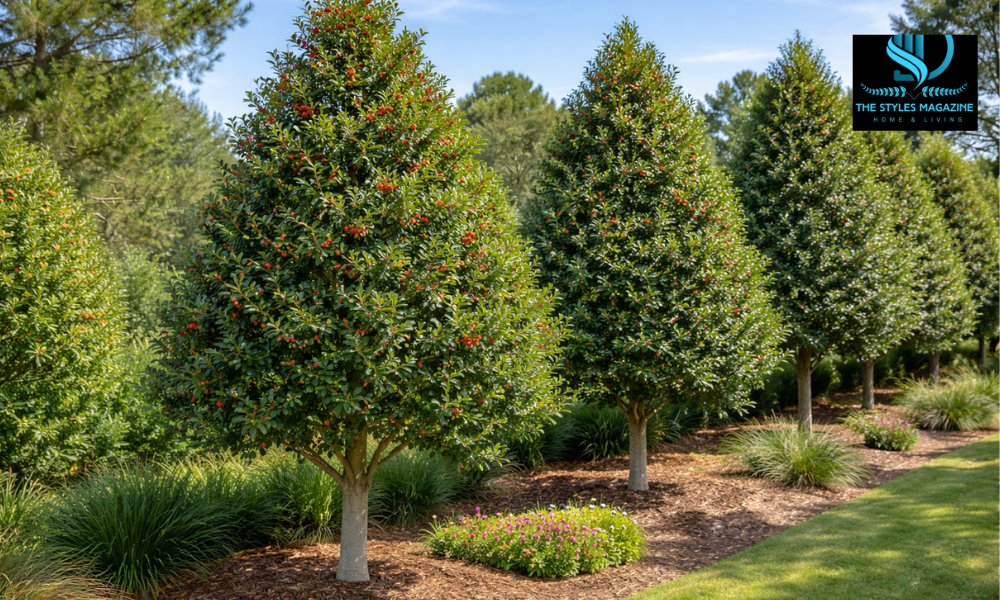
Another notable characteristic is its dense and symmetrical growth habit. The tree naturally forms a tall, pyramidal shape that requires little shaping or pruning. Because of this natural form, it is often used in formal landscapes, entryways, and along property borders.
The Eagleston Holly Tree is also known for producing bright red berries during the colder months. These berries create a striking contrast against the deep green foliage and provide an attractive seasonal display. In many landscapes, this combination of structure, color, and evergreen foliage makes the tree a valuable year-round feature.
Natural Growth Habit and Overall Appearance
One of the reasons the Eagleston Holly Tree is widely used in landscaping is its graceful and predictable growth pattern. The tree typically reaches a mature height of about 15 to 25 feet, with a spread ranging from 8 to 15 feet. This moderate size allows it to work well in both residential gardens and larger landscape designs.
The tree naturally grows in a pyramidal or cone-shaped form, which gives it a neat and balanced appearance. Because of this symmetrical structure, the tree often looks carefully shaped even when it has not been heavily pruned. This characteristic is especially helpful for homeowners who want an attractive tree that does not require constant maintenance.
The trunk of the Eagleston Holly Tree is usually smooth and light gray, adding another subtle visual element to the landscape. As the tree matures, the branches grow outward in an organized pattern, creating a dense canopy of evergreen leaves.
In many landscapes, the tree becomes a focal point. Its upright shape and rich green color stand out among other plants, and it can be used as a single ornamental tree or as part of a row of trees forming a hedge or privacy screen.
Distinctive Foliage and Seasonal Berry Display
The foliage of the Eagleston Holly Tree plays a major role in its popularity. The leaves are oval-shaped and have a glossy surface that reflects sunlight, giving the tree a vibrant and healthy appearance throughout the year. Their medium-to-dark green color remains consistent in every season, which is one of the defining features of evergreen plants.
Unlike some traditional holly varieties, the leaves of this hybrid are not extremely sharp. While they may still have slight spines along the edges, they are generally smoother and easier to handle. This makes the tree suitable for planting near walkways, patios, and other high-traffic areas.
During fall and winter, female trees produce clusters of bright red berries. These berries create a beautiful seasonal contrast against the dark green leaves. The colorful fruit can remain on the tree for several months, especially in cooler climates.
In addition to their visual appeal, the berries provide food for birds and other wildlife. Many species of birds rely on holly berries as a winter food source, which means planting an Eagleston Holly Tree can help support local wildlife populations.
Growth Rate and Expected Maturity
The Eagleston Holly Tree is generally considered a moderately fast-growing evergreen. Under favorable conditions, the tree can grow between 12 and 24 inches per year. This steady growth rate allows the tree to establish itself quickly without becoming overly large in a short time.
Young trees often grow more rapidly during their early years as their root systems become established. Over time, the growth rate becomes more consistent as the tree reaches maturity. In most landscapes, a newly planted Eagleston Holly Tree can develop into a well-formed specimen within several years.
Several factors influence how quickly the tree grows. Adequate sunlight, well-drained soil, and proper watering all play important roles in healthy development. Trees that receive consistent care during their early years often grow stronger and more evenly.
With the right conditions, the tree can reach its mature height and full canopy while maintaining its attractive, symmetrical shape.
Ideal Growing Conditions for Eagleston Holly Trees
The Eagleston Holly Tree thrives in a range of environments, which is another reason it is so widely planted. It grows best in USDA hardiness zones 6 through 9, where winters are mild to moderate and summers provide plenty of warmth and sunlight.
This tree performs well in both full sun and partial shade. Ideally, it should receive at least four to six hours of direct sunlight each day. Adequate sunlight encourages dense foliage growth and helps support healthy berry production on female trees.
Soil conditions are also important for successful growth. The Eagleston Holly Tree prefers well-drained soil that is slightly acidic. While it can adapt to different soil types, including clay and sandy soils, extremely alkaline soil may cause nutrient problems that affect leaf color.
Another advantage of this tree is its adaptability. Once established, it can tolerate periods of heat and mild drought, making it suitable for many different climates and landscape settings.
Watering, Soil Care, and Fertilization Needs
Proper watering is especially important during the first year after planting an Eagleston Holly Tree. Newly planted trees need regular moisture to help their roots establish and spread into the surrounding soil. Consistent watering during this stage supports healthy growth and reduces stress on the plant.
After the tree becomes established, its watering needs become more moderate. While it can tolerate short periods of dry weather, occasional deep watering during extended dry spells can help maintain strong growth and vibrant foliage.
Healthy soil is another key factor in long-term success. Soil that drains well prevents water from collecting around the roots, which can lead to root problems. Adding organic material such as compost can improve soil structure and provide essential nutrients.
Fertilization is generally simple. Applying a balanced fertilizer once or twice during the growing season can support steady growth and help maintain the rich green color of the leaves.
Pruning and Shaping for Healthy Structure
One of the advantages of planting an Eagleston Holly Tree is that it requires very little pruning. Because the tree naturally grows into a symmetrical pyramidal form, it often maintains its shape without much intervention.
However, occasional pruning can still be helpful. Removing dead or damaged branches helps keep the tree healthy and allows new growth to develop. Light trimming can also be used to maintain a neat appearance if the tree is being used as part of a hedge or privacy screen.
The best time for pruning is usually in late winter or early spring before the tree begins its new growth cycle. At this time, trimming can be done without interfering with berry production later in the year.
Careful shaping can also encourage denser foliage, which is especially useful when the tree is planted for privacy or screening purposes.
Landscaping Uses for the Eagleston Holly Tree
The Eagleston Holly Tree is extremely versatile in landscape design. Its upright shape and evergreen foliage make it useful in many different planting situations.
One of the most common uses is as a privacy screen. When several trees are planted in a row, their dense foliage creates a natural barrier that blocks views and provides year-round coverage.
The tree can also be used as a specimen plant. When planted alone in a yard or garden, its symmetrical shape and colorful berries create a striking focal point.
In urban or residential settings, the Eagleston Holly Tree can also be used along streets, driveways, or patios. Its manageable size and tidy appearance allow it to fit into both formal and informal landscape styles.
Because it remains green throughout the year, it also helps maintain structure in the garden even during winter months when many other plants lose their leaves.
Spacing and Planting Strategies for Privacy Screens
When the Eagleston Holly Tree is planted for privacy or screening, proper spacing is important. Trees that are placed too far apart may leave gaps, while trees planted too closely may compete for space and nutrients.
Most landscapers recommend spacing the trees approximately six to ten feet apart. This distance allows each tree enough room to grow while still creating a dense, continuous screen over time.
Planning the layout carefully can also help ensure even coverage. Straight rows are often used for formal hedges, while slightly staggered plantings may create a more natural appearance.
With proper spacing and care, a row of Eagleston Holly Trees can develop into an effective and attractive privacy barrier.
Male and Female Trees and Berry Production
Like many holly species, the Eagleston Holly Tree is dioecious, which means male and female flowers grow on separate trees. Only female trees produce the bright red berries that are commonly associated with hollies.
For berries to develop, a male tree must be located nearby to provide pollination. The presence of both types of trees allows pollinators such as bees to transfer pollen between them.
When successful pollination occurs, female trees begin producing berries in the fall. These berries often remain on the branches through the winter, adding color to the landscape during colder months.
Because of this natural process, landscapers often include both male and female trees when planting holly varieties intended for decorative berry displays.
Wildlife Value and Safety Considerations
The berries produced by the Eagleston Holly Tree provide an important food source for wildlife. Many birds are attracted to holly trees during winter when other natural foods become scarce. By planting this tree, homeowners can create a more wildlife-friendly garden environment.
Despite their value for wildlife, holly berries should not be consumed by humans or pets. The berries contain compounds that can cause digestive discomfort if eaten. For this reason, it is important to consider where the tree is planted, especially in areas where small children or pets frequently play.
When planted thoughtfully, the Eagleston Holly Tree can offer both ecological benefits and beautiful seasonal color without creating unnecessary risks.
Choosing the Right Eagleston Holly Tree When Buying
When purchasing an Eagleston Holly Tree, buyers will often find a variety of sizes available at nurseries. Smaller trees may come in containers of a few gallons, while larger specimens may be sold in much larger containers or field-grown root balls.
Selecting a healthy tree is important for long-term success. A good specimen should have vibrant green leaves, a straight trunk, and well-formed branches. Avoid trees with damaged foliage or signs of stress.
Some nurseries also offer different forms of the tree. Single-trunk specimens are commonly used as ornamental landscape trees, while compact patio forms may be suitable for smaller spaces or decorative containers.
Choosing the right size and form allows the tree to fit naturally into the intended landscape design.
Common Problems and Maintenance Tips
Although the Eagleston Holly Tree is generally hardy, a few issues may occasionally appear. One common concern is leaf discoloration, sometimes caused by soil conditions that prevent the plant from absorbing nutrients properly.
In soils that are highly alkaline, leaves may develop a yellowish color. Improving soil quality or adjusting soil conditions can often correct this issue.
Other challenges may include poor drainage or inconsistent watering. Ensuring that the soil drains well and that the tree receives appropriate moisture can prevent many common problems.
Regular observation and simple maintenance practices can keep the tree healthy and attractive for many years.
Conclusion
The Eagleston Holly Tree is valued in landscapes for its elegant form, evergreen foliage, and vibrant winter berries. Its natural pyramidal shape, moderate growth rate, and adaptability make it a practical choice for both homeowners and professional landscapers.
From privacy screens and ornamental plantings to wildlife-friendly gardens, this versatile tree offers many benefits. With proper planting conditions, occasional pruning, and basic care, it can thrive for many years while providing year-round beauty.
For anyone looking to add structure, color, and lasting greenery to a landscape, the Eagleston Holly Tree remains a dependable and attractive option.
FAQs
How Fast Does An Eagleston Holly Tree Grow?
The Eagleston Holly Tree grows at a moderate rate of about 12–24 inches per year. With proper sunlight, soil, and watering, it can reach maturity within several years.
How Tall Does An Eagleston Holly Tree Get?
Most mature trees grow 15 to 25 feet tall with a spread of 8 to 15 feet, making them ideal for privacy screens or decorative landscape trees.
Do All Eagleston Holly Trees Produce Berries?
No. Only female trees produce red berries, and they need a male holly nearby for pollination in order to develop fruit.
Is The Eagleston Holly Tree Good For Privacy?
Yes. Because of its dense evergreen foliage and upright growth, it is commonly planted 6–10 feet apart to form natural privacy hedges.
Are Eagleston Holly Berries Poisonous?
Yes. The berries can be toxic if eaten by humans or pets, so it is best to plant the tree in areas where berries will not be accidentally consumed.
Disclaimer: This article is for informational and educational purposes only. Plant growth, care requirements, and landscape results may vary depending on soil conditions, climate, and local environment. Always consult local gardening experts, nurseries, or agricultural extensions for advice specific to your region before planting or treating any tree.
Loved Reading This? Discover More Exclusive Stories And Updates At The Styles Magazine!