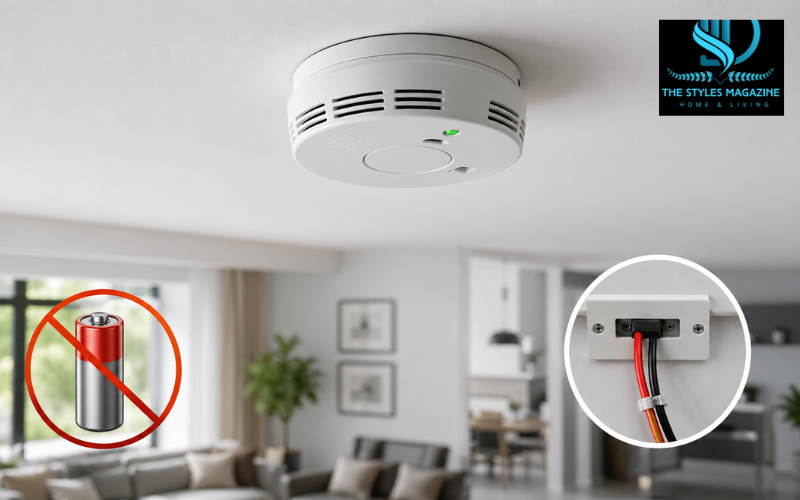
When people search for smoke alarms without battery, they are usually looking for a simple solution to a common frustration: constant beeping, frequent battery changes, and the worry of forgetting to replace a dead battery. The idea sounds appealing—install a smoke alarm once and never think about batteries again.
However, the reality is a bit more nuanced. Most modern smoke alarms still rely on some form of backup power, even if they don’t require regular battery maintenance. There is an important difference between completely battery-free systems and low-maintenance smoke alarms with sealed 10-year lithium batteries. Understanding this difference is key to choosing the right option for your home.
This topic matters not just for convenience, but also for safety. A smoke alarm that stops working due to a dead battery can put lives at risk. At the same time, no one enjoys the loud, unexpected chirping that signals a low battery—often in the middle of the night.
Today, modern solutions have made things much easier. Hardwired smoke alarms with built-in long-life batteries and advanced systems integrated into home security setups offer reliable, low-maintenance alternatives. In this guide, we’ll break down what actually works, what doesn’t, and how to choose the best smoke alarms without battery hassle.
Quick Comparison Guide
| Type of Smoke Alarm | Power Source | Maintenance Level | Works During Power Outage | Best For |
| Battery-Powered | Replaceable batteries | High (frequent changes) | Yes | Renters, simple setups |
| 10-Year Battery Detector | Sealed lithium battery | Very Low | Yes | Low-maintenance homes |
| Hardwired (No Backup) | Home electricity | Low | No | Rarely recommended |
| Hardwired + 10-Year Backup | Wired + sealed battery | Very Low | Yes | Modern homes, best overall |
| Security System Integrated | Central system power | Very Low | Yes (central backup) | Advanced setups |
What “Smoke Alarms Without Battery” Really Means
The phrase smoke alarms without battery can be misleading. In most cases, it does not mean there is absolutely no battery involved. Instead, it usually refers to alarms that do not require regular battery replacement.
There are two main interpretations of this term. The first is completely battery-free systems, which rely entirely on a direct power source, such as a wired electrical connection or a central security system. These systems do exist, but they are not common in standard residential homes.
The second, and far more common option, is smoke alarms with sealed 10-year lithium batteries. These units are designed so that the battery lasts for the entire lifespan of the device. You never have to remove or replace it. Once the battery reaches the end of its life, the entire unit is replaced.
Most homes still require some form of backup power, even in hardwired systems. This is because electricity can fail during emergencies, such as fires or power outages. A backup battery ensures that the alarm continues to function when it matters most.
So, while truly battery-free smoke alarms are rare, maintenance-free options are widely available and highly reliable.
How Hardwired Smoke Detectors Work in Modern Homes
Hardwired smoke detectors are connected directly to your home’s electrical system. This means they draw power continuously from your household wiring, making them more stable than standalone units that rely only on batteries.
In modern homes, these systems are often interconnected. When one alarm detects smoke, all alarms in the house go off at the same time. This feature improves safety by ensuring that everyone in the home is alerted, no matter where the fire starts.
Even though these systems are powered by electricity, most include a backup battery. This leads to a common question: will a hard wired smoke detector work without a battery?
The answer is yes—but only while the main power is active. If there is a power outage and no backup battery is installed, the alarm will stop working completely. This is why safety standards strongly recommend, and often require, a backup power source.
Regulations in many regions are designed to ensure that smoke alarms remain functional under all conditions. Backup batteries provide an extra layer of protection, especially during emergencies when power loss is more likely.
Hardwired Smoke Detectors with 10-Year Battery Backup
For most homeowners, the best balance between convenience and safety comes from hard wired smoke detectors with 10-year battery backup. These systems combine the reliability of direct electrical power with the convenience of a long-lasting sealed battery.
The built-in lithium battery is designed to last for up to ten years, which typically matches the lifespan of the smoke alarm itself. This means you never have to worry about replacing batteries every few months or dealing with low-battery chirps.
Over time, these sealed batteries maintain consistent performance. Unlike traditional replaceable batteries, they are less likely to fail unexpectedly or be installed incorrectly. They also eliminate the risk of someone removing the battery and forgetting to put it back.
Compared to older models, these modern units offer several advantages. They reduce maintenance, improve reliability, and provide peace of mind. For many households, they represent the closest thing to a true “install and forget” smoke alarm solution.
True Battery-Free Smoke Alarm Systems (Do They Exist?)
If you are looking for a completely battery-free option, you will likely need to explore fully wired systems integrated into a home security setup. These systems are typically connected to a central control panel and draw power directly from the system.
Such setups are more common in commercial buildings or professionally installed home security systems. In these cases, the entire system may have a centralized backup power source, rather than individual batteries in each alarm.
While this approach can eliminate the need for separate batteries in each unit, it is not always practical for standard residential use. Installation can be more complex and expensive, often requiring professional help.
For most homeowners, the benefits do not outweigh the cost and effort. These systems make more sense in large properties or buildings where centralized monitoring is already in place.
In everyday homes, hardwired alarms with sealed batteries remain the most practical and widely used solution.
Why Smoke Detectors Beep Even When You Think There’s No Battery
One of the most frustrating experiences is hearing a smoke alarm chirp when you believe it doesn’t even have a battery. This situation is often described as smoke detector without battery beeping, but there is usually a logical explanation.
In many cases, the alarm still contains a hidden or sealed battery. Even if it is not visible or removable, it can still trigger a low-power warning when it reaches the end of its life.
Another common reason is that the unit itself has reached its expiration date. Most smoke detectors are designed to last around ten years. After that, they may begin to chirp as a signal that they need to be replaced.
Hardwired units can also produce chirping sounds due to electrical issues, such as power fluctuations or wiring problems. Dust buildup inside the unit can sometimes cause false alerts as well.
If the beeping continues and the unit is older, replacement is usually the safest and most effective solution. Ignoring these warnings can lead to a non-functional alarm when you need it most.
Comparing Battery-Powered vs Hardwired Smoke Alarms
When choosing between a battery powered smoke detector and a hardwired system, it’s important to understand how they differ in terms of performance and convenience.
Battery-powered units are easy to install and do not require any wiring. This makes them a popular choice for renters or older homes without built-in electrical connections. However, they require regular battery changes and can be less reliable if maintenance is neglected.
Hardwired smoke alarms, on the other hand, offer a more stable power source. They are ideal for new homes or renovations where wiring can be installed easily. With a backup battery, they provide continuous protection even during power outages.
Each option has its advantages. Battery-powered detectors offer flexibility and simplicity, while hardwired systems provide reliability and enhanced safety features like interconnectivity.
The best choice depends on your living situation, budget, and how much maintenance you are willing to handle.
Understanding 10-Year Battery Smoke Detectors
A 10-year battery smoke detector is designed to operate for its entire lifespan without requiring a battery replacement. These units use sealed lithium batteries that provide consistent power over a long period.
The main advantage is convenience. Once installed, the detector works without any need for maintenance related to battery changes. This makes it an excellent option for people who want a low-maintenance solution.
In terms of lifespan, most of these units last about ten years. After that, the entire device should be replaced, as both the sensor and the battery reach the end of their effectiveness.
In some cases, a standalone 10-year battery detector may be a better choice than a hardwired system, especially in homes where wiring is not available or installation would be difficult.
Key Features to Look for in Low-Maintenance Smoke Alarms
When selecting a smoke alarm with minimal maintenance, certain features can make a significant difference in performance and usability.
Sealed battery technology is one of the most important features, as it eliminates the need for regular battery replacement. Interconnected alarms are also valuable, as they ensure that all units sound simultaneously when smoke is detected.
Modern smoke alarms may include voice alerts that clearly indicate the type of danger, such as fire or carbon monoxide. Smart features, such as mobile notifications, are becoming more common and can add an extra layer of convenience.
Reliability is essential, so it is important to choose products that meet recognized safety standards. A well-designed smoke alarm should provide consistent performance without frequent false alarms or maintenance issues.
Common Issues with Hard Wired Smoke Detectors (And How to Avoid Them)
Even though hardwired systems are designed to be reliable, they can still experience problems. One common issue is that hard wired smoke detectors keep beeping, which can be frustrating if the cause is not clear.
In many cases, this is related to the backup battery reaching the end of its life. Even if the unit is connected to electricity, the backup battery still needs to function properly.
Electrical issues, such as loose connections or voltage fluctuations, can also cause alarms to malfunction. Dust and debris inside the unit may trigger false alerts or interfere with sensors.
To avoid these problems, it is important to perform basic maintenance, such as cleaning the unit occasionally and checking that it is functioning correctly. Even “maintenance-free” devices still benefit from periodic inspection.
Choosing the Right Smoke Alarm Setup for Your Home
Selecting the right smoke alarm system depends on several factors, including the type of home you live in, your budget, and your preference for convenience.
Apartments and rental properties may benefit from battery-powered or 10-year sealed battery detectors due to their easy installation. New homes or renovations are better suited for hardwired systems with backup batteries.
Installation flexibility is another important consideration. Some systems require professional installation, while others can be set up quickly without special tools.
Budget also plays a role, but it is important to focus on long-term value rather than just the initial cost. A slightly more expensive unit with a 10-year battery can save time and effort over the years.
Ultimately, the best setup is one that provides reliable protection while fitting your lifestyle and maintenance preferences.
Conclusion
The idea of smoke alarms without battery is appealing, but in most cases, it refers to systems that eliminate battery maintenance rather than batteries entirely. Truly battery-free options are rare and usually limited to specialized security systems.
For most homes, the safest and most practical choice is a hardwired smoke alarm with a sealed 10-year battery backup or a standalone 10-year battery detector. These options offer reliability, convenience, and peace of mind without the need for frequent maintenance.
By understanding how these systems work and what to expect, you can make a more informed decision. Choosing the right smoke alarm is not just about convenience—it is about ensuring long-term safety for you and your household.
FAQs
Do Smoke Alarms Without Battery Really Exist?
Not completely. Most “battery-free” smoke alarms still include a backup power source, such as a sealed 10-year battery or a central system backup, to ensure they work during power outages.
Will A Hardwired Smoke Detector Work Without A Battery?
Yes, but only when electricity is active. During a power outage, it won’t function without a backup battery, which is why modern safety standards strongly recommend having one installed.
Why Is My Smoke Detector Beeping If It Has No Battery?
It likely has a hidden or sealed battery, or the unit has reached its end-of-life. Hardwired detectors can also beep due to electrical issues or internal faults.
Are 10-year Battery Smoke Detectors Reliable?
Yes, they are designed to provide consistent performance for their entire lifespan. They reduce maintenance and eliminate the need for frequent battery replacement, making them a popular modern choice.
What Is The Best Option For Low-maintenance Smoke Alarms?
Hardwired smoke alarms with a 10-year sealed battery backup are usually the best option, offering reliable performance, minimal maintenance, and protection even during power outages.
Enjoyed it? Find more exclusive content on The Styles Magazine.
Disclaimer: This content is for informational purposes only and does not replace professional advice or local safety regulations. Always follow your region’s building codes and consult a qualified electrician or safety expert before installing or replacing smoke alarms.