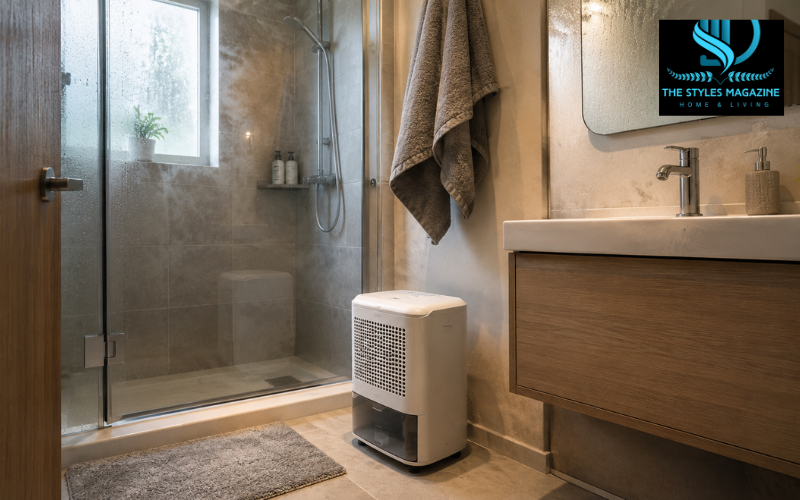
A dehumidifier for bathroom use removes extra moisture from the air after showers, baths, and other activities that create steam. It pulls humid air into the unit, collects the moisture as water, and sends drier air back into the room. This can help a bathroom feel less damp and can reduce condensation on mirrors, windows, walls, and other cool surfaces.
Hot showers release a large amount of water vapor into a small space. If it clears quickly, that is usually normal. If it lingers, towels and surfaces can stay damp, musty smells may develop, and conditions can become more favorable for mold.
A dehumidifier controls moisture in the air, but it is not a repair tool. It cannot fix a leaking pipe, damaged grout, a roof leak, or an existing mold problem. Those issues need to be corrected separately. For general indoor moisture control, the U.S. Environmental Protection Agency recommends keeping relative humidity below 60% and ideally between 30% and 50% when practical.
Choosing the right unit means balancing bathroom size, humidity, extraction capacity, noise, drainage, and safety.
Quick Guide: Choosing a Dehumidifier for Bathroom
| Bathroom Need | Suitable Option | What to Look For |
| Small bathroom, mild humidity | Compact/Peltier dehumidifier | Quiet operation, small size, auto shutoff |
| Standard family bathroom | Compact compressor model | Humidistat, stronger extraction, larger tank |
| Heavy shower steam | Higher-capacity compressor model | High moisture removal, auto mode |
| Frequent daily use | Dehumidifier with hose | Continuous drainage connection |
| Persistent dampness | Higher-capacity model + ventilation | Humidity control, exhaust fan, drainage |
| Bathroom near bedroom | Low-noise model | Quiet mode and adjustable fan speed |
Simple Steps for Using a Bathroom Dehumidifier
- Check the humidity: Use a hygrometer to see whether moisture stays high long after showering.
- Choose enough capacity: Match the unit to bathroom size and the amount of steam produced.
- Place it safely: Keep the appliance away from showers, tubs, sinks, splashes, and standing water.
- Set the humidity level: Aim for a comfortable indoor range, commonly around 30–50% RH when practical.
- Use ventilation too: Run the exhaust fan when available instead of relying only on the dehumidifier.
- Maintain the unit: Empty and clean the tank, clean filters, and inspect drain hoses regularly.
When Does a Bathroom Actually Need a Dehumidifier?
Not every bathroom needs a dehumidifier. A mirror that fogs during a hot shower and clears soon afterward is normal. The concern is moisture that remains long after the shower ends.
Warning signs include long-lasting window condensation, damp walls or ceilings, slow-drying grout and towels, musty smells, or visible mold. Mold can also come from leaks or hidden water damage.
A simple hygrometer can help you understand what is happening. Check the humidity before a shower, shortly afterward, and again later. If the room regularly stays above a healthy range instead of returning toward normal levels, better ventilation or dehumidification may be useful. EPA guidance also treats condensation on windows, walls, or pipes as a sign that humidity may be too high.
Before buying one, check for weak ventilation, blocked vents, failed seals, plumbing leaks, or roof problems.
Dehumidifier vs Exhaust Fan vs Open Bathroom Window
An exhaust fan and a dehumidifier solve the same general problem in different ways. The exhaust fan removes humid bathroom air and sends it outside. A dehumidifier keeps air inside the room but removes some of its water content.
An effective exhaust fan is often the first line of moisture control because it removes steam close to its source. EPA guidance recommends running the bathroom fan or opening a window while showering and using dehumidifiers when needed.
Opening a window can also help when outdoor air is drier than indoor air. On a hot, very humid day, however, an open window may bring more moisture inside and make dehumidification less effective.
A bathroom with weak ventilation may benefit from both methods: the fan removes the main burst of steam, and the dehumidifier lowers the remaining humidity. If the fan barely moves air or does not vent outdoors properly, improving it may help more than buying a larger machine.
Choosing the Right Dehumidifier Capacity for Your Bathroom
Capacity should match both bathroom size and moisture load. A powder room has very different needs from a large bathroom used for several hot showers each day.
Dehumidifier capacity is commonly stated in pints per day or liters per day. This figure describes how much moisture the appliance can remove under specified test conditions. Tank capacity is different: it only tells you how much collected water the reservoir can hold before it must be emptied.
ENERGY STAR says sizing depends on both room size and how damp the space is. Wetter conditions require more capacity. It also notes that test methods have changed over time, so capacity numbers from older and newer products may not always be directly comparable.
Manufacturer test conditions matter too. Xiaomi, for example, rates the Smart Dehumidifier Lite at up to 13 liters per day and lists it for bathroom spaces of about 8–15 square meters, but the 13 L/day figure is a rated value measured under specific conditions.
A small unit may handle light condensation, while frequent showers and persistent dampness usually call for more capacity.
Small Dehumidifier for Bathroom: Peltier vs Compressor Models
A small dehumidifier for bathroom use is attractive because bathrooms often have very little spare floor space. Many mini models use thermoelectric, or Peltier, technology. They cool a small surface so water vapor condenses and drips into a tank. They do not use a traditional compressor.
Their main advantages are compact size, low weight, and quiet operation, which can suit tiny bathrooms, campers, and RVs with modest moisture loads.
The trade-off is capacity. Pro Breeze, for example, lists its 500 ml mini Peltier unit at up to 250 ml of extraction per day, with a 33 dB noise rating and no continuous drainage option. That is useful for a small damp space, but it is far below the output of a compressor dehumidifier.
Compressor models are larger and usually louder, but they remove much more moisture. For a bathroom that stays wet after repeated showers, the best small dehumidifier for bathroom use may therefore be a compact compressor model rather than the physically smallest product on the shelf.
Best Dehumidifier for Bathroom: Features That Matter Most
The best dehumidifier for bathroom use is the one that has enough capacity, fits safely, and is practical to use every day.
An adjustable humidistat is especially helpful because it lets you choose a target humidity instead of running the machine without a clear goal. Auto mode can then cycle the unit as needed. Full-tank shutoff is also important because it stops the appliance when the reservoir is full.
For bathrooms that produce a lot of moisture, continuous drainage can save time. Some machines use a gravity hose, while others include a pump that can move water to a higher drain point. Tank size matters if you plan to empty the unit by hand.
Also consider noise, filter access, automatic restart, defrost, energy efficiency, warranty, and whether the manufacturer allows use in the intended environment.
Online owner discussions, including searches such as “dehumidifier for bathroom Reddit,” can reveal real-world issues such as noise, tank handling, and durability. They are useful as supporting experience, but technical specifications should still be checked against the manufacturer and reliable testing.
Bathroom Dehumidifier Options Worth Comparing in 2026
For a compact option, the Pure Enrichment PureDry Deluxe has a 1.5-liter tank, two speed settings, 4- and 8-hour timers, full-tank automatic shutoff, and a stated extraction rate of up to 20 ounces per day. The manufacturer specifically lists bathrooms among its intended small-to-medium spaces.
For very small spaces, Pro Breeze mini units use Peltier technology. The 500 ml model is rated for up to 250 ml per day and 33 dB, making it easier to place and quieter than many compressor machines, though its extraction power is much lower.
The Xiaomi Smart Dehumidifier Lite is a stronger smart option. Xiaomi lists a 13 L/day capacity, 3-liter tank, 34 dB low-noise figure, adjustable smart mode, and an included one-meter hose for direct drainage to a floor drain.
For severe humidity, a 50-pint compressor unit offers far more drying power. RTINGS’ May 2026 bathroom testing selected the GE APYR50LC as its top tested bathroom model because of its high capacity and built-in pump, while also warning that it is bulky and may be excessive for smaller bathrooms.
A small bathroom with mild condensation and a large family bathroom with constant steam need very different machines.
Dehumidifier for Bathroom Mold: What It Can and Cannot Do
A dehumidifier for bathroom mold problems can help by reducing the moisture that allows mold to grow, but it does not kill or remove mold that is already established.
Mold needs moisture. Keeping indoor humidity under control makes surfaces less likely to remain damp for long periods. EPA guidance recommends keeping relative humidity below 60% and ideally within the 30–50% range when possible. It also recommends drying wet materials quickly and correcting the source of moisture.
If mold is already visible, first find out why the area keeps getting wet. Possible causes include a leaking pipe, failed shower seal, damaged grout, poor ventilation, roof leak, or repeated condensation on a cold surface. Cleaning the visible growth without fixing the moisture source often allows the problem to return.
A dehumidifier is best viewed as one part of moisture control. Damaged materials or significant mold contamination may still need proper cleaning, repair, or professional remediation.
Dehumidifier for Bathroom Window Condensation
Bathroom window condensation forms when warm, moisture-filled air touches colder glass. The air next to the glass cools, and some of its water vapor turns into liquid droplets.
A dehumidifier reduces the amount of moisture in the room, so there is less water available to condense on the window. Opening the window during or after a shower can also help when outdoor air is reasonably dry. EPA guidance includes both bathroom ventilation and opening windows as useful ways to reduce humidity.
If the glass stays soaked after humidity is controlled, check seals, glazing, insulation, and the frame for water entry.
Place the dehumidifier where air can circulate around it, but not where it can be splashed or reached from the tub or shower. Condensation on glass is one thing; water leaking through the frame is another problem and should be repaired rather than treated with a dehumidifier.
Bathroom Ceiling Moisture, Condensation, and Mold
Steam rises, so bathroom ceilings often show moisture problems before other areas. Warm humid air can collect near a cooler ceiling and leave water droplets, peeling paint, stains, or eventually mold.
A dehumidifier can lower overall room humidity, but an effective exhaust fan is especially valuable because it removes humid air before it lingers near the ceiling. If the ceiling remains wet long after showers, check whether the fan is actually moving air outside and whether its duct is blocked or poorly installed.
Persistent ceiling dampness can also come from roof leaks, plumbing above, missing insulation, or damaged finishes.
For that reason, using a dehumidifier for bathroom ceiling problems should be seen as moisture control, not a direct repair. If the ceiling is stained, soft, repeatedly moldy, or wet when the bathroom has not been used, investigate the building issue itself.
Dehumidifier for Bathroom With Hose and Continuous Drainage
A dehumidifier for bathroom with hose drainage can be useful when the tank fills quickly or you simply do not want to empty it every day.
With gravity drainage, collected water flows through a hose to a lower drain. The hose must usually slope downward without sharp bends or kinks. ENERGY STAR notes that many portable units can drain through a hose to a floor drain or sump, which removes the need for regular bucket emptying.
A built-in pump gives more flexibility because it can push water upward to an elevated drain point. This may help where a floor drain is not available, although the exact height and hose arrangement depend on the model.
Whichever method you use, follow the manual, secure the connection, keep the hose away from electrical cords, and check it for leaks or blockages.
Safe Placement and Electrical Use in a Bathroom
Because water and electricity are a dangerous combination, do not assume a portable dehumidifier is splash-proof or safe in any bathroom position. Check the manufacturer’s instructions and any IP or water-resistance rating first.
Keep the unit away from the shower, tub, sink, standing water, and places where it can be touched with wet hands. Do not block its air intake or outlet with towels, curtains, furniture, or walls. ENERGY STAR also advises following manufacturer electrical warnings, using a properly grounded outlet, and keeping drain hoses away from electrical connections.
Where required by local electrical rules, bathroom outlets should have appropriate GFCI or equivalent protection. CPSC bathroom guidance warns that plugged-in electrical appliances can create a shock hazard if they fall into water, and its home electrical checklist highlights GFCI protection in bathrooms.
Avoid improvised extension-cord setups unless the manufacturer specifically allows them. If safe placement is not possible inside the bathroom, consider positioning the unit outside the wet zone or improving ventilation instead.
Getting Better Results From a Bathroom Dehumidifier
Good results depend on how the dehumidifier is used, not just its rated capacity. After a shower, run the unit according to the manufacturer’s instructions and aim for a sensible humidity level rather than leaving it on continuously without checking conditions.
When dehumidifying a room, closed doors and windows generally help the appliance work more efficiently because it is treating a defined space rather than constantly pulling in new humid air. ENERGY STAR recommends closing doors and windows while a portable dehumidifier is operating.
Keep the filter and air vents clean so airflow remains strong. Empty and rinse the water tank regularly if you are not using a drain hose. For continuous drainage, check the hose for kinks, loose fittings, or buildup.
A small hygrometer is useful for judging whether the machine is keeping up. If humidity remains high for hours despite correct use, the unit may be too small, the exhaust fan may be ineffective, or there may be a hidden source of moisture.
The goal is simply to help the bathroom return to a normal humidity range after bathing.
Conclusion: Choosing the Right Bathroom Moisture Solution
A dehumidifier for bathroom use can be a practical way to control steam, condensation, lingering dampness, and the humid conditions that support mold. The right choice depends on the bathroom itself: its size, how often people shower, how quickly moisture clears, and whether good ventilation is already available.
For a tiny room with mild dampness, a compact Peltier model may be enough. For a family bathroom that regularly stays wet, a compressor model with a humidistat and stronger extraction is usually the better fit. Where tank emptying would be inconvenient, a hose or built-in pump can make daily use much easier.
Whatever model you choose, prioritize safe placement, automatic shutoff, suitable drainage, reasonable noise, and enough capacity for the real moisture load. Do not use the appliance as a substitute for repairing leaks, fixing poor ventilation, or dealing properly with existing mold.
The best setup removes excess humidity safely and efficiently while addressing the real source of dampness instead of hiding the symptoms.
Frequently Asked Questions
Is A Dehumidifier Good For A Bathroom?
Yes. A bathroom dehumidifier can remove excess moisture left after showers, helping reduce condensation, damp towels, musty smells, and conditions that encourage mold. It works best alongside effective ventilation.
What Size Dehumidifier Is Best For A Bathroom?
The right size depends on both bathroom dimensions and moisture levels. Small units may handle mild dampness, while bathrooms with frequent hot showers generally need a higher-capacity compressor dehumidifier.
Can A Dehumidifier Stop Bathroom Mold?
A dehumidifier can lower humidity and make conditions less favorable for new mold growth. However, it cannot remove existing mold or fix leaks, damaged seals, or other sources of moisture.
Should I Use A Dehumidifier Or Exhaust Fan In A Bathroom?
An exhaust fan removes steam directly from the bathroom, while a dehumidifier removes moisture remaining in the air. In bathrooms with persistent humidity, using both appropriately can provide better moisture control.
Is A Dehumidifier For Bathroom With Hose Better?
A hose is useful when the unit collects a lot of water because it allows continuous drainage. It reduces manual tank emptying, but the hose must be installed according to the manufacturer’s drainage instructions.
Enjoyed it? Find more exclusive content on The Styles Magazine.
Disclaimer: This article provides general information about choosing and using a dehumidifier for bathroom moisture control. Electrical safety requirements, suitable placement, drainage methods, and operating instructions vary by model and location. Always follow the manufacturer’s manual and local electrical safety rules. A dehumidifier does not replace repairs for leaks, poor ventilation, water damage, or professional mold remediation when needed.