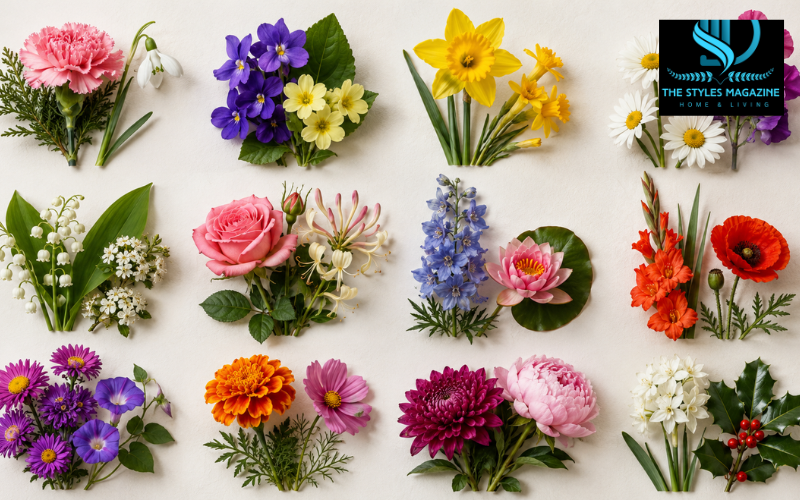
Birth month flowers are blooms traditionally linked with the month in which a person was born. Much like birthstones, they offer a simple way to connect a birthday with nature, seasonal beauty, and personal meaning. A flower may represent love, hope, strength, friendship, remembrance, or another quality associated with that part of the year.
Most modern birth flower guides give each month a primary and secondary flower. This provides more choice when one bloom is unavailable or when a person feels a stronger connection to the alternative. Birth month flowers are often used in birthday bouquets, wedding arrangements, anniversary gifts, nursery artwork, jewelry, and tattoo designs.
These meanings are symbolic rather than scientific rules. The same flower can carry different messages depending on its color, country, religion, local folklore, or historical period. For that reason, a birth flower list is best viewed as a helpful tradition, not a fixed system with only one correct interpretation.
Simple Ways to Use Birth Month Flowers
- Create a birthday bouquet using the primary and secondary flowers.
- Combine family members’ flowers in one arrangement.
- Use the flower in a tattoo, card, necklace, or wall print.
- Choose colors that match the meaning you want to express.
- Use a similar seasonal flower when the original bloom is unavailable.
The History and Symbolism of Birth Month Flowers
The exact origin of monthly birth flower lists is uncertain. They appear to have grown from older seasonal customs, in which people used flowers available at a certain time of year for festivals, ceremonies, gifts, and personal decoration. Over time, these seasonal associations mixed with floriography, commonly called the language of flowers.
Flower symbolism became especially popular during the Victorian era. Flowers could express feelings that were difficult to say openly, and published guides assigned meanings to different species, colors, and arrangements. Smithsonian Gardens notes that learning floral symbolism became a popular pastime during the 1800s, when bouquets could communicate love, hope, sorrow, remembrance, and other emotions.
Meanings were never completely universal. A red rose may suggest romantic love, while a yellow rose can express friendship in modern gift-giving. Chrysanthemums represent joy and long life in some cultures, but they are strongly connected with mourning in parts of Europe. This is also why birth month flower lists sometimes show regional alternatives. The main pairings below are among the most widely used English-language associations today.
Birth Month Flowers: Primary and Secondary Quick Guide
The following table offers an easy overview of the primary and secondary birth month flowers and their most common symbolic themes.
| Month | Primary flower | Secondary flower | Core meaning |
| January | Carnation | Snowdrop | Love, admiration, and hope |
| February | Violet | Primrose | Loyalty, modesty, and young love |
| March | Daffodil | Jonquil | New beginnings and optimism |
| April | Daisy | Sweet pea | Innocence, gratitude, and pleasure |
| May | Lily of the valley | Hawthorn | Sweetness, happiness, and hope |
| June | Rose | Honeysuckle | Love, affection, and devotion |
| July | Larkspur | Water lily | An open heart, positivity, and purity |
| August | Gladiolus | Poppy | Strength, integrity, and remembrance |
| September | Aster | Morning glory | Wisdom, patience, and affection |
| October | Marigold | Cosmos | Warmth, creativity, and harmony |
| November | Chrysanthemum | Peony, on some lists | Loyalty, happiness, and longevity |
| December | Narcissus or paperwhite | Holly | Good wishes, rebirth, and protection |
Alternate lists may replace one flower with another, especially when regional growing seasons or older flower-language books are used. That does not make one version false; it reflects how the tradition developed through several sources rather than one official authority.
January and February Birth Month Flowers
January is represented by the carnation and snowdrop. Carnations are long-lasting flowers commonly linked with love, admiration, devotion, and remembrance. Their meaning can change with color. Red often suggests deep affection, pink can express gratitude, and white is associated with pure love or innocence. Snowdrops bring a quieter message. Because they can appear near the end of winter, they have become symbols of hope, renewal, and the promise of brighter days.
February’s flowers are the violet and primrose. Violets are connected with modesty, loyalty, faithfulness, and truth. Their small size and low-growing habit support the idea of quiet devotion rather than showy affection. Purple violets are often tied to loyalty, while white varieties can suggest innocence. The primrose is associated with young love and the first signs of spring. Its name comes from a word meaning “first,” reflecting its early flowering season.
Together, these winter flowers suit birthdays celebrated during a colder and darker time of year. Their shared message is that affection and hope can remain strong even in difficult seasons.
March and April Birth Month Flowers
The daffodil is March’s primary flower, with the jonquil as its secondary bloom. Both are closely related because jonquils belong to the wider Narcissus group that people commonly call daffodils. Jonquils usually have slender leaves and fragrant clusters of smaller flowers, while the familiar garden daffodil often has one larger trumpet-shaped bloom per stem.
Daffodils are strongly associated with spring, fresh starts, optimism, and renewal. A single flower can look delicate, but a field of daffodils creates a bold display, which also makes them a symbol of shared happiness. Jonquils carry similar meanings, including affection, desire, and returning love.
April is linked with the daisy and sweet pea. Daisies suggest innocence, purity, loyal love, and simplicity. Their bright centers and open petals give them a cheerful, honest appearance. Sweet peas are commonly associated with gratitude, gentle pleasure, and fond goodbyes. An April bouquet can therefore express both fresh joy and appreciation for time shared with another person.
May and June Birth Month Flowers
May’s primary flower is lily of the valley, a small white bell-shaped bloom known for its sweet scent. Its traditional meanings include sweetness, humility, purity, and the return of happiness. Because it flowers in spring and spreads through shaded gardens, it often suggests renewed joy after a difficult period.
The hawthorn birth flower is May’s secondary choice. Hawthorn usually grows as a shrub or small tree, producing clusters of white or pink flowers before developing berries later in the year. It has long been connected with hope, happiness, protection, and the arrival of warmer weather. Flowering hawthorn branches can make a striking seasonal arrangement, although they are less common in everyday bouquets than lily of the valley.
June is represented by the rose and honeysuckle. Roses are among the clearest examples of color changing a flower’s message. Red roses are linked with romantic love, pink with admiration and gratitude, white with innocence or new beginnings, and yellow with friendship and warmth. Honeysuckle adds the idea of devoted affection. Its climbing habit and sweet fragrance have helped it become a symbol of lasting bonds and loving attachment. The pairing makes June especially suitable for weddings, anniversaries, and other celebrations of close relationships.
July Birth Flower Meanings
Larkspur is the primary July birth flower. Its tall stems carry many soft, open blooms, giving it a light and welcoming appearance. Larkspur is often associated with an open heart, positivity, dignity, and strong emotional bonds.
Color adds another layer of meaning. Pink larkspur can express affection or changing feelings, white may suggest happiness and purity, while purple or blue varieties are linked with grace and dignity. Because flower-language sources do not always agree, it is sensible to choose a color based on both its traditional message and the recipient’s taste.
The water lily is July’s secondary flower. Unlike larkspur, it grows at the surface of ponds and still water. Its clean bloom rising above dark water has made it a symbol of purity, peace, renewal, and inner strength. Together, larkspur and water lily balance open emotion with calm reflection.
August and September Birth Month Flowers
August’s main birth flower is gladiolus. Its name is connected with the Latin word for sword, a reference to its blade-shaped leaves. This strong form supports its meanings of strength, moral character, integrity, and determination. Tall gladiolus stems also give arrangements height and a bold focal point.
The poppy is August’s secondary flower. It is widely associated with remembrance and consolation, although individual colors may suggest sleep, imagination, success, or peace. The Metropolitan Museum of Art notes that flower-language sources have used poppies to communicate consolation, showing how closely the flower is tied to comfort and memory.
September birth flowers are the aster and morning glory. Asters bloom in star-like shapes and are commonly connected with wisdom, patience, love, and faith. Morning glories open early and often fade later in the day, giving them a more delicate message of affection, brief beauty, and sometimes unreturned love. The Met records morning glory as a symbol of love and affection, while also noting its link with unrequited love.
October and November Birth Month Flowers
October is represented by marigold and cosmos. Marigolds have rich yellow, orange, and red shades that suit the warmth of autumn. Their symbolism includes creativity, passion, warmth, and determination. However, cultural context matters. Marigolds also hold an important place in remembrance traditions, including celebrations that honor people who have died.
Cosmos flowers have a neat, balanced arrangement of petals. Their name is linked with order and harmony, which explains their association with peace, balance, modest beauty, and calm affection. Paired together, marigold and cosmos combine energy with emotional balance.
November’s traditional flower is the chrysanthemum. Common meanings include loyalty, friendship, happiness, honesty, and long life. Color and culture can greatly change the message, so a florist may recommend checking local customs before sending chrysanthemums for a formal event. Peony appears as a November alternative on some modern lists. It is usually associated with prosperity, honor, romance, and a happy marriage, but chrysanthemum remains the more widely recognized November birth flower.
December Birth Flower Meanings
The traditional December birth flower is narcissus, especially the paperwhite narcissus. Paperwhites are often grown indoors during winter, where their white, fragrant blooms bring life to the darker part of the year. Their meanings include hope, rebirth, good wishes, respect, and the promise of renewal.
Holly is the secondary December birth plant. Although people value it mainly for its evergreen leaves and red berries rather than its small flowers, it is regularly included in birth flower lists. Its winter greenery has made it a symbol of protection, resilience, domestic happiness, and celebration.
Paperwhites and daffodils are not unrelated plants. Both belong to the genus Narcissus, while “daffodil” is the common name widely used for plants in that group. Paperwhite usually refers to Narcissus papyraceus and similar white-flowering types grown for winter display. The Royal Horticultural Society explains that Narcissus is the botanical name and daffodil is the common name, which helps clear up the apparent difference.
Birth Month Flower Bouquet Ideas
A birth month flower bouquet feels personal because it connects the arrangement with a birthday rather than relying only on favorite colors. The simplest approach is to combine the month’s primary and secondary flowers. A January bouquet, for example, could pair carnations with a few delicate snowdrops when they are available. A June arrangement could mix roses with trailing honeysuckle for a soft, romantic look.
Birth flowers can also represent more than one person. A couple may combine flowers from both birth months in an anniversary arrangement. Parents can create a family bouquet using one flower for each child. A new-baby arrangement might include the baby’s birth flower alongside blooms representing the parents or grandparents.
Seasonal availability can make some combinations difficult. Water lilies, hawthorn branches, snowdrops, or lily of the valley may not be stocked by ordinary florists throughout the year. In that case, use a similar flower in the preferred color and add the original birth flower through a card, illustration, pressed bloom, or decorative charm. A thoughtful substitute is better than a forced arrangement using damaged or poor-quality flowers.
Color helps personalize the message. Choose red for romantic affection, yellow for warmth and friendship, white for simplicity, or mixed tones for celebration. The symbolism should support the recipient’s personality and the reason for the gift.
Birth Month Flowers Tattoo Ideas and Symbolism
Birth month flower tattoos are popular because they can represent identity, family, memory, or an important relationship without using names or dates in an obvious way. A single bloom creates a simple personal symbol, while a larger bouquet can combine the flowers of several loved ones.
A family design might place each person’s flower on one shared stem or arrange them as a hand-tied bouquet. Couples may weave two birth flowers together. Memorial designs can include a birth flower with a meaningful date, initials, or a small symbol connected with the person being remembered. Minimalist line art works well for small placements, while botanical illustrations allow more detail in petals, leaves, and color.
Before choosing the final design, check the flower’s meaning in the culture most relevant to you. Also confirm the plant’s shape using reliable botanical images, since similar flowers are sometimes mislabeled online. Placement affects detail: wrists and ankles suit simpler forms, while the shoulder, upper arm, thigh, ribs, or back can hold a larger bouquet. A design should remain meaningful even if a traditional interpretation changes or another source gives the flower a slightly different meaning.
Korean Birth Flower by Date and How It Differs
A Korean birth flower by date follows a different idea from the Western monthly system. Popular Korean-style calendars assign a flower or plant to each day of the year, so two people born in the same month may have different flowers. Online guides commonly describe this as a 365-day flower calendar, with each date carrying its own short symbolic message.
This date-based system should be approached carefully. It is not an official national calendar issued by the Korean government, and English-language lists do not always agree on the plant names, translations, or meanings. Some entries may even be trees, herbs, fruits, or other plants rather than flowers in the narrow sense. The exact historical origin is also difficult to confirm from authoritative sources.
By comparison, Western birth month flowers use only twelve monthly groups, usually with one or two flowers for each month. They are easier to use for bouquets and gifts because the list is shorter and more widely recognized in English-speaking countries. Korean date-based lists offer a more individual result, but their differences mean they are best enjoyed as a symbolic or cultural-interest tradition rather than a fixed personality test.
Conclusion: Finding Meaning in Your Birth Month Flower
Birth month flowers offer a gentle way to connect birthdays with the seasons and the language of flowers. The primary and secondary blooms provide useful choices, whether you are planning a bouquet, selecting a tattoo, marking an anniversary, or creating a design that represents several family members.
Their meanings can shift with color, culture, and historical source, so there is no need to treat one interpretation as the only correct answer. The most meaningful choice is usually the flower that combines tradition with a personal memory, favorite color, or message you genuinely want to share. Used thoughtfully, birth month flowers can turn a simple bloom into a lasting symbol of affection, hope, strength, or remembrance.
Frequently Asked Questions
What Are Birth Month Flowers?
Birth month flowers are blooms traditionally assigned to each calendar month. They are often used to represent personality, emotions, seasonal qualities, or meaningful messages connected with a person’s birth month.
Does Every Month Have Two Birth Flowers?
Most popular guides list a primary and secondary flower for each month. However, the exact pairings may differ slightly depending on cultural traditions, regions, and historical flower-language sources.
What Is The September Birth Flower?
Aster is the primary September birth flower, while morning glory is commonly listed as the secondary flower. They represent wisdom, patience, love, affection, and the beauty of lasting connections.
What Is The December Birth Flower?
Narcissus, especially paperwhite, is the traditional December birth flower. Holly is the secondary choice. Together, they symbolize hope, good wishes, renewal, celebration, protection, and resilience.
Can Birth Month Flowers Be Used In Tattoos?
Yes. Birth month flower tattoos can represent personal identity, children, partners, family members, or loved ones. Several flowers may be combined into one meaningful bouquet or minimalist botanical design.
Enjoyed it? Find more exclusive content on The Styles Magazine.
Disclaimer: Birth flower meanings may vary by culture, color, region, and historical source. This guide presents widely recognized associations for general informational and symbolic purposes.