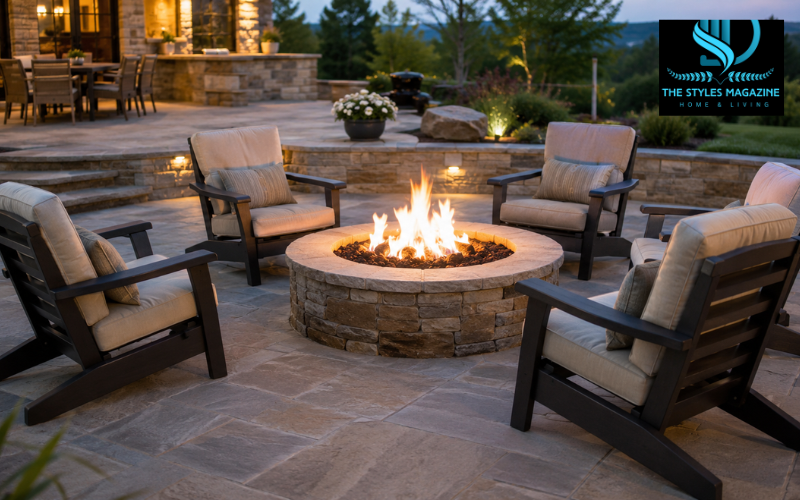
Firepit chairs are outdoor seats chosen specifically for relaxing around a wood-burning, propane, or natural-gas fire pit. Unlike standard patio dining chairs, they are usually designed for longer sitting periods and a more relaxed social setting. Many have wider seats, supportive backs, broad armrests, or cushions that make cool evenings outside more comfortable.
Choosing suitable firepit chairs involves more than matching their color to the patio. You also need to consider how they respond to rain, sunlight, heat, smoke, and changing temperatures. Their size affects how many people can sit around the fire, while their height and back angle influence how easy they are to use.
Safety is equally important. Chairs placed too close to a wood fire may be exposed to excessive heat, sparks, or embers. Seating that is too far away may feel disconnected from the warmth and conversation. The best arrangement balances comfort, safe clearance, weather resistance, and enough walking space for guests.
Quick Guide to Firepit Chairs
| Chair Type | Best For | Main Benefit | Possible Drawback |
| Adirondack chairs | Relaxed outdoor seating | Wide arms and deep, angled seat | Low position may be difficult for some users |
| Upright campfire chairs | Seniors and conversation areas | Easier to sit down and stand up | Less reclined than lounge chairs |
| Swivel lounge chairs | Social gatherings | Rotates between the fire and conversation | Requires a level surface and more space |
| Cushioned fire pit chairs | Long evenings outdoors | Extra back and seat comfort | Cushions require dry storage |
| Stackable aluminum chairs | Small patios and seasonal use | Lightweight and easy to store | May move during strong winds |
| HDPE chairs | Year-round outdoor use | Heavy, weather-resistant, and low-maintenance | Can cost more than basic resin chairs |
What Makes a Chair Suitable for a Fire Pit
A good fire pit chair should remain comfortable for more than a few minutes. A supportive back, a sensible seat height, and enough room around the hips and shoulders all contribute to a better experience. Deep, low chairs may feel relaxing, but they can be difficult for some people to enter and leave.
The chair should also be strong enough for outdoor conditions. Sunlight can fade weak finishes, moisture can damage untreated wood, and metal may rust if its protective coating is scratched or poorly applied. Outdoor furniture made from materials such as HDPE, teak, coated aluminum, or outdoor-rated synthetic wicker generally handles rain and humidity better than indoor-style furniture.
Stability matters as well. Narrow legs may sink into grass or loose gravel, while rocking and swivel bases require an even surface. Before buying, consider whether the chairs will stand on concrete, pavers, decking, lawn, or compacted stone.
Finally, suitable chairs should be easy to clean. Smoke, pollen, ash, spilled drinks, and food marks are common around fire pit seating.
Popular Firepit Chair Styles
Adirondack chairs are among the most recognizable choices. They have a sloped back, a low seat, and wide armrests. Their laid-back shape works well for casual outdoor gatherings, especially when guests want to settle in for a long evening.
Swivel lounge chairs offer a different experience. Their rotating bases allow people to face the fire and then turn toward another conversation without moving the entire chair. Many swivel models also include thick cushions, although they require more storage and maintenance than solid-frame seating.
Upright campfire chairs use a straighter back and a higher seat. They provide a more natural sitting position for conversation and are usually easier to get out of than low Adirondack designs.
Other choices include patio rocking chairs, modern sling chairs, woven lounge seats, folding chairs, and low-profile outdoor club chairs. There is no single style that works for every space. The right option depends on the users, fire pit size, available storage, and overall patio design.
Adirondack Chairs Around a Fire Pit
Adirondack chairs remain popular because their shape naturally creates a relaxed outdoor atmosphere. Their wide bases look balanced around round or square fire pits, while their angled backs encourage users to sit back and enjoy the warmth.
Broad armrests are one of their most useful features. Depending on the design, they may provide enough space for a mug, small plate, phone, or s’mores supplies. This can reduce the need for separate side tables in a compact seating area. However, drinks should still be placed carefully because not every armrest is level or wide enough to hold them safely.
The low seat can be a disadvantage. Older adults, taller users, and people with knee or mobility concerns may find it difficult to stand from a deeply reclined position. Upright or “comfort-height” Adirondack chairs can provide a similar appearance with easier access.
These chairs are also wider than many ordinary patio seats. Measure their full width and depth before planning a circle. An arrangement that looks spacious on paper can quickly feel crowded once large angled chairs are added.
Chairs for a Fire Pit That Are Not Adirondack
People searching for chairs for a fire pit that are not Adirondack have many practical alternatives. Swivel chairs are useful for social areas where guests may want to move their attention between the fire, a dining space, and other people nearby. They work best on firm, level patios that allow the bases to rotate smoothly.
Upright lounge chairs are a strong choice for users who prefer more back support and a higher sitting position. Their smaller depth may also make them easier to fit around a modest fire pit.
Outdoor rocking chairs create gentle movement and a traditional porch-like appearance. However, they need extra space behind and beneath the rockers. They should be placed on stable flooring rather than uneven gravel or soft ground.
Stackable aluminum or resin chairs are helpful when storage is limited. Folding camp chairs are even easier to move, but lightweight models can become unstable in wind and may not offer enough protection from heat or sparks. Whatever style you choose, confirm that it is intended for outdoor use and can stand securely on the planned surface.
Best Materials for Firepit Chairs
HDPE, or high-density polyethylene, is a popular material for low-maintenance firepit chairs. It can imitate painted wood but does not require regular sanding or repainting. It is heavy, moisture-resistant, and easy to clean. POLYWOOD describes its HDPE lumber as weather-resistant and heavy-duty, while L.L.Bean’s current All-Weather Waterfall Adirondack Chair uses HDPE and is listed as resistant to rotting, cracking, warping, and splintering.
Natural teak provides a warmer, more traditional appearance. It performs well outdoors and gradually develops a silver-gray surface when left untreated. Owners who want to preserve its golden color will need to clean and maintain it more regularly.
Powder-coated aluminum offers a clean, modern look. It is light, resistant to rust, and often used in stackable or cushioned chair designs. Because it weighs less than HDPE or teak, it may need to be moved or secured during strong winds.
Steel is strong but can rust where its coating is damaged. Resin and synthetic wicker are affordable and easy to clean, while untreated softwood usually requires the most maintenance.
Choosing Weatherproof Fire Pit Chairs
The term “weatherproof” is often used loosely. Few outdoor chairs remain completely unaffected by every climate, so it is better to examine the actual materials and construction rather than depending on a label.
Weatherproof fire pit chairs should resist moisture, fading, cracking, mildew, and corrosion. Look beyond the main frame. Screws, bolts, brackets, and connectors should also be suitable for outdoor exposure. Marine-grade or stainless-steel hardware can provide better resistance to moisture than unprotected metal fasteners.
Construction quality matters just as much as material. Loose joints can allow water to collect, while poor welding or weak plastic connections may fail after repeated temperature changes. Check whether replacement hardware is available and whether the warranty covers structural damage, fading, or only manufacturing defects.
Covers can reduce exposure to rain, dirt, pollen, and bird droppings. Even durable chairs benefit from cleaning and inspection. During severe winter weather, hurricanes, or long periods of non-use, storing the furniture in a shed or garage may extend its life.
Fire Pit Chairs With Cushions
Fire pit chairs with cushions can provide better hip, back, and lumbar support than hard seating. They are especially useful for people who plan to spend several hours outside. However, cushions add extra care requirements.
Look for outdoor-rated fabric, removable covers, and filling that drains and dries quickly. The University of Florida’s outdoor-living guidance recommends outdoor fabrics and cushion materials that resist fading, rotting, and trapped moisture.
Water-resistant does not mean waterproof. A cushion may survive a brief shower but still absorb water during heavy or repeated rain. Wet cushions should be stood upright in a ventilated place rather than left flat on the chair. Trapped moisture can cause odors, staining, or mildew.
Cushions should also be kept away from direct flame, sparks, and hot fire pit surfaces. Store them indoors when the chairs are not being used, particularly during wet seasons or winter. Before purchasing a cushioned set, check whether replacement covers or inserts are available. Replacing one worn cushion is often more practical than replacing the entire seating set.
Finding the Most Comfortable Fire Pit Chairs
The most comfortable fire pit chairs are not always the softest or deepest. Comfort depends on seat height, depth, back angle, armrest position, and the user’s body size.
A very deep seat may support relaxed lounging but leave shorter users without proper back support. A low seat may feel casual but place extra pressure on the knees when standing. Taller chairs with straighter backs are generally easier for older adults and people with limited movement.
Lumbar support is important for long gatherings. Some chairs include curved backs, flexible slats, or lower-back cushions. Armrests should sit at a natural height without forcing the shoulders upward. They should also be strong enough to support users who rely on them when standing.
When possible, test the chair before buying. Sit in it for several minutes rather than making a quick decision. Check whether your feet rest comfortably, whether the front edge presses against your legs, and whether you can stand without pulling yourself forward. For online purchases, compare detailed dimensions with a chair you already find comfortable.
Fire Pit Chair Sets of 2, 4, and 6
A fire pit chairs set of 2 works well for couples, balconies, compact patios, or small gas fire tables. Two matching chairs can create a simple conversation area without taking over the entire outdoor space.
A fire pit chairs set of 4 is suitable for many family patios. Four chairs can be placed in a complete circle around a small fire pit or arranged in a semicircle that leaves one side open for walking and serving.
A fire pit chairs set of 6 is better for larger households and regular entertaining. However, six wide chairs require much more space than many buyers expect. Adirondack and swivel chairs need extra room because of their broad arms, deep frames, or rotating bases.
Do not choose the set size based only on the number of guests. Measure the fire pit, the full depth of each chair, the intended clearance, and the walking area behind the seats. It may be better to buy four spacious chairs and keep two folding seats in storage than to crowd six permanent chairs into a small patio.
Arranging Firepit Chairs for Comfort and Conversation
A circular arrangement gives everyone a similar view of the fire and supports group conversation. It works best when the fire pit is round and the surrounding patio is large enough to maintain even spacing.
A semicircular layout is useful near a wall, garden border, pool, or outdoor kitchen. It leaves one side open, making it easier for guests to enter the seating area without stepping between chairs or moving close to the flames.
An open-sided arrangement can also improve serving and safety. Keeping a clear route into and out of the area reduces the chance of someone bumping a chair or walking too close to the fire while carrying food.
Leave extra space around rocking, swivel, and reclining chairs. A stationary chair may fit comfortably in a tight area, while a chair that moves backward or rotates could enter the fire pit’s clearance zone. Practical patio-planning guidance commonly recommends allowing additional space behind seating for movement rather than filling the entire surface with furniture.
Safe Distance Between Chairs and the Fire Pit
There is no universal chair distance that suits every fire pit. Flame height, heat output, fuel type, wind, chair material, and the manufacturer’s instructions all affect safe placement.
As a practical starting point, chairs around a wood-burning fire pit are often kept at least 3 feet from the pit because wood fires can release sparks and embers. Gas or propane fires may allow seating closer, with around 2 feet often used as an initial planning distance. However, these figures should never replace the clearances listed in the fire pit’s manual.
Measure from the outer edge of the fire pit to the nearest part of the chair, not merely to the user’s back. Also consider how close a person’s knees, clothing, blanket, or cushion may come to the flame.
Move chairs farther away when wind carries smoke, sparks, or ash toward guests. Strong or unpredictable wind may make it safer not to use a wood fire at all. Keep children, pets, cushions, and other flammable items away from hot surfaces, and always follow local fire restrictions.
Buying Firepit Chairs Online or In Store
Start by comparing exact measurements. Product photographs can make chairs appear larger, smaller, higher, or more upright than they really are. Check the overall width, depth, seat height, seat width, weight capacity, and chair weight.
Material descriptions should be specific. “Wood-look” may refer to resin, HDPE, or a thin surface finish. “Metal” could mean aluminum or steel, which have different weights and care needs. Read warranty details to understand what is covered and for how long.
When viewing firepit chairs at Walmart or another large retailer, confirm whether the listing is sold directly by the retailer or by a marketplace seller. Review delivery terms, assembly requirements, return conditions, replacement-part availability, and customer photographs. Product selection and availability can change, so compare the current listing rather than relying on an older review.
Avoid choosing chairs only because they are inexpensive or visually attractive. A low price provides little value if the seats are uncomfortable, unstable, difficult to assemble, or unsuitable for the weather. Measure the patio first, then choose the style and set size that fit safely.
Conclusion
The best firepit chairs bring together comfort, durability, practical design, and safe placement. Adirondack chairs create a relaxed and traditional setting, while swivel, upright, rocking, stackable, and cushioned options meet different needs.
Materials also influence the long-term experience. HDPE offers simple maintenance and useful weight, teak provides natural warmth, and powder-coated aluminum creates a lighter modern look. Cushions can improve comfort but require dry storage and protection from sparks.
Before purchasing a set of 2, 4, or 6 chairs, measure the entire seating area rather than the fire pit alone. Include room for chair depth, safe clearance, movement, and access. Most importantly, follow the fire pit manufacturer’s instructions and adjust the layout for fuel type, heat, weather, children, and pets.
Well-chosen firepit chairs do more than complete the appearance of a patio. They create a safer, more comfortable place where people can relax, talk, and enjoy the fire without feeling crowded.
Frequently Asked Questions
How Far Should Firepit Chairs Be From The Fire?
Follow the fire pit manufacturer’s instructions first. As a general planning guide, allow about three feet around wood-burning pits and approximately two feet around controlled gas or propane fire pits.
What Is The Best Material For Firepit Chairs?
HDPE is a practical low-maintenance choice because it resists moisture, fading, and cracking. Teak offers a natural premium appearance, while powder-coated aluminum is lightweight, modern, and resistant to rust.
Are Adirondack Chairs Good Around A Fire Pit?
Adirondack chairs work well around fire pits because they offer wide armrests, supportive backs, and relaxed seating. However, their low position may be uncomfortable for seniors or people with limited mobility.
Can Fire Pit Chairs With Cushions Stay Outside?
Outdoor cushions can handle light moisture, but they should not remain exposed to heavy rain or winter weather. Store them in a dry, ventilated place to prevent mildew, fading, and unpleasant odors.
How Many Chairs Can Fit Around A Fire Pit?
The number depends on the fire pit size, chair width, required safety clearance, and walking space. Small areas may fit two chairs, while larger patios can accommodate sets of four or six.
Enjoyed it? Find more exclusive content on The Styles Magazine.
Disclaimer: Fire pit clearance requirements vary by product, fuel type, weather, and local regulations. Always follow the manufacturer’s safety instructions and keep chairs, cushions, children, and pets away from flames, sparks, and hot surfaces.