To kill lawn weeds organically, you need to do more than burn or dry the leaves. The best plan combines direct removal, careful spot treatment, and lawn care that makes it harder for new weeds to grow. This approach reduces the need for conventional herbicides, but it does not mean every method is harmless. Concentrated vinegar, boiling water, and even salt can injure people, pets, grass, soil, or nearby plants when used carelessly.
Organic weed control has two goals: remove weeds already growing and prevent new ones by keeping the lawn thick and free of bare soil. Pulling a dandelion handles the present plant, while overseeding helps stop future seedlings.
Natural methods usually work more slowly than systemic weed killers. Timing matters, and repeat treatment is often necessary. A contact spray may brown the leaves within hours, yet the root can survive and send up new growth. Permanent control is most realistic when you identify the weed, remove or exhaust its root system, stop seed production, and correct the lawn problem that allowed it to spread.
Quick Guide to Organic Lawn Weed Control
| Method | Best Used For | Lawn-Safe? | Main Limitation |
| Hand pulling | Dandelions, plantain, small patches | Yes | The entire root must be removed |
| Weeding tool | Deep taproots and scattered weeds | Yes | May leave holes that need reseeding |
| Horticultural vinegar | Young weeds on paths or isolated spots | No | Can burn grass and may not kill roots |
| Boiling water | Driveway cracks, pavers, and gravel | No | Damages any plant it touches |
| Corn gluten meal | Reducing some new weed seedlings | Usually | Does not kill established weeds |
| High mowing | Shading weed seeds in the lawn | Yes | Height must suit the grass type |
| Aeration | Compacted soil and weak turf | Yes | Must be done in the correct season |
| Overseeding | Thin lawns and bare patches | Yes | Needs suitable seed and regular moisture |
Simple Steps to Kill Lawn Weeds Organically
- Identify the weed and determine whether it is annual or perennial.
- Pull isolated weeds when the soil is moist.
- Remove the crown, taproot, runners, or underground growth.
- Avoid spraying vinegar or boiling water on healthy grass.
- Fill holes and reseed bare soil immediately.
- Mow at the recommended height for your grass type.
- Water deeply rather than giving the lawn frequent light watering.
- Aerate compacted soil and overseed thin areas when the season is suitable.
- Inspect the lawn regularly and remove new weeds before they produce seeds.
Identify the Weeds Before Choosing a Treatment
Correct identification is the first step because lawn weeds do not all grow in the same way. Dandelions and plantain are broadleaf weeds with wide leaves. Crabgrass is a grassy annual that can blend into turf. Clover has creeping stems and rounded leaflets, while nutsedge has upright, shiny leaves and is a sedge rather than a true grass.
The weed’s life cycle also affects control. Annual weeds, including crabgrass, complete their life cycle in one season and depend heavily on seed. Removing them before they flower and preventing seed germination can greatly reduce future growth. Biennial weeds usually grow leaves during the first year and flower in the second. Perennial weeds, such as dandelion, white clover, plantain, and nutsedge, can live for several years and regrow from taproots, runners, rhizomes, or underground tubers.
The wrong method may waste time or harm the lawn. Vinegar can damage grass, while poor nutsedge removal may leave underground parts behind. Confirm the weed with reliable local identification photos before treating a large area.
Remove Lawn Weeds by Hand and Get the Entire Root
Hand removal is usually the cheapest and safest choice for a few weeds or small patches. Pull weeds after rain or watering, when the soil is moist but not muddy. Soft soil releases roots more easily and lowers the chance of snapping a taproot below the surface.
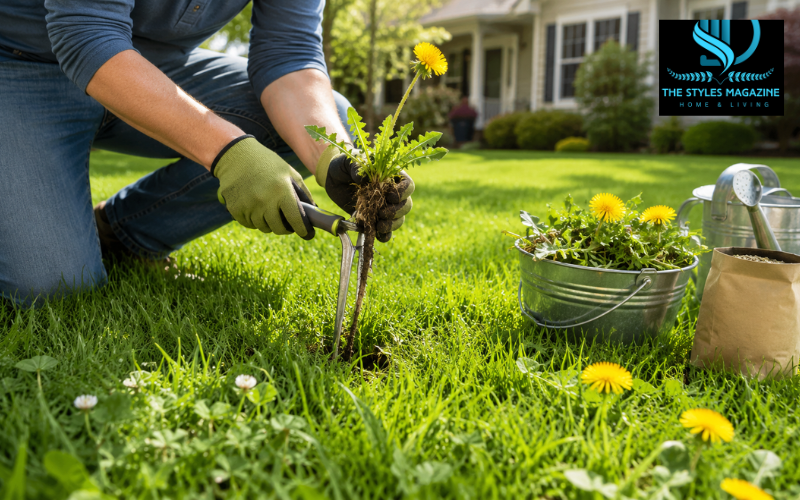
For dandelions and plantain, slide a dandelion fork or narrow weeding tool deep beside the crown. Loosen the soil, lift the root, and remove as much of it as possible. A stand-up weeder can make the job easier when many scattered weeds are present.
Deep-rooted perennials may return if a large root section remains, so check the spot every week and remove new leaves promptly. Repeated removal slowly uses up the plant’s stored energy. Hand removal is most practical for individual plants or small patches, especially when the root and underground stems are removed before seeds develop.
After digging, refill and reseed the hole with grass suited to the lawn. Keep it lightly moist during germination so the open soil does not become another weed site.
How to Get Rid of Weeds Without Killing Grass
When weeds are mixed with healthy turf, precision matters more than speed. Manual removal is the best starting point because it targets the unwanted plant without coating the surrounding grass. For larger broadleaf weed patches, consider only a commercial product specifically labeled for use on your grass type.
Some iron-based products target certain broadleaf weeds while causing less harm to compatible turf. Results vary by product, grass species, weather, and application rate, so read the label and never assume a natural or mineral-based product is safe for every lawn.
Iron-based products may act quickly on small, actively growing broadleaf weeds, but some can temporarily darken or discolor grass. Testing has mainly focused on certain cool-season grasses, so extra care is needed with warm-season lawns and sensitive species.
Avoid blanket spraying when only a few weeds are present. Shield nearby grass when applying a non-selective treatment, use the smallest amount needed, and test a lawn-safe product on a small area first. Homemade mixtures are difficult to dose and are not automatically safer.
Natural Contact Killers for Fast Weed Control
Natural contact killers damage the plant tissue they touch. Acetic acid products, fatty-acid herbicides, and some botanical-oil products can dry young weed leaves quickly. This is why people searching for what kills weeds instantly often notice fast browning after treatment. However, rapid leaf damage is not the same as complete root death.
Horticultural vinegar is much stronger than kitchen vinegar. Products containing high levels of acetic acid can cause severe eye damage and skin burns. Vinegar is also non-selective, which means it can injure lawn grass, flowers, and vegetables.
The Environmental Protection Agency identifies acetic acid as a potent herbicidal ingredient rather than a harmless minimum-risk substance. Registered vinegar-based weed-control labels also explain that these products mainly burn contacted growth and may require repeated treatment on established perennial weeds.
Use only a product labeled for weed control, wear the protection listed on the label, and follow its directions exactly. Do not add dish soap, salt, or other ingredients unless the product label specifically allows it.
Contact products work best on small, actively growing annual weeds. Mature weeds and deep-rooted perennials often need repeat treatment or physical removal. Follow the label’s re-entry directions and avoid windy days.
Can Weeds Be Killed Down to the Root Overnight?
There is no dependable natural treatment that kills every lawn weed down to the root overnight. Boiling water or strong contact herbicides may collapse the top growth quickly, but perennial roots can remain alive underground. A weed that looks dead the next morning may return days or weeks later.
For deep-rooted weeds, long-term control comes from removing the root or repeatedly cutting off new growth before the plant can rebuild its energy. Dig dandelions below the crown, remove plantain crowns, and keep pulling creeping weeds before they spread farther.
For a stubborn patch, combine cutting or digging with follow-up checks throughout the growing season. Persistent perennial weeds that spread through large root or rhizome systems can take several seasons of repeated removal to weaken.
“Permanent weed control” is relative. You may eliminate one plant, but new seeds can arrive from wind, animals, soil, equipment, or neighboring yards. Dense turf and regular inspection keep the problem from returning at the same level.
Boiling Water and Heat-Based Weed Removal
Boiling water can be useful in driveway cracks, between paving stones, along gravel edges, and in other places where no living plant is wanted. Pour it slowly and directly onto young weeds. The heat destroys exposed plant tissue and may damage shallow roots, especially on small annual weeds.
Do not pour boiling water onto weeds growing inside the lawn. It will burn grass roots and blades in the same area. It can also damage nearby flowers, surface tree roots, plastic edging, and some paving materials.
Wear closed shoes and heat-resistant gloves, carry only a manageable amount, and keep children and pets away while working. Natural weed-removal guidance also warns that boiling water must be directed only at unwanted plants because it can damage anything it contacts.
Established perennials often need repeated heat treatment. Treat them before seeds form, then repair cracks where new seeds could collect.
Corn Gluten Meal and Organic Pre-Emergent Control
Corn gluten meal is often promoted as a natural pre-emergent. It is intended to reduce the establishment of some newly germinating weed seeds, but university guidance shows that results can be inconsistent. It does not kill mature weeds, existing roots, or dormant perennial plants.
Timing is critical because a pre-emergent must be present before target seeds establish. Corn gluten meal will not remove visible weeds and also adds nitrogen, so heavy use may overfeed the lawn. University of Minnesota guidance notes that corn gluten meal contains about 10 percent nitrogen and may or may not provide dependable weed control.
Do not use corn gluten meal when you plan to overseed because it may interfere with grass-seed establishment. Choose either pre-emergent treatment or new grass seeding for that period. Check local timing advice because crabgrass germination and the best seeding season vary by climate.
Build Thicker Grass That Naturally Crowds Out Weeds
A dense lawn leaves less light and open soil for weed seeds. Mow at the recommended height for your grass rather than using one fixed height for every lawn.
Many cool-season lawns perform well when kept roughly between 2.5 and 4 inches, while some warm-season grasses are maintained lower. Local guidance and grass type should decide the final setting. University recommendations differ by region and grass species, but they consistently warn that mowing too low creates openings for weeds.
Never remove more than about one-third of the blade at once. Scalping weakens turf and exposes soil, while sharp mower blades make cleaner cuts.
Water deeply enough to moisten the active root zone, then wait until the lawn shows signs that it needs water again. Frequent shallow watering encourages shallow roots and may favor some weeds.
Fertilize according to a soil test and the needs of your grass. Too little nutrition can thin the lawn, while too much can cause weak growth, runoff, disease, or extra mowing.
Repair bare spots quickly. Loosen the surface, add suitable seed, maintain seed-to-soil contact, and keep the area evenly moist until seedlings become established.
Aeration and Overseeding for Long-Term Prevention
Compacted soil makes it difficult for grass roots to receive air and water. It is common in high-traffic areas and may be linked with weeds such as plantain and knotweed. If water runs off, the ground feels hard, or grass remains thin despite normal care, core aeration may help.
Aerate while the grass is actively growing and able to recover. Cool-season lawns are often aerated in early fall, while warm-season lawns are usually handled during active late-spring or summer growth. Avoid aerating during severe heat, drought, or dormancy.
Overseed after aeration when the season suits your grass. Choose compatible seed, rake thin areas so the seed touches soil, and keep the surface moist during germination. The goal is lasting turf density that competes with weeds.
Regular overseeding is widely recommended for filling thin spaces and helping grass compete with weed seedlings. The best season and frequency depend on the grass type and regional growing conditions.
Organic Control Methods for Common Lawn Weeds
Dandelions are perennial broadleaf weeds with strong taproots. Remove them when the soil is moist, dig below the crown, and revisit the area if leaves return. Mowing flowers before seeds form also limits their spread.
Crabgrass is a summer annual. Pull young plants before they produce seed, maintain the correct mowing height, and thicken bare areas. Pre-emergent timing can help, but it conflicts with spring seeding because both crabgrass and grass seed are germinating plants.
Clover may increase where turf is thin or soil fertility is low, although some homeowners choose to keep it because its flowers support pollinators. Where removal is desired, improve grass density, check soil conditions, pull small patches, and reseed gaps.
Plantain often appears in compacted, worn, or low-fertility soil. Dig out the entire crown and main root, then reduce compaction and improve turf growth.
Nutsedge needs careful identification because it grows from underground structures and often points to wet or poorly drained soil. Improve drainage where possible and avoid assuming it can be managed like ordinary grass. Dense turf and correction of poor lawn conditions remain important defenses against these common weeds.
How to Control Weeds in Rocks, Gravel, and Hardscape Areas
Methods that are too damaging for a lawn may be useful in areas where no plants should grow. Start by pulling weeds after rain and removing roots before seed heads mature. Use a narrow scraper or crack tool for weeds between pavers.
Boiling water or a labeled non-selective contact product can be used carefully on hardscape weeds. Keep runoff away from lawns, drains, streams, tree roots, and garden beds. Repeated treatment may be needed because gravel often contains dust and organic matter that supports new seedlings.
For longer control, remove soil and leaves, repair cracks, and maintain a suitable barrier under rebuilt gravel. Fabric may reduce weeds, but seeds can still germinate in material above it, so sweeping and early removal remain necessary.
There is no treatment that will permanently prevent every weed in rocks. The most reliable strategy combines root removal, surface cleaning, crack repair, early treatment, and regular inspection.
Cheap Organic Methods, Unsafe Shortcuts, and Common Myths
For a small lawn problem, hand pulling is usually cheapest. A weeding fork, grass seed, and regular follow-up can solve scattered patches without exposing healthy turf to a non-selective spray. For a badly thinned lawn, repair and reseeding may cost less than repeated treatment.
Salt is not a good lawn herbicide. It can injure roots, move with water, and prevent wanted plants from growing. Even natural weed-control guidance that mentions salt warns that it may leave soil unable to support plants for months.
Bleach is also not an appropriate weed-control product. It may burn leaves, but it can harm grass, soil life, nearby plants, surfaces, clothing, and water quality. It is not a reliable answer to whether bleach will kill weeds permanently.
Stronger homemade mixtures are not necessarily more effective or safer. Combining vinegar, salt, and soap can create broad damage without solving deep roots.
Never mix bleach with vinegar, ammonia, or other cleaners because dangerous gases can form. Use physical removal, cultural prevention, or a properly labeled weed-control product instead.
A Seasonal Plan to Kill Lawn Weeds Organically
In early spring, inspect the lawn and identify winter weeds, perennial crowns, and thin areas. Decide whether the priority is overseeding or pre-emergent treatment because the two may conflict. Pull weeds while the soil is soft and repair small bare patches.
During late spring and summer, mow at the correct height, remove annual weeds before seeds form, and spot-treat only where necessary. Watch irrigation patterns because both drought-stressed turf and constantly wet soil can invite different weeds. Avoid aggressive treatment during extreme heat when grass is already under stress.
Fall is often the best repair season for cool-season lawns. Aerate compacted areas, overseed thin turf, and remove perennial weeds while they are still actively growing. Warm-season lawns need a schedule matched to their active growth period.
In every season, a short inspection once a week is more effective than waiting until weeds cover a large part of the yard.
Conclusion: Maintain a Lawn That Leaves Less Room for Weeds
The most dependable way to kill lawn weeds organically is to work from the root of the problem. Remove isolated weeds completely, use contact treatments only where they will not harm wanted grass, and prevent new growth by building dense, well-managed turf.
No single natural product permanently removes every weed. Results depend on the species, root system, lawn type, season, soil, and follow-up care. Fast leaf burn may look impressive, but root removal, seed prevention, proper mowing, soil improvement, aeration, and overseeding provide better long-term control.
A healthy lawn will never be completely free of every unwanted plant, and that does not mean the plan has failed. Consistent, targeted care can keep weeds at a manageable level while reducing unnecessary herbicide use and protecting the rest of the yard.
Frequently Asked Questions
What Kills Lawn Weeds Naturally Without Killing Grass?
Hand pulling is usually the safest option for weeds growing among healthy grass. Remove the full root, fill the hole, and reseed the area to prevent another weed from taking its place.
Can Vinegar Kill Lawn Weeds Permanently?
Vinegar can quickly burn weed leaves, but it may not destroy deep perennial roots. It is also non-selective, so overspray can damage or kill nearby lawn grass.
What Kills Weeds Down To The Root Overnight?
No natural method reliably kills every weed down to the root overnight. Deep-rooted weeds usually require complete digging, repeated cutting, or several carefully targeted treatments over time.
Is Boiling Water Safe For Killing Weeds In A Lawn?
No. Boiling water damages grass and any other plant it touches. It is better suited to weeds growing in driveway cracks, gravel, paths, or other plant-free areas.
How Can I Prevent Lawn Weeds Naturally?
Maintain thick grass by mowing at the correct height, watering deeply, repairing bare patches, reducing soil compaction, and overseeding when appropriate. Dense turf leaves less room for weeds.
Enjoyed it? Find more exclusive content on The Styles Magazine.
Disclaimer: This information is for general guidance. Always identify the weed, follow product labels, wear suitable protection, and check local lawn-care recommendations before applying any treatment.