Learning how to clean a rug correctly can help remove dirt, odors, spills, pet hair, and allergens while keeping the rug in good condition. Rugs often look clean on the surface, but dust and fine debris can settle deep between the fibers. Regular foot traffic can push this dirt even farther into the pile, making the rug appear dull and causing unpleasant smells over time.
The safest cleaning method depends on the rug’s material, size, condition, and care instructions. A sturdy synthetic rug may tolerate water, mild soap, and outdoor rinsing. A wool, jute, silk, shag, or antique rug may need a much gentler method. Using too much water or the wrong cleaner can cause fading, shrinking, rough fibers, damaged backing, or mildew.
You can clean many rugs at home by vacuuming, spot treating, washing by hand, or using a low-moisture method. Some small rugs can also be washed in a washing machine when the care label allows it. No matter which method you choose, careful rinsing and complete drying are essential. The following guide explains how to clean a rug yourself without causing avoidable damage.
Quick Rug-Cleaning Guide
| Rug Type | Recommended Cleaning Method | What to Avoid |
| Synthetic | Mild soap, gentle brushing, rinsing, and air-drying | Excessive heat and strong chemicals |
| Cotton | Hand wash or machine wash when the label allows | Hot water that may cause shrinking |
| Wool | Wool-safe cleaner and low-moisture cleaning | Soaking, hot water, and hard scrubbing |
| Shag | Gentle vacuuming and light spot cleaning | Beater bars and heavy saturation |
| Jute or sisal | Vacuuming and minimal spot cleaning | Washing with water or soaking |
| Silk or antique | Professional rug cleaning | DIY washing and stain chemicals |
Simple Steps for Cleaning a Rug
- Read the care label and identify the rug material.
- Vacuum the top and underside thoroughly.
- Test the cleaner on a hidden corner.
- Treat stains by blotting rather than scrubbing.
- Apply a mild, material-safe rug cleaner.
- Rinse washable rugs until no soap remains.
- Remove excess water with towels or a wet-dry vacuum.
- Dry the rug and backing completely before replacing it.
Identify the Rug Material Before You Begin
Before applying water or cleaning products, check the rug’s care label. It may tell you the fiber type, recommended water temperature, drying instructions, and whether professional cleaning is required. Following the label is safer than choosing a method based only on the rug’s appearance.
Synthetic rugs made from nylon, polyester, or polypropylene are generally among the easiest to clean. Many can handle mild soap, gentle brushing, and rinsing with water. Cotton rugs may also be washable, although they can shrink or lose their shape if cleaned with hot water or dried with high heat.
Wool rugs require more care because their natural fibers can shrink, felt, or become stiff. Use cool water and a wool-safe cleaner, and avoid soaking the rug unless its instructions clearly permit washing. Shag rugs can trap moisture deep in their long pile, so they need careful vacuuming and extended drying time.
Jute and sisal rugs should not be saturated. Their plant-based fibers can become stained, warped, brittle, or moldy when heavily wet. Silk, antique, handmade, and valuable rugs are usually best left to a professional rug cleaner.
Inspect the rug before cleaning. Look for loose threads, weak seams, faded areas, cracked backing, dye bleeding, or damage caused by pets. A damaged rug may become worse during washing, even when the cleaning method is otherwise suitable.
Essential Rug-Cleaning Supplies
You do not need a large cleaning machine for every rug. A few basic supplies are usually enough for routine cleaning and light washing.
Use a vacuum with adjustable suction and suitable attachments. A suction-only floor head is safer for delicate, fringed, or high-pile rugs than a powerful rotating brush. You may also need a soft-bristle brush, sponge, bucket, microfiber cloths, white towels, and a squeegee.
Choose a mild dish soap, rug shampoo, or rug cleaner designed for the rug’s material. Avoid strong bleach, heavy fragrances, and harsh household cleaners unless the care instructions specifically approve them. White towels are helpful because they make it easier to see whether color is transferring from the rug.
Floor fans and open windows can speed up drying. A wet-dry vacuum can remove a large amount of moisture from washable rugs, although it is not essential. For outdoor cleaning, place the rug on a clean patio, driveway, or waterproof tarp. Do not wash it directly on muddy ground or dirty concrete that may transfer stains.
Prepare and Vacuum the Rug Thoroughly
Proper vacuuming is one of the most important parts of learning how to clean a rug. Water can turn loose dust into muddy residue, so remove as much dry dirt as possible before using any cleaning solution.
Start by removing furniture and objects from the rug. Take smaller rugs outdoors and shake them carefully to release crumbs, hair, and loose soil. Avoid shaking rugs with weak seams or damaged backing.
Vacuum the top slowly, moving in more than one direction. Several slow passes are more effective than moving the vacuum quickly. If the rug has a visible pile direction, finish by vacuuming in that direction to leave the fibers looking even.
Flip the rug over and vacuum the underside. Dust often collects between the backing and the floor, where it can cause odors and wear. After vacuuming the back, turn the rug over again and make one final pass across the top.
Use low suction on wool, shag, fringed, or delicate rugs. Keep rotating brushes away from fringe because they can pull, twist, or tear the threads.
Test for Colorfastness and Cleaning Compatibility
Always test a cleaning product before applying it across the whole rug. Even a mild rug shampoo can affect unstable dyes or delicate fibers.
Choose a small hidden area, such as a corner that normally sits under furniture. Apply a small amount of the prepared cleaning solution and leave it for the time suggested on the product label. Blot the area with a clean white cloth.
Check the cloth for transferred color. Also inspect the rug for fading, stiffness, roughness, curling, or changes in texture. If the color bleeds or the fibers react badly, stop using the product.
A failed spot test does not always mean the rug cannot be cleaned. It means the chosen method is unsuitable. Use a dry or low-moisture method instead, or contact a professional cleaner for advice.
How to Clean a Rug by Hand
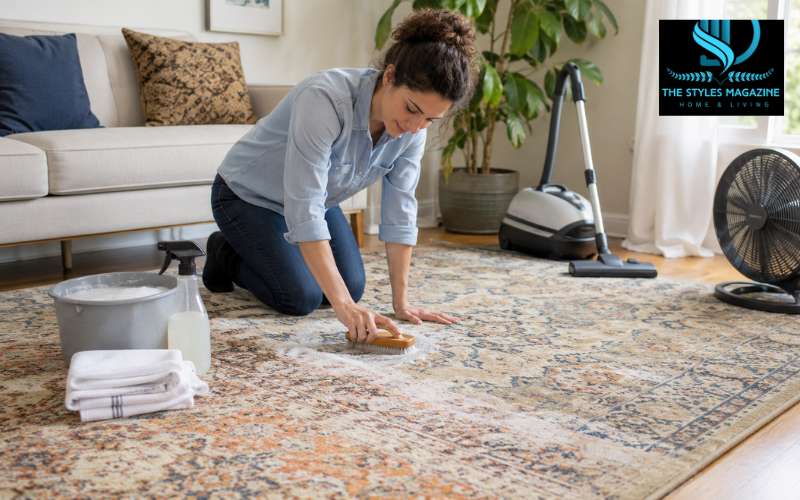
Cleaning by hand works well for many washable synthetic and cotton rugs. Choose a dry day and work outdoors when possible so the rug can be rinsed and dried more easily.
Mix cool or lukewarm water with a small amount of mild soap or rug shampoo. More soap does not produce a cleaner rug. Too much creates extra foam, makes rinsing difficult, and leaves residue that can attract dirt.
Place the rug flat on a clean surface. Apply the solution in small sections using a sponge or soft-bristle brush. Gently work it through the fibers, following the direction of the pile. Do not scrub aggressively because this can damage the surface and spread stains.
Pay extra attention to heavily used areas, but avoid repeatedly brushing the same spot. Allow the solution to remain only as long as the cleaning-product instructions recommend.
If the rug is fully washable, rinse it with clean, cool water. Continue rinsing until the water is clear and free from foam. Remove as much water as possible before starting the drying process.
How to Clean a Rug Without a Machine
You can clean a rug without a carpet machine by combining thorough vacuuming, gentle hand cleaning, and careful moisture control. This method is useful for routine cleaning, small stains, and rugs that cannot easily be taken outside.
Begin by vacuuming both sides whenever possible. Prepare a small amount of mild cleaning solution and test it on a hidden area. Lightly dampen a cloth, sponge, or soft brush rather than pouring the solution directly onto the rug.
Work in small sections. Blot and lift dirt from the fibers instead of soaking them. For delicate rugs, press a damp microfiber cloth gently against the surface and then blot with a dry towel.
After cleaning, use clean towels to absorb moisture. Place a towel over the damp area and press down firmly without rubbing. Repeat with dry towels until very little moisture transfers.
Position fans so air moves across the rug. Good airflow is more important than heat. Avoid using a hair dryer or heater at close range because high temperatures can damage fibers or backing.
How to Clean an Area Rug Without Moving It
A large area rug can be difficult to lift or take outdoors. It can still be cleaned in place, but you must protect the floor underneath.
If possible, slide waterproof sheeting, plastic, or thick towels beneath the section being cleaned. This is especially important over hardwood or laminate flooring, as trapped moisture can damage the floor.
Vacuum the rug thoroughly and treat individual stains first. Use a low-moisture cleaning method rather than wetting the entire rug. Apply the cleaner to a cloth or brush instead of pouring it directly onto the surface.
Clean one small section at a time. Blot away the cleaning solution with a clean, damp cloth, then press dry towels into the fibers. Move to the next section only after removing as much moisture as possible.
Open windows and direct fans across the rug. Check the underside and the floor when possible. Do not return furniture until the rug, backing, and flooring are completely dry.
Choosing and Using Rug Shampoo or Rug Cleaner
A suitable rug cleaner can loosen embedded soil and improve the rug’s appearance, but the wrong product may damage the fibers or leave sticky residue.
Choose a cleaner labeled for the rug’s material. A general carpet shampoo may work on some synthetic rugs but may not be safe for wool, natural fibers, handmade rugs, or unstable dyes. For wool, use a product clearly marked as wool-safe.
Read the instructions for dilution, application, waiting time, rinsing, and drying. Using a stronger mixture than recommended does not make the cleaner more effective. It often makes the rug harder to rinse.
Never mix rug shampoo with bleach, ammonia, vinegar, peroxide, or another cleaning chemical. Combining products may damage the rug and can create harmful fumes.
Use only enough cleaner to lift the dirt. When the care label allows rinsing, remove the product thoroughly. If the rug cannot be rinsed, blot repeatedly with a clean, lightly damp cloth to reduce leftover residue.
How to Clean a Rug With Baking Soda
Baking soda can help reduce mild odors in a dry rug. It is useful for freshening between deeper cleanings, but it does not wash away embedded grime, sticky spills, or heavy stains.
Vacuum the rug first. Sprinkle a light, even layer of baking soda across the dry surface. Avoid applying a thick coating, especially to high-pile rugs, because fine powder can settle deep into the fibers and become difficult to remove.
Leave it for several hours. For stronger odors, it may remain overnight as long as the area stays dry and is kept away from children and pets. Vacuum slowly in several directions until no visible powder remains.
Be cautious when using baking soda on delicate, handmade, jute, sisal, silk, or antique rugs. Fine particles may become trapped in natural fibers. Test a small area first or follow the manufacturer’s guidance.
Baking soda can freshen a rug, but it should not replace proper stain treatment or deep cleaning when the rug is visibly dirty.
How to Wash Rugs in a Washing Machine
Only wash a rug in a washing machine when its care label clearly states that machine washing is safe. Small cotton rugs, washable synthetic rugs, bath mats, and some lightweight runners may be suitable.
Check for rubber or latex backing before washing. Old or cracked backing can break apart inside the machine. Rugs that are heavy when wet may also overload the washer.
Shake and vacuum the rug before placing it in the machine. Use cold water, a gentle cycle, and a small amount of mild detergent. Avoid bleach unless the care label specifically permits it.
Balance the load so the washer does not shake violently. Depending on the rug’s size, adding one or two towels may help balance the drum, but do not overfill it.
Air-dry the rug flat or hang it securely with even support. Avoid tumble drying unless the label allows it. Dryer heat can shrink fibers, weaken adhesives, and damage non-slip backing.
Removing Common Rug Stains Safely
Treat stains as soon as possible. Remove solid material with a spoon or dull edge, then blot liquid with a clean white cloth. Work from the outer edge toward the center to prevent the stain from spreading.
For coffee, tea, wine, and food spills, begin with cool water and a small amount of mild soap. Blot gently, then use a separate damp cloth to remove the soap. Do not rub back and forth.
For pet urine, absorb as much liquid as possible before using an enzyme-based cleaner approved for the rug material. Enzyme cleaners help break down the compounds that cause lingering odors. Test the product first and follow its instructions carefully.
For grease, place an absorbent powder such as baking soda or cornstarch over the dry spot. Allow it to absorb the oil, then vacuum it away. Follow with a mild rug-safe cleaner if needed.
Mud is often easier to remove after it has dried. Vacuum the loose dirt first, then treat any remaining mark. Repeating a gentle method is safer than applying a strong chemical treatment all at once.
Rinsing, Extracting Water, and Drying the Rug
Rinsing removes both dirt and cleaning residue. For fully washable rugs, use cool water until no foam remains and the runoff appears clear.
Move a squeegee across the rug in the direction of the pile to push out water. You can also press clean towels into the surface or use a wet-dry vacuum. Do not twist or tightly roll a wet rug, as this may stretch the backing and distort its shape.
Dry the rug flat on a clean surface or support it evenly on a strong rail. A large wet rug becomes very heavy, so a thin clothesline may cause stretching. Turn the rug when possible so both sides receive airflow.
Limited sunlight can speed up drying, but prolonged direct sun may fade dark or unstable colors. Fans, ventilation, and dry outdoor air are safer for many rugs.
Before returning the rug indoors, check the center, edges, and backing. A surface may feel dry while moisture remains underneath. Placing a damp rug on the floor can lead to mildew, odors, staining, and floor damage.
Rug-Cleaning Mistakes That Can Cause Damage
One common mistake is treating every rug in the same way. A method that works on polyester may ruin wool, jute, silk, or an antique rug.
Avoid hot water unless the label specifically recommends it. Heat can shrink natural fibers, loosen adhesives, and cause colors to bleed. Oversaturating a rug is also risky, especially when it has glued backing or slow-drying fibers.
Do not use excessive soap. Residue makes fibers feel stiff or sticky and causes the rug to become dirty again more quickly. Rinse washable rugs thoroughly and blot non-rinsable rugs carefully.
Aggressive scrubbing can spread stains, untwist fibers, and leave a worn patch. Blot stains and use a soft brush only when the material can tolerate gentle brushing.
Finally, never place furniture on a damp rug. Furniture legs may leave deep marks, transfer stains, or trap moisture. Wait until both the rug and the floor beneath it are fully dry.
Conclusion: Keeping a Rug Clean Without Shortening Its Life
Knowing how to clean a rug begins with identifying its material and reading the care label. Synthetic and machine-washable rugs may tolerate a full wash, while wool, shag, jute, sisal, silk, antique, and handmade rugs need more controlled cleaning.
Use gentle products, test for colorfastness, and avoid unnecessary soaking. Vacuuming both sides, treating spills quickly, rinsing away soap, and drying the rug completely can improve its appearance without shortening its life.
Regular vacuuming also reduces the need for frequent deep cleaning. Rotate the rug occasionally, keep outdoor dirt away from entrances, and deal with stains before they settle.
Professional care is the safest choice when a rug is valuable, badly damaged, heavily stained, made from delicate fibers, or showing signs of dye bleeding. A careful cleaning approach may take more time, but it protects the rug’s color, texture, shape, and backing for years to come.
Frequently Asked Questions
Can I Clean A Rug Without A Carpet-cleaning Machine?
Yes. Vacuum it thoroughly, clean small sections with mild soap and a damp cloth or soft brush, blot away moisture with towels, and use fans to dry it completely.
Can Baking Soda Be Used To Clean A Rug?
Baking soda can absorb mild odors and freshen a dry rug. Sprinkle it lightly, leave it for several hours, and vacuum thoroughly. It does not replace washing or stain removal.
Can I Wash My Rug In A Washing Machine?
Only wash small, lightweight rugs when the care label says they are machine-safe. Use cold water, a gentle cycle, mild detergent, and air-dry unless tumble drying is specifically permitted.
How Long Does A Rug Take To Dry After Cleaning?
A rug may take several hours to more than a day to dry, depending on its thickness, weather, and airflow. Ensure the backing is completely dry before returning it indoors.
When Should A Rug Be Professionally Cleaned?
Choose professional cleaning for silk, wool, antique, handmade, color-bleeding, heavily stained, or damaged rugs. Professional care lowers the risk of shrinking, fading, fiber damage, and distorted backing.
Enjoyed it? Find more exclusive content on The Styles Magazine.
Disclaimer: This guide provides general cleaning information. Always follow the rug’s care label, test products in a hidden area, and consult a professional for delicate, valuable, or damaged rugs.