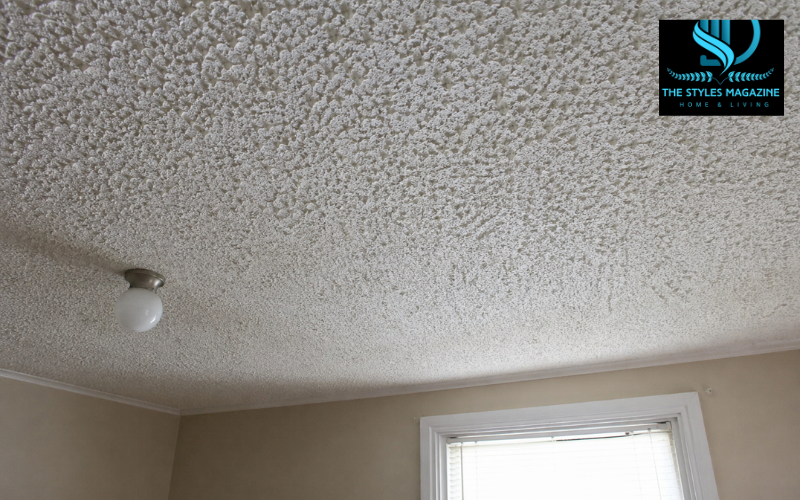
An asbestos stucco ceiling, often called a popcorn or acoustic ceiling, is a textured ceiling finish that was widely used in homes built several decades ago. These ceilings were popular because they were affordable, easy to apply, and effective at reducing noise. Many homeowners also liked their ability to hide imperfections in the ceiling surface.
However, what many people did not realize at the time is that these ceilings often contained asbestos, a material now known to pose serious health risks. Because of this, asbestos stucco ceilings remain a concern today, especially for homeowners planning renovations or repairs. Understanding what these ceilings are and how to handle them safely is essential for protecting both your home and your health.
Asbestos vs Non-Asbestos Popcorn Ceiling
| Feature | Asbestos Stucco Ceiling | Non-Asbestos Ceiling |
| Time Period | Common before 1980s (some until 1990) | Mostly after late 1980s |
| Appearance | Rough, textured (same as non-asbestos) | Similar textured look |
| Safety | Dangerous if disturbed | Generally safe |
| Identification | Requires lab testing | Can only confirm via testing |
| Renovation Risk | High without professionals | Low with standard precautions |
| Handling | Encapsulation or professional removal | Safe to remove or update |
What an Asbestos Stucco Ceiling Really Is
An asbestos stucco ceiling refers to a textured ceiling finish that includes asbestos fibers mixed into the material. These ceilings are also commonly known as popcorn ceilings or acoustic ceilings because of their bumpy, uneven appearance.
The reason asbestos was used in these ceilings is simple. It offered several useful benefits at the time. It made the ceiling more resistant to fire, helped improve durability, and provided sound insulation. These qualities made it a popular choice in residential construction, especially from the 1950s through the early 1980s.
Although the use of asbestos began to decline in the late 1980s, some materials were still used into the early 1990s. This means that even a 1990 popcorn ceiling asbestos risk cannot be fully ruled out without proper testing. Many homeowners assume newer homes are safe, but that is not always the case.
Why Asbestos in Stucco Ceilings Is a Serious Concern
The main issue with an asbestos stucco ceiling lies in how the material behaves. These ceilings are considered friable, which means they can easily crumble or break apart when touched or disturbed. When this happens, tiny asbestos fibers are released into the air.
These fibers are extremely small and cannot be seen with the naked eye. Once airborne, they can be inhaled without you even noticing. Over time, inhaling these fibers can lead to serious health problems such as lung scarring, breathing difficulties, and in severe cases, diseases like mesothelioma and lung cancer.
What makes this especially concerning is that even a small amount of disturbance can release these fibers. Unlike other building materials, asbestos does not pose a risk only during major damage. Even minor activities can create a hazardous environment if the ceiling contains asbestos.
When an Asbestos Stucco Ceiling Becomes Dangerous
An asbestos stucco ceiling is not always dangerous. If it is in good condition and left undisturbed, it usually does not release harmful fibers. This means that many homes with these ceilings can remain safe as long as no work is done on them.
The danger begins when the ceiling is disturbed. Activities such as scraping, sanding, drilling, or even aggressive cleaning can break the surface and release asbestos into the air. Home improvement projects are one of the most common times when exposure happens.
A common situation involves someone accidentally removed asbestos popcorn ceiling material while trying to update or repair a room. In such cases, the risk increases immediately because the fibers may spread throughout the home. This can lead to contamination that is difficult and expensive to fix. It also puts everyone in the home at risk of inhaling harmful particles.
How to Identify an Asbestos Popcorn Ceiling
One of the biggest challenges with asbestos stucco ceilings is identifying them. Many homeowners wonder what does asbestos popcorn ceiling look like, hoping to recognize it visually. Unfortunately, there is no reliable way to confirm asbestos just by looking at the ceiling.
While these ceilings often have a rough, textured appearance with small bumps or clusters, this look is not unique to asbestos materials. Non-asbestos ceilings can look almost identical. This makes visual inspection unreliable and often misleading.
Because of this, the only way to know for sure is through proper testing. While certain clues, such as the age of the home, can suggest a higher risk, they cannot provide a definite answer. It is always better to rely on testing rather than guesswork when dealing with potential asbestos.
Popcorn Ceiling Asbestos vs Non-Asbestos: Key Differences
The difference between popcorn ceiling asbestos vs non asbestos mainly comes down to the materials used in the ceiling mixture. Older ceilings often included asbestos fibers for strength and insulation, while newer ceilings use safer alternatives.
In terms of appearance, there is little to no visible difference between the two. Both types can have the same textured look, which is why homeowners often struggle to tell them apart.
The timeline of installation can offer some clues. Ceilings installed before the mid-1980s are more likely to contain asbestos, while those installed later are less likely. However, this is not a guarantee. The only accurate way to confirm whether a ceiling contains asbestos is through testing.
Popcorn Ceiling Asbestos Testing Options
Testing is the most important step when dealing with a suspected asbestos stucco ceiling. There are two main options available: professional inspection and do-it-yourself testing.
Hiring a professional is the safest and most reliable method. Certified inspectors know how to collect samples without spreading fibers and can send them to a lab for accurate analysis. This approach minimizes risk and provides clear results.
For those who prefer a more affordable option, a popcorn ceiling asbestos test kit can be used. These kits allow homeowners to collect a small sample and send it to a laboratory. However, extra care must be taken during the process to avoid releasing fibers.
A popcorn ceiling asbestos test typically involves carefully removing a small portion of the ceiling material and sealing it for testing. Before doing this, it is important to wear protective gear and limit disturbance to the area. Even small mistakes during testing can increase exposure risk.
What About Newer Ceilings? (1990 Popcorn Ceiling Asbestos Risk)
Many homeowners assume that newer ceilings are completely safe, but the situation is not always that simple. While asbestos use declined significantly after the 1980s, some materials were still used into the early 1990s.
This means that a 1990 popcorn ceiling asbestos concern is still valid in some cases. Leftover materials, delayed regulation enforcement, or regional differences in construction practices can all contribute to this risk.
Because of this uncertainty, it is important not to rely on the construction date alone. Even if your home was built around 1990, testing is still the best way to confirm whether asbestos is present.
Safe Ways to Deal With an Asbestos Stucco Ceiling
If your home has an asbestos stucco ceiling, there are safe ways to manage it without putting yourself at risk. One of the most common methods is encapsulation. This involves sealing the ceiling with a special coating or covering it with another material, such as drywall, to prevent fibers from escaping.
In many cases, leaving the ceiling undisturbed is the safest option. If the ceiling is in good condition and not causing any issues, there may be no need to take immediate action.
However, if the ceiling is damaged or if you are planning renovations, it may be necessary to address it more directly. The key is to choose a method that minimizes exposure and ensures long-term safety.
Asbestos Popcorn Ceiling Removal: What to Expect
Removing an asbestos stucco ceiling is a complex and risky process, which is why professional abatement is strongly recommended. Trained experts use specialized equipment and follow strict safety procedures to contain and remove the material safely.
During removal, professionals often use sealed work areas, protective clothing, and HEPA filtration systems to prevent fibers from spreading. They may also use wetting techniques to keep dust levels low.
Attempting to remove asbestos yourself can lead to serious problems. DIY removal can spread fibers throughout your home, increasing the risk of exposure and making cleanup more difficult and expensive. In most cases, it is not worth the risk.
Asbestos Popcorn Ceiling Removal Cost Breakdown
The cost of removing an asbestos stucco ceiling can vary depending on several factors. These include the size of the area, the condition of the ceiling, and the location of the home.
Encapsulation is generally less expensive than full removal because it involves sealing the existing material rather than removing it. Full removal, on the other hand, requires more labor, equipment, and safety measures, which increases the cost.
Improper removal can lead to higher expenses in the long run. If asbestos spreads throughout the home, professional cleanup may be required, which can be significantly more costly than doing the job correctly the first time.
What a Popcorn Ceiling Without Asbestos Means for You
If your ceiling is tested and confirmed to be free of asbestos, it opens up many possibilities. A popcorn ceiling without asbestos is much safer to work with and can be removed or updated without the same level of concern.
This allows homeowners to renovate more freely, whether they want a modern smooth ceiling or a different design. It also provides peace of mind, knowing that the material does not pose a hidden health risk.
However, even in these cases, it is still important to follow basic safety practices during renovation to avoid dust and debris.
Conclusion
An asbestos stucco ceiling is more than just an outdated design feature. It carries potential risks that every homeowner should understand. While these ceilings were once valued for their practical benefits, their hidden dangers have made them a concern in modern homes.
The key to staying safe is awareness and proper handling. Testing is essential, as it is the only way to confirm whether asbestos is present. Once you know what you are dealing with, you can make informed decisions about whether to leave the ceiling as it is, seal it, or remove it with professional help.
By taking the right steps and avoiding unnecessary risks, you can protect your health and maintain a safe living environment.
FAQs
What Does An Asbestos Stucco Ceiling Look Like?
It usually has a rough, bumpy texture similar to popcorn ceilings. However, appearance alone cannot confirm asbestos. Testing is the only reliable way to know if it contains harmful fibers.
Is It Dangerous To Live With An Asbestos Stucco Ceiling?
If the ceiling is undisturbed and in good condition, it is generally safe. The risk begins when it is damaged or disturbed, releasing fibers into the air.
Can I Remove An Asbestos Popcorn Ceiling Myself?
DIY removal is not recommended. Improper handling can spread asbestos fibers throughout your home. It is safer to hire licensed professionals trained in asbestos removal.
How Do I Test My Ceiling For Asbestos?
You can hire a certified inspector or use a popcorn ceiling asbestos test kit. The sample is sent to a lab for confirmation, which is the only accurate way to identify asbestos.
How Much Does Asbestos Ceiling Removal Cost?
Costs vary based on size, condition, and location. Encapsulation is cheaper, while full removal is more expensive due to safety procedures and specialized equipment.
Enjoyed it? Find more exclusive content on The Styles Magazine.
Disclaimer: This content is for informational purposes only and should not replace professional advice. Always consult certified asbestos inspectors or licensed contractors before testing, handling, or removing any material suspected to contain asbestos.