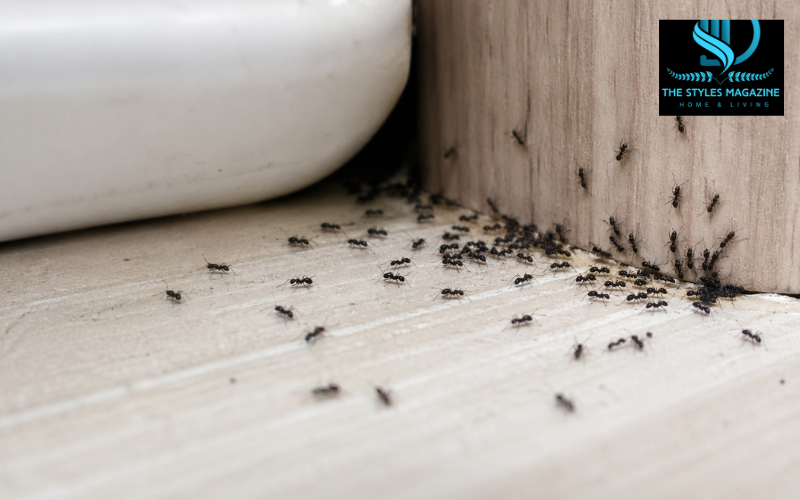
Finding black ants in house spaces is a common experience for many homeowners. At first, it may seem like a minor issue, but these tiny visitors usually appear for a reason. Ants are always searching for three basic needs: food, water, and shelter. When your home provides even one of these, it can quickly become a target.
Sometimes, the problem is as simple as a few crumbs left on the counter. In other cases, moisture from a leaking pipe or hidden gaps in walls can invite ants inside. While most ants are harmless, some types may point to deeper issues, such as damp wood or hidden nests.
In this guide, you will learn why black ants enter your home, how to identify different types, and the most effective ways to remove them. You will also understand when it is a simple nuisance and when it may require serious attention. By the end, you will have a clear and practical plan to keep your home ant-free.
How to Get Rid of Black Ants Fast
| Step | Action | Why It Works |
| 1 | Clean surfaces with vinegar solution | Removes scent trails ants follow |
| 2 | Place bait (borax + sugar mix) | Targets the colony, not just visible ants |
| 3 | Seal cracks and entry points | Stops new ants from entering |
| 4 | Remove moisture (fix leaks) | Cuts off water source ants need |
| 5 | Monitor and repeat if needed | Ensures long-term control |
Why You Are Seeing Black Ants in Your House
Black ants do not appear randomly. They are highly organized insects that follow scent trails created by other ants. Once one ant finds a food or water source, it leaves a chemical trail behind, guiding the rest of the colony straight into your home.
One of the most common reasons for seeing black ants in house areas is easy access to food. Even small amounts of sugar, grease, or leftovers can attract them. Kitchens are the most common entry point, but ants can also appear in bathrooms due to moisture.
Seasonal changes also play a role. During warmer months, ants become more active and start searching for new nesting spots. In colder weather, they may move indoors to stay warm. This is why some people notice ants suddenly appearing even when their homes are clean.
Another reason ants keep coming back is that the root of the problem is often not addressed. Cleaning visible ants does not remove the colony. As long as the nest exists and the trail remains, new ants will continue to appear.
Types of Black Ants Found Indoors
Not all ants are the same, and identifying the type is important for proper treatment. The most common type is tiny black ants in house environments. These ants are very small, usually around 1.5 to 2 mm, and often travel in long lines. They are mostly harmless but can contaminate food.
On the other hand, big black ants in house situations may indicate carpenter ants. These ants are much larger and can grow up to 13 mm. Unlike smaller ants, they do not just search for food—they can burrow into wood to create nests. This behavior can lead to structural damage over time.
The main difference between these types lies in their habits. Small ants usually build nests outside and enter homes for food. Carpenter ants prefer moist or damaged wood and may create nests inside walls, floors, or ceilings. Understanding these differences helps you choose the right solution.
What It Means When You See Tiny Black Ants in House With No Food
It can be confusing to see ants when there is no visible food around. However, ants do not always rely on obvious sources. Even a clean home can attract them due to hidden factors.
Moisture is one of the biggest hidden attractants. Leaky pipes, damp walls, or even condensation can provide the water ants need to survive. In some cases, tiny food particles that are not easily visible can still be enough to attract them.
Another reason is nesting inside wall voids or under floors. When ants build nests inside your home, they do not need to travel far for resources. This is why you might see tiny black ants in house no food situations where the source is hidden.
Even small residues, such as sticky surfaces or spills that were not fully cleaned, can draw ants. Once they find a path, they continue to follow it, making it seem like they appear out of nowhere.
Are Black Ants in House a Sign of Good Luck or a Problem?
In some cultures, people believe that seeing black ants in house good luck signs may represent prosperity or positive energy. These beliefs are often based on traditional ideas rather than practical evidence.
From a daily life perspective, ants are usually a sign of a problem that needs attention. They indicate that something in your home is attracting them, whether it is food, water, or shelter. Ignoring them may allow the infestation to grow over time.
While cultural meanings can be interesting, it is more useful to focus on the practical side. Addressing the cause of the ants will help you maintain a clean and comfortable living space.
Black Ants in House in Islam: Meaning and Guidance
In Islam, ants are considered part of Allah’s creation and are treated with respect. There is no direct negative meaning attached to black ants in house in Islam, but cleanliness is strongly emphasized in daily life.
Islamic teachings encourage maintaining a clean home and removing anything harmful in a gentle and humane way. If ants become a nuisance, it is acceptable to remove them, but unnecessary harm should be avoided.
Patience and balance are key. The presence of ants can serve as a reminder to maintain cleanliness and care for the home environment.
Early Signs of a Growing Ant Infestation
Recognizing early signs can help you control the problem before it becomes serious. One of the first signs is the appearance of ant trails. These lines often lead from entry points to food or water sources.
Another sign is the presence of small piles of debris. In the case of carpenter ants, this may look like sawdust, known as frass. This indicates that ants are nesting inside wood.
If ants start appearing in multiple rooms, it is a sign that the colony is growing. At this stage, simple cleaning may not be enough, and a more targeted approach is needed.
How to Get Rid of Black Ants in House Effectively
Getting rid of black ants in house areas requires more than just removing the visible ants. The key is to eliminate the entire colony, including the queen.
The process starts with identifying where the ants are coming from. Once you locate the entry points, you can begin treatment. Cleaning surfaces thoroughly will remove scent trails and prevent ants from returning.
Using bait is often more effective than spraying. Baits allow ants to carry the poison back to the colony, which helps eliminate the source of the problem. This method takes time but provides long-term results.
Consistency is important. Regular cleaning and monitoring will help ensure that the ants do not return.
Natural Remedies to Remove Tiny Black Ants in House
Many homeowners prefer natural methods to deal with ants. One simple solution is a mixture of vinegar and water. This can be used to wipe surfaces and remove scent trails.
Other natural deterrents include cinnamon, coffee grounds, and spices. These substances can be placed near entry points to discourage ants from entering.
Food-grade diatomaceous earth is another option. It works by drying out the ants’ bodies, which eventually kills them. These methods are safe for indoor use and are especially useful for dealing with tiny black ants in house how to get rid of them situations.
Using Ant Killer and Baits the Right Way
Chemical solutions can be effective when used correctly. Ant killers work by targeting the ants directly, while baits focus on eliminating the colony.
A common DIY method involves mixing borax with sugar and water. The sugar attracts the ants, while the borax acts as a poison. The ants carry this mixture back to the nest, spreading it throughout the colony.
It is important to use these methods carefully. Always keep them away from children and pets. Proper placement and patience are essential for success.
How to Get Rid of Big Black Ants in House (Carpenter Ants)
Carpenter ants require special attention because they can damage wood. Unlike smaller ants, they do not just search for food—they create nests inside wooden structures.
Moisture plays a major role in attracting these ants. Damp or decaying wood is an ideal nesting site. This is why fixing leaks and reducing humidity is important.
In many cases, DIY methods may not be enough. If you notice signs of structural damage or a large infestation, professional help may be necessary. Addressing the problem early can prevent costly repairs.
Prevention Tips to Stop Ants From Coming Back
Preventing ants is easier than dealing with an infestation. Sealing cracks and gaps around windows, doors, and walls can block entry points.
Keeping your home clean is equally important. Regularly wiping surfaces and storing food in airtight containers will reduce the chances of attracting ants.
Controlling moisture is another key factor. Fixing leaks and ensuring proper ventilation can make your home less appealing to ants. These simple steps can help keep your home free from black ants in house problems.
Common Mistakes That Make Ant Problems Worse
Many people make the mistake of only dealing with visible ants. This does not solve the problem because the colony remains active.
Ignoring nesting areas is another common issue. Without finding the source, ants will continue to return. Using the wrong treatment method can also make things worse, especially if it scatters the colony instead of eliminating it.
Understanding these mistakes can help you choose the right approach and avoid repeated infestations.
When It’s Time to Call a Professional
Sometimes, the problem goes beyond simple home remedies. If ants keep returning despite your efforts, it may be time to seek professional help.
Large infestations, especially those involving carpenter ants, can cause structural damage. If you notice signs like sawdust or ants inside walls, professional treatment is often the best option.
Experts have the tools and knowledge to locate nests and remove them effectively. This ensures long-term results and protects your home.
Conclusion
Seeing black ants in house spaces can be frustrating, but it is usually a manageable problem when handled early. Ants enter homes in search of food, water, and shelter, and understanding these causes is the first step toward solving the issue.
From identifying the type of ant to using the right treatment methods, each step plays an important role. Natural remedies and proper cleaning can handle minor problems, while larger infestations may require stronger solutions or professional help.
The key is consistency. Regular cleaning, sealing entry points, and controlling moisture will help prevent ants from returning. With the right approach, you can keep your home clean, comfortable, and free from unwanted pests.
FAQs
Why Do I Suddenly Have Black Ants In My House?
Black ants usually appear when they find easy access to food, water, or shelter. Even small crumbs or moisture can attract them quickly, especially during warmer months.
Are Black Ants In House Dangerous?
Most black ants are harmless, but larger ones like carpenter ants can damage wood. If you notice sawdust or ants inside walls, it may need urgent attention.
How Do I Get Rid Of Tiny Black Ants In House Permanently?
Use bait methods to target the colony, clean scent trails with vinegar, and seal entry points. Consistency is key to stopping them from returning.
Why Do I See Tiny Black Ants In House With No Food?
They may be attracted to hidden moisture, tiny food residues, or nests inside walls. Even a clean home can have conditions that support ants.
Do Natural Remedies Really Work For Black Ants?
Yes, natural methods like vinegar, cinnamon, and diatomaceous earth can help control minor infestations, but larger problems may require stronger treatments or professional help.
Enjoyed it? Find more exclusive content on The Styles Magazine.
Disclaimer: This content is for informational purposes only. Results may vary depending on the severity of the infestation. For serious or recurring ant problems, consider consulting a licensed pest control professional for proper treatment.