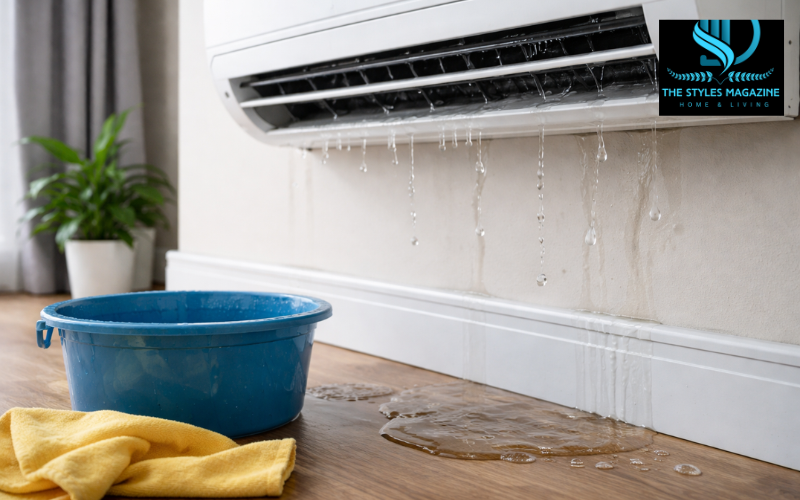
If you’re wondering why is my AC leaking water, you’re not alone. This is one of the most common problems homeowners face, especially during hot weather when the air conditioner is running for long hours. While it may seem like a small issue at first, water leakage can point to several underlying problems that should not be ignored.
An air conditioner naturally removes moisture from the air as it cools your home. This moisture turns into water and is supposed to flow out through a drain system. When everything works properly, you never even notice this process. But when something goes wrong, the water has nowhere to go, and it starts leaking inside your home.
The reason behind this leakage can vary. Sometimes it’s a simple issue like a dirty filter, while in other cases it could be something more serious like low refrigerant levels or a damaged component. In this article, we’ll explain why your AC is leaking water, what it means for your home, the risks involved, and how you can fix or prevent the problem in the future.
Common Causes & Fixes
| Problem | What Happens | Simple Fix |
| Clogged drain line | Water backs up and leaks inside | Clean or flush the drain line |
| Dirty air filter | Coil freezes and later melts | Replace or clean the filter |
| Low refrigerant | Ice forms on coils, then melts | Call a professional technician |
| Damaged drain pan | Water leaks directly from unit | Replace the drain pan |
| Broken condensate pump | Water cannot be pushed out | Repair or replace the pump |
| Improper installation | Water doesn’t flow to drain properly | Adjust unit leveling |
How an Air Conditioner Produces and Drains Water
To understand why your AC is leaking water, it helps to know how it works in simple terms. When your air conditioner cools the air, it also removes humidity. Warm air passes over a cold part inside the system called the evaporator coil. As the air cools, the moisture in it turns into water droplets.
These droplets collect on the coil and drip into a small tray called the drain pan. From there, the water flows through a pipe known as the condensate drain line and is directed outside your home. This is a normal and necessary process that helps keep your indoor air comfortable.
Problems begin when this flow is interrupted. If the drain line is blocked, the pan is damaged, or the system is not working correctly, the water cannot exit as it should. Instead, it starts to build up and eventually leaks out of the unit. This is why even a small blockage or issue can lead to noticeable water leakage inside your home.
The Most Common Reasons Your AC Is Leaking Water
There are several reasons why your air conditioner may start leaking water. Some are simple and easy to fix, while others require professional attention.
One of the most common causes is a clogged condensate drain line. Over time, dust, dirt, algae, and even mold can build up inside the pipe. This blockage prevents water from draining properly, causing it to back up and leak from the unit.
A dirty air filter is another frequent reason. When the filter is clogged, it restricts airflow. This can cause the evaporator coil to become too cold and freeze. When the ice melts, it creates excess water that the system may not be able to handle, leading to leaks.
Low refrigerant levels can also cause similar problems. When the refrigerant is low, the pressure inside the system drops, which can result in frozen coils. Once those coils thaw, the extra water can overflow the drain system.
In older air conditioning units, the drain pan may be damaged or rusted. If the pan is cracked, water will drip directly through instead of flowing into the drain line.
Some systems use a condensate pump to push water out, especially in basements or areas where gravity alone is not enough. If this pump fails, water can quickly overflow.
Finally, improper installation or leveling issues can also be the reason. If the unit is not positioned correctly, water may not flow toward the drain opening and instead leak out from the sides.
Why Is My AC Leaking Water from the Bottom or Inside the Unit
If you notice water pooling at the bottom of your AC or leaking inside your home, it usually means that the drainage system is not working properly. When water cannot exit through the drain line, it starts collecting in places where it shouldn’t.
Leaks from inside the unit often point to internal issues such as a clogged drain line, frozen coils, or a damaged drain pan. These problems cause water to overflow within the system and eventually drip into your living space.
On the other hand, water leaking from the bottom of the unit can be related to installation issues or blocked drainage. In apartments or indoor setups, this type of leak can be more noticeable and may even affect nearby walls or flooring.
If you live in an apartment, the issue can sometimes be linked to shared drainage systems or improper installation. In such cases, it’s important to address the problem quickly to avoid damage to both your unit and your living space.
AC Leaking Water in Specific Situations You Shouldn’t Ignore
Sometimes, the way your AC leaks water can give you clues about the underlying problem. For example, if your AC is leaking water when it is turned off, it could mean that there is leftover ice melting on the coils. This often happens when airflow is restricted or refrigerant levels are low.
Window AC units can also leak water, but in many cases, this is normal. These units are designed to drip water outside. However, if water is leaking inside the room, it may mean the unit is not properly tilted or the drainage path is blocked.
In cars, AC systems also produce water due to condensation. Seeing water dripping under your car is usually normal. But if water starts leaking inside the car, it could indicate a blocked drain tube.
Apartment air conditioners can be more complex. Leakage in these systems may affect multiple units or shared areas. This makes it even more important to identify the problem early and fix it before it causes bigger issues.
Is Water Dripping from an AC Dangerous or Just Annoying
At first glance, a leaking AC might seem like a minor inconvenience. However, it can become a serious problem if left untreated.
In some cases, dripping water is harmless and simply part of the normal condensation process. For example, a small amount of water dripping outside is usually nothing to worry about.
But when water starts leaking inside your home, it can lead to several risks. Continuous moisture can create the perfect environment for mold and mildew to grow. This not only damages your home but can also affect your health.
Water near electrical components is another concern. It can lead to short circuits or even damage your AC system permanently. Over time, repeated leaks can weaken walls, ceilings, and flooring, leading to costly repairs.
So while it may start as a small issue, it’s always better to take AC leaks seriously and fix them as soon as possible.
Signs That Help You Identify the Exact Cause Quickly
Understanding the signs can help you figure out why your AC is leaking water and what needs to be done.
If you notice ice buildup on the coils, it usually means there is restricted airflow or low refrigerant. Weak airflow from the vents is another sign that something is blocking the system, often a dirty filter.
A musty smell can indicate mold growth inside the unit or the drain line. This often happens when water has been sitting in the system for too long.
Water stains around the AC unit or on nearby walls and ceilings are clear signs of ongoing leakage. Unusual noises or changes in system performance can also point to internal problems that need attention.
By paying attention to these signs, you can identify the issue early and prevent further damage.
How to Fix Air Conditioner Leaking Water Inside Your Home
Fixing an AC that is leaking water often starts with simple steps that you can do yourself.
First, turn off the AC to prevent further leakage and avoid electrical risks. Then check the air filter. If it’s dirty, replace it with a new one. This alone can solve many issues.
Next, inspect the drain line. If you suspect a clog, you can try clearing it by flushing it with warm water or a vinegar solution. In some cases, using a wet/dry vacuum can help remove the blockage.
Check the drain pan for any cracks or damage. If the pan is broken, it will need to be replaced. Also, make sure the unit is level so that water flows properly into the drain line.
While these steps can fix many common problems, there are situations where DIY solutions are not enough. If the issue keeps coming back or seems more serious, it’s best to seek professional help.
When to Call a Professional HVAC Technician
There are times when fixing a leaking AC requires more than basic troubleshooting.
If the problem is related to refrigerant levels, it should always be handled by a trained technician. Refrigerant issues can be dangerous and require proper tools and expertise.
Repeated leaks are another sign that something deeper is wrong. If you’ve tried cleaning the drain line and replacing the filter but the problem continues, a professional inspection is needed.
Electrical risks are also a major concern. Water and electricity are a dangerous combination, so it’s important not to take chances.
If your system has visible damage or is not working properly, calling an HVAC technician can help prevent further issues and extend the life of your unit.
Simple Maintenance Tips to Prevent Future AC Water Leaks
Preventing AC leaks is often easier than fixing them. Regular maintenance can keep your system running smoothly and reduce the chances of water leakage.
Cleaning or replacing the air filter regularly is one of the simplest and most effective steps. It ensures proper airflow and prevents coil freezing.
Keeping the drain line clean is also important. Flushing it occasionally can prevent clogs from forming.
Seasonal inspections can help identify small issues before they turn into bigger problems. Checking the installation and making sure the unit is level can also make a big difference.
By taking these simple steps, you can avoid many common causes of AC water leaks and keep your system working efficiently.
Conclusion
If you’ve been asking yourself why is my AC leaking water, the answer often comes down to how well your system is able to handle and drain moisture. While leaks are common, they should never be ignored.
Most of the time, the problem is caused by simple issues like a clogged drain line or a dirty filter. These can often be fixed بسهولة with basic maintenance. However, some situations require professional help, especially when refrigerant or electrical components are involved.
The key is to act early. Identifying the signs and addressing the problem quickly can save you from bigger repairs and protect your home from damage.
With regular care and attention, you can keep your air conditioner running smoothly and avoid future leaks.
FAQs
Why Is My AC Leaking Water From The Inside?
Your AC may leak water inside due to a clogged drain line, frozen evaporator coil, or damaged drain pan, preventing proper water drainage and causing overflow into your home.
Is Water Dripping From AC Dangerous?
It can be harmless if outside, but indoor leaks can lead to mold growth, electrical issues, and damage to walls or ceilings if not fixed quickly.
Why Is My AC Leaking Water When Turned Off?
This usually happens when frozen coils melt after the unit turns off, releasing excess water that the drainage system cannot handle properly.
How Do I Fix My AC Leaking Water Inside?
Start by cleaning or replacing the air filter, clearing the drain line, and checking the drain pan. If the problem continues, a professional inspection is recommended.
Is It Normal For A Window AC To Leak Water?
Yes, but only outside. If water is leaking inside, the unit may be tilted incorrectly or have a blocked drainage system.
Enjoyed it? Find more exclusive content on The Styles Magazine.
Disclaimer: This content is for general informational purposes only. For serious AC issues or technical problems, always consult a licensed HVAC professional to ensure safe and proper repairs.