Many homes are built with a crawlspace, which is a shallow area beneath the house that allows access to plumbing, wiring, and structural parts. A crawlspace is usually low, often just a few feet high, and not meant for living or regular use. In contrast, a basement is a full-height space that can be used for storage, living areas, or even rental units.
A crawlspace to basement conversion means turning that small, limited space into a full basement by digging deeper and strengthening the foundation. This process is sometimes called a “dig-out” because it involves removing soil from under the home to create more usable space.
Homeowners consider this upgrade for many reasons. Some want extra living space without building outward. Others need better storage or want to increase their home’s value. With rising property prices and limited land, this type of conversion has become more popular in recent years. It offers a way to improve your home without changing its footprint.
(Helpful for Readers)
| Feature | Crawlspace | Basement |
| Height | Low (1–3 ft) | Full height (7–10 ft) |
| Usage | Limited access | Living or storage space |
| Value Impact | Low | High property value boost |
| Moisture Control | Often poor | Improved with systems |
| Accessibility | Difficult | Easy access |
What a Crawlspace to Basement Conversion Involves
A crawlspace to basement conversion is not a simple upgrade. It is a major construction project that changes the structure of your home from below. The basic idea is to dig out the existing crawlspace so that it becomes deep enough to stand in comfortably, usually around 8 to 10 feet.
This process involves careful planning because the house is already sitting on top of the area being excavated. Contractors must support the structure while removing soil and extending the foundation downward. This requires precision and experience to avoid damage.
Unlike basic crawl space improvements such as adding insulation or moisture barriers, a full conversion completely transforms the space. It turns an unused, often damp area into a solid, functional basement that can be used daily. The difference is not just visual but structural, making it a much bigger investment.
Key Steps in a Crawlspace to Basement Conversion Project
The process begins with planning and inspection. A structural engineer evaluates the home’s foundation and the soil conditions. This step is important because it determines whether the project is safe and possible.
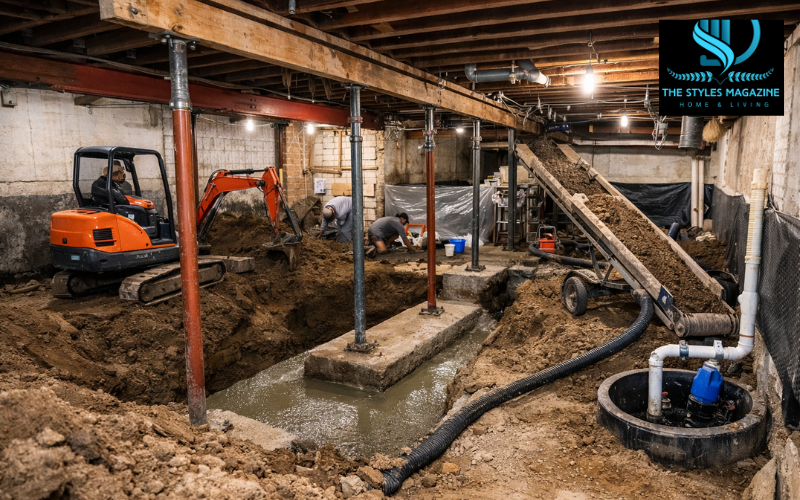
Once the plan is approved, the structure must be supported. Contractors install temporary supports such as steel beams to hold the house in place while work is done underneath. This ensures that the home remains stable during excavation.
Next comes the excavation stage. Soil is removed carefully, often in small sections, to avoid disturbing the foundation. In many cases, workers use small machines or even manual tools because space is limited.
After excavation, underpinning begins. This is the process of extending the foundation deeper by pouring new concrete footings beneath the existing ones. It is done in stages to maintain stability.
Waterproofing is then added to protect the new basement from moisture. This may include drainage systems, sump pumps, and vapor barriers. These systems help prevent future water problems.
Finally, the space is finished. A concrete floor is poured, and utilities like electricity, plumbing, and heating are installed. At this stage, the basement can be turned into a usable area based on the homeowner’s needs.
Crawlspace to Basement Conversion Cost Breakdown
The cost of a crawlspace to basement conversion can vary widely, but most projects fall between $60,000 and $150,000. In more complex cases, costs can exceed $200,000.
A large part of the budget goes into excavation and debris removal, which can cost between $15,000 and $40,000. Foundation work and underpinning may add another $10,000 to $35,000. Waterproofing systems typically range from $3,000 to $9,000, depending on the level of protection needed.
Finishing the basement, including walls, flooring, and utilities, can cost anywhere from $10,000 to $40,000 or more. Permits, engineering fees, and inspections also add to the total, usually between $4,000 and $10,000.
Several factors affect the final price. These include the size of the home, soil type, ease of access, and local labor costs. Homes in dense areas or with difficult soil conditions often cost more to convert.
When compared to basic crawl space conversion costs, which are much lower, a full basement conversion is a bigger investment but offers far more value and usability.
Real Cost Insights from Homeowners and Market Trends
Many homeowners share their experiences online, and these insights show that costs can vary more than expected. Some report spending less than $70,000 for simple projects, while others exceed $180,000 due to complications.
The reason for this wide range is that every home is different. Soil conditions, foundation design, and local regulations all play a role. Unexpected issues, such as poor drainage or structural weaknesses, can increase costs during the project.
Hidden costs are also common. These may include upgrading electrical systems, improving ventilation, or fixing existing damage found during excavation. Some homeowners also need temporary housing during construction, which adds to the overall expense.
These real-world examples highlight the importance of planning and budgeting carefully before starting a crawlspace to basement conversion.
Before and After: How Homes Change After Conversion
The transformation from a crawlspace to a basement can be dramatic. Before the conversion, the space is often dark, cramped, and difficult to access. After the project, it becomes a clean, open area with full standing height.
This change improves both the structure and appearance of the home. A finished basement can include proper flooring, lighting, and walls, making it feel like a natural extension of the house.
In daily life, homeowners benefit from extra space. The basement can be used for storage, living areas, or even workspaces. It also makes it easier to access systems like plumbing and heating, which are often located below the home.
Typical crawl space to basement before and after results show a clear improvement in usability, comfort, and overall home value.
Smart Crawlspace to Basement Conversion Ideas
Once the conversion is complete, the new basement can be used in many ways. Some homeowners turn it into a living area, such as a family room, home office, or guest bedroom.
Others focus on storage, creating organized spaces for seasonal items, tools, or equipment. This is especially useful for homes with limited storage above ground.
In some cases, the basement is converted into a rental unit. This can provide extra income and make the investment more worthwhile over time.
Another practical idea is to use the space for utilities. Placing mechanical systems in a well-designed basement can improve efficiency and make maintenance easier.
DIY Crawlspace to Basement Conversion: Is It Realistic?
A crawlspace to basement conversion is not a typical DIY project. It involves structural work that requires professional knowledge and equipment. Attempting to do it yourself can be dangerous and may lead to serious damage.
One of the biggest risks is weakening the foundation. If the soil is removed incorrectly, the house could shift or even collapse. This makes professional support essential.
There are some small tasks that homeowners can handle, such as minor finishing work or organizing the space after construction. However, the main conversion process should always be done by experienced contractors.
Hiring professionals ensures safety, quality, and compliance with local building codes.
How to Find the Right Contractor Near You
Choosing the right contractor is one of the most important steps in a crawlspace to basement conversion. Look for specialists who have experience with foundation work and structural projects.
Foundation experts understand the risks involved and know how to handle complex situations. They can provide accurate assessments and reliable solutions.
When searching for “crawlspace to basement conversion near me,” it is helpful to check reviews, past projects, and certifications. A good contractor should be transparent about costs and timelines.
Before hiring, ask important questions about their experience, process, and safety measures. Clear communication helps avoid problems later on.
Benefits of Converting a Crawlspace into a Basement
One of the main benefits of this conversion is increased living space. It allows homeowners to expand without building outward, which can save land and maintain the home’s appearance.
Property value often improves as well. A finished basement can make a home more attractive to buyers and offer a strong return on investment.
Another advantage is better access to home systems. With a proper basement, it is easier to maintain plumbing, electrical, and heating systems.
In the long term, the added space provides flexibility. Homeowners can adapt the basement to their changing needs over time.
Risks and Challenges You Should Know Before Starting
Despite the benefits, there are risks involved. Structural issues can occur if the work is not done correctly. This is why professional expertise is essential.
Water and moisture problems are also a concern. Without proper waterproofing, the basement could develop dampness or leaks.
Permits and legal requirements can add complexity to the project. Local regulations must be followed to ensure safety and compliance.
In some cases, homeowners may need to move out temporarily during construction. This can be inconvenient but is sometimes necessary for safety.
Alternatives to Crawlspace to Basement Conversion
If a full conversion is not suitable, there are other options. One simple approach is converting the crawl space to storage by improving access and adding basic upgrades.
Home additions are another option for gaining extra space. While they may cost less in some cases, they require additional land and construction.
Partial upgrades, such as improving insulation or moisture control, can also make a crawlspace more useful without turning it into a basement.
The best choice depends on your goals, budget, and property conditions.
Conclusion: Is Crawlspace to Basement Conversion Worth It for Your Home?
A crawlspace to basement conversion is a major investment, but it offers significant benefits. It can transform unused space into a valuable part of your home, improve daily living, and increase property value.
However, the costs and risks should not be ignored. Careful planning, professional help, and a clear understanding of the process are essential for success.
For homeowners who need more space and want a long-term solution, this conversion can be a smart choice. For others, simpler alternatives may be more practical.
In the end, the decision depends on your needs, budget, and goals. Taking the time to plan properly will help you make the right choice for your home.
FAQs
How Long Does A Crawlspace To Basement Conversion Take?
Most projects take 4 to 12 weeks, depending on the size of the home, soil conditions, and complexity of the work involved.
Is Crawlspace To Basement Conversion Worth It?
Yes, it can be worth it if you need extra space and want to increase property value, but the high cost means careful planning is important.
Can I Live In My Home During The Conversion?
In some cases yes, but many homeowners choose to move out temporarily due to noise, dust, and safety concerns during construction.
Does Converting A Crawlspace Increase Home Value?
Yes, it often increases value by adding usable square footage, making the home more attractive to buyers.
What Is The Biggest Risk In This Project?
The biggest risk is structural damage if the work is done incorrectly, which is why hiring experienced professionals is essential.
Enjoyed it? Find more exclusive content on The Styles Magazine.
Disclaimer: This content is for general informational purposes only and does not replace professional advice. Always consult a qualified contractor or structural engineer before starting any crawlspace to basement conversion project.