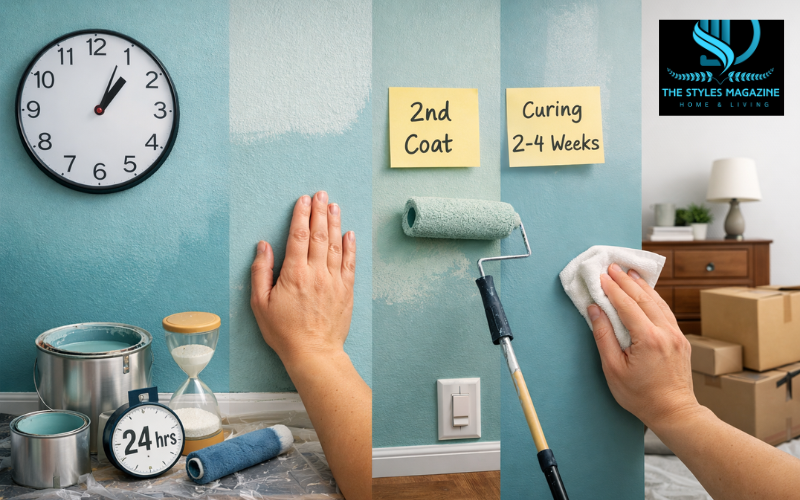
If you’ve ever painted a wall, a piece of furniture, or even a small DIY project, one question always comes up: how long does paint take to dry? The answer is not as simple as many people think. Paint drying time can vary widely depending on the type of paint you use, the conditions in your space, and how the paint is applied.
Many people assume that once paint feels dry to the touch, the job is done. In reality, that is only the first stage. Paint goes through a process that includes both drying and curing, and these are not the same thing. Understanding this difference can help you avoid common mistakes like smudging, peeling, or damaging your freshly painted surface.
In this guide, you’ll learn exactly how long paint takes to dry for different types of paint, what each stage means, and how to make sure your paint job lasts. Whether you’re painting a room or working on a small project, this information will help you get better results.
Paint Drying Times
| Paint Type | Dry to Touch | Recoat Time | Full Cure Time |
| Latex (Water-based) | ~1 hour | 2–4 hours | 2–4 weeks |
| Acrylic | ~1 hour | 2–4 hours | 2–3 weeks |
| Oil-based | 6–8 hours | 24 hours | 3–7 days |
| Chalk Paint | 30–60 minutes | ~2 hours | Up to 30 days |
| Spray Paint | 10–30 minutes | 1–3 hours | ~24 hours |
Understanding Paint Drying vs Curing
To fully understand how long paint takes to dry, you first need to know the difference between drying and curing. These two terms are often used interchangeably, but they describe very different stages.
Drying happens when the water or solvent in the paint evaporates. This is when the surface starts to feel dry and no longer looks wet. Depending on the type of paint, this can happen fairly quickly, sometimes within an hour.
Curing, on the other hand, is a much slower process. It involves a chemical reaction that allows the paint to harden and reach its full strength. During this stage, the paint becomes more durable and resistant to scratches, moisture, and everyday wear.
This is why paint can feel dry but still be vulnerable. If you touch it too much, place objects against it, or clean it too soon, you can damage the finish. Understanding this difference helps you plan your painting project properly and avoid frustration later.
Paint Drying Times by Type
Different types of paint have different drying and curing times. This is one of the main reasons why there is no single answer to the question of how long paint takes to dry.
Latex or water-based paint is one of the most common choices for walls and ceilings. It usually dries to the touch in about one hour and can often be recoated within two to four hours. However, it can take two to four weeks to fully cure.
Acrylic paint behaves in a similar way. It dries quickly on the surface, often within an hour, and can be recoated in a few hours. Full curing typically takes around two to three weeks.
Oil-based paint takes much longer. It may take six to eight hours just to become dry to the touch, and you usually need to wait about 24 hours before applying another coat. On the positive side, it often cures faster than water-based paints, usually within three to seven days.
Chalk paint dries quickly, often within 30 to 60 minutes. However, it takes much longer to fully cure, sometimes up to 30 days, especially if it is sealed with wax.
Spray paint is known for its fast drying time. It can dry to the touch in as little as 10 to 30 minutes and be ready for another coat within a few hours. Most spray paints fully cure within 24 hours, although this can vary depending on the brand.
What “Dry to Touch,” “Recoat,” and “Fully Cured” Really Mean
When looking at paint instructions, you will often see terms like “dry to touch,” “recoat time,” and “fully cured.” Understanding these terms makes it much easier to know how long paint takes to dry in a practical sense.
“Dry to touch” means the surface no longer feels wet. You can lightly touch it without getting paint on your fingers. However, this does not mean the paint is strong or ready for use.
“Recoat time” tells you when it is safe to apply another layer of paint. If you paint too soon, you may trap moisture underneath, which can lead to uneven drying or peeling later.
“Fully cured” means the paint has reached its maximum hardness and durability. At this stage, it can handle cleaning, pressure, and daily use without damage. This is the stage most people overlook, but it is the most important for long-term results.
How Long to Wait Between Coats of Paint
One of the most common mistakes people make is applying a second coat too quickly. Even if the paint feels dry, it may not be ready for another layer.
For most water-based paints, waiting two to four hours between coats is usually enough. For oil-based paints, you should wait at least 24 hours. These times can vary depending on temperature, humidity, and the thickness of the paint.
Applying a second coat too soon can cause the paint to lift, streak, or peel. It can also extend the overall drying time, which defeats the purpose of rushing.
For the best results, it’s always a good idea to follow the instructions on the paint can and give the paint enough time to settle before adding another layer.
When It’s Safe to Use or Touch Painted Surfaces
Knowing how long paint takes to dry is especially important when it comes to using the painted surface.
For light contact, such as gently touching a wall, it is usually safe after a few hours. However, for anything more than that, you should wait longer.
It’s generally recommended to wait at least 24 hours before reinstalling items like light switch covers or wall fixtures. Moving furniture back against walls should be done after 24 to 48 hours, depending on the paint type.
Even after this time, the paint may still be curing. This means you should avoid heavy pressure, scrubbing, or cleaning for at least a few weeks. Being patient during this stage helps prevent marks, dents, and other damage.
Factors That Affect How Fast Paint Dries
Several environmental factors can influence how long paint takes to dry. Even the best paint will take longer if the conditions are not ideal.
Temperature plays a big role. Paint dries best in moderate temperatures, usually between 15°C and 25°C. If it’s too cold, drying slows down significantly. If it’s too hot, the paint may dry too quickly on the surface and not properly underneath.
Humidity is another important factor. High humidity adds moisture to the air, which slows down evaporation. This can make drying times much longer than expected.
Airflow also matters. Good ventilation helps moisture escape, allowing the paint to dry faster. A closed, poorly ventilated room can trap moisture and delay the process.
The surface you are painting and the thickness of the paint also make a difference. Porous surfaces may absorb paint and affect drying time, while thick coats take longer to dry than thin, even layers.
How to Make Paint Dry Faster (Safely)
If you want to speed up the drying process, there are a few safe and effective methods you can use.
Improving airflow is one of the easiest ways. Opening windows or using fans can help move air around the room and remove moisture. A dehumidifier can also be useful, especially in humid environments.
Keeping the room at a stable, moderate temperature helps paint dry more evenly. Avoid using extreme heat, as this can cause the paint to dry too quickly on the surface while remaining soft underneath.
It’s also important to apply thin, even coats. Thick layers may seem faster, but they actually take longer to dry and cure properly.
Trying to rush the process with heat guns or strong heaters is not recommended. This can lead to cracking, bubbling, or an uneven finish.
Common Mistakes That Slow Down Paint Drying
Many people unintentionally slow down the drying process by making simple mistakes.
Applying paint too thickly is one of the most common issues. Thick coats trap moisture and take much longer to dry, which can also lead to uneven results.
Painting in poor conditions, such as high humidity or low temperatures, can also cause delays. Even good-quality paint will struggle to dry properly in these environments.
Ignoring the manufacturer’s instructions is another mistake. Each paint type is different, and the recommended drying times are there for a reason. Skipping these guidelines can lead to problems that are difficult to fix later.
Signs Your Paint Is Fully Dry and Ready
It can be difficult to tell when paint is truly ready, especially since it may look dry long before it is fully cured.
A fully dry surface should feel smooth and not tacky. It should not leave marks when lightly touched. However, this only indicates that the paint is dry to the touch, not fully cured.
To check if the paint is cured, you can gently press on a hidden area. If it feels hard and does not leave any marks, it is likely ready. Another sign is that the paint no longer has a strong smell, which often fades as curing completes.
Patience is key here. Even if everything looks fine, giving the paint extra time ensures a stronger and longer-lasting finish.
Conclusion
So, how long does paint take to dry? The answer depends on several factors, including the type of paint, the environment, and how it is applied. While some paints may feel dry within an hour, full curing can take anywhere from a few days to several weeks.
Understanding the difference between drying and curing is essential for achieving a professional result. Rushing the process can lead to damage, while giving the paint enough time ensures durability and a smooth finish.
By following the right steps, paying attention to environmental conditions, and being patient, you can get the best results from your painting project. In the end, taking a little extra time can make a big difference in how your paint looks and lasts.
FAQs
How Long Does Paint Take To Dry On Walls?
Most wall paints dry to the touch in about 1 hour, but you should wait 2–4 hours before recoating and up to 2–4 weeks for full curing.
Can I Sleep In A Room After Painting?
Yes, usually after 24 hours if the room is well-ventilated, but avoid staying if strong paint fumes are still present.
What Happens If You Apply A Second Coat Too Soon?
Applying too early can cause peeling, streaks, or uneven drying because moisture gets trapped under the paint.
How Can I Make Paint Dry Faster?
Increase airflow with fans, open windows, and use a dehumidifier. Avoid using direct heat, as it can damage the paint finish.
How Do I Know If Paint Is Fully Cured?
Fully cured paint feels hard, smooth, and no longer tacky. It can handle cleaning and pressure without damage.
Enjoyed it? Find more exclusive content on The Styles Magazine.
Disclaimer: This content is for general informational purposes only. Drying times may vary depending on paint brand, surface, and environmental conditions. Always follow the manufacturer’s instructions for the best and safest results.