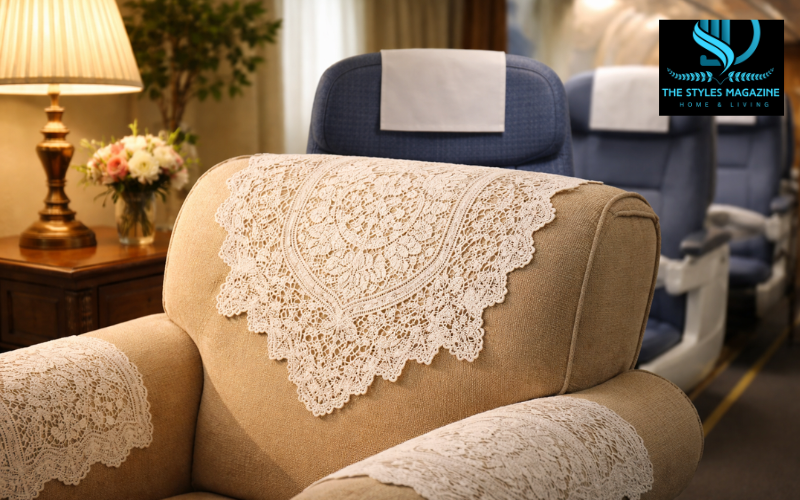
An antimacassar is a small piece of fabric placed over the back or arms of chairs and sofas. At first glance, it may seem like a simple decorative cloth, but it actually has a very practical origin. In the past, people used hair oils that could easily stain furniture, and antimacassars were created to protect upholstery from these marks.
The idea began in the 19th century, when a popular hair product called Macassar oil was widely used. This oil left greasy stains on furniture, especially on headrests. To solve this problem, households started placing removable cloth covers on chairs, which could be washed or replaced easily.
Today, while the use of heavy hair oils has declined, the antimacassar still exists in a modern form. You can often see it on airplane seats, trains, and buses, where it helps maintain cleanliness and hygiene. It has also found a place in interior design, where it adds a touch of vintage charm. This combination of history, function, and style is what makes the antimacassar still relevant today.
Antimacassar at a Glance
| Aspect | Details |
| Definition | Protective cloth for chairs/sofas |
| Origin | 19th century (Macassar hair oil era) |
| Main Purpose | Prevent stains and protect upholstery |
| Common Materials | Crochet, lace, silk, wool |
| Modern Use | Airplanes, trains, buses (headrest covers) |
| Decorative Use | Vintage and traditional home décor |
| Similar Items | Doilies, chair covers (different purpose) |
The Origin of Antimacassar: A Practical Solution from the 19th Century
The story of the antimacassar begins with a beauty trend from the 1800s. Macassar oil, a scented hair oil, became extremely popular among men who wanted smooth and shiny hair. While it was effective for grooming, it also had an unwanted side effect. The oil would transfer from hair to furniture, leaving dark, greasy stains on fabric and upholstery.
At that time, furniture was often expensive and carefully maintained, so these stains became a real concern for households. Cleaning upholstery was not easy, and replacing furniture was costly. As a result, people needed a simple and affordable solution.
This is where the antimacassar came into use. Families began placing small cloths over the backs of chairs, especially where the head would rest. These cloths acted as a barrier, protecting the furniture underneath. They could be removed, washed, and reused, making them both practical and economical.
Over time, antimacassars became a standard feature in many homes. They were not only functional but also reflected the care and attention people gave to their living spaces. Their presence became part of everyday life, especially in well-kept households.
Understanding the Name: What “Antimacassar” Really Means
The word antimacassar may sound unusual, but its meaning is quite simple once broken down. It is made up of two parts: “anti,” which means against, and “Macassar,” referring to the hair oil that caused the staining problem.
So, the term literally means “against Macassar.” It describes the cloth’s purpose very clearly—it was designed to prevent damage caused by Macassar oil. Unlike many words that change meaning over time, this one has stayed closely connected to its original use.
The name has continued to be used even though Macassar oil is no longer common. This shows how strong the connection is between the object and its history. Even today, when people refer to an antimacassar, they are indirectly referring to that original problem and its clever solution.
The survival of this term also reflects how language preserves everyday items from the past. It gives us a small insight into how people lived, what they valued, and how they adapted to challenges in their daily lives.
Materials and Designs: From Simple Cloth to Decorative Pieces
In the beginning, antimacassars were made from simple and practical materials. White crochet fabric was especially common because it was easy to wash and matched most interiors. The focus was mainly on protection rather than appearance.
As time passed, the design of antimacassars began to change. People started using softer and more decorative materials such as lace, silk, wool, and embroidered fabrics. These designs added beauty to furniture while still serving their original purpose.
By the late Victorian era, antimacassars had become both functional and decorative. They were often carefully crafted, sometimes handmade, and used to show a sense of style and attention to detail. Homes with elegant furniture often featured equally elegant antimacassars.
There is also a clear difference between functional and decorative versions. Functional antimacassars are simple and easy to clean, while decorative ones focus more on design and may include patterns, colors, or detailed stitching. Today, both types still exist, depending on whether the priority is protection or style.
How Antimacassars Were Used in Traditional Homes
In traditional homes, antimacassars were commonly placed on the backs and arms of chairs and sofas. The most important area was the top of the chair, where the head would rest. This was where hair oils were most likely to cause stains.
These cloths played an important role in keeping furniture clean. Instead of worrying about permanent damage, homeowners could simply remove and wash the antimacassar. This helped extend the life of the furniture and kept it looking fresh.
Beyond their practical use, antimacassars also became part of home decoration. They were often matched with curtains, tablecloths, or other fabrics in the room. This created a coordinated and tidy appearance.
Their presence also reflected social habits of the time. Cleanliness and presentation were highly valued, and antimacassars helped maintain both. They became a small but meaningful detail that showed care for one’s home.
Modern-Day Uses of Antimacassars in Public Spaces
Although antimacassars are less common in private homes today, they are still widely used in public spaces. One of the most familiar examples is on airplane seats. The small white cloth placed over the headrest is essentially a modern antimacassar.
These covers serve an important purpose. In places where many people use the same seat, hygiene becomes a priority. Antimacassars provide a clean surface for each new user and can be replaced or cleaned regularly.
They are also used in trains, buses, and other forms of transport. In these settings, they help protect seats from dirt, sweat, and wear. This makes maintenance easier and keeps the seating area looking neat.
The continued use of antimacassars in these environments shows how effective the idea still is. Even with modern materials and cleaning methods, a simple removable cloth remains a practical solution.
Antimacassar in Fashion: The Sailor Uniform Connection
The concept of the antimacassar is not limited to furniture. It also appears in clothing, particularly in sailor uniforms. Sailors often wore a flap or collar at the back of their shirts, which served a similar purpose.
This cloth was designed to protect the uniform from hair oils and dirt. Just like on furniture, it acted as a barrier that could be cleaned more easily than the main fabric.
The idea behind this design is very similar to the antimacassar used on chairs. In both cases, a removable or protective layer is used to keep the main surface clean. This shows how a simple concept can be applied in different areas of daily life.
It also highlights how practical solutions often cross over between different uses, adapting to the needs of the time.
Antimacassar vs Doilies and Chair Covers: Key Differences
Antimacassars are sometimes confused with other fabric items such as doilies and chair covers. While they may look similar, their purpose and use are quite different.
A doily is usually a decorative piece placed on tables or surfaces. It is mainly used for appearance rather than protection. Chair covers, on the other hand, are larger and designed to cover the entire piece of furniture.
An antimacassar is more specific in its function. It is placed only on certain parts of furniture, such as the back or arms, where protection is needed the most. It is smaller than a chair cover and more practical than a doily.
Understanding these differences helps clarify the unique role of the antimacassar. It is not just a decorative item but a functional piece with a clear purpose.
Decorative Value: How Antimacassars Add Style to Interiors
Over time, antimacassars have become more than just protective cloths. They are now also used as decorative elements, especially in vintage or traditional interiors.
In homes that follow a classic design style, antimacassars can add a sense of elegance and detail. They can highlight the shape of furniture and bring attention to craftsmanship. Their patterns and textures can also complement other elements in the room.
Modern designers sometimes use antimacassars in creative ways. They may choose bold colors, unique fabrics, or updated designs to give a fresh look while still keeping the traditional idea.
This blend of function and style makes antimacassars a flexible addition to many interiors. They can be simple and practical or detailed and decorative, depending on the desired effect.
Are Antimacassars Still Relevant in Modern Homes?
In today’s homes, antimacassars are not as common as they once were, but they have not disappeared completely. Their use has become more selective and often depends on personal preference or design style.
Some people still use them to protect furniture, especially in homes with children or pets. Others choose them for their vintage appeal, adding a touch of history to modern spaces.
There is also a growing interest in sustainable living. Instead of replacing damaged furniture, people look for ways to protect and maintain what they already have. In this context, antimacassars can be seen as a practical and eco-friendly solution.
While they may not be a standard feature in every home, their usefulness and charm ensure that they remain relevant in certain settings.
Conclusion: A Small Fabric with a Lasting Legacy
The antimacassar may seem like a small and simple item, but it carries a rich history and a clear purpose. From its origins as a solution to oily stains to its role in modern transport and interior design, it has adapted to changing times.
Its journey shows how everyday problems can lead to practical and lasting solutions. Even as lifestyles have changed, the basic idea behind the antimacassar remains useful.
Today, it stands as both a functional tool and a decorative element. Whether used for protection, hygiene, or style, the antimacassar continues to prove its value. It is a reminder that even the simplest objects can have a lasting impact.
FAQs
What Is An Antimacassar Used For?
An antimacassar is used to protect furniture from stains, especially on chair backs and armrests. Today, it also helps maintain hygiene in shared seating like airplanes and trains.
Why Is It Called An Antimacassar?
The name comes from “anti” (against) and “Macassar,” a hair oil that caused stains. The cloth was designed to protect furniture from that oil.
Are Antimacassars Still Used Today?
Yes, antimacassars are still used, especially in public transport like airplanes and trains. They are also used in vintage home décor.
What Is The Difference Between An Antimacassar And A Doily?
An antimacassar protects furniture from stains, while a doily is mainly decorative and placed on tables or surfaces.
Can Antimacassars Be Decorative?
Yes, modern antimacassars are often decorative, made with lace, embroidery, or stylish fabrics to enhance interior design.
Enjoyed it? Find more exclusive content on The Styles Magazine.
Disclaimer: This article is for informational purposes only. While we aim to provide accurate and up-to-date details about antimacassars, historical and design interpretations may vary. Always consider your specific needs when applying this information.