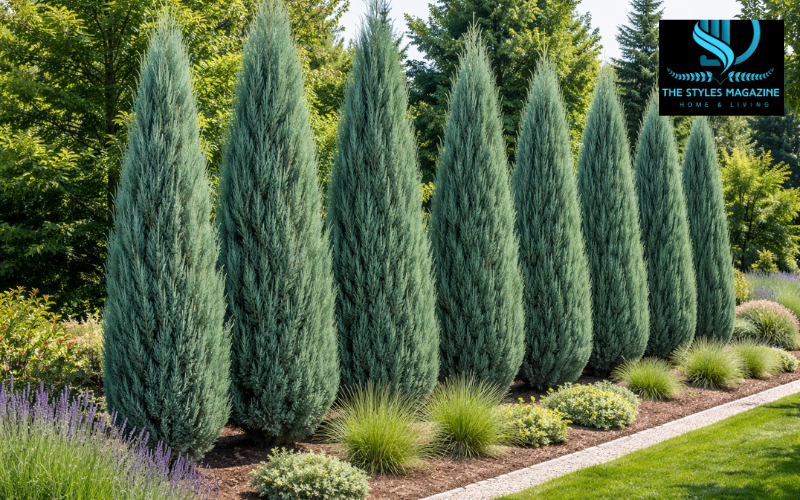
Juniper Skyrocket Conifers are a popular choice for homeowners and gardeners who want a clean, vertical shape without taking up much ground space. Known for their tall and narrow form, these evergreens bring structure and color to landscapes all year long. Their silvery-blue foliage and naturally upright habit make them stand out in both modern and traditional garden designs.
What makes Juniper Skyrocket Conifers especially appealing in today’s landscaping is how well they fit into smaller yards and urban environments. Many gardens now focus on efficient use of space, and this conifer answers that need perfectly. Instead of spreading outward like many trees and shrubs, it grows upward in a tight column, allowing gardeners to create privacy or visual height even in limited areas.
Homeowners often choose this plant because it combines beauty with practicality. It offers year-round interest, requires minimal maintenance, and adapts to a wide range of growing conditions. Whether used as a narrow privacy screen, a design accent, or a vertical focal point, Juniper Skyrocket Conifers continue to be a reliable and stylish addition to modern landscapes.
What Are Juniper Skyrocket Conifers?
Juniper Skyrocket Conifers are a cultivated variety of rocky mountain juniper, commonly known by the botanical name Juniperus scopulorum ‘Skyrocket’. In some references, they may also be associated with similar narrow forms of eastern red cedar. The cultivar was selected for its exceptionally slim growth habit and attractive blue-green foliage, traits that make it different from many other evergreens.
The defining feature of the “Skyrocket” form is its strong vertical growth. The branches stay close to the trunk, naturally creating a pencil-like silhouette without frequent trimming. Unlike shrubs that require shaping, this plant keeps its elegant form on its own, making it a favorite among gardeners who prefer low-maintenance landscaping.
Compared with other columnar evergreens, Juniper Skyrocket Conifers are usually narrower and more refined in appearance. Some narrow conifers eventually spread outward or lose their structure with age, but Skyrocket tends to remain compact and upright. This reliable shape makes it especially useful where space is limited or when a clean architectural look is desired.
Physical Characteristics of Juniper Skyrocket Conifers
One of the most attractive traits of Juniper Skyrocket Conifers is their impressive height combined with a very narrow width. In most home landscapes, they reach around 15 to 20 feet tall while staying only about 2 to 3 feet wide. In ideal growing conditions and over many years, some specimens may grow even taller, creating a striking vertical presence.
The foliage is another key reason gardeners appreciate this conifer. Its scale-like leaves display a soft silvery-blue to blue-green color that stays attractive throughout all seasons. Unlike deciduous plants that lose leaves in winter, this evergreen provides constant color and structure, which helps keep gardens visually appealing even in colder months.
The natural growth habit is tightly columnar, giving the plant a clean and organized look. Branches grow upward rather than outward, and the strong central leader helps maintain stability. Because of this shape, the tree often resembles a living pillar or narrow spire, making it ideal for framing entrances or marking boundaries.
Mature female plants may produce small berry-like cones with a bluish waxy coating. These cones are not only decorative but also provide food for birds during winter. While they are subtle compared to flowers or large fruits, they add an extra layer of seasonal interest and support local wildlife.
Ideal Growing Conditions for Healthy Growth
Juniper Skyrocket Conifers perform best when planted in full sun. At least six to eight hours of direct sunlight each day encourages dense foliage and strong growth. Although the plant can survive in partial shade, reduced light often leads to a looser shape and less vibrant color, which takes away from its signature appearance.
Soil flexibility is another advantage of this conifer. It can grow in sandy, clay, or slightly alkaline soils as long as drainage is good. The one condition it strongly dislikes is standing water. Wet soil can damage roots and lead to decline, so choosing a well-drained location is essential for long-term success.
This plant is well suited to a wide range of climates, thriving in hardiness zones that include both cold winters and warm summers. Its durability makes it a reliable option in many regions where other evergreens may struggle. Once established, Juniper Skyrocket Conifers also tolerate wind, drought, and temperature extremes better than many ornamental trees.
Because of this resilience, the plant works well in challenging environments such as exposed yards, dry slopes, or areas where watering may be limited. Its ability to adapt while still maintaining a neat appearance is one of the reasons it remains a favorite among landscape designers.
Planting Juniper Skyrocket Conifers the Right Way
Choosing the right location is the first step in successful planting. Because these conifers grow tall but stay narrow, they are often placed along fences, property lines, or pathways where space is tight. When planting multiple trees for a screen, allowing enough spacing ensures healthy airflow while still creating a unified wall of greenery.
Before planting, preparing the site properly helps the roots establish quickly. Loosening the soil and ensuring good drainage creates a healthy environment for early growth. The planting hole should be slightly wider than the root ball but not too deep, allowing the tree to sit at the same level it was growing in its container.
After placing the tree, gently filling the soil and watering thoroughly helps remove air pockets around the roots. This initial watering is crucial for reducing transplant stress. Adding a layer of mulch around the base helps maintain moisture and regulate soil temperature, but it should be kept away from the trunk to prevent rot.
During the first few weeks, regular monitoring is important. Young Juniper Skyrocket Conifers benefit from consistent care while they settle into their new environment. Once roots begin to establish, the plant quickly becomes more independent and resilient.
Watering, Feeding, and Ongoing Care
Watering needs change significantly as Juniper Skyrocket Conifers mature. Newly planted trees require regular watering during the first growing season to help roots spread and anchor. Deep, occasional watering works better than frequent shallow watering because it encourages strong root development.
Once established, the tree becomes quite drought-tolerant. In most climates, natural rainfall may be enough except during extended dry periods. Overwatering should be avoided, as it can create more problems than drought for this species.
Fertilization is usually simple and minimal. A balanced slow-release fertilizer applied in early spring can support healthy growth if the soil is poor. However, many gardeners find that these conifers perform well without heavy feeding, especially in moderately fertile soil.
Mulching plays an important role in long-term care by keeping soil moisture stable and reducing weed competition. Seasonal maintenance generally involves checking for damaged branches after storms or winter weather, but overall upkeep remains light compared to many other landscape plants.
Pruning and Maintenance for a Clean Columnar Shape
One of the biggest advantages of Juniper Skyrocket Conifers is that they rarely need pruning. Their natural growth pattern already forms a neat column, so aggressive shaping is unnecessary. In fact, excessive pruning can disrupt the plant’s natural appearance and should be avoided.
When pruning is needed, it usually involves removing dead, damaged, or broken branches. Late winter or early spring is often the best time for this work because the plant is still dormant and new growth has not yet started. Clean cuts help prevent disease and encourage healthy recovery.
In regions with heavy snowfall or ice, branches may occasionally bend or break under weight. Gently brushing snow off branches rather than shaking the tree can prevent damage. Some gardeners choose to tie branches lightly during winter to maintain shape in severe conditions.
Maintaining density is mostly about proper growing conditions rather than cutting. Adequate sunlight and good airflow naturally keep the foliage full and attractive, allowing the plant to maintain its signature vertical structure for many years.
Common Problems and How to Prevent Them
While Juniper Skyrocket Conifers are generally hardy, they can face certain challenges. Fungal diseases such as juniper blight may occur in humid or poorly ventilated environments. Maintaining proper spacing and avoiding overhead watering helps reduce the risk of these issues.
Environmental stress can also affect growth. Prolonged wet soil, high humidity, or lack of sunlight may cause thinning foliage or discoloration. Choosing the right location from the beginning is the best preventive step.
Pests are usually not a major problem, but occasional issues with mites or scale insects can appear. Regular observation allows gardeners to catch problems early before they spread. Healthy, well-maintained trees tend to resist pests more effectively than stressed plants.
Long-term prevention focuses on good cultural practices. Proper watering, adequate sunlight, and well-drained soil create strong plants that naturally resist many common issues.
Landscaping Ideas Using Juniper Skyrocket Conifers
Juniper Skyrocket Conifers are highly versatile in landscape design because of their strong vertical form. One of the most common uses is as a narrow privacy screen. When planted close together, they form a living wall that blocks views without taking up much space.
They also work beautifully as vertical accents. Designers often use them to create balance in gardens that contain wide, low-growing shrubs. Their height draws the eye upward, adding dimension and structure to outdoor spaces.
Another popular use is framing entrances or pathways. Placing a pair of these conifers on either side of a gate or doorway creates a formal, welcoming look that feels both elegant and natural.
Because growth is relatively slow at first, these trees can also be grown in large containers for patios or courtyards. This makes them a practical option for people who want evergreen interest without planting directly in the ground.
Juniper Skyrocket Conifers vs Other Columnar Evergreens
When comparing Juniper Skyrocket Conifers to other narrow evergreens, shape is often the first difference gardeners notice. Skyrocket tends to be slimmer and more upright, while some alternatives gradually widen or develop a softer outline.
Maintenance requirements are another point of comparison. Many columnar evergreens need occasional shaping to maintain symmetry, but Skyrocket usually keeps its form naturally. This makes it appealing for those who prefer low-maintenance landscapes.
The best choice depends on design goals. If a strict vertical line and compact width are priorities, Juniper Skyrocket Conifers often stand out as the preferred option. Other evergreens may be better suited for softer, more natural styles where width and fullness are desired.
Is Juniper Skyrocket the Right Choice for Your Garden?
This conifer is especially beneficial for gardeners working with limited space. Small yards, narrow side paths, and urban properties can all benefit from its compact footprint. People who want privacy without installing large fences also find it a practical solution.
It performs best in sunny locations with well-drained soil, making it ideal for open landscapes or areas that receive consistent light. Those seeking a low-maintenance evergreen that keeps its structure year-round will likely appreciate what this plant offers.
Before planting, it is important to consider mature height and surrounding structures. Although the tree stays narrow, its vertical growth means overhead space should be available. Planning ahead ensures the plant remains an asset rather than a future problem.
Conclusion
Juniper Skyrocket Conifers have earned their reputation as one of the most practical and attractive narrow evergreens for modern landscapes. Their tall, slim shape, beautiful silvery-blue foliage, and ability to thrive in a variety of conditions make them a reliable choice for both beginners and experienced gardeners.
From understanding what makes this conifer unique to learning how to plant, care for, and use it in landscape design, the key takeaway is that simplicity often leads to success. With the right placement and basic care, Juniper Skyrocket Conifers can provide structure, privacy, and year-round beauty for many years.
For anyone considering a vertical evergreen that fits tight spaces without demanding constant maintenance, this conifer remains a smart and balanced choice.
FAQs
How Tall Do Juniper Skyrocket Conifers Grow?
They typically grow 15–20 feet tall and about 2–3 feet wide, though some may grow taller in ideal conditions.
Do Juniper Skyrocket Conifers Need Full Sun?
Yes, they grow best in full sun with at least 6–8 hours of direct sunlight daily.
Are Juniper Skyrocket Conifers Low Maintenance?
Yes, they require minimal pruning and become drought-tolerant once established.
Can Juniper Skyrocket Conifers Be Used For Privacy?
Yes, their narrow upright shape makes them excellent for privacy screens in small spaces.
How Far Apart Should They Be Planted?
For a dense screen, spacing them about 2–3 feet apart works best.
Disclaimer: This article is for general informational and educational purposes only. Growing results for Juniper Skyrocket Conifers may vary depending on climate, soil, care, and local conditions. Always consider your specific garden environment or consult a local gardening professional before planting or making landscaping decisions.
Loved Reading This? Discover More Exclusive Stories And Updates At The Styles Magazine!