A 14×18 cutlery tray two tier is a smart kitchen organizer designed to help homeowners make better use of drawer space. Instead of storing utensils in a single flat layer, this design adds a second level, usually in the form of a sliding upper tray placed above a fixed bottom section. The result is a cleaner, more organized drawer that can hold more items without feeling cluttered.
This type of tray is commonly made to fit inside standard 18-inch base cabinet drawers. While the cabinet itself may be labeled as 18 inches wide, the internal usable space is slightly smaller. That is why the tray typically measures around 14 to 14.5 inches wide, allowing room for drawer slides and side walls. Its depth often ranges from 18 to 21 inches depending on the cabinet style.
Homeowners choose a 14×18 cutlery tray two tier design because modern kitchens demand efficiency. Families cook more often, utensils come in many shapes and sizes, and kitchens must stay tidy despite limited storage space. A two-level organizer helps separate everyday silverware from specialty tools without requiring larger drawers or expensive remodeling.
In this guide, you will learn what makes this tray design unique, how to make sure it fits your cabinet, what materials and styles are available, and how to choose the right option for your kitchen. Whether you are upgrading a single drawer or planning a full renovation, understanding this organizer can help you make a practical and long-lasting decision.
What Makes a 14×18 Two-Tier Cutlery Tray Different
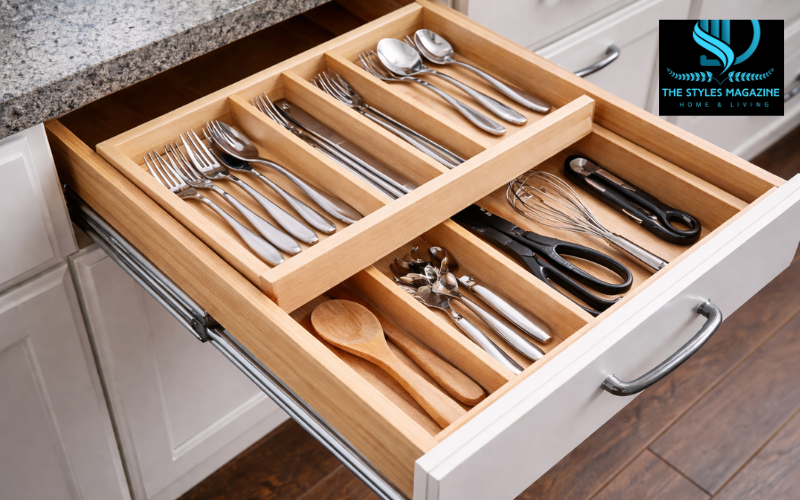
The biggest difference between a 14×18 two-tier cutlery tray and a traditional organizer lies in its layered design. Instead of placing all utensils on one level, the tray uses a sliding top section that moves back and forth, revealing a second storage layer underneath. This simple concept allows you to use the full vertical space of the drawer rather than wasting the area above your utensils.
In a standard single-layer organizer, items often overlap or compete for space. Large serving spoons, kitchen scissors, and measuring tools may not fit neatly next to forks and knives. With a two-tier layout, frequently used cutlery can stay on the upper tray while larger or less-used items remain below. This improves accessibility and keeps everything easier to find.
Another advantage is storage efficiency. Because the upper tray slides smoothly, both levels remain reachable without removing the organizer or rearranging the drawer. This makes daily kitchen tasks faster and reduces clutter, especially in smaller kitchens where every inch matters.
Typical dimensions are designed to match common base cabinets. While the label says 14×18, actual measurements may vary slightly depending on manufacturer design. The width is usually around 14 to 14.5 inches, the depth is close to 18 inches for inserts or up to 21 inches for deeper drawers, and the height generally requires at least 4.25 to 5 inches of internal drawer clearance.
Standard Sizes and Fit Requirements for 18-Inch Cabinets
Understanding measurements is essential when choosing a 14×18 cutlery tray two tier. Many homeowners assume an 18-inch cabinet offers exactly 18 inches of usable space, but this is rarely true. Cabinet labels refer to the outside dimension, not the internal area where the organizer will sit.
Inside an 18-inch base cabinet, the actual drawer width is usually closer to 14.5 inches once side panels and drawer slides are accounted for. This is why most trays designed for this cabinet size follow similar measurements. If you try to install a tray that is too wide, it may rub against the sides or fail to slide correctly.
Depth is another important detail. Full-size kitchen cabinets often allow drawers around 21 inches deep, but some furniture-style cabinets or older kitchens may have shallower drawers closer to 18 inches. Measuring from the front inside edge to the back panel gives a more accurate idea of available space.
Height clearance is especially important for two-tier designs. Because the tray has a sliding top layer, the drawer must be tall enough to allow movement without scraping the top. Most manufacturers recommend at least 4.25 to 5 inches of internal height. If your drawer is too shallow, the upper tray may not function smoothly.
Finally, remember that drawer glides take up space on the sides. Even a small difference in slide thickness can affect fit, so measuring carefully before purchasing is always recommended.
Types of 14×18 Two-Tier Cutlery Trays Available
The market offers several styles of the 14×18 cutlery tray two tier, each designed for different needs and budgets. One popular option is the full replacement drawer system. These units replace the entire existing drawer and often include high-quality slides and a built-in organizer. They provide a custom, premium look and feel but usually require more installation effort.
Another common choice is the drop-in insert organizer. This style sits directly inside your existing drawer without permanent modification. It is simple to install and can be removed later if needed. Many homeowners prefer this option because it is affordable and flexible.
Some trays come in expandable designs. These organizers adjust slightly in width to match different drawer sizes. While convenient, they may not always provide a true two-tier system and sometimes focus more on adjustable footprint than stacked storage.
Fixed-size configurations, on the other hand, are built for a precise fit. They often look cleaner and feel more stable because there are fewer moving parts beyond the sliding upper tray.
You will also find built-in versus removable designs. Built-in options look more integrated with the cabinet and are ideal for long-term renovations. Removable inserts work well for renters or anyone who wants the option to change organizers later.
Material Options and Build Quality Differences
Material plays a big role in both appearance and durability. Solid wood trays, especially those made from birch or similar hardwoods, are often considered premium choices. They bring a warm, natural look to the kitchen and match traditional or high-end cabinetry. Wood trays also tend to feel more sturdy and are built to last when properly maintained.
Bamboo is another popular material. It offers a natural appearance similar to wood but is usually lighter and more affordable. Bamboo organizers are often praised for being eco-friendly and resistant to moisture, making them a practical choice for busy kitchens.
Plastic and hybrid materials are common in budget-friendly options. While they may not have the same upscale appearance, they are easy to clean and lightweight. Modern plastic trays can still look attractive and work well for everyday use.
Build quality varies between brands. Strong joinery, smooth sliding mechanisms, and solid compartment walls all contribute to longer lifespan. Visual appeal also matters, especially in kitchens where drawers are frequently opened in front of guests or family members. The right material balances style, durability, and ease of maintenance according to your needs.
Storage Layout and Organization Features
A well-designed 14×18 cutlery tray two tier focuses on organization as much as storage capacity. Most layouts include narrow slots for forks, spoons, and knives on the top layer, while wider compartments below hold larger utensils and tools.
Separate compartments help prevent items from mixing together. This makes it easier to grab what you need while cooking and reduces the small daily frustration of searching through messy drawers. Some trays also include dedicated sections for specialty tools such as peelers, serving spoons, or kitchen gadgets.
The tiered layout improves workflow by placing everyday cutlery on top where it is instantly accessible. Less frequently used items stay below but remain easy to reach by sliding the top tray aside. This structure helps maintain order over time, since each item naturally has its place.
For busy kitchens, this simple organization system can significantly reduce clutter and make cooking feel more efficient. Instead of digging through crowded drawers, everything becomes visible and organized in layers.
Installation and Compatibility Considerations
Before buying any organizer, accurate measuring is essential. Start by removing everything from the drawer and measuring width, depth, and height from the inside. Measurements should be taken at multiple points because some drawers are slightly narrower toward the back.
Clearance for the sliding top tray is another key factor. Even if the tray fits in width and depth, insufficient height can prevent smooth movement. Checking manufacturer recommendations for minimum drawer height helps avoid this issue.
Common fitting mistakes include assuming all 18-inch cabinets are identical or ignoring drawer slide thickness. Some homeowners also forget to account for curved drawer sides or interior hardware that may limit space.
In certain situations, a replacement drawer system may be the better option. If your current drawer is damaged, poorly aligned, or very shallow, installing a complete replacement with built-in tiers can provide better performance and a cleaner result.
Who Benefits Most from a 14×18 Two-Tier Cutlery Tray
This organizer is especially helpful for small kitchens where storage is limited. By using vertical space instead of only horizontal space, a two-tier design effectively doubles capacity without requiring larger cabinets.
Busy family kitchens also benefit from clearer organization. When multiple people use the same drawer, defined compartments reduce confusion and keep utensils in the right place. It becomes easier for everyone to maintain order.
Minimalist homeowners appreciate the clean appearance and efficient layout. Keeping clutter hidden yet organized aligns well with modern kitchen design preferences.
The tray is also ideal for renovation or upgrade projects. Even without changing cabinets, adding a 14×18 cutlery tray two tier can give drawers a more custom and high-end feel, improving both functionality and everyday comfort.
Common Buying Mistakes and How to Avoid Them
One of the most common mistakes is confusing cabinet size with internal drawer space. Always measure inside dimensions rather than relying on cabinet labels. This simple step prevents most fitting problems.
Another issue is ignoring height clearance. Two-tier designs need extra vertical space, and choosing one without checking measurements can lead to frustration during installation.
Some buyers focus only on style, choosing a tray that looks attractive but lacks practical compartment layout. Functionality should come first, especially for daily kitchen use.
Slide quality and material durability are also easy to overlook. A tray may look good initially but fail to glide smoothly over time if construction quality is poor. Investing in solid materials and reliable hardware helps ensure long-term satisfaction.
Conclusion
The 14×18 cutlery tray two tier is a practical solution for anyone looking to improve kitchen drawer organization without major renovations. By using a sliding upper tray above a fixed lower section, it creates more storage space while keeping utensils neat and easy to access.
Choosing the right organizer depends on understanding cabinet measurements, selecting a suitable material, and deciding between insert-style or replacement drawer systems. When chosen carefully, this simple upgrade can make everyday cooking and cleanup more efficient while giving your kitchen a cleaner and more organized feel.
For long-term success, focus on fit, function, and build quality rather than appearance alone. With the right 14×18 cutlery tray two tier, you can enjoy a drawer that stays tidy, works smoothly, and supports your kitchen routine for years to come.
FAQs
What Is A 14×18 Cutlery Tray Two Tier?
It is a drawer organizer with two levels — a sliding top tray and a fixed bottom layer — designed to maximize storage inside an 18-inch cabinet drawer.
Will A 14×18 Two-tier Tray Fit All 18-inch Drawers?
Not always. You must check the internal drawer measurements because usable space is usually smaller than the cabinet’s outside size.
What Is The Main Benefit Of A Two-tier Cutlery Tray?
It provides extra storage by using vertical space, helping keep utensils organized and easy to access.
Which Material Is Best For Durability?
Solid wood and high-quality bamboo are generally more durable, while plastic options are lightweight and easy to maintain.
Can I Install It Without Replacing The Drawer?
Yes, many models are designed as drop-in inserts that can be placed directly inside existing drawers.
Disclaimer: This article is for general informational and educational purposes only. Product sizes, materials, and compatibility may vary by manufacturer and kitchen cabinet design. Always measure your drawer carefully and review product specifications before purchasing. The information provided does not replace professional advice or installation guidance.
Loved Reading This? Discover More Exclusive Stories And Updates At The Styles Magazine!