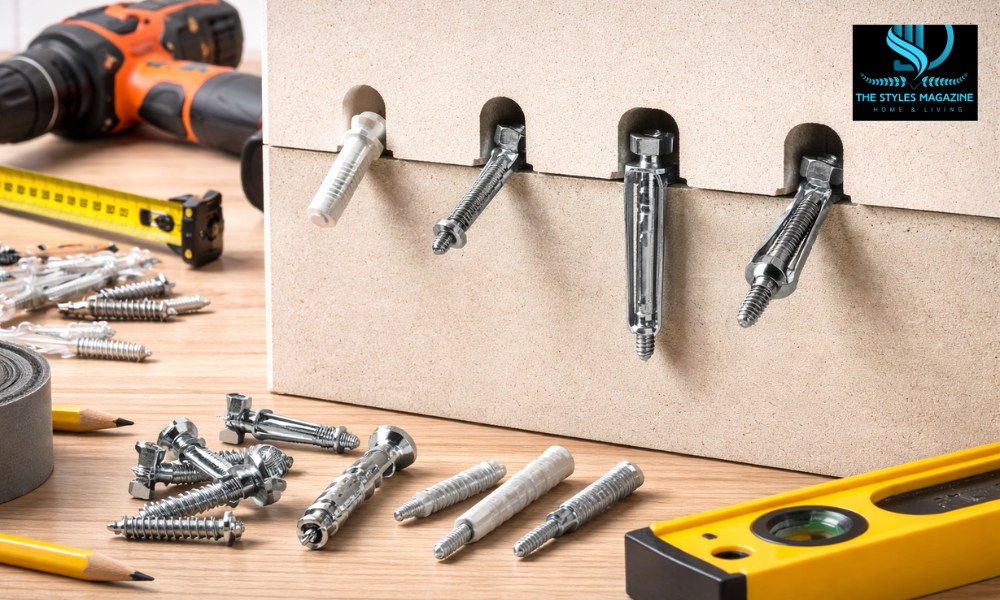
Gypsum board is widely used because it is smooth, affordable, and easy to install. It creates strong, flat walls that look solid from the outside. However, while gypsum board works well as a surface covering, it is not designed to hold weight with a simple screw pushed into it. The core is made of compressed gypsum wrapped in paper, and that material can crack or crumble when stress is concentrated in one small point. This is why many shelves, mirrors, and fixtures eventually loosen or fall when they are mounted without proper support.
This Gypsum Board Anchor Guide is designed to remove guesswork. When you choose the correct anchor and install it properly, you spread the load across a larger area behind the wall. That prevents wobbling, tearing, and damage to the paper surface. The goal is simple: secure fittings that stay firm for years, without cracked walls or repeated repairs.
What Exactly Is a Gypsum Board Anchor (and Why Regular Screws Fail)
A gypsum board anchor is a fastening device that allows screws to hold securely in hollow walls. Instead of relying on the soft gypsum core, the anchor expands, grips, or locks behind the board. This distributes weight and prevents the screw from pulling straight out.
Gypsum board consists of a brittle mineral core sandwiched between two layers of strong paper. The paper provides surface stability, but the inside is not dense like wood. When you drive a screw directly into gypsum board without an anchor, the threads have very little solid material to bite into. Under light load it may hold temporarily, but over time, vibration and gravity slowly weaken the hole.
If you skip using an anchor, you may see gradual sagging, hairline cracks, or sudden pull-out. In real-life situations, I have seen picture frames stay in place for weeks before slowly tilting forward. The failure often happens quietly and gradually, not immediately. That delayed failure makes anchors even more important because the wall can look secure while already weakening inside.
Before You Buy Anything: 5 Quick Checks That Decide Your Anchor Type
Before selecting an anchor, take a few minutes to evaluate your wall and the object you plan to hang. The first check is board thickness. Common gypsum board thicknesses include 9.5 mm and 12.5 mm, and sometimes thicker double layers are used. You can estimate thickness by removing an outlet cover plate and measuring the visible edge. Thicker boards can support slightly stronger anchors, while thinner boards require more care.
Second, check for studs. Studs are vertical framing members behind the wall. If you can mount directly into a wooden stud, that is almost always stronger and safer than using anchors alone. A simple stud finder helps locate them. Whenever possible, heavy items should be attached to studs.
Third, consider what you are really hanging. Weight matters, but leverage matters more. A deep floating shelf creates outward force that multiplies stress on the anchor. A small frame sits flat against the wall and creates minimal leverage. Think beyond the number on the scale.
Fourth, assess the condition of the board. If the area has been patched, water damaged, or feels crumbly, it will not hold anchors as well. In those cases, relocating the mount or using multiple fixing points is safer.
Finally, consider what is behind the board. Insulation, pipes, metal tracks, or double-layer panels can affect anchor performance. Some anchors need open cavity space to expand fully. Understanding what lies behind the wall prevents installation problems.
Gypsum Board Anchor Types Explained (Plain English + When to Use Each)
Plastic expansion plugs are the simplest anchors. They are inserted into a pre-drilled hole and expand when the screw enters. These are suitable for lightweight items such as small décor pieces. They are easy to use but not ideal for heavy or frequently used fixtures.
Self-drilling or threaded anchors have sharp tips and wide threads that cut directly into gypsum board. They are fast to install and convenient for moderate loads. However, overtightening can damage the wall material, especially if the board is soft.
Molly or hollow-wall metal anchors expand behind the wall when tightened. They form a secure backing and are reliable for medium-duty applications like towel bars or small shelves. Proper installation is important because incorrect expansion reduces their holding strength.
Toggle and strap toggle anchors are designed for heavier loads. They use wings or straps that open behind the wall and create strong support across a larger area. These are useful when cavity space is available and when mounting heavier fixtures.
In special situations, such as ceiling installations or double-layer gypsum board, anchor choice must be adjusted. Ceiling loads experience downward pull, which requires stronger fastening. Gypsum fibre boards are denser than standard gypsum board and may support certain anchors better, but correct selection still matters.
The “Pick the Right Anchor” Decision Guide (This is your ranking section)
Choosing the right anchor becomes easier when you match the item to its use. For picture frames and small decorative items, a light-duty expansion plug or small self-drilling anchor is usually enough. These items apply minimal stress and rarely move.
For towel bars or curtain rods that are pulled daily, metal hollow-wall anchors or toggle anchors provide better long-term stability. Repeated pulling creates dynamic load, which weakens lighter anchors over time.
Floating shelves deserve special attention. Because they extend outward, they create leverage that multiplies force on the wall. In this case, toggle anchors or direct stud mounting are strongly recommended. The deeper the shelf, the stronger the fixing must be.
TV brackets and wall cabinets should ideally be mounted into studs. Anchors may assist with alignment or secondary support, but they should not replace structural attachment. A helpful rule of thumb is that dynamic use requires a stronger anchor than the static weight suggests.
Step-by-Step: How to Install a Gypsum Board Anchor Cleanly
Start by marking your mounting points carefully. Use a level to ensure straight alignment. Taking time at this stage prevents multiple holes, which weaken the wall.
If your anchor requires a pilot hole, choose the correct drill bit size. The hole should match the anchor specifications exactly. An oversized hole reduces holding strength, while a tight hole may damage the board during insertion.
For plastic expansion plugs, drill the pilot hole, insert the plug flush with the surface, and drive the screw gently until secure. For self-drilling anchors, press firmly and rotate until fully seated, then insert the screw without overtightening.
For molly or hollow-wall anchors, insert the anchor into the drilled hole and tighten until the back section expands behind the board. Ensure it is fully expanded before attaching the fixture. For toggle or strap toggles, insert the folded mechanism through the hole, allow it to open inside the cavity, and pull it tight against the inner surface before tightening the screw.
Finish by tightening the screw only until snug. Over-tightening can crush the paper face and reduce strength. The anchor should feel firm but not forced.
Common Mistakes and How to Fix Them (Troubleshooting Like a Pro)
One common issue is an anchor spinning in place. This often happens when the hole is too large or the board is weak. In such cases, consider moving slightly to a fresh location or using a larger anchor designed for the opening.
If the hole becomes too wide, you can patch it with filler, allow it to dry completely, and reposition the mount nearby. Avoid reusing compromised holes for heavy loads.
If the board crumbles during installation, switch to an anchor type that distributes load more broadly, such as a toggle anchor. You may also use multiple fixing points to reduce stress on one area.
Sometimes you may unexpectedly hit a stud or metal track. In that situation, remove the anchor and use the correct screw suitable for wood or metal framing. Attaching directly to framing increases strength.
Misaligned holes can weaken the wall if repeated. Plan measurements carefully and, if necessary, use a mounting template to avoid multiple adjustments.
Safety + Load Reality: How to Hang Heavy Items Without Regret
Distribute weight whenever possible. Use two or more anchors spaced evenly apart. Wider brackets reduce pressure on individual points and improve long-term stability.
Leverage increases stress significantly. A shallow cabinet applies less outward force than a deep shelf. Always consider how far the object extends from the wall.
Real-world conditions matter. Doors slamming, children pulling, and daily use create vibration and dynamic load. Even moderate weight items can fail under repeated movement if not properly secured.
For heavy installations such as large cabinets, handrails, or televisions, direct stud mounting or professional installation is strongly recommended. Anchors alone are not a substitute for structural support in high-risk situations.
Removal and Wall Repair: How to Take Anchors Out Nicely
Removing anchors carefully prevents surface damage. For plastic anchors, gently back out the screw and pull the anchor with pliers. If it resists, push it slightly inward rather than tearing the paper surface.
Molly anchors can often be removed by unscrewing and gently collapsing the back section. Toggle anchors typically drop behind the wall once the screw is removed. Take care not to enlarge the hole unnecessarily.
After removal, apply a light layer of spackle to the hole, smooth it with a putty knife, and allow it to dry fully. Sand lightly for a flush finish. Applying primer before repainting helps avoid visible patches or flashing under light.
Conclusion: Gypsum Board Anchor Guide Recap (Choose Right, Install Once)
Choosing the right anchor for gypsum board is not complicated, but it requires careful thought. When you understand your wall type, the weight of the item, and how it will be used, you can prevent future problems.
Check your board thickness and always look for studs first. Match the anchor type to the real load and wall condition. Install carefully and avoid overtightening to protect the paper surface.
By following this Gypsum Board Anchor Guide, you can hang fixtures safely and confidently. The correct preparation and anchor choice ensure your walls stay strong, your fittings remain secure, and you avoid unnecessary repairs in the future.
FAQ
Can I Hang A TV On Gypsum Board Anchors?
It is best to mount TVs directly into wall studs. Anchors may support lighter brackets, but structural attachment provides greater safety.
What Anchor Is Best For 12.5mm Gypsum Board?
For moderate loads, hollow-wall metal anchors or self-drilling anchors are commonly suitable. Heavy items should use toggle anchors or studs.
Why Does My Drywall Anchor Keep Spinning?
This usually happens when the hole is too large or the board is weak. Moving to a fresh spot or using a larger anchor often solves the issue.
Are Self-drilling Anchors Safe For Shelves?
They can support light shelves, but deeper or heavier shelves are better secured with toggle anchors or stud mounting.
Do I Need Different Anchors For Bathroom Walls?
Bathroom walls may experience moisture and repeated pulling from fixtures. Choose corrosion-resistant anchors and ensure the board is dry and structurally sound.
Disclaimer: This article is for general informational and educational purposes only. While every effort has been made to provide accurate and practical guidance, wall structures and load requirements may vary. Always assess your specific wall condition before installation and consult a qualified professional for heavy or structural mounting projects. The author is not responsible for damage, injury, or loss resulting from improper installation or misuse of anchors.
Loved Reading This? Discover More Exclusive Stories And Updates At The Styles Magazine!