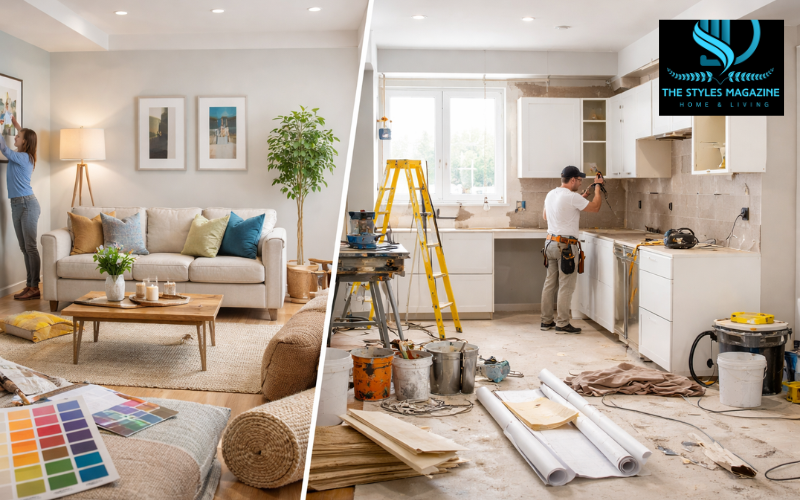
When people start improving their homes, they often ask the same question: what does decorating and renovating include? These two terms are widely used in the world of home improvement, yet they are frequently misunderstood or used interchangeably. While both aim to improve a living space, they focus on different aspects of the home and serve different purposes.
Decorating and renovating both play important roles in creating a comfortable, attractive, and functional home. Renovating usually focuses on repairing, updating, or improving the physical structure and systems of a property. Decorating, on the other hand, concentrates on the visual appearance and personal style of a space after the major work is finished. Together, they transform a house into a home that feels both practical and welcoming.
Many homeowners confuse the two because renovation projects often lead directly into decorating decisions. For example, after replacing flooring or changing a layout, people naturally move on to choosing furniture, colors, and accessories. The transition between the two can feel seamless, which makes the distinction less obvious.
This guide will clearly explain what decorating and renovating include, how they differ, and how they work together. By understanding their roles, you can make smarter decisions about planning, budgeting, and improving your home in a way that fits your goals.
Understanding Decorating vs Renovating at a Glance
At their core, decorating and renovating serve two different purposes. Renovating focuses on improving the foundation and function of a home, while decorating focuses on appearance, personality, and comfort. Renovation changes how a space works, while decoration changes how it feels.
In real-life projects, these processes often overlap. A family renovating their kitchen might replace old cabinets, update plumbing, and install new flooring. Once those changes are complete, they move on to decorating by selecting lighting, choosing bar stools, and adding wall art. Both stages are essential, but they require different decisions and priorities.
Knowing the difference between decorating and renovating helps homeowners plan more effectively. Renovations usually require bigger budgets, professional help, and permits, while decorating tends to be more flexible and personal. When you understand where one ends and the other begins, you can avoid costly mistakes and plan each phase with confidence.
What Home Renovating Includes
When asking what does decorating and renovating include, it is important to first understand renovation in detail. Home renovating is primarily about improving the structure, safety, and functionality of a property. It often involves repairing old elements or modernizing outdated features to meet current standards and lifestyles.
Structural repairs are one of the main parts of renovation. Over time, homes experience wear and tear that may affect stability or performance. Renovation work can include fixing damaged walls, repairing foundations, reinforcing ceilings, or addressing moisture-related issues. These updates ensure the property remains safe and reliable for everyday living.
System improvements are another key component. Many older homes require upgrades to plumbing, electrical wiring, or heating and cooling systems. Modern households depend heavily on efficient systems, and renovating allows homeowners to replace outdated infrastructure with safer and more energy-efficient options. These improvements may not always be visible, but they greatly impact comfort and long-term value.
Renovation also includes surface-level updates. Replacing worn flooring, installing new tiles, updating kitchen cabinets, or refreshing bathroom fixtures are common examples. While these changes can improve appearance, they are usually part of a larger effort to modernize the home rather than simply decorate it.
Layout adjustments and functional improvements are another major aspect. Renovation can involve removing non-load-bearing walls, opening up small rooms, or converting unused areas like basements or lofts into functional spaces. These changes improve how people move through and use their homes, making spaces more practical for modern living.
Exterior updates are also included in renovation projects. Replacing windows, fixing roof leaks, updating siding, and improving insulation help protect the home from weather and improve energy efficiency. These improvements strengthen the building envelope and contribute to long-term comfort and savings.
Overall, renovation focuses on improving the structure and systems of a home. It creates a strong and functional foundation that allows decorating to shine later.
What Home Decorating Includes
While renovation focuses on function and structure, decorating focuses on personality and style. Understanding what decorating includes helps complete the picture when exploring what does decorating and renovating include.
Decorating begins after the major construction or repair work is done. Its goal is to make a space feel inviting, comfortable, and visually pleasing. Visual styling is one of the most noticeable parts. This can involve choosing paint colors, applying wallpaper, or selecting decorative finishes that match the desired atmosphere.
Furniture selection and arrangement play a major role in decorating. The type, size, and placement of furniture shape how a room feels and functions. A well-decorated room balances beauty with practicality, ensuring that spaces are both attractive and comfortable to use.
Colors, textures, and materials are also central to decoration. Soft fabrics, natural wood tones, metallic accents, or layered textiles help create depth and warmth. These choices allow homeowners to express their personalities and create a cohesive look throughout the home.
Lighting is another essential element. Decorative light fixtures such as pendant lights, table lamps, or wall sconces enhance mood and add character. Even small details, like cabinet handles or door hardware, contribute to a consistent design style.
Finally, soft furnishings and accessories bring the space to life. Rugs, cushions, curtains, artwork, and decorative objects add comfort and individuality. These finishing touches transform a renovated space into a truly lived-in environment.
In short, decorating is about appearance and atmosphere. It turns a functional space into one that feels personal and enjoyable.
Key Areas Where Renovating and Decorating Overlap
Although decorating and renovating have different focuses, they often influence each other. Decisions made during renovation can directly affect decorating options later. For example, choosing hardwood floors during renovation impacts the colors, furniture styles, and textiles that will work best in the decorated space.
Timing is another area where the two overlap. Renovation usually comes first because structural or system changes can damage decorative elements if done later. Once the construction work is complete, decorating begins as the final stage. However, planning both together early in the project often leads to better results.
Real-life projects show how closely connected they can be. A bathroom renovation might involve replacing plumbing and tiles, but the final look depends on mirrors, lighting, and accessories chosen during the decorating phase. Similarly, a living room renovation may include new flooring or built-in shelves, while decoration adds personality through color schemes and furnishings.
Understanding this connection helps homeowners avoid mismatched results. When renovation and decoration are planned together, spaces feel cohesive rather than pieced together.
Renovating, Decorating, and Remodelling: Knowing the Difference
Another term often mentioned alongside renovation and decoration is remodelling. While similar, it has a distinct meaning that homeowners should understand.
Renovation focuses on updating or restoring existing features without drastically changing the layout or purpose of a space. Decorating focuses on visual enhancements and style. Remodelling, however, goes a step further by changing the structure or function of an area.
For example, updating cabinets and replacing appliances in a kitchen is renovation. Choosing new colors and decor is decoration. But moving the kitchen to another part of the house or removing structural walls to create a completely new layout is remodelling.
Knowing the difference matters because each type of project involves different levels of planning, cost, and professional involvement. Homeowners who understand these terms can communicate more clearly with contractors and designers and set realistic expectations from the beginning.
How to Decide What Your Home Actually Needs
Many homeowners struggle to decide whether they need renovation, decoration, or both. One clear sign that renovation is necessary is when there are functional problems. Issues like leaking roofs, outdated electrical systems, damaged flooring, or poor layouts usually require renovation rather than simple decoration.
In other cases, decorating alone may be enough. If a space feels outdated but still functions well, changing paint colors, rearranging furniture, or adding new textiles can dramatically improve the look without major construction work. Decorating is often faster, more affordable, and easier to update over time.
The best results often come from combining both approaches. Renovating first to improve structure and functionality, then decorating to enhance comfort and style, creates a balanced outcome. This method ensures that homes not only look beautiful but also work efficiently for daily life.
Common Misconceptions About Decorating and Renovating
One common misconception is that decorating and renovating are the same thing. In reality, they serve different purposes and involve different levels of effort. Assuming they are identical can lead to poor planning or unrealistic expectations.
Another misunderstanding involves cost. Many people think decorating is always cheap and renovation is always expensive. While renovation typically requires larger investments, decoration costs can also add up depending on choices and quality. Budgeting realistically for both stages is important.
Some homeowners also underestimate the scope of renovation work. They may start with small updates but discover underlying issues that require additional repairs. Understanding the true scope of each process helps avoid surprises and reduces stress during projects.
By clarifying these misconceptions, homeowners can approach improvements with clearer goals and better planning.
Conclusion
So, what does decorating and renovating include? Renovating focuses on improving the structure, systems, and functionality of a home, ensuring it is safe, efficient, and suitable for modern living. Decorating focuses on the final visual and emotional experience, bringing personality, comfort, and style into the space.
Both processes play essential roles in creating a well-designed home. Renovation builds the foundation, while decoration adds character and warmth. When homeowners understand how they work together, they can make smarter decisions that balance function and beauty.
Instead of following trends alone, the best approach is to plan improvements based on purpose. By understanding what decorating and renovating include, you can create spaces that not only look good but also support the way you live every day.
FAQs
What Does Decorating And Renovating Include?
Decorating focuses on improving the look and style of a space, while renovating includes repairing or upgrading the structure, systems, and functionality of a home.
Is Decorating Cheaper Than Renovating?
In most cases, yes. Decorating usually costs less because it involves aesthetic updates rather than structural work.
Can I Decorate Without Renovating?
Yes. If your home is structurally sound, simple decorating changes like paint, furniture, and lighting can refresh the space without renovation.
Does Renovation Always Mean Major Construction?
Not always. Some renovations are small, such as replacing flooring or updating fixtures, while others involve larger structural changes.
What Comes First — Decorating Or Renovating?
Renovating typically comes first, and decorating is done after the construction or upgrade work is complete.
Disclaimer: This article is for general informational purposes only. Home decorating and renovating projects can vary depending on property condition, location, budget, and local building regulations. Always consult qualified professionals such as contractors, designers, or licensed experts before making major structural or financial decisions related to your home.
Loved Reading This? Discover More Exclusive Stories And Updates At The Styles Magazine!