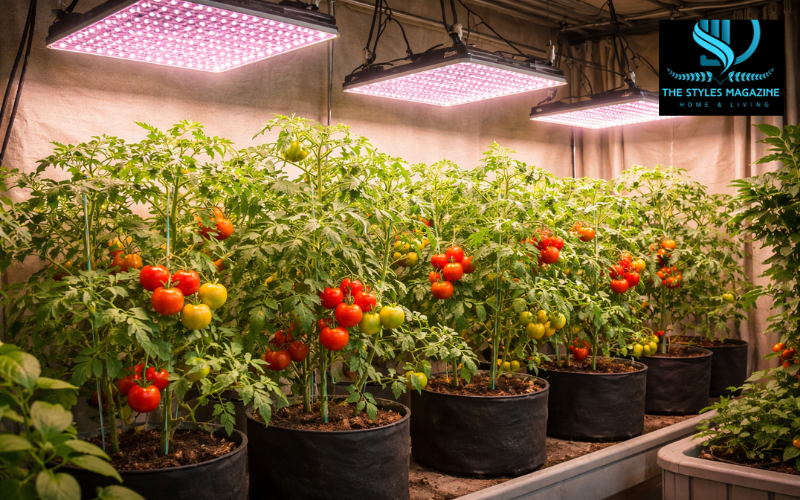
Tomatoes are known as sun-loving plants, and for good reason. In outdoor conditions, they rely on long hours of bright sunlight to grow strong stems, produce flowers, and eventually develop juicy fruits. When you move tomato plants indoors, this natural light is often not enough, especially in apartments or during cloudy seasons. That’s where using grow lights for tomatoes becomes essential.
Without enough light, tomato plants can become weak and stretched, a condition often called “leggy growth.” Their stems grow long and thin, leaves become pale, and fruit production either slows down or stops completely. This is one of the most common challenges faced by indoor gardeners.
Grow lights solve this problem by replacing natural sunlight with a consistent and controlled light source. Modern full-spectrum LED grow lights are especially effective because they mimic the natural sunlight that tomatoes need. They also use less energy and produce less heat, making them ideal for indoor environments.
In this guide, you will learn how to use grow lights properly for tomatoes indoors. From choosing the right type of light to setting the correct duration, intensity, and distance, this article will walk you through everything in simple and practical terms so you can grow healthy, productive tomato plants at home.
Using Grow Lights for Tomatoes Indoors
| Growth Stage | Light Duration | Light Intensity | Recommended Distance |
| Seedlings | 16–18 hours | Low–Moderate | 24–36 inches |
| Vegetative Growth | 14–16 hours | Moderate | 18–24 inches |
| Flowering/Fruiting | 14–16 hours | High | 12–18 inches |
Understanding Why Grow Lights Matter for Tomato Growth
Tomatoes are often described as “sun-worshippers,” and this description is accurate. These plants require a high amount of light to perform photosynthesis, which is the process that helps them create energy for growth. When tomatoes receive strong and consistent light, they develop thick stems, healthy leaves, and a strong root system.
Light plays a direct role in every stage of tomato development. During early growth, it helps seedlings stay compact and sturdy. In the vegetative stage, it supports leaf production and overall plant strength. When it’s time for flowering and fruiting, light becomes even more important because it fuels the energy needed to produce flowers and ripen tomatoes.
One of the most common mistakes when using grow lights for tomatoes indoors is underestimating how much light the plant actually needs. Many beginners place a weak light source too far from the plant, thinking it will be enough. The result is slow growth and poor fruit production. Another mistake is using the wrong type of light that does not provide the full spectrum required for healthy plant development.
Understanding the importance of proper lighting is the first step toward successful indoor tomato growing. Once you provide the right light conditions, many other problems become easier to manage.
Types of Grow Lights Suitable for Tomatoes
When it comes to using grow lights for tomatoes, not all lights are the same. There are several types available, but some work much better than others for indoor tomato cultivation.
LED grow lights are now considered the best choice. They are energy-efficient, long-lasting, and provide full-spectrum light that closely resembles natural sunlight. This makes them ideal for both beginners and experienced growers. Full spectrum grow lights for tomatoes are especially useful because they support all stages of plant growth, from seedlings to fruiting.
Fluorescent lights are another option and are often used for seedlings or small plants. They are affordable and easy to use but may not provide enough intensity for mature tomato plants. HID (High-Intensity Discharge) lights are powerful and were commonly used in the past, but they produce a lot of heat and consume more energy, making them less practical for home setups today.
Choosing between budget and premium options depends on your space and goals. A simple bulb-style LED light can work for a small setup, while larger indoor gardens may require more advanced lighting systems with adjustable brightness and wider coverage.
Optimal Light Duration and Daily Schedule for Tomatoes
Providing the correct amount of light each day is just as important as choosing the right type of light. Tomatoes need long hours of light, but they also need time to rest.
For seedlings, about 16 to 18 hours of light per day is ideal. This helps them grow strong and prevents them from stretching. As the plant matures and enters the fruiting stage, around 14 to 16 hours of light is usually enough.
It is important to remember that tomatoes cannot grow properly under constant light. A common question is whether tomatoes can grow in 24 hours of light. While they may survive for a short time, continuous light can stress the plant and reduce overall health. Like all living things, tomato plants need a period of darkness, usually around 6 to 8 hours, to recover and carry out important biological processes.
Creating a consistent lighting schedule is key. Using a timer can make this process easier and ensures that your plants receive the same amount of light every day without manual adjustments.
Light Intensity Explained for Healthy Tomato Growth
Light intensity refers to how strong the light is, and it plays a major role in plant development. When using grow lights for tomatoes, intensity is often measured using a term called PPFD, which simply indicates how much usable light reaches the plant.
For beginners, it’s easier to think of intensity in terms of plant response. Seedlings need gentle light to avoid damage, while mature plants require stronger light to support flowering and fruit production.
Low light intensity leads to weak growth, thin stems, and fewer flowers. On the other hand, very high intensity without proper distance can cause leaf burn and stress. The goal is to find a balance where the plant receives enough energy without being exposed to excessive heat or brightness.
As the plant grows, its light needs increase. Adjusting intensity through dimmers or by changing the distance between the light and the plant can help maintain the right balance throughout different growth stages.
Correct Light Distance and Positioning for Best Results
The distance between the grow light and the tomato plant is crucial. If the light is too close, it can cause heat stress and burn the leaves. If it is too far away, the plant may not receive enough light, leading to weak growth.
For seedlings, keeping the light higher above the plant helps protect delicate leaves. As the plant grows stronger, the light can be moved closer to increase intensity. During the flowering stage, placing the light closer provides the energy needed for fruit production.
A simple way to check the correct distance is the hand test. Place your hand at the level of the plant canopy under the light. If the heat feels uncomfortable after a few seconds, the light is too close.
It is also important to adjust the position of the light as the plant grows taller. Keeping the light at the correct distance ensures that all parts of the plant receive even and sufficient light.
Using Grow Lights for Tomatoes Indoors: Complete Setup Guide
Setting up grow lights for tomatoes indoors does not have to be complicated. The first step is choosing a suitable location where you can control light, temperature, and airflow.
A small room, balcony corner, or dedicated indoor gardening area can work well. Once you select the space, position your grow light above the plants so that it covers the entire canopy evenly. Using reflective surfaces, such as white walls or reflective sheets, can help maximize light efficiency by bouncing light back onto the plants.
Ventilation is another important factor. Even though LED lights produce less heat, indoor environments can still become warm. Proper airflow helps prevent overheating and reduces the risk of mold or disease.
Temperature should also be monitored. Tomatoes grow best in a moderate environment, so maintaining a stable temperature will support consistent growth. Combining proper lighting with good airflow and temperature control creates an ideal indoor setup.
Best LED Grow Light for Tomatoes (What Actually Works)
Choosing the best LED grow light for tomatoes depends on a few key factors. A good grow light should provide full-spectrum light, cover the required area, and offer enough brightness for your plant’s stage of growth.
Coverage area is especially important. A small light may work for one or two plants, but larger setups require lights that can spread evenly across multiple plants. Wattage and efficiency also matter because they determine how much energy the light can deliver without increasing electricity costs too much.
There are many options available, from simple bulb-style lights to advanced panels with adjustable settings. The best grow lights for tomatoes are those that match your space and growing goals. Beginners often prefer easy-to-use lights with built-in timers, while experienced growers may choose more powerful systems for higher yields.
Will Tomatoes Ripen Under Grow Lights? What to Expect
One common concern is whether tomatoes will ripen properly under artificial light. The good news is that tomatoes can indeed ripen under grow lights if the conditions are right.
Grow lights provide the energy needed for photosynthesis, which supports fruit development. However, ripening also depends on other factors such as temperature, plant health, and proper nutrition.
If the light intensity is too low or the duration is not sufficient, fruit may develop slowly or remain under-ripe. Maintaining the right balance of light, along with stable environmental conditions, helps ensure that tomatoes reach full ripeness.
Common Mistakes When Using Grow Lights for Tomatoes
Even with the right equipment, mistakes can happen. One of the most common issues is providing too little light, which leads to weak and stretched plants. On the other hand, placing lights too close can cause leaf burn.
Ignoring plant signals is another mistake. Tomato plants often show clear signs when something is wrong, such as drooping leaves or discoloration. Paying attention to these signs can help you make adjustments early.
Choosing poor-quality lights can also affect results. Not all lights provide the full spectrum needed for healthy growth, so selecting a reliable option is important.
Insights from Growers: What People Say Online
Many gardeners share their experiences with using grow lights for tomatoes on platforms like Reddit. A common takeaway is that consistency is key. Growers who maintain a stable lighting schedule and proper distance often achieve better results.
Another insight is that even small adjustments can make a big difference. Changing the height of the light or improving airflow can quickly improve plant health. Beginners often learn through trial and error, while experienced growers emphasize the importance of observation and patience.
Learning Through Visuals: Helpful YouTube Practices
Watching real setups on YouTube can be very helpful, especially for beginners. Many growers demonstrate how they position lights, adjust height, and manage indoor environments.
These visual examples make it easier to understand how to apply the concepts in real life. Seeing how others use grow lights for tomatoes indoors can help you avoid common mistakes and improve your setup faster.
Quick Tips to Maximize Tomato Growth Under Grow Lights
Small changes can lead to better results when growing tomatoes indoors. Keeping your lighting schedule consistent, adjusting the distance as plants grow, and ensuring good airflow all contribute to healthier plants.
Using timers can simplify your routine, while monitoring plant behavior helps you make timely adjustments. Staying consistent and attentive is often more important than having expensive equipment.
Conclusion
Using grow lights for tomatoes is one of the most effective ways to grow healthy plants indoors. Since tomatoes need strong and consistent light, providing the right conditions makes a significant difference in their growth and productivity.
By balancing light duration, intensity, and distance, you can create an environment that supports every stage of the plant’s life cycle. From seedlings to fruiting, proper lighting ensures that your tomatoes remain strong, productive, and capable of producing quality fruit.
With the right setup and a little attention to detail, indoor tomato growing can be both simple and rewarding.
FAQs
Can Tomatoes Grow Fully Indoors With Grow Lights?
Yes, tomatoes can grow successfully indoors if they receive enough light, proper nutrients, and the right temperature. Grow lights replace sunlight and support healthy growth and fruit production.
Will Tomatoes Ripen Under Grow Lights?
Yes, tomatoes can ripen under grow lights if the light intensity and duration are sufficient. Proper temperature and plant care also play an important role in successful ripening.
How Far Should Grow Lights Be From Tomato Plants?
The distance depends on the growth stage. Seedlings need lights farther away, while mature plants require closer positioning to receive stronger light without causing heat stress.
Can Tomatoes Grow Under 24 Hours Of Light?
No, tomatoes need a dark period to rest. Continuous light can stress the plant and reduce productivity. A balanced cycle of light and darkness is essential for healthy growth.
What Is The Best Grow Light For Tomatoes?
Full-spectrum LED grow lights are the best choice because they provide the right type of light, use less energy, and support all stages of tomato growth effectively.
Enjoyed it? Find more exclusive content on The Styles Magazine.
Disclaimer: This content is for informational purposes only. Results may vary depending on your environment, equipment, and care routine. Always observe your plants and adjust conditions based on their specific needs.