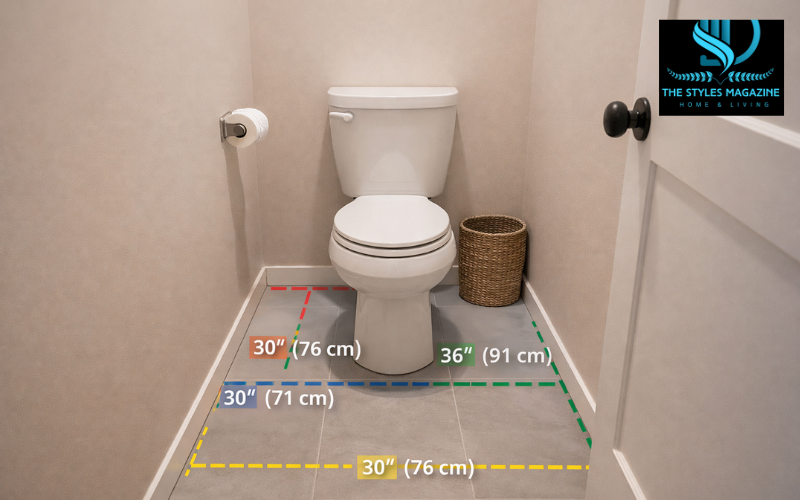
When people plan a bathroom, the focus usually goes to tiles, fixtures, or colors. However, one of the most important details is often overlooked — the toilet room size. A toilet room, sometimes called a water closet, is a small enclosed space designed specifically for a toilet. Even though it may be one of the smallest areas in a home, its size has a big impact on comfort and daily usability.
Planning the right toilet room size is important for more than just appearance. A well-sized space improves comfort, allows safe movement, and makes cleaning easier. It also ensures that the room meets building codes while still feeling functional for real-life use. Many homeowners are surprised to learn that a layout can technically meet minimum code requirements yet still feel cramped or uncomfortable.
There is often a difference between what is legally acceptable and what actually works well for everyday living. Minimum dimensions focus on safety and basic functionality, while comfort-focused dimensions consider movement, privacy, and ease of use. Understanding this difference helps homeowners, designers, and renovators make smarter decisions.
In this guide, you will learn how toilet room size is typically measured, what minimum requirements look like, which dimensions feel more comfortable, and how to plan layouts that work well in both large and small homes. By the end, you will have a clear understanding of how to create a toilet space that feels practical, balanced, and comfortable.
Toilet Room Size
| Type | Recommended Width | Recommended Depth | Approx. Area | Best For |
| Minimum Code | 30 in (76 cm) | 60 in (152 cm) | 12.5 sq ft | Small or tight spaces |
| Standard Comfort | 36 in (91 cm) | 66 in (168 cm) | 16.5 sq ft | Most homes |
| Spacious / Luxury | 42+ in (107+ cm) | 72+ in (183+ cm) | 21+ sq ft | Premium comfort |
| Powder Room | 36–60 in | 60–96 in | 15–30 sq ft | Guest bathrooms |
| Accessible Layout | 60 in turning space | Flexible | Varies | Accessibility needs |
nderstanding Standard Toilet Room Sizes
A toilet room, or water closet, is a small enclosed area that contains only a toilet, usually separated from the rest of the bathroom. This layout is common in modern homes because it adds privacy and allows multiple people to use the bathroom space at the same time.
When discussing toilet room size, designers usually think in three categories. The first is the minimum layout, which meets basic building codes but offers limited space. The second is a standard or comfort layout, which provides more room for movement and feels less restrictive. The third category includes spacious or luxury layouts, where additional width and depth create an open and comfortable experience.
Dimensions play a major role in how the space feels. A room that is technically usable may still feel tight if the walls are too close to the toilet. Even a few extra inches can significantly improve comfort, making the space easier to enter, exit, and maintain. The width influences elbow room, while the depth affects how easily someone can move in front of the fixture.
Understanding these categories helps homeowners set realistic expectations. A small toilet room can work well when designed carefully, but larger dimensions usually provide better comfort and flexibility.
Minimum Code Requirements for Toilet Room Size
Building codes establish the smallest dimensions allowed for a toilet room to ensure safety and basic usability. In many residential projects, the minimum toilet room size is around 30 inches wide and 60 inches deep. This size allows the fixture to fit properly and provides the basic clearances needed for daily use.
One important rule involves side clearance. Most codes require at least 15 inches from the centerline of the toilet to any wall or obstruction. This ensures that users have enough shoulder and elbow space. Front clearance is also required, typically around 21 to 24 inches in front of the toilet bowl, allowing a person to sit and stand safely.
While these minimum requirements make the layout legal, they do not always feel comfortable. Many homeowners find that rooms designed only to meet code standards feel tight, especially when the door swings inward or when the walls are close to the fixture. The result can be a cramped experience that feels more like a utility space than a comfortable part of the home.
For this reason, professionals often treat minimum measurements as a starting point rather than a final goal. Adding extra inches wherever possible can make a noticeable difference in overall usability.
Recommended Comfort Dimensions for Everyday Use
Designers often recommend going beyond the minimum requirements when planning a toilet room size. A common comfort dimension is about 36 inches wide and around 66 inches deep. These measurements provide extra elbow room and make the space feel noticeably less confined.
The main advantage of comfort dimensions is improved usability. Users can move more naturally, and the room feels less restrictive. Cleaning also becomes easier because there is more space around the fixture. For families or homes with frequent guests, this added comfort can make a significant difference in how the bathroom is experienced.
Another benefit of adding space is flexibility in design. A slightly wider layout allows for better door placement and easier access. It also creates a more balanced visual appearance, which helps the room feel intentional rather than squeezed into leftover space.
However, balancing room size with the overall bathroom layout is important. Not every home has the luxury of extra square footage, so designers often look for smart adjustments that improve comfort without sacrificing the function of nearby spaces.
Essential Clearances Around the Toilet
Clearances are the invisible boundaries that make a toilet room comfortable and safe. Even if the overall toilet room size seems adequate, poor spacing around the fixture can make the room feel awkward or difficult to use.
Front clearance is especially important. Designers typically recommend leaving at least 24 inches in front of the toilet, while 30 inches is considered more comfortable. This open space allows users to sit, stand, and move freely without feeling restricted.
Side clearance is measured from the toilet’s centerline. While the minimum requirement is usually 15 inches on each side, increasing this to around 18 inches creates a more relaxed feel. The additional space may seem minor, but it greatly improves comfort and reduces the sense of confinement.
Practical spacing tips include avoiding bulky cabinetry near the toilet and ensuring that walls or partitions do not crowd the area. Planning these clearances early in the design process helps prevent costly changes later.
Door Placement and Space Planning
The way a door opens can greatly affect how a toilet room functions. In small layouts, door swing is often one of the biggest challenges. If the door swings inward and hits the toilet, the room can feel awkward and difficult to navigate.
Many designers prefer outward-opening doors or sliding options for smaller toilet rooms. Pocket doors and barn-style sliders are popular because they save interior space and eliminate conflicts between the door and fixtures. These solutions can make a small toilet room feel significantly larger.
Common mistakes include placing the door directly in front of the toilet or ignoring the space needed for a person to enter and close the door comfortably. Careful planning ensures that movement flows naturally and that the room feels functional rather than cramped.
Good space planning considers how people actually use the room, not just how the measurements look on paper.
Toilet Room Size for Powder Rooms and Half Baths
Powder rooms and half baths typically combine a toilet and a small sink within a limited area. Because these spaces are usually intended for guests, they must balance efficiency with comfort.
Typical powder room sizes range from about 15 to 30 square feet. A layout around 3 by 5 feet is considered very compact, while slightly larger dimensions provide more flexibility for sink placement and movement. Even in small spaces, thoughtful design can make the room feel open and welcoming.
Efficient layouts often place the sink opposite or beside the toilet to maximize floor space. Wall-mounted sinks are frequently used because they reduce visual bulk and create a more spacious appearance.
When planning a powder room, focusing on clear pathways and appropriate spacing helps maintain comfort despite limited square footage.
ADA and Accessibility-Friendly Toilet Room Dimensions
Accessible design is becoming increasingly important in modern homes. Even if accessibility is not immediately needed, planning for it can make a home more adaptable in the future.
Accessibility-friendly toilet room sizes usually require more open floor space to allow easy movement and turning. A common guideline is providing enough clear area for a wheelchair to maneuver, often represented by a circular turning space of about 60 inches in diameter.
Additional spacing around the toilet allows for easier transfers and safer movement. Wider doorways and thoughtful fixture placement also contribute to a more accessible layout.
Future-proofing a bathroom by considering accessibility from the start can prevent expensive renovations later. It also ensures that the space remains comfortable for users of all ages and abilities.
Small Space Solutions: Under-Stair and Compact Toilet Rooms
In homes where every inch counts, compact toilet rooms are often built under stairs or in narrow areas. While these spaces can be functional, careful planning is essential to ensure comfort and usability.
Functional minimum dimensions for tight layouts may start around 70 centimeters by 130 centimeters, though slightly larger sizes are usually recommended. Ceiling height becomes an important factor in under-stair designs, as lower areas may feel restrictive.
To maximize usability, designers often use compact or wall-mounted toilets, lighter colors, and efficient lighting. Keeping the layout simple helps prevent the room from feeling cluttered.
However, compact spaces come with limitations. Ventilation, door placement, and restricted movement are common challenges. Understanding these limitations before construction helps create realistic expectations and better results.
Comparing Toilet Room Sizes: Minimum vs Comfort vs Luxury
Comparing different toilet room sizes helps homeowners choose the best option for their needs. Minimum layouts focus on fitting within limited space and meeting code requirements. They work best in small homes or renovation projects where space is limited.
Comfort-sized layouts provide a better balance between efficiency and usability. They allow more natural movement and tend to feel more inviting. For most households, this category offers the best overall experience.
Luxury layouts go a step further by adding generous width and depth. These spaces feel open, reduce any sense of confinement, and allow more flexible design features. Larger rooms also make the space easier to clean and maintain.
Choosing the right category depends on available space, budget, and personal preferences. Even small increases in dimensions can significantly improve comfort.
Common Toilet Room Size Planning Mistakes
One of the most common mistakes when planning a toilet room size is ignoring clearances. Many layouts focus only on fitting the toilet into the space rather than ensuring comfortable movement around it. This often leads to cramped rooms that feel uncomfortable despite meeting technical requirements.
Another frequent issue is overlooking door clearance. A poorly placed door can interfere with movement, making the room inconvenient to use. Choosing the wrong door style can reduce usable space even further.
Some homeowners also design strictly according to minimum code standards without considering real-life comfort. While code compliance is important, it should not be the only goal. Thinking about daily use, cleaning, and long-term comfort results in a much better outcome.
Avoiding these mistakes requires careful planning and a focus on how the space will actually be used.
Conclusion
Choosing the right toilet room size is about more than meeting building codes. It directly affects comfort, safety, and the overall experience of using the space. While minimum dimensions provide a legal baseline, slightly larger and better-planned layouts can transform a small toilet room into a functional and comfortable part of the home.
By understanding standard sizes, clearances, door placement, and accessibility considerations, homeowners can make smarter design choices that balance efficiency with usability. Whether planning a compact powder room or a larger private water closet, thoughtful sizing makes daily use easier and more enjoyable.
When planning your layout, focus on real-life comfort rather than just minimum requirements. A well-sized toilet room may be small in area, but it plays a big role in how comfortable and practical a home feels overall.
Frequently Asked Questions (FAQs)
What Is The Minimum Toilet Room Size Allowed?
In many residential codes, the minimum size is about 30 inches wide and 60 inches deep, but it can feel tight for everyday use.
What Is The Most Comfortable Toilet Room Size?
A comfortable layout is usually around 36 inches wide and 66 inches deep, offering better movement and elbow room.
How Much Space Should Be In Front Of A Toilet?
At least 21–24 inches is required, though 30 inches is recommended for better comfort.
Is A Pocket Door Better For Small Toilet Rooms?
Yes, sliding or pocket doors save space and prevent door-swing problems in compact layouts.
Can A Toilet Room Be Built Under Stairs?
Yes, but ceiling height, ventilation, and clearance must be carefully planned to keep the space usable and comfortable.
Disclaimer: This article is for general informational and educational purposes only. Building codes and toilet room size requirements may vary by country, state, or local authority. Always consult a licensed contractor or local building regulations before final design or construction decisions.
Loved Reading This? Discover More Exclusive Stories And Updates At The Styles Magazine!