Sagging floors are a common issue in many homes, especially older ones, but they can also appear in newer houses under certain conditions. In simple terms, sagging floors happen when the surface of your floor is no longer level. You might notice dips, slopes, or areas that feel soft or bouncy when you walk across them. While this may seem like a small problem at first, it often points to deeper structural concerns beneath the surface.
There are several reasons why sagging floors develop. In older homes, natural settling over time can cause minor unevenness. However, when sagging becomes more noticeable or continues to worsen, it is usually a sign of problems with the support system below the floor. This can include weakened wooden beams, shifting foundations, or moisture damage. Even in newer homes, poor construction practices or excess weight can lead to similar issues.
Ignoring sagging floors can lead to more serious damage over time. What starts as a slight dip may eventually affect walls, doors, and even the overall stability of the house. In some cases, repairs become more expensive the longer the issue is left unaddressed. Safety is also an important concern, especially if the floor becomes unstable.
Understanding the causes, warning signs, and repair options for sagging floors can help homeowners make informed decisions. Whether you are dealing with a small issue or a more serious structural concern, early action can save time, money, and stress.
How to Handle Sagging Floors
| Step | What to Do | Why It Matters |
| 1 | Check for visible dips or bounce | Helps confirm early signs |
| 2 | Inspect crawl space or basement | Finds root cause like moisture or rot |
| 3 | Look for cracks or sticking doors | Shows structural movement |
| 4 | Identify severity (minor or serious) | Decides repair approach |
| 5 | Consult a professional if needed | Ensures safe and correct fix |
What Sagging Floors Look and Feel Like Inside a Home
Sagging floors are not always obvious at first, but there are several signs that can help you identify the problem. One of the most noticeable signs is an uneven or sloping surface. You may feel like you are walking slightly downhill in certain areas of your home, or you might notice that furniture does not sit evenly on the floor.
Another common sign is a bouncy or spongy feeling when walking. Floors should feel solid and stable, so if they move or vibrate when someone walks across them, it could indicate weak support underneath. This is especially noticeable in areas with high foot traffic.
You may also see gaps forming between the floor and the baseboards. These gaps can appear gradually as the floor begins to sink. Doors and windows may start to stick or become difficult to open and close, as the shifting structure affects their alignment. Cracks in walls, especially around door frames or corners, are another warning sign that something may be wrong.
In many homes, sagging floors in house settings develop slowly, making them easy to overlook in the early stages. At first, the issue may be minor and mostly cosmetic. However, as the problem progresses, the signs become more noticeable and can start to affect daily comfort and functionality.
Main Causes Behind Sagging Floors
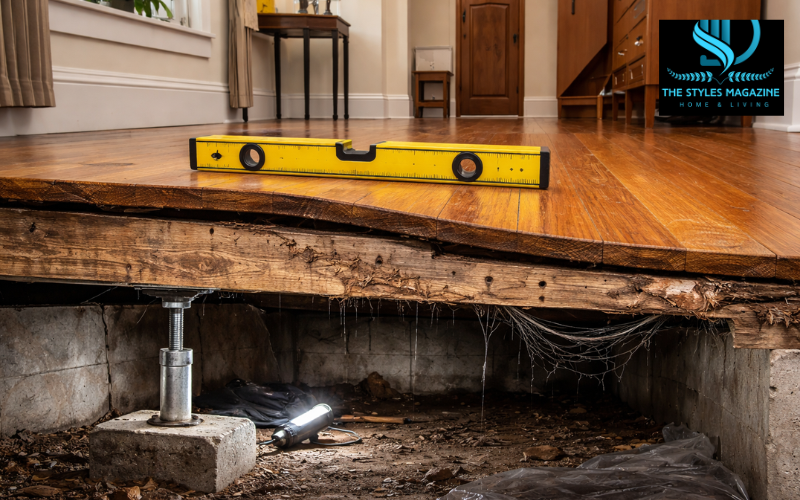
The main causes of sagging floors are usually found beneath the visible surface. One of the most common causes is moisture damage. When crawl spaces or basements have high humidity or water leaks, the wooden beams and joists can begin to rot over time. This weakens their ability to support the floor above.
Another major cause is damaged or undersized joists. Joists are the horizontal supports that hold up your floor. If they are too small for the space they need to cover, spaced too far apart, or weakened by cuts for plumbing or wiring, they can fail under pressure.
Foundation settlement is another key factor. Over time, the soil beneath a house can shift or compact, causing parts of the foundation to sink. When this happens, the floor structure above it may also move, leading to sagging.
Pest infestations can also play a role. Termites and carpenter ants can damage wooden structures from the inside, often without visible signs at first. By the time the damage is noticed, the structural support may already be compromised.
In some cases, excess weight can cause sagging floors. Adding heavy materials like stone countertops or large appliances without proper support can put extra strain on the floor system. The situation can vary depending on the type of construction. Sagging floors on concrete are less common but can occur due to soil movement or cracking, while wooden floor systems are more vulnerable to moisture and structural issues.
Can Sagging Floors Collapse or Become Dangerous
Not all sagging floors are dangerous, but it is important to understand when the problem becomes serious. In some cases, sagging is only cosmetic and does not affect the structural integrity of the home. However, when the underlying supports are weakened, the risk increases.
Signs of serious structural risk include large dips, rapidly worsening sagging, and visible damage to beams or supports. If the floor feels extremely soft or unstable, it may no longer be able to safely carry weight. Cracks in walls and ceilings that continue to grow can also indicate deeper issues.
The speed at which the damage worsens depends on the cause. Moisture-related damage and pest infestations can progress quickly if not addressed. Foundation issues may develop more slowly but can still lead to major problems over time.
Safety should always be a priority. While complete floor collapse is rare, it can happen in extreme cases where the support system has failed significantly. Even if collapse is unlikely, unstable floors can lead to accidents and injuries. If you suspect serious damage, it is best to seek professional advice as soon as possible.
Should You Buy a House with Sagging Floors
Buying a house with sagging floors can be a difficult decision, but it is not always a deal-breaker. In some cases, the issue is minor and can be repaired at a reasonable cost. For example, slight unevenness caused by natural settling may not require major work.
However, sagging floors can also be a warning sign of deeper structural problems. If the issue is caused by foundation movement, severe wood rot, or extensive pest damage, repairs can become costly and complex. This is where careful inspection becomes essential.
Before making a decision, it is important to have the property inspected by a professional, ideally a structural engineer. They can identify the root cause and provide an accurate assessment of the repair needs. This information can help you understand whether the problem is manageable or a serious concern.
Cost is another important factor. Sagging floor repair cost can vary widely depending on the severity of the issue. In some cases, the cost can be used as a negotiation point when buying the property. However, it is important to be realistic about the time and effort involved in fixing the problem.
How to Fix Sagging Floors the Right Way
Fixing sagging floors properly starts with identifying the root cause. Without understanding why the floor is sagging, any repair is likely to be temporary. For example, simply leveling the surface without addressing moisture or structural damage will not solve the problem.
There are both temporary and permanent solutions available. Temporary fixes can help stabilize the floor in the short term, but they do not address the underlying issue. Permanent solutions focus on strengthening or repairing the support system beneath the floor.
Some homeowners may consider DIY repairs, especially for minor issues. However, more serious problems often require professional expertise. Structural repairs can be complex and require proper tools and knowledge to ensure safety and long-term stability.
In general, the best approach is to assess the situation carefully and choose a solution that addresses both the symptoms and the cause of the sagging floors.
Common Repair Methods Professionals Use
Professionals use several proven methods to fix sagging floors, depending on the cause of the problem. One common technique is sistering joists, which involves attaching a new, strong joist alongside a damaged one to provide additional support.
Another method is the use of floor jacks for sagging floors. These adjustable supports are placed beneath the floor to gradually lift it back to a level position. Once the desired level is achieved, permanent supports are installed to maintain stability.
Adding support beams or columns is another effective solution. This helps distribute the weight more evenly and reduces stress on weakened areas. In cases where the foundation is the issue, underpinning techniques may be used to stabilize and lift the structure.
Moisture control is also an important part of the repair process. Crawl space encapsulation and proper ventilation can prevent further damage and protect the repaired structure from future problems.
How to Fix Sagging Floors on Second Floor
Sagging floors on the second floor can be more challenging to repair because the support system is located between levels rather than directly above the ground. This makes access more limited and requires careful planning.
The main challenge is ensuring proper load distribution. The weight of the upper floor must be supported without affecting the structure below. Reinforcement techniques often involve strengthening the joists or adding additional support where possible.
In many cases, repairs may require opening parts of the ceiling below to access the joists. This can make the process more complex and may involve additional work to restore the affected areas.
Because of these challenges, it is often best to seek professional help when dealing with second-floor sagging floors, especially if the issue is severe.
Clever Fix for Sagging Floors (Temporary and Budget Solutions)
There are some clever fixes for sagging floors that can help stabilize the problem temporarily. These solutions are often used when immediate repair is not possible or when the issue is minor.
Short-term fixes may include adding temporary supports or shims to reduce movement. In some cases, additional beams or braces can be installed to provide extra support. These methods can improve stability and reduce the risk of further damage in the short term.
DIY reinforcement ideas can be helpful for small issues, but it is important to understand their limitations. Temporary fixes do not address the root cause and should not be seen as a permanent solution.
While these approaches can be useful, they should be followed by proper repairs to ensure long-term safety and stability.
Sagging Floor Repair Cost: What to Expect
The cost of repairing sagging floors can vary widely depending on the severity of the problem and the type of repair needed. Minor issues may cost a few hundred to a couple of thousand dollars, while more serious structural repairs can reach several thousand dollars or more.
Factors that affect sagging floors cost include the extent of the damage, the materials required, and labor costs. Repairs involving foundation work or extensive structural changes are usually more expensive.
It is also important to consider the long-term value of proper repair. Investing in a complete and effective solution can prevent future problems and protect the overall value of your home.
Finding Sagging Floor Repair Near Me
When looking for sagging floor repair near me, it is important to choose a qualified and experienced professional. Not all contractors specialize in structural repairs, so it is important to find someone with the right expertise.
A structural engineer can provide an unbiased assessment of the problem and recommend the best solution. This can help ensure that the repair work is done correctly and safely.
Before hiring a contractor, it is a good idea to ask questions about their experience, methods, and previous work. Getting multiple quotes can also help you compare options and make an informed decision.
How to Prevent Sagging Floors in the Future
Preventing sagging floors starts with proper maintenance and care. Moisture control is one of the most important factors. Keeping crawl spaces dry and well-ventilated can help protect wooden structures from rot.
Regular inspections can also help identify early warning signs before they become serious problems. Checking for leaks, cracks, and changes in floor level can make a big difference.
Managing the weight placed on floors is another important step. Avoid adding heavy loads without ensuring proper support. By taking these preventive measures, homeowners can reduce the risk of sagging floors and maintain the stability of their homes.
Conclusion: Taking Sagging Floors Seriously Without Panic
Sagging floors are a common issue that can range from minor inconvenience to serious structural concern. Understanding the causes, warning signs, and repair options is the first step in addressing the problem effectively.
Early action is key. Identifying and fixing the issue before it worsens can save money and prevent further damage. While the situation may seem concerning, many cases can be resolved with the right approach.
By staying informed and taking the necessary steps, homeowners can handle sagging floors with confidence and ensure the safety and stability of their homes without unnecessary stress.
FAQs
Can Sagging Floors Be Fixed Permanently?
Yes, sagging floors can be fixed permanently by repairing the underlying structure, such as joists or foundation. Temporary fixes may help short-term, but proper repair ensures long-term stability and safety.
How Much Does Sagging Floor Repair Cost?
The cost usually ranges from $1,000 to $10,000 depending on damage severity. Minor fixes are cheaper, while foundation or structural repairs can be more expensive.
Are Sagging Floors Dangerous?
Not always, but severe sagging can become dangerous if the structure weakens. If the floor feels very soft or unstable, it’s important to get it inspected quickly.
Can I Fix Sagging Floors Myself?
Minor issues can be handled with DIY methods, but structural problems usually need professional repair to ensure safety and proper support.
What Causes Sagging Floors The Most?
The most common causes are moisture damage, weak joists, foundation settlement, and pest damage. These issues weaken the support system under the floor over time.
Enjoyed it? Find more exclusive content on The Styles Magazine.
Disclaimer: This content is for informational purposes only and does not replace professional advice. Always consult a qualified contractor or structural engineer for accurate inspection and repair recommendations based on your specific situation.