When choosing fixtures for a home, small details can make a big visual difference. One of the most common decisions homeowners face is Polished Chrome vs Polished Nickel. Both finishes look similar at first glance because they are bright, reflective, and silver in appearance. Yet once they are installed, they create very different moods and design effects.
Polished chrome is known for its crisp, cool shine. It has been a popular choice for decades because it feels modern, clean, and versatile. Polished nickel, on the other hand, offers a warmer, softer glow that often feels more classic and refined. Even though both are considered premium-looking finishes, their undertones and how they age over time set them apart.
Homeowners, builders, and interior designers frequently compare these two options because they influence the overall style of a space. The wrong choice can make fixtures feel disconnected from the rest of the design, while the right finish can tie everything together effortlessly.
In this guide, you’ll learn the practical and visual differences between polished chrome and polished nickel. We’ll explore how each finish looks, how it performs over time, where it works best, and how to choose the right one based on your style, lifestyle, and budget.
Polished Chrome vs Polished Nickel
| Feature | Polished Chrome | Polished Nickel |
| Tone | Cool, blue undertones | Warm, soft golden undertones |
| Look | Bright, mirror-like | Rich, slightly softer shine |
| Style | Modern, minimalist | Classic, timeless, luxury |
| Maintenance | Shows fingerprints & water spots | Hides marks better but may tarnish |
| Durability | Very hard, corrosion-resistant | Durable but develops patina |
| Aging | Stays consistent | Can mellow over time |
| Cost | Budget-friendly | More premium pricing |
| Best For | Contemporary spaces | Traditional or warm interiors |
Polished Chrome vs Polished Nickel at a Glance
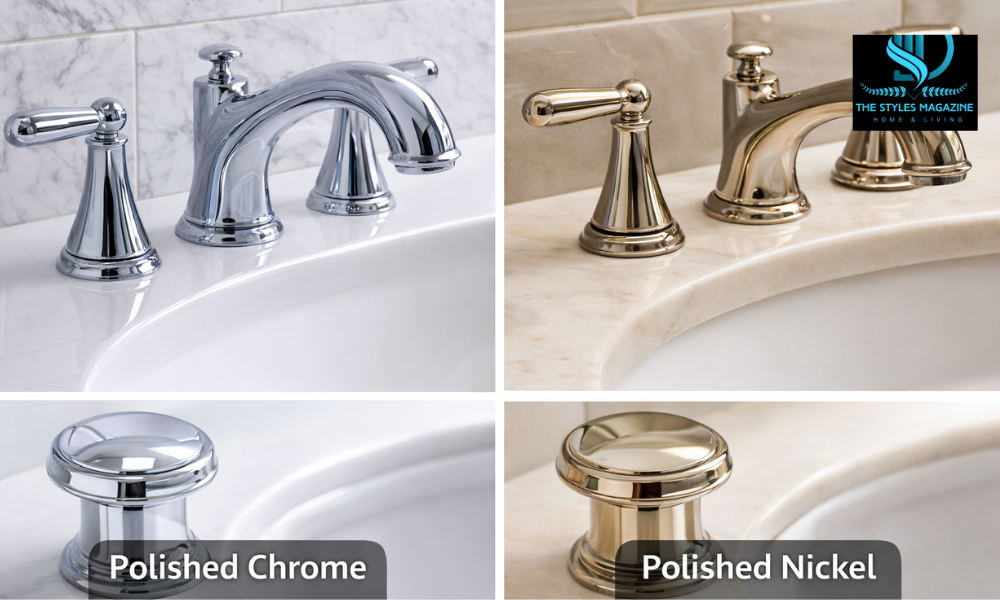
Before diving into details, it helps to see the overall picture. The main difference between polished chrome vs polished nickel comes down to tone and personality. Chrome has a bright, cool appearance with slight blue undertones, while nickel feels warmer and slightly golden or champagne-like under certain lighting.
In terms of style, polished chrome often feels modern and minimal. It fits well in contemporary spaces where clean lines and sharp contrasts are important. Polished nickel leans toward timeless elegance, often seen in traditional, transitional, or luxury-inspired interiors.
Maintenance is another major point of comparison. Chrome’s mirror-like shine means fingerprints and water spots are easy to see, especially in bathrooms and kitchens. Nickel tends to hide minor marks better, although it may develop a soft patina as it ages. Cost also separates the two, with polished nickel typically being the more expensive option because of the material and finishing process.
Both finishes are widely used in faucets, shower fixtures, cabinet hardware, and lighting. Chrome is common in modern homes and budget-friendly projects, while polished nickel is chosen when homeowners want a warmer, more upscale look.
Appearance and Undertones: Cool vs Warm Silver Finishes
The first thing people notice when comparing polished chrome vs polished nickel is the visual tone. Even though both are reflective, they give off completely different vibes once installed.
Polished chrome has a bright, almost mirror-like surface. It reflects surrounding colors clearly and creates a crisp, clean look. Because of its cool undertones, it often appears slightly blue or icy under natural light. This strong reflectiveness makes chrome stand out and gives spaces a fresh, sharp appearance.
Polished nickel has a deeper and softer shine. Instead of appearing icy, it reflects light in a more muted way. Its warm undertones make it feel slightly golden or creamy, similar to the look of sterling silver. This warmth gives the finish more depth and makes it feel softer to the eye.
Lighting plays a huge role in how these finishes appear. Under cool white lighting, chrome feels even brighter and more modern. Under warm bulbs, polished nickel can take on a luxurious glow that changes throughout the day. This ability to shift slightly in tone is one reason many designers appreciate polished nickel.
Undertones matter because they influence how well fixtures blend with the rest of a room. Cool-toned finishes generally pair best with whites, grays, and monochrome palettes, while warmer undertones complement wood, beige tones, and softer color schemes.
Design Style Compatibility and Interior Pairing
When deciding between polished chrome vs polished nickel, design compatibility is just as important as appearance. Each finish naturally works better with certain styles and materials.
Polished chrome is often the go-to choice for modern and minimalist spaces. It pairs well with sleek cabinetry, glass surfaces, black accents, and contemporary design elements. The clean reflectiveness makes rooms feel bright and open, which is why chrome is commonly seen in urban apartments and modern bathrooms.
Polished nickel fits naturally into more traditional or transitional interiors. It looks beautiful alongside natural wood, marble countertops, and classic architectural details. Because it feels softer than chrome, it creates a welcoming atmosphere without drawing too much attention.
Color pairing is another consideration. Chrome works best with cool color palettes such as gray, white, and navy. Nickel complements warmer shades like cream, taupe, soft greens, and earth tones. Both finishes can look stunning when paired thoughtfully, but matching undertones across the room helps create harmony.
Mixing finishes is possible, but it requires balance. Many designers mix chrome or nickel with matte black or brushed metals to add depth. The key is to choose one dominant finish and use others as accents so the space feels intentional rather than mismatched.
Durability and Long-Term Aging Differences
Durability is a practical factor that homeowners often overlook when comparing polished chrome vs polished nickel. While both finishes are strong enough for daily use, they behave differently over time.
Polished chrome has a very hard surface created through a plating process. This makes it resistant to corrosion, scratches, and moisture, which is why it has long been favored in bathrooms and kitchens. It keeps its shine for years if properly maintained, but deep scratches can be difficult to repair.
Polished nickel is slightly softer than chrome, which means it may show subtle wear sooner. However, many people see this as part of its charm. Over time, polished nickel can develop a gentle patina that softens its appearance and gives it character. This “living finish” quality appeals to homeowners who like finishes that evolve naturally.
In terms of moisture resistance, both finishes perform well in humid environments. Chrome tends to maintain a consistent appearance, while nickel may gradually mellow in tone. The choice depends on whether you prefer a finish that stays unchanged or one that develops personality as it ages.
Maintenance and Cleaning Expectations
Everyday maintenance is a major consideration for busy households. Although both finishes are relatively easy to care for, polished chrome and polished nickel require slightly different approaches.
Chrome’s reflective surface shows fingerprints, water spots, and soap residue very easily. In bathrooms or kitchens, this can mean more frequent wiping to keep the surface looking spotless. A soft cloth and mild cleaner are usually enough to maintain its shine.
Polished nickel is generally more forgiving. Its warmer tone and softer reflection make smudges less noticeable, which is why many homeowners find it easier to live with day to day. However, because nickel can develop a patina, occasional polishing may be needed if you want to maintain a bright, high-shine appearance.
Both finishes should be cleaned with non-abrasive products. Harsh chemicals or rough scrubbers can damage the surface and reduce the lifespan of the finish. For most people, regular gentle cleaning is all that’s necessary.
When thinking about which finish is easier for everyday living, nickel often wins for hiding minor marks, while chrome appeals to those who love a consistently bright and polished look.
Cost Comparison and Value Over Time
Price is often one of the biggest deciding factors in the polished chrome vs polished nickel debate. In general, chrome fixtures are more affordable. The manufacturing process is widely used and cost-efficient, making chrome a common option for budget-friendly projects.
Polished nickel usually carries a higher price tag. In many cases, similar fixtures in nickel can cost noticeably more than their chrome versions. This difference comes from both the base material and the finishing process, which tends to be more specialized.
However, cost doesn’t always tell the full story. Chrome offers excellent value for homeowners who want durability and a clean look without spending extra. Nickel, while more expensive, is often chosen for its upscale appearance and ability to add warmth to a space.
Long-term value depends on personal priorities. If you plan to keep your design consistent for years and prefer a timeless look, polished nickel may feel worth the investment. If affordability and easy replacement matter more, chrome remains a strong choice.
Which Finish Is Better for Different Spaces
Different rooms place different demands on hardware and fixtures, which means the best choice between polished chrome vs polished nickel can vary throughout the home.
Bathrooms often feature polished chrome because of its strong resistance to moisture and its bright, clean appearance. It works especially well in modern bathrooms with glass and white surfaces. Polished nickel, however, creates a spa-like feel and is popular in luxury or traditional bathroom designs.
In kitchens, both finishes can work beautifully. Chrome is practical and easy to match with appliances, while nickel adds warmth and elegance, especially when paired with natural stone or wood cabinetry.
High-traffic areas benefit from finishes that hide wear, which gives polished nickel an advantage in some households. Its softer glow can disguise minor marks better than chrome.
Luxury or traditional interiors tend to favor nickel because it feels more refined. Modern or minimalist homes usually lean toward chrome because it enhances clean lines and simplicity.
How to Choose Between Polished Chrome and Polished Nickel
Choosing between polished chrome vs polished nickel ultimately comes down to lifestyle and personal preference. Think about how much maintenance you’re willing to do. If you want a bright, consistent shine and don’t mind regular wiping, chrome may be ideal. If you prefer a warmer look that hides small marks, nickel could be the better fit.
Lighting and room tone also play a big role. Cool lighting and color schemes often look best with chrome, while warm, cozy spaces tend to complement nickel.
Budget should also guide the decision. Chrome offers a high-end appearance at a more affordable price point, while nickel usually appeals to those willing to invest more for a premium feel.
A simple decision checklist can help: consider your design style, the colors already in the room, maintenance expectations, and how long you plan to keep the fixtures. When these factors align, the right choice becomes clear.
Conclusion: Choosing the Right Finish for Your Home
The comparison between Polished Chrome vs Polished Nickel is not about which finish is universally better — it’s about which one fits your home and lifestyle. Chrome offers a cool, bright, modern appearance with strong durability and a lower cost. Nickel provides warmth, character, and a timeless elegance that many homeowners love.
Both finishes perform well and can elevate the look of kitchens, bathrooms, and living spaces when chosen thoughtfully. The best decision depends on your design style, budget, and comfort with maintenance.
By understanding how each finish looks, ages, and functions in real-life spaces, you can confidently choose the option that feels most harmonious with your overall home design.
FAQs
Is Polished Nickel Better Than Polished Chrome?
Neither is universally better — polished nickel offers warmth and luxury, while polished chrome provides affordability, durability, and a clean modern look.
Does Polished Nickel Tarnish Over Time?
Yes, polished nickel can develop a soft patina as it ages, especially if unlacquered. Many homeowners like this natural, lived-in appearance.
Which Finish Is Easier To Clean — Chrome Or Nickel?
Polished nickel usually hides fingerprints and water spots better, while polished chrome needs more frequent wiping to stay spotless.
Can I Mix Polished Chrome And Polished Nickel In One Home?
Yes, but it works best when one finish is dominant and the other is used as an accent to keep the design cohesive.
Why Is Polished Nickel More Expensive Than Chrome?
The material and finishing process for polished nickel are typically more premium, which increases its price compared to chrome fixtures.
Disclaimer: This article is for informational and educational purposes only. Product appearance, pricing, and performance may vary by brand and installation conditions. Always check manufacturer specifications and consult a professional before making final purchasing decisions.
Loved Reading This? Discover More Exclusive Stories And Updates At The Styles Magazine!