If you’ve ever patched a wall or tried to fix small damage at home, you’ve likely come across two common materials: joint compound and spackle. At first glance, they may seem almost identical. Both are white, spreadable, and used to repair walls. Because of this, many DIYers assume they can be used interchangeably.
However, the truth about joint compound vs spackle is that they are designed for very different purposes. The confusion usually comes from their similar appearance and the fact that they’re both used on drywall. But choosing the wrong one can lead to poor results, such as cracks, uneven surfaces, or wasted time.
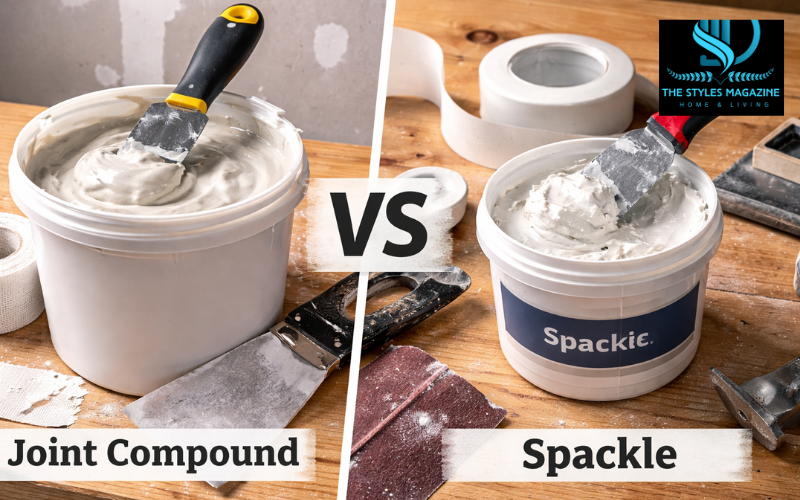
In simple terms, spackle is best for small, quick repairs, while joint compound is used for larger, more detailed drywall work. Understanding when to use each one not only improves your results but also saves effort and frustration. This guide will walk you through everything you need to know so you can make the right choice every time.
Comparison Guide Table
| Feature | Spackle | Joint Compound |
| Best Use | Small holes, dents | Drywall seams, large repairs |
| Drying Time | Fast (20–30 mins) | Slow (12–24+ hours) |
| Shrinkage | Low (usually one coat) | High (needs multiple coats) |
| Texture | Thick, paste-like | Smooth, mud-like |
| Sanding | Slightly harder | Very easy to sand |
| Skill Level | Beginner-friendly | Requires more patience |
What Is Spackle and What Makes It Unique
Spackle is a lightweight repair material made specifically for small wall fixes. It is commonly used to fill nail holes, tiny dents, or minor cracks in drywall. Its main purpose is convenience.
What makes spackle unique is its thick, paste-like consistency. It feels similar to toothpaste, which allows it to stay in place without sagging. This makes it very easy to apply, even for beginners. Another key feature is how quickly it dries. In many cases, spackle can dry within 20 to 30 minutes, allowing you to sand and paint the same day.
Spackle also has very low shrinkage. This means it usually doesn’t require multiple coats. Once you fill a hole, it tends to stay level as it dries. Because of this, it’s ideal for quick touch-ups where you don’t want to spend hours waiting or applying layers.
Different types of spackle are available depending on your needs. Lightweight versions are great for very small holes, while vinyl or acrylic spackles offer more flexibility and durability. Overall, spackle is designed for speed, ease, and small-scale repairs.
What Is Joint Compound and How It Works
Joint compound, often called drywall mud, is a more versatile material used for larger and more detailed drywall work. Unlike spackle, it is not just for quick fixes. Instead, it is an essential part of drywall installation and finishing.
Joint compound has a smoother and thinner consistency, more like cake frosting. This makes it easier to spread over large areas and blend into the wall. It is typically used to cover seams between drywall panels, hide screw heads, and create a smooth, even surface across the wall.
One important thing to understand is that joint compound dries much more slowly than spackle. Depending on the type and thickness, it can take 12 to 24 hours or more to fully dry. While this may seem inconvenient, the slower drying time actually allows for better control and smoother finishes.
Another key feature is that joint compound sands very easily. Once dry, it can be smoothed down to create a seamless surface that blends perfectly with the surrounding wall. This is one reason why professionals prefer it for large projects.
Joint compound is usually sold in large tubs or as a powder that you mix with water. It is designed for layering, meaning multiple coats are often required to achieve the best result. While it takes more time and effort, it delivers a cleaner and more professional finish.
Joint Compound vs Spackle: Key Differences That Actually Matter
When comparing joint compound vs spackle, the differences become clear once you look at how each material performs in real situations.
The most important difference is purpose. Spackle is made for small repairs, while joint compound is designed for larger jobs like drywall seams and surface finishing. Using one in place of the other can affect the final result.
Drying time is another major factor. Spackle dries quickly, often within an hour, making it perfect for fast fixes. Joint compound, on the other hand, takes much longer to dry. This slower process allows for better smoothing and layering but requires more patience.
Shrinkage also plays a role. Spackle has very little shrinkage, so one coat is usually enough. Joint compound tends to shrink as it dries, which is why multiple layers are needed.
The texture of each material is different as well. Spackle is thick and stays where you apply it, while joint compound is smoother and easier to spread across wide areas. This makes joint compound better for creating seamless finishes.
Finally, sanding is much easier with joint compound. It smooths out quickly, making it ideal for professional-looking results. Spackle can be slightly harder to sand, especially if applied too thickly.
These differences may seem small, but they have a big impact on how your project turns out.
When to Use Spackle for Best Results
Spackle is the best choice when you’re dealing with small, simple repairs. If you have nail holes from picture frames, tiny dents from furniture, or small cracks in your wall, spackle is exactly what you need.
One of the biggest advantages of spackle is speed. Because it dries quickly, you can often complete a repair in just a few hours. This makes it perfect for last-minute fixes before painting or preparing a room.
Spackle is also ideal when you want a clean and easy process. It doesn’t require mixing, and it usually only needs one application. This makes it a great option for beginners or anyone looking for a quick solution.
Different types of spackle can also be chosen based on the situation. Lightweight spackle is perfect for very small holes, while stronger versions can handle slightly larger imperfections. No matter the type, spackle is designed to make small repairs simple and efficient.
When to Use Joint Compound Instead
Joint compound is the better choice for larger and more detailed work. If you are installing drywall, repairing large holes, or trying to create a perfectly smooth wall, joint compound is essential.
It is especially useful when working with drywall seams. The material allows you to embed tape between panels and create a solid, even surface. This is something spackle cannot do effectively.
Joint compound is also ideal for large repairs. When a hole is more than a few inches wide, joint compound provides the strength and flexibility needed to cover the area properly. It can be layered and feathered out, meaning you can blend the repair into the surrounding wall without visible edges.
Another important use is skim coating. This process involves applying a thin layer of joint compound over an entire wall to improve its appearance. It helps create a smooth, flawless finish that is ready for painting.
While it requires more time and effort, joint compound delivers results that are hard to achieve with spackle.
Can You Use Joint Compound Instead of Spackle
In some cases, joint compound can be used instead of spackle. If you already have joint compound at home, you can use it to fill small holes or minor damage.
However, there are a few limitations to keep in mind. Joint compound takes much longer to dry, so the repair process will not be as quick. It may also shrink as it dries, which means you might need to apply a second coat to get a smooth finish.
Despite these drawbacks, joint compound can still work for small repairs if you are patient. It may not be as convenient as spackle, but it can get the job done when needed.
Why Spackle Should Not Replace Joint Compound
While joint compound can sometimes replace spackle, the opposite is not true. Spackle should not be used for large drywall projects or structural work.
The main reason is that spackle lacks the strength and flexibility needed for bigger jobs. It dries too quickly, which makes it difficult to spread smoothly over large areas. This can lead to uneven surfaces and visible lines.
Spackle is also more likely to crack when used on seams or large repairs. Since it is not designed for layering or reinforcing drywall, it cannot provide the same durability as joint compound.
Many DIYers make the mistake of using spackle for everything because it is easy to use. However, this often leads to poor results, especially on larger projects. For anything beyond small fixes, joint compound is the safer and more effective choice.
How to Choose Between Joint Compound and Spackle for Your Project
Choosing between joint compound and spackle becomes much easier when you focus on the size of the job.
For small holes, dents, or quick touch-ups, spackle is the better option. It is fast, simple, and requires minimal effort.
For larger repairs, drywall seams, or projects that require a smooth, professional finish, joint compound is the right choice. It takes more time, but the results are worth it.
A simple rule to remember is this: if the damage is small and you want a quick fix, use spackle. If the job is larger or requires a seamless finish, use joint compound.
This approach helps you avoid common mistakes and ensures your repair looks clean and professional.
Common Mistakes People Make When Using Either Material
One common mistake is using spackle for large areas. While it may seem easier, it often leads to cracking and uneven surfaces.
Another mistake is not applying joint compound in layers. Because it shrinks as it dries, applying it too thickly in one go can result in poor coverage and more work later.
Skipping sanding or not allowing enough drying time is also a frequent issue. Both materials require proper finishing to achieve the best results. Rushing the process can leave visible imperfections on the wall.
Understanding how each material works helps you avoid these mistakes and achieve better results.
Quick Comparison Guide: Joint Compound vs Spackle
When looking at joint compound vs spackle, the key differences come down to purpose, drying time, and application. Spackle is best for small, quick repairs and dries fast with minimal shrinkage. Joint compound is better suited for larger projects, takes longer to dry, and requires multiple coats but provides a smoother finish.
In simple terms, spackle is for speed and convenience, while joint compound is for precision and professional results.
Conclusion
Understanding the difference between joint compound and spackle can make a big difference in your DIY projects. While they may look similar, they serve very different purposes.
Spackle is perfect for small, quick fixes where speed matters. Joint compound, on the other hand, is designed for larger repairs and creating a smooth, seamless finish.
By choosing the right material for the job, you can avoid common problems like cracking, uneven surfaces, and wasted time. Whether you’re fixing a small hole or working on a larger project, knowing when to use each option will help you achieve better results with less effort.
FAQs
Can I Use Joint Compound Instead Of Spackle?
Yes, but it takes longer to dry and may require multiple coats due to shrinkage.
Is Spackle Stronger Than Joint Compound?
No, spackle is not stronger. Joint compound is better for large areas and structural drywall work.
Do I Need To Sand Spackle Before Painting?
Yes, light sanding helps create a smooth finish before painting.
Why Does Joint Compound Crack Sometimes?
It can crack if applied too thickly or not layered properly with enough drying time.
Which Is Better For Beginners?
Spackle is easier to use because it dries quickly and usually needs only one coat.
Enjoyed it? Find more exclusive content on The Styles Magazine.
Disclaimer: This content is for general informational purposes only. Results may vary depending on materials, tools, and techniques used. Always follow product instructions and consider professional advice for large or complex repairs.