The Hybrid Willow Tree is widely known as one of the fastest-growing trees available for homeowners and landowners who want quick results in their landscape. Often referred to as Salix matsudana × alba or the Austree hybrid, this tree is a cross between two vigorous willow species that were selected to combine strong growth, adaptability, and practical landscape value. Instead of being grown mainly for decoration, the Hybrid Willow Tree is valued for what it can do — creating fast privacy, reducing wind exposure, and helping manage wet or unstable soil.
Over the past several years, the Hybrid Willow Tree has become increasingly popular because many property owners want natural alternatives to fences and artificial barriers. Its rapid growth can quickly transform open land into a green screen, which makes it appealing for rural properties, farms, and large backyards. At the same time, its simple care requirements make it approachable even for beginners who have limited gardening experience.
While this tree offers impressive benefits, it also comes with specific care needs and planning considerations. Understanding how fast it grows, how big it becomes, and how its roots behave is essential before planting. In this guide, we’ll explore what the Hybrid Willow Tree is, why it grows so quickly, how to plant and maintain it properly, and what you should expect in the long term.
What Is a Hybrid Willow Tree?
A Hybrid Willow Tree is a specially bred cross between two willow species: the Peking willow (Salix matsudana) and the white willow (Salix alba). The goal of creating this hybrid was simple — combine the hardiness and fast growth of both parent trees into a single, reliable variety that performs well in many environments.
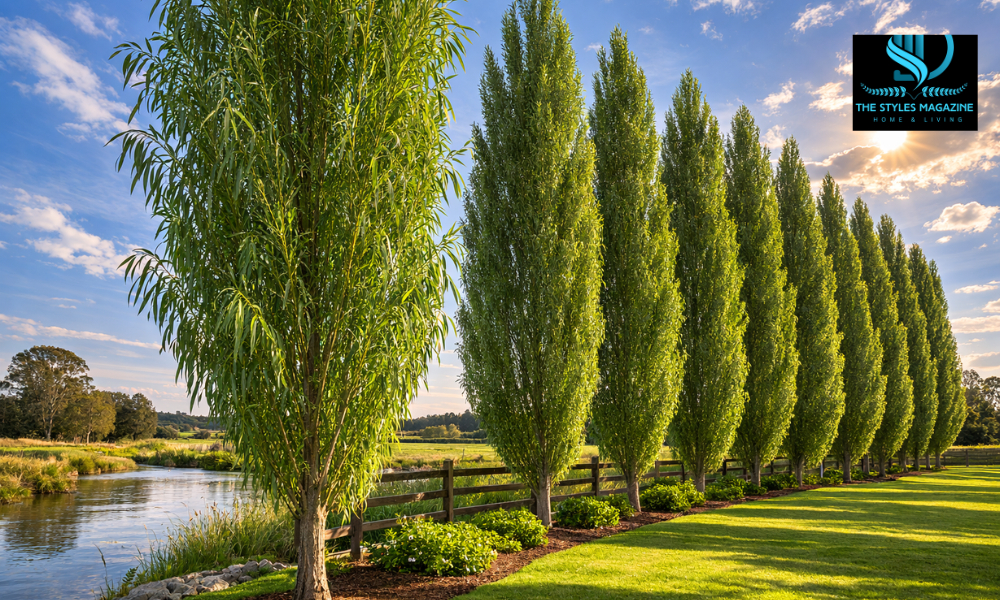
Unlike traditional willow trees that often develop a dramatic weeping shape, many Hybrid Willow types grow with a more upright, vertical form. This growth pattern makes them especially useful for privacy screens and windbreaks where height and density matter more than ornamental appearance. The tree focuses its energy on rapid development, forming a strong trunk and a full canopy in just a few years.
Compared to classic willow varieties, the Hybrid Willow Tree usually grows faster, adapts better to different soil conditions, and maintains a more uniform structure. Traditional willows are often chosen for their beauty near ponds or rivers, while hybrid varieties are selected for practical landscaping. This difference in purpose explains why hybrids have gained popularity among property owners who want quick coverage rather than ornamental features.
Growth Rate and Mature Size
One of the most talked-about features of the Hybrid Willow Tree is its incredible growth speed. Under ideal conditions, it can grow anywhere from six to ten feet per year, and in some cases even faster. This means a newly planted tree can reach around fifteen feet tall within just two or three years, which is much quicker than most shade or privacy trees.
At full maturity, a Hybrid Willow Tree can reach heights between fifty and seventy-five feet. The spread is typically narrower than the height, often ranging between fifteen and thirty-five feet depending on growing conditions and maintenance. Because the tree grows so fast, the early years are the most dramatic, with visible changes happening from season to season.
The development stages are fairly straightforward. During the first year, the focus is on root establishment and upward growth. By the second and third years, branching becomes fuller and the tree starts to create noticeable screening or shade. As it matures, growth gradually slows, but the tree continues to expand in thickness and canopy coverage.
Despite its speed, the Hybrid Willow Tree does not have an extremely long lifespan. Most live between thirty and fifty years, which is shorter than slower-growing hardwood trees. This shorter lifespan is often described as a trade-off for rapid results — the tree grows quickly but tends to age earlier than long-lived species.
Key Characteristics That Make Hybrid Willow Popular
The Hybrid Willow Tree has several traits that explain why it remains a favorite for practical landscaping projects. Its upright structure makes it easy to use in rows or clusters, creating a uniform look without requiring heavy shaping. The trunk grows straight and the branches fill in quickly, producing a dense green wall when planted closely together.
The leaves are narrow and elongated, giving the tree a soft, natural appearance. During spring and summer, the foliage is bright green and provides a fresh, lively look. In autumn, the leaves often turn yellow before dropping, allowing sunlight to reach nearby areas during winter months. This seasonal cycle adds some visual interest while remaining low maintenance.
Another key advantage is adaptability. Hybrid Willow Trees tolerate a wide range of soil types, including clay-heavy ground and temporarily wet conditions where many trees struggle. They also recover well after pruning and can handle changing weather patterns better than some other fast-growing species.
However, these strengths come with limitations. The rapid growth often means softer wood, which can be more vulnerable to strong winds or heavy snow. Regular monitoring and proper placement help reduce these risks.
Best Landscape Uses for Hybrid Willow Trees
The primary reason people choose a Hybrid Willow Tree is for its functional value in the landscape. One of the most common uses is creating privacy screens. When planted three to five feet apart, the trees quickly grow together, forming a dense barrier that blocks views, reduces noise, and creates a natural sense of separation.
Hybrid Willow Trees are also widely used as windbreaks. In open or windy areas, planting rows of trees can slow down strong winds, protecting buildings, gardens, and outdoor living spaces. Farmers and rural landowners often use staggered planting patterns to maximize this effect.
Because the root system spreads widely and helps hold soil in place, these trees are useful for erosion control. They are frequently planted near slopes, stream banks, or areas prone to water runoff. Their ability to absorb excess moisture also makes them valuable in slightly marshy or wet sections of land.
While they work well on large properties, homeowners with smaller yards can still use them effectively — as long as proper spacing and placement are considered. In compact spaces, careful planning is especially important because the tree grows quickly and can outgrow tight areas.
Ideal Growing Conditions
For the best performance, the Hybrid Willow Tree prefers full sun. Ideally, it should receive at least six to eight hours of direct sunlight each day. More sunlight generally means faster growth and a healthier overall structure.
The tree thrives in moist, well-drained soil, but one of its strengths is its tolerance for different conditions. It can handle heavier soils and temporary flooding better than many other trees. However, extremely dry or poorly drained locations may reduce growth speed and overall health.
Climate adaptability is another reason the tree is widely planted. It grows well across many temperate regions and can handle seasonal temperature changes. Still, extremely harsh or arid environments may require extra watering and protection during establishment.
Space is important when choosing a planting location. Even though the tree may start small, it quickly develops height and spread. Giving it enough room from the beginning prevents crowding and reduces future maintenance challenges.
Planting a Hybrid Willow Tree the Right Way
Successful planting begins with selecting the right site. Choose a location with good sunlight and enough distance from structures or underground utilities. Since the tree grows rapidly, planning ahead saves effort later.
Spacing between trees depends on the goal. For privacy screens, placing trees around three to five feet apart helps create a dense wall quickly. If you want individual trees with distinct shapes, wider spacing allows each one to develop fully.
Planting itself is simple. Dig a hole slightly wider than the root ball and about the same depth. Place the tree upright, backfill with soil, and water thoroughly to eliminate air pockets. Adding mulch around the base helps retain moisture and reduce weeds.
During the first growing season, expect rapid upward growth, but remember that root development is equally important. A strong root system during early establishment lays the foundation for future stability.
Watering, Feeding, and Routine Care
Water is especially important during the first few months after planting. Newly planted Hybrid Willow Trees benefit from consistent moisture, often requiring regular watering to help roots establish. Once established, they become more tolerant of changing moisture levels but still prefer soil that does not dry out completely.
Ongoing care is relatively simple. In most cases, fertilizing is not necessary unless the soil is very poor. Overfeeding can even encourage overly soft growth, so minimal intervention is often best.
Applying mulch around the base helps maintain soil moisture and protects roots from temperature changes. Routine care mainly involves checking for damaged branches and ensuring the tree has enough space to grow freely.
Root System Behavior and Safety Considerations
The Hybrid Willow Tree develops an aggressive and wide-reaching root system. This trait helps it find water quickly and stabilize soil, but it also means placement is extremely important. Roots naturally seek moisture and can potentially interfere with pipes, septic systems, or building foundations if planted too close.
Experts commonly recommend planting these trees at least forty to fifty feet away from underground utilities, septic fields, and structures. While this may seem like a large distance, it reduces the risk of expensive repairs later.
Choosing the right location from the start is the best way to enjoy the tree’s benefits without facing root-related problems.
Pruning and Size Management
Hybrid Willow Trees are often described as self-pruning because they naturally drop lower branches as they grow. Even so, light pruning can improve shape, remove weak branches, and reduce breakage risks.
The best time to prune is during late winter or early spring when the tree is dormant. Pruning at this time encourages healthy regrowth once warmer weather returns. If height control is needed, careful topping or thinning can be done, but aggressive cutting should be avoided to maintain structure.
Regular monitoring ensures the canopy remains balanced and reduces the likelihood of storm damage as the tree matures.
Common Problems and Practical Limitations
Like many fast-growing trees, the Hybrid Willow Tree has trade-offs. Its relatively short lifespan means it may need replacement sooner than slower-growing species. The wood can also be softer, making branches more likely to break in storms or heavy winds.
Some disease and pest issues may occur, though they are usually manageable with proper care and airflow. Overcrowding and excessive moisture around the trunk can increase these risks.
The tree may not be the best choice for very small yards, urban spaces with underground infrastructure, or areas where long-term permanence is the main goal. Understanding these limitations helps homeowners make informed decisions.
Popular Hybrid Willow Varieties
The Austree Hybrid Willow is the most widely planted variety and is known for its dependable performance and rapid growth. It is commonly used for privacy screens and windbreaks due to its strong vertical habit.
The Moutere Hybrid Willow is recognized for its narrower crown and adaptability to windy environments. This makes it especially suitable for open landscapes where wind resistance matters.
Skyrise Hybrid Willow is another option designed to be sterile, meaning it does not produce cottony seeds. This characteristic makes it appealing for homeowners who want less seasonal cleanup.
Choosing the right variety depends on your property’s needs, available space, and environmental conditions.
Hybrid Willow Tree vs Other Fast-Growing Privacy Trees
When compared with other fast-growing privacy trees, the Hybrid Willow Tree often stands out because of its unmatched speed. Trees like arborvitae or certain poplar varieties may grow quickly, but few can match the rapid height gain of a hybrid willow.
However, maintenance needs can be higher due to pruning and branch management. Longevity is also an important difference, as some alternative trees live much longer while growing more slowly.
For property owners who want immediate results and are comfortable with regular monitoring, the Hybrid Willow Tree is often the better choice. Those looking for long-term, low-maintenance options may prefer slower-growing alternatives.
Conclusion
The Hybrid Willow Tree offers a unique combination of speed, practicality, and adaptability that makes it a popular choice for privacy screens, windbreaks, and erosion control. Its rapid growth allows homeowners and landowners to transform open spaces in just a few years, creating natural barriers and greener landscapes quickly.
At the same time, successful planting requires understanding its needs. Proper spacing, thoughtful placement, and routine maintenance are essential for avoiding root issues and managing growth over time. While the tree’s lifespan is shorter than many others, its ability to deliver fast results makes it valuable for specific landscaping goals.
For anyone considering planting a Hybrid Willow Tree, the key takeaway is simple: plan carefully, give it space, and enjoy the benefits of one of the fastest-growing trees available.
FAQs — Hybrid Willow Tree
How Fast Does A Hybrid Willow Tree Grow?
A Hybrid Willow Tree can grow around 6–10 feet per year under ideal conditions, making it one of the fastest-growing privacy trees.
How Tall Does A Hybrid Willow Tree Get?
It usually reaches 50–75 feet in height with a spread of about 15–35 feet at maturity.
Is The Hybrid Willow Tree Good For Privacy Screens?
Yes, it is widely used for privacy screens because it grows quickly and forms a dense natural barrier when planted close together.
Does A Hybrid Willow Tree Have Invasive Roots?
Its roots are aggressive and search for water, so the tree should be planted far from foundations, pipes, and septic systems.
How long does a Hybrid Willow Tree live?
Most Hybrid Willow Trees live around 30–50 years, which is shorter than many slower-growing hardwood trees.
Disclaimer: This article is for informational and educational purposes only. Growing conditions, tree performance, and results may vary depending on climate, soil type, and local care practices. Always consult a local nursery, arborist, or landscaping professional before planting to ensure the Hybrid Willow Tree is suitable for your property and environment.
Loved Reading This? Discover More Exclusive Stories And Updates At The Styles Magazine!