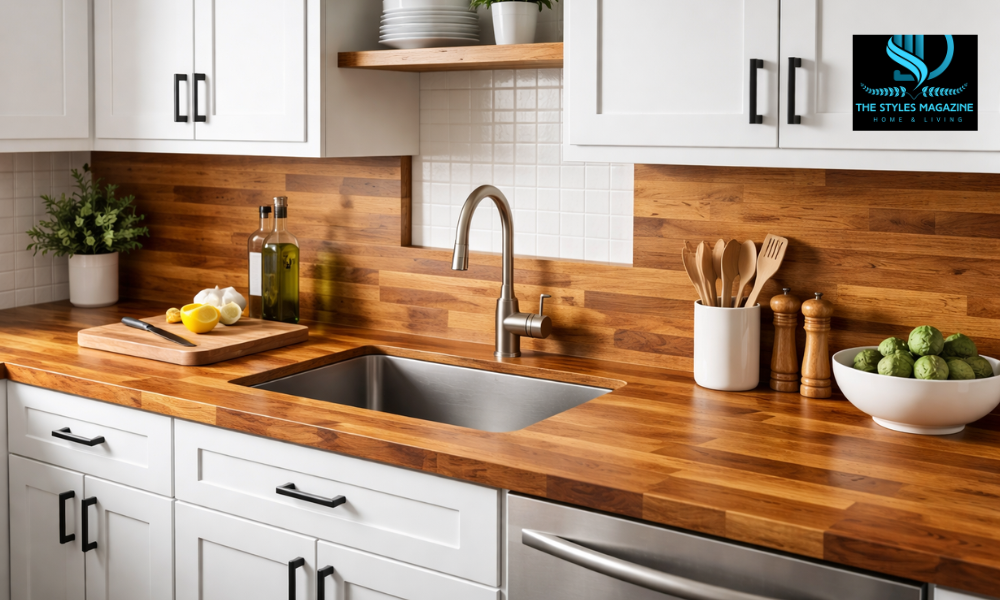
A butcher block countertop and backsplash combination brings warmth, character, and natural beauty into a kitchen. Unlike stone or synthetic surfaces, butcher block is made from real wood, which gives the space a welcoming and timeless feel. A butcher block countertop is typically used as a work surface for food preparation, while a matching or complementary backsplash protects the wall behind it and completes the overall design.
Many homeowners choose butcher block countertops and backsplashes because they create a balanced look that feels both modern and comfortable. Wood softens the appearance of a kitchen, making it feel less cold than materials like granite or quartz. At the same time, it can work well in different styles, from farmhouse and rustic kitchens to clean, modern spaces.
When planning this combination, it is important to consider style, practicality, cost, and maintenance. Wood requires more care than stone, but many people appreciate that it can be sanded and refinished instead of replaced. Costs can vary depending on the wood type, installation, and design choices, but butcher block often provides good value for homeowners looking for a natural alternative.
In this guide, you will learn how butcher block countertops and backsplashes work together, the different construction styles available, how to choose the right wood, design ideas, pricing expectations, installation basics, and long-term care tips. By the end, you will have a clear understanding of whether this option is the right fit for your kitchen.
Understanding Butcher Block Countertops and Backsplashes
A butcher block countertop is made by joining pieces of hardwood together to create a strong and durable surface. Originally used by butchers for food preparation, this material has become popular in residential kitchens because of its warm appearance and practical function. A butcher block backsplash extends the same natural material or pairs it with another surface to protect walls from water, grease, and stains.
Visually, the countertop and backsplash can work together in different ways. Some homeowners choose a matching wood backsplash to create a seamless, continuous look. Others prefer contrast, combining wood countertops with tile or stone to add texture and visual balance. Functionally, the backsplash helps keep walls clean and can prevent moisture damage, especially near sinks and cooking areas.
This combination works well in many kitchen layouts. In smaller kitchens, butcher block can make the space feel brighter and more inviting. In open-concept designs, wood helps connect the kitchen to living and dining areas by adding warmth. It also works nicely on kitchen islands, L-shaped layouts, and galley kitchens where the natural grain becomes a design feature.
Butcher Block Construction Styles and Their Differences
The appearance and performance of a butcher block countertop and backsplash depend largely on how the wood pieces are constructed. Different construction styles affect durability, cost, and the overall look of the surface.
Edge grain is the most common style found in kitchens today. It is made by placing long strips of wood side by side, creating a clean and linear appearance. Because it balances durability and affordability, edge grain is often chosen for everyday kitchen use. It resists warping reasonably well and provides a smooth surface that works for food preparation and general kitchen tasks.
End grain construction is considered the most durable option. Instead of long strips, the wood is arranged so the ends of the pieces face upward, creating a checkerboard-like pattern. This style is popular with serious cooks because it hides knife marks better and is gentle on blades. However, it tends to be more expensive and heavier, which can increase installation complexity.
Face grain, also known as plank style, uses wider boards laid flat so the natural grain is fully visible. This creates a visually stunning surface that highlights the wood’s character. While beautiful, face grain is generally softer and more prone to dents, making it better suited for decorative areas or kitchens where heavy chopping is not common.
Each construction style affects maintenance and longevity. More durable styles usually cost more upfront but may require less frequent refinishing. Understanding these differences helps homeowners choose the right balance between appearance, function, and budget.
Choosing the Right Wood Species for Your Kitchen
The type of wood used for a butcher block countertop and backsplash has a major impact on durability, color, and overall style. Hardwoods are the preferred choice because they can handle daily kitchen use while maintaining their appearance.
Maple is one of the most popular options due to its strength and neutral color. It fits well with many design styles and is often considered the industry standard for butcher block surfaces. Walnut is another favorite, known for its rich, dark tones and luxurious feel. It creates strong contrast in light-colored kitchens but typically comes at a higher price.
Cherry wood offers warm reddish tones that deepen over time, giving the kitchen a more classic and elegant appearance. Red oak is often chosen as a budget-friendly option, providing good durability at a lower cost. Other species, such as birch or bamboo, may also be considered depending on availability and design preferences.
Wood choice is not just about cost. Each species responds differently to stains, finishes, and aging. Lighter woods can make small kitchens feel more open, while darker woods add depth and sophistication. Matching the wood tone to cabinets, flooring, and lighting can create a more cohesive look throughout the space.
Design Ideas for Pairing a Butcher Block Countertop with a Backsplash
Designing a kitchen with a butcher block countertop and backsplash involves finding the right balance between warmth and contrast. One popular choice is to use the same wood for both surfaces, creating a seamless and unified look. This approach works especially well in traditional or farmhouse-style kitchens where natural materials are highlighted.
High-contrast combinations are also common. Pairing butcher block countertops with white subway tile backsplashes brightens the kitchen and prevents the wood from feeling visually heavy. Dark-colored backsplashes, such as deep blue or charcoal, create a bold and modern atmosphere that highlights the natural grain of the wood.
Tile, stone, and painted surfaces provide additional options for variety. Marble or textured stone adds a sense of luxury and contrast, while painted beadboard can reinforce a cottage-style design. The key is to ensure that colors and textures complement rather than compete with each other.
Balancing warmth and texture is essential. Since wood already adds visual richness, a simple backsplash often works best. Neutral tones or subtle patterns allow the butcher block to remain the centerpiece while still creating a complete and polished kitchen design.
Cost Breakdown and Budget Planning
The cost of a butcher block countertop and backsplash can vary widely depending on materials and design choices. On average, butcher block countertops generally range from around $50 to $150 per square foot, depending on wood type, thickness, and construction style. Premium woods or custom designs can increase costs significantly.
Backsplash expenses depend on whether you choose matching wood or another material. A simple wood backsplash is often more affordable than natural stone but may require additional finishing and sealing. Tile or stone backsplashes can vary from budget-friendly options to high-end designs, depending on the material selected.
Installation costs also play an important role. Professional installation includes cutting, fitting, sealing, and securing the wood properly. Kitchens with complex layouts or custom edges may require more labor, increasing the final price. Homeowners should also consider ongoing maintenance costs, such as oils or refinishing products.
While butcher block may require more care than some alternatives, many homeowners see long-term value in its ability to be repaired and refreshed rather than fully replaced. Over time, this can make it a cost-effective choice compared with materials that chip or crack permanently.
Installation Essentials for Long-Lasting Results
Proper installation is essential for ensuring that a butcher block countertop and backsplash remain stable and beautiful for years. Before installation, the wood must acclimate to the home’s environment. Allowing it to sit in the kitchen for several days helps prevent expansion or warping after it is installed.
During installation, accurate measuring and careful cutting are important. Countertops should be secured in a way that allows natural wood movement. Over-tightening fasteners can lead to cracking or splitting over time. Backsplashes may be attached using adhesive or mechanical fasteners depending on the design and wall surface.
Finishing the wood correctly is another key step. Food-prep areas typically require food-safe mineral oil or beeswax, while decorative sections may use polyurethane finishes for lower maintenance. Choosing the right finish helps protect against moisture and stains.
Common mistakes include skipping acclimation, using incorrect adhesives, or failing to seal the wood properly. Taking time during installation reduces future issues and extends the life of both the countertop and backsplash.
Maintenance and Daily Care
Maintaining a butcher block countertop and backsplash is straightforward when done consistently. Regular sealing protects the wood and keeps it safe for food preparation. Food-safe oils are commonly used because they penetrate the wood and help prevent drying or cracking.
Daily cleaning usually involves mild soap and warm water. Harsh chemicals should be avoided as they can damage the finish. After cleaning, it is best to dry the surface quickly to prevent moisture from soaking into the wood.
Preventing damage is mostly about good habits. Using cutting boards, wiping spills quickly, and avoiding standing water near sinks can greatly extend the life of the wood. Small scratches or stains can often be sanded out, which is one advantage of butcher block compared to other materials.
Over time, the surface may need resealing or refinishing. Signs such as a dry appearance or increased staining indicate it may be time for maintenance. With proper care, butcher block can remain attractive and functional for many years.
Pros and Cons of Butcher Block Countertop and Backsplash
One of the biggest advantages of a butcher block countertop and backsplash is the warm, natural look it brings to a kitchen. Wood adds character and feels more inviting than many hard surfaces. It is also versatile, fitting into a wide range of design styles. Another benefit is repairability, since scratches and dents can often be sanded away.
However, there are drawbacks to consider. Wood requires regular maintenance to protect against moisture and stains. It can also dent more easily than stone surfaces. Without proper sealing, water exposure may cause warping or discoloration.
This option is best suited for homeowners who enjoy natural materials and are willing to perform basic maintenance. Those looking for a completely maintenance-free surface may prefer alternative materials, but many find the beauty and warmth of wood worth the extra effort.
Common Mistakes to Avoid When Designing with Butcher Block
Design mistakes can affect both appearance and functionality when working with butcher block. One common issue is creating too much visual heaviness by using dark wood alongside busy patterns. Balancing wood with lighter or simpler elements helps maintain harmony in the space.
Another mistake involves choosing the wrong finish for the intended use. Food-prep areas require safe, breathable finishes, while decorative areas can use more protective coatings. Mixing these up can lead to practical problems later.
Poor backsplash pairings can also disrupt the overall look. A backsplash that clashes in color or texture may make the kitchen feel unbalanced. Selecting complementary tones helps maintain a cohesive design.
Finally, neglecting maintenance is a frequent problem. Skipping regular oiling or allowing water to sit on the surface can shorten the lifespan of the wood. A small amount of consistent care makes a big difference over time.
Conclusion
A butcher block countertop and backsplash can transform a kitchen by adding warmth, character, and natural beauty. This combination offers a unique balance between style and practicality, making it a popular choice for homeowners who want a welcoming and functional space. From understanding construction styles and wood species to planning design pairings and budgets, thoughtful decisions help ensure long-lasting results.
Choosing this option means considering both its advantages and responsibilities. While butcher block requires regular care, it rewards homeowners with a surface that ages gracefully and can be refreshed over time. If you are looking for a kitchen design that feels timeless, flexible, and personal, a butcher block countertop and backsplash may be the right fit for your home. Careful planning based on your lifestyle, budget, and design goals will help you create a kitchen that looks beautiful and performs well for years to come.
FAQs
Is A Butcher Block Countertop Good For Everyday Use?
Yes, it is durable enough for daily kitchen use when properly sealed and maintained.
Can I Use The Same Wood For The Countertop And Backsplash?
Yes, many homeowners use matching wood for a seamless and natural look.
Does Butcher Block Require Regular Maintenance?
Yes, it needs periodic oiling or sealing to protect it from moisture and stains.
Is Butcher Block Cheaper Than Stone Countertops?
In many cases, yes. It is often more affordable than premium stone options, depending on the wood type.
Which Wood Is Best For Butcher Block Countertops?
Hard maple is commonly preferred because it is strong, durable, and has a neutral appearance.
Disclaimer: This article is for general informational and educational purposes only. Prices, materials, and design recommendations may vary depending on location, supplier, and individual kitchen conditions. Always consult a professional contractor or kitchen specialist before making final installation or design decisions.
Loved Reading This? Discover More Exclusive Stories And Updates At The Styles Magazine!