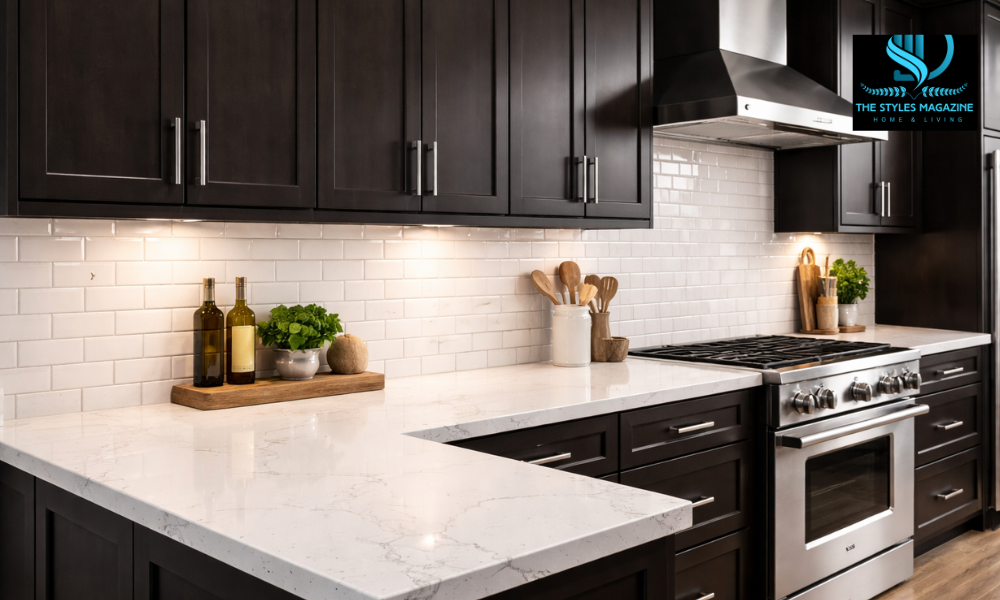
Choosing the right backsplash for quartz countertop and dark cabinets can completely change the feel of a kitchen. The backsplash is not just a protective surface behind the sink or stove — it connects the countertop, cabinets, and overall design into one cohesive look. When dark cabinets meet bright or patterned quartz, the backsplash becomes the visual bridge that keeps everything balanced and visually pleasing.
This combination has become very popular in modern kitchens because it offers strong contrast and timeless elegance. Dark cabinetry creates depth and richness, while quartz countertops bring brightness and a clean, durable surface. Together, they allow homeowners to experiment with modern, classic, or even dramatic styles without losing practicality.
The main design goals when choosing a backsplash in this setup are balance, contrast, texture, and functionality. A well-chosen backsplash can brighten a darker kitchen, add subtle movement to smooth quartz surfaces, or create a calm and seamless atmosphere. At the same time, it should be easy to maintain and suitable for everyday cooking.
In this guide, you will learn how quartz influences backsplash decisions, how color and lighting affect the final result, and which materials and design approaches work best. By the end, you will have a clear idea of how to pick a backsplash that feels stylish, practical, and well connected to your kitchen’s overall look.
Best Backsplash Options
| Backsplash Style | Best For | Look & Feel | Maintenance Level |
| White Subway Tile | Bright contrast | Clean & timeless | Easy |
| Quartz Slab | Modern kitchens | Seamless & luxury | Very easy |
| Geometric Tile | Contemporary spaces | Stylish & dynamic | Medium |
| Gray/Neutral Tile | Balanced designs | Soft & modern | Easy |
| Dark Moody Tile | Bold interiors | Dramatic & elegant | Medium |
How Quartz Countertops Influence Backsplash Design
Quartz countertops play a major role in backsplash selection because they often become the main visual surface in the kitchen. Quartz comes in many finishes, from solid colors to soft veining that mimics natural stone. These patterns and tones help determine whether a backsplash should blend in or stand out.
When quartz has bold veins or movement, a simple backsplash often works better. This allows the countertop to remain the focal point without creating visual clutter. On the other hand, if the quartz surface is minimal or lightly patterned, a backsplash with texture or shape can add interest and prevent the kitchen from feeling flat.
Another important factor is the finish of the quartz. Polished quartz reflects light and pairs well with smooth, glossy backsplashes that enhance brightness. Matte or textured quartz may work better with softer, more natural-looking tiles that add warmth and depth.
Creating visual flow between the counter and wall surfaces is essential. The backsplash should feel like a natural extension of the countertop rather than an unrelated element. Whether you choose a matching material or a contrasting tile, the goal is to keep the transition smooth so the eye moves easily through the space.
Choosing the Right Color Direction for Dark Cabinets
Color choice has a strong impact when pairing a backsplash with dark cabinets. Since dark cabinetry already adds weight to the room, the backsplash can either lighten the space or enhance a dramatic mood depending on the direction you choose.
Bright, high-contrast backsplashes remain one of the most popular options. White or light-toned backsplashes reflect light and create a clean, fresh appearance. They help prevent dark kitchens from feeling heavy and provide a timeless look that works with many quartz styles.
Soft neutral tones are another safe and elegant option. Shades like cream, beige, or warm gray offer balance without creating harsh contrast. These colors often work well when the quartz countertop has subtle patterns or warm undertones.
For those who prefer bold design, moody monochromatic looks are becoming more common. Using darker backsplash tones with dark cabinets creates depth and sophistication, especially in modern or industrial-style kitchens. In this case, the quartz countertop becomes the main source of brightness.
Lighting plays a major role in color selection. Natural light can soften darker backsplashes, while limited lighting may make them appear too heavy. It is always important to consider how the kitchen looks at different times of the day before making a final decision.
Full-Height Quartz Slab Backsplash for a Seamless Modern Look
A full-height quartz slab backsplash is an increasingly popular choice for homeowners who want a clean, modern kitchen design. Instead of using individual tiles, the same quartz material from the countertop extends upward to the wall, creating a smooth and uninterrupted surface.
This approach offers several benefits. It creates a high-end appearance that looks intentional and polished. Since there are no grout lines, the surface is easier to clean and maintain, making it practical for busy kitchens. It also highlights the beauty of the quartz pattern, allowing the design to flow naturally.
This style works especially well with dark cabinets because it introduces continuity and balance. The light quartz surface helps break up the visual heaviness of dark cabinetry while keeping the overall design simple and elegant.
A slab backsplash is best suited for modern or minimalist kitchens where clean lines are important. It also works well in smaller kitchens because the seamless surface can make the area feel larger and more open.
Popular Tile Styles That Pair Well with Quartz and Dark Cabinetry
Tile remains one of the most versatile choices for a backsplash for quartz countertop and dark cabinets because it allows for creativity without overwhelming the space. Several styles stand out for their ability to complement quartz and dark tones.
Subway tile continues to be a classic favorite. Its simple rectangular shape offers timeless appeal and pairs well with both traditional and modern cabinets. Depending on the finish and grout color, subway tile can look crisp and contemporary or soft and classic.
Geometric patterns are another popular option. Shapes like hexagons or herringbone layouts bring movement and character to the kitchen. These designs work best when the color palette remains controlled, ensuring the backsplash adds interest without competing with quartz patterns.
Textured finishes provide depth and dimension. Slightly uneven or handmade-style tiles catch the light beautifully and help soften the sleek look of quartz surfaces. They can make a kitchen feel more inviting while still maintaining a modern feel.
Tile size and layout also affect the final appearance. Larger tiles tend to feel calm and modern, while smaller tiles create more detail and texture. Choosing the right balance ensures the backsplash feels proportional to the cabinets and countertop.
Modern Gray, Metallic, and Neutral Backsplash Ideas
Gray, metallic, and neutral tones have become popular choices because they work as a middle ground between light quartz and dark cabinets. Gray shades, in particular, create a smooth transition that feels modern and sophisticated without being too bold.
Light gray backsplashes can brighten a kitchen while still maintaining a calm tone. Darker grays, on the other hand, add depth and pair well with sleek black or espresso-colored cabinetry. The flexibility of gray makes it easy to coordinate with various quartz styles.
Metallic accents introduce subtle luxury. Tiles with brass, copper, or brushed metal details can reflect light and tie in with cabinet hardware or fixtures. The key is to use metallic elements in moderation so the design remains balanced.
Neutral colors such as beige or greige help blend warm and cool tones within the kitchen. This is especially useful when quartz countertops have mixed undertones. A neutral backsplash can soften contrasts and create a more cohesive look.
Creating Contrast vs Creating Harmony: Two Design Approaches
Designing a backsplash for dark cabinets and quartz countertops often comes down to choosing between contrast and harmony. Both approaches can be successful when applied thoughtfully.
A high-contrast design uses light or bold backsplash colors to stand out against dark cabinets. This method creates visual energy and highlights the backsplash as a feature. It works well in kitchens that need brightness or a strong focal point.
A harmony-based approach focuses on coordination rather than contrast. Tone-on-tone styling uses similar shades across cabinets, counters, and backsplash to create a calm, unified look. This method often feels more sophisticated and timeless.
Deciding between these approaches depends on kitchen size and lighting. Smaller kitchens typically benefit from contrast because it adds openness, while larger spaces can handle darker, more blended designs without feeling closed in.
Material Selection: Durable and Low-Maintenance Options
Durability is just as important as style when selecting a backsplash. Since the area behind the stove and sink is exposed to moisture and grease, choosing easy-to-maintain materials is essential.
Ceramic and porcelain tiles are popular because they are strong, affordable, and simple to clean. They come in many colors and finishes, making them suitable for almost any design style. Glass tiles are another good option for adding brightness and reflectivity, especially in darker kitchens.
Quartz countertops themselves are known for being low maintenance, so pairing them with equally practical backsplash materials helps maintain convenience. Smooth surfaces with minimal grout lines are often easier to keep clean.
Homeowners sometimes overlook factors such as grout color, sealing requirements, and surface texture. Dark grout can hide stains but may change the overall appearance, while lighter grout creates a cleaner look but may require more maintenance.
Lighting and Visual Impact Around the Backsplash Area
Lighting can dramatically change how a backsplash appears, especially when combined with dark cabinets. Even the most beautiful materials may look dull without proper illumination.
Under-cabinet lighting is one of the best ways to enhance backsplash details. It highlights texture, reflects off glossy surfaces, and improves visibility for cooking tasks. LED strips are particularly popular because they provide consistent lighting without taking up space.
Reflective surfaces such as glass or polished tiles can amplify light, making the kitchen feel more open. Matte finishes, however, offer a softer and more subtle appearance, reducing glare and creating a cozy feel.
Good lighting can also prevent dark kitchens from feeling enclosed. By brightening the backsplash area, the space feels more balanced and inviting, allowing the quartz and cabinetry to work together visually.
Common Design Mistakes to Avoid with Quartz and Dark Cabinets
While designing a backsplash may seem simple, a few common mistakes can affect the final result. One frequent issue is overmatching colors and patterns. When everything looks too similar, the kitchen can feel flat and lack dimension.
Another mistake is choosing a busy backsplash that competes with bold quartz veining. Both elements may look attractive on their own, but together they can create visual confusion. A balance between simple and detailed surfaces is important.
Grout color is often ignored but has a strong impact on the final look. Highly contrasting grout can draw attention to tile lines, while matching grout creates a smoother appearance.
Poor lighting decisions can also reduce the impact of the backsplash. Without enough light, even carefully chosen colors may appear dull or darker than expected.
How to Choose the Perfect Backsplash Style for Your Kitchen Layout
Selecting the right backsplash should always consider the layout of the kitchen. Smaller kitchens often benefit from lighter colors and simpler designs that create openness. Larger kitchens may allow for bolder textures or darker tones without overwhelming the space.
Matching the backsplash style with cabinet design is equally important. Modern flat-panel cabinets usually pair well with clean, minimal backsplashes, while traditional cabinets may benefit from more textured or classic tile styles.
It is also wise to think beyond short-term trends. While trendy designs can look exciting, choosing a backsplash that feels timeless ensures the kitchen remains appealing for years. A balance between personal style and long-term practicality often leads to the best results.
Conclusion: Bringing Balance and Style to Quartz Countertops and Dark Cabinets
Choosing the right backsplash for quartz countertop and dark cabinets is about creating harmony between beauty and function. The backsplash connects the brightness of quartz with the richness of dark cabinetry, shaping the overall atmosphere of the kitchen. Whether you prefer bold contrast or a calm, coordinated style, thoughtful choices in color, material, and lighting can transform the space.
The best designs focus on balance, practicality, and personal taste rather than following trends alone. By understanding how quartz patterns, lighting, and material selection work together, homeowners can create kitchens that feel modern, welcoming, and easy to maintain. Ultimately, a well-chosen backsplash completes the design and turns everyday cooking spaces into places that feel both stylish and comfortable.
FAQs (People Also Search)
What Is The Best Backsplash Color For Dark Cabinets And Quartz Countertops?
Light colors like white, soft gray, or neutral tones are most popular because they brighten the kitchen and balance the heaviness of dark cabinets.
Should Backsplash Match Quartz Countertops?
It doesn’t have to match exactly. A similar tone creates harmony, while a contrasting tile adds visual interest and helps the countertop stand out.
Is A Quartz Slab Backsplash Worth It?
Yes, it offers a seamless, modern look and is very easy to clean since there are no grout lines, making it ideal for busy kitchens.
Which Backsplash Material Is Easiest To Maintain?
Porcelain, ceramic, and quartz slab backsplashes are the easiest to clean and maintain around cooking areas.
Can I Use A Dark Backsplash With Dark Cabinets?
Yes, but make sure your kitchen has good lighting so the space doesn’t feel too closed or heavy.
Disclaimer: This article is for informational and educational purposes only. Design choices may vary depending on kitchen layout, lighting, personal preference, and professional advice. Always consult a qualified designer or contractor for project-specific recommendations.
Loved Reading This? Discover More Exclusive Stories And Updates At The Styles Magazine!