Contemporary mid-century design brings together the timeless appeal of mid-century modern interiors and the comfort and simplicity of today’s homes. It takes inspiration from the furniture, shapes, natural materials, and architectural details popular during the middle of the 20th century while introducing softer finishes, modern fabrics, and a more relaxed approach to decorating. The result is an interior that feels familiar but not outdated, combining vintage character with the practical needs of modern living.
One of the most appealing features of this style is its balance. Warm walnut furniture, tapered wooden legs, and simple geometric shapes provide a connection to traditional mid-century design. Meanwhile, comfortable sofas, neutral walls, textured fabrics, and carefully selected accessories give the space a contemporary appearance. Rather than filling a room with vintage objects, the aim is to choose a few distinctive pieces and allow them to stand out.
Homeowners appreciate this combination because it offers plenty of flexibility. It can work in a spacious house, a small apartment, or an open-plan living area. You do not need to replace every piece of furniture or completely redesign your home to introduce the look. Understanding its defining features, choosing suitable materials, and arranging furniture thoughtfully can help you create a welcoming interior that feels both stylish and practical.
Quick Answer:
Contemporary mid-century is an interior design style that combines classic 1950s and 1960s furniture shapes, warm natural wood, and clean lines with modern colors, comfortable fabrics, and simple, uncluttered spaces.
Contemporary Mid-Century: Quick Guide Table
| Design element | Traditional mid-century | Contemporary mid-century |
| Colors | Mustard, orange, olive | Warm neutrals with earthy accents |
| Furniture | Low-profile, tapered legs | Classic shapes with modern comfort |
| Materials | Teak, walnut, leather | Wood, bouclé, linen, brass |
| Lighting | Vintage-inspired fixtures | Sculptural modern lighting |
| Decoration | Geometric patterns and vintage objects | Minimal artwork and selected accessories |
| Overall look | Retro and functional | Warm, modern, and timeless |
Simple Ways to Create a Contemporary Mid-Century Home
- Start with neutral colors: Choose warm white, beige, or soft gray for walls and larger surfaces.
- Introduce natural wood: Add walnut, teak, or oak through furniture, flooring, or decorative details.
- Choose suitable furniture: Look for tapered legs, clean lines, and comfortable contemporary seating.
- Mix different textures: Combine linen, bouclé, leather, wood, and metal for visual interest.
- Add statement lighting: Consider globe pendants, arc floor lamps, or simple brass fixtures.
- Keep decoration balanced: Use artwork, indoor plants, cushions, and ceramics without overcrowding the room.
What Makes Contemporary Mid-Century Design Different?
Traditional mid-century modern design developed during a period when designers were exploring simpler furniture forms, new manufacturing methods, and more practical ways of furnishing homes. The movement became particularly influential during the 1950s and 1960s, when furniture with clean lines, organic shapes, and functional designs became widely recognised. Natural wood, molded materials, and simple decorative details helped define its appearance.
Contemporary design, on the other hand, reflects current tastes and continues to change over time. It often includes neutral colors, comfortable furniture, open spaces, and a mixture of natural and modern materials. Its appearance is not restricted to one historical period, which makes it easier to combine different influences.
Contemporary mid-century brings these approaches together without trying to recreate an entire room from the past. For example, a traditional walnut sideboard might sit alongside a large contemporary sofa with rounded edges. A vintage-inspired wooden coffee table could be paired with a modern textured rug and simple metal lighting.
The main difference is the way each element is used. Traditional mid-century interiors often have a stronger connection to their original period, while contemporary mid-century spaces adapt those familiar details to modern lifestyles. Comfort, flexibility, and personal preference remain just as important as appearance.
Mid-Century Modern Interior Design Characteristics
Understanding traditional mid-century modern interior design characteristics makes it easier to recognise which features can work in a contemporary home. Although individual designs vary, several details appear regularly throughout this style.
Clean lines are one of its most recognisable features. Furniture generally avoids excessive decoration and focuses on simple shapes and balanced proportions. You might see a rectangular wooden sideboard, a streamlined dining table, or a low sofa with a clearly defined frame.
Tapered legs are another familiar detail. They become narrower towards the floor and give furniture a lighter appearance. They can be found on chairs, tables, cabinets, and sofas. Low-profile furniture also plays an important role, helping rooms feel open rather than crowded.
Natural materials are equally important. Walnut, teak, and oak are popular choices because their grain patterns and warm tones add character without requiring elaborate decoration. Mid-century designers also experimented with materials such as molded plywood, fiberglass, and metal, reflecting developments in manufacturing at the time.
Organic shapes provide another interesting feature. Rounded chairs, curved table edges, and sculptural lighting soften the straight lines found elsewhere in a room. Large windows and open arrangements can also help create a stronger connection between indoor spaces and the outdoors.
Together, these features create interiors that feel functional, balanced, and visually interesting.
The Contemporary Mid-Century Color Palette
Color plays an important role in bringing traditional and contemporary design together. A modern interpretation usually starts with a neutral foundation and introduces stronger shades through selected furniture pieces and accessories.
Warm white, cream, beige, and soft gray are useful choices for walls and larger surfaces. These shades create a calm background that allows wooden furniture and decorative details to become more noticeable. They also make it easier to update a room without changing every part of the design.
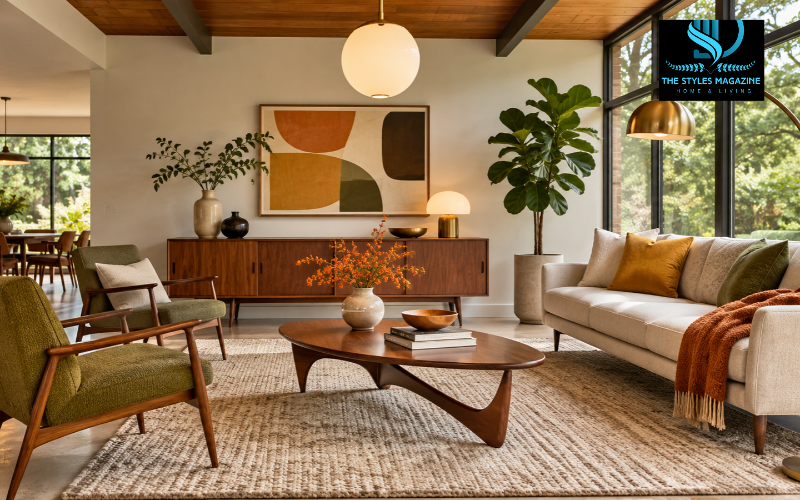
Earthy colors provide the connection to mid-century style. Olive green, mustard yellow, terracotta, rust, and deep teal can add personality without overwhelming the space. For example, an olive green armchair can complement a walnut coffee table, while mustard cushions can introduce warmth to a cream-colored sofa.
The key is to use stronger shades selectively. You could introduce them through an area rug, artwork, curtains, cushions, or a single accent chair. This approach creates visual interest while keeping the overall appearance balanced.
It is also worth considering natural light when choosing colors. A room with limited daylight may benefit from warmer shades, while a bright room can accommodate cooler neutrals more comfortably. Testing paint samples at different times of day can help you understand how the colors will appear in your actual space.
Contemporary Mid-Century Furniture and Materials
Furniture is often the starting point when creating a contemporary mid-century interior. Rather than choosing every item from the same collection, consider combining recognizable mid-century shapes with modern pieces that provide greater comfort and flexibility.
Wooden furniture is particularly useful. Walnut offers a rich, deep appearance, while oak can introduce a lighter and more relaxed feeling. Teak is another familiar mid-century material, appreciated for its warm tone and distinctive grain. A wooden sideboard, dining table, or media console can become a focal point without requiring additional decoration.
Seating should balance appearance with everyday comfort. Look for sofas with simple frames, attractive proportions, and supportive cushions. Accent chairs with tapered wooden legs or gently curved backs can introduce vintage character while remaining suitable for contemporary spaces.
Modern fabrics provide another way to update traditional furniture shapes. Linen has a relaxed, natural appearance, while bouclé offers a softer, textured surface. Leather can introduce a more structured finish and works particularly well with warm wooden furniture. When selecting upholstery, consider cleaning requirements, durability, and how frequently the furniture will be used.
Metal and glass details can complete the combination. Brushed brass, matte black finishes, and simple glass surfaces introduce contrast without taking attention away from the natural materials. The goal is not to use every material together but to select a few that complement one another.
Creating a Contemporary Mid-Century Interior
Creating a contemporary mid-century interior does not require a complete renovation. In many homes, a few thoughtful changes can make a noticeable difference. Start by considering the furniture and architectural features you already have, then decide which traditional details you would like to introduce.
A neutral background provides a useful starting point. If your walls are already painted in white, cream, or a warm gray, you may not need to change them. Instead, focus on introducing natural wood, comfortable upholstery, and carefully chosen lighting.
Think about how furniture relates to the available space. Open layouts can make it easier to move between different areas, but an open room still needs a clear arrangement. Position sofas and chairs to encourage conversation, leave enough room around dining furniture, and avoid blocking windows or natural light.
Texture is another important consideration. A smooth wooden table can be balanced with a soft rug, woven cushions, or textured upholstery. These differences prevent neutral interiors from feeling flat or uninviting.
Indoor plants can introduce natural color and help soften furniture arrangements. Choose varieties that suit the light and conditions in your home rather than selecting plants simply because they look attractive in photographs.
Most importantly, every item should have a purpose. A successful room should look appealing while supporting the activities that take place there.
Contemporary Mid-Century Living Room Ideas
The living room is an ideal place to introduce this style because it usually contains several important furniture pieces. A comfortable sofa, coffee table, accent chair, and lighting can establish the overall appearance without requiring too many decorative accessories.
Begin with the sofa. A contemporary design in cream, beige, or warm gray provides a versatile foundation. You can choose a straight, low-profile shape for a traditional influence or a softly curved sofa for a more relaxed contemporary appearance. The most important consideration is that it suits the room’s size and provides enough seating for everyday use.
A walnut media console or wooden sideboard can introduce the characteristic warmth of mid-century furniture. Pair it with a simple coffee table, perhaps with tapered legs or a sculptural base. If the sofa has a large, boxy shape, a rounded table can create a pleasant contrast.
An accent chair is another useful addition. Choose a design with a distinctive wooden frame or an interesting silhouette, then use a textured cushion to connect it with the rest of the room.
A large area rug can help define the seating arrangement, particularly in an open-plan home. Abstract patterns, subtle geometric designs, and earthy colors are all suitable options.
Finally, consider how the furniture is arranged. Leave enough space to walk comfortably between pieces, keep important windows unobstructed, and position seating where people can talk easily. The result should feel welcoming rather than carefully staged.
Designing a Contemporary Mid-Century Dining Space
A contemporary mid-century dining room combines practical furniture with a warm and inviting atmosphere. The dining table is usually the main feature, so choosing the right material and proportions is a sensible place to begin.
Walnut and oak tables work particularly well because they introduce natural texture and provide a strong visual connection to traditional mid-century interiors. Depending on the available space, you might choose a rectangular table with angled legs, a round pedestal design, or a simple oval shape.
Dining chairs provide an opportunity to introduce contemporary comfort. Upholstered chairs in neutral fabrics can soften the appearance of a solid wooden table. Alternatively, chairs with curved backs and visible wooden frames can maintain a stronger mid-century influence.
Lighting should complement the table without making the room feel crowded. A globe pendant or simple sculptural fixture can provide a visual focal point above the dining area. Make sure it is positioned at a suitable height and provides enough light for meals.
Decorations should remain relatively simple. A ceramic vase, a small arrangement of flowers, or a natural table runner can add interest without taking up too much space.
If your dining area is part of an open-plan room, use the table, chairs, and lighting to create a clear dining zone. This helps the space feel organised while maintaining a connection with the surrounding living area.
Contemporary Mid-Century Bedroom and Other Living Spaces
The same design principles can work beautifully in bedrooms, home offices, hallways, and other parts of the house. The main difference is that each space needs furniture and accessories suited to its everyday purpose.
In a bedroom, a low-profile bed with a simple wooden frame can establish the mid-century influence. Pair it with walnut or oak bedside tables and understated lighting. Neutral bedding in cream, beige, or soft gray creates a relaxing foundation, while olive cushions or a terracotta throw can introduce a little color.
Storage is also important. A wooden chest of drawers or a simple wardrobe can provide useful space without making the bedroom feel crowded. Choose furniture that fits the available floor area and allows doors and drawers to open comfortably.
A home office can benefit from a straightforward wooden desk, a comfortable chair, and practical storage. A desk with clean lines and tapered legs can create a connection to mid-century design, while a modern task lamp provides suitable lighting for work.
Hallways and smaller spaces require a more selective approach. A slim wooden console, a mirror, and one carefully chosen decorative object may be enough. Avoid placing oversized furniture in narrow areas, as it can make movement difficult.
Across the home, repeat a few materials, colors, and shapes to create a consistent appearance without making every room look identical.
Contemporary Mid-Century Lighting and Decor
Lighting and decoration help bring the different elements of a room together. They can introduce character, improve comfort, and create visual interest without requiring additional furniture.
Globe pendants are a familiar choice for mid-century-inspired interiors. Their rounded shapes provide a pleasant contrast to straight furniture lines. Arc floor lamps are another popular option, particularly beside sofas and reading chairs. Sculptural chandeliers can also work well when their size and finish suit the room.
For a contemporary touch, consider brushed brass, matte black, or simple metal finishes. These details can connect older furniture designs with more current interiors. However, lighting should be selected according to the purpose of the room as well as its appearance. General lighting, reading lights, and task lighting each serve different needs.
Decorations should be chosen carefully. Large abstract artwork can provide a focal point above a sofa or sideboard, while ceramic vessels and handmade objects introduce texture. Indoor plants can soften the appearance of wooden furniture and neutral walls.
Avoid filling every available surface with accessories. Leaving some shelves and tabletops relatively clear allows individual pieces to attract attention. A small number of well-chosen objects often creates a more balanced result than a large collection of unrelated decorations.
Contemporary Mid-Century House Architecture and Layout
A contemporary mid-century house often takes inspiration from architectural features associated with mid-20th-century homes. These may include large windows, simple building forms, natural materials, and layouts that encourage movement between indoor and outdoor areas.
Large windows are particularly valuable because they bring daylight into the home and help connect interior spaces with gardens, patios, or surrounding views. Where possible, avoid placing bulky furniture directly in front of windows.
Open-plan arrangements are another common feature of modern mid-century-inspired homes. A kitchen, dining area, and living room may share one larger space rather than being separated by several walls. Furniture placement, rugs, and lighting can help define each area while maintaining a sense of openness.
Natural wood can also be introduced through flooring, ceiling details, cabinetry, and furniture. However, using the same wood finish everywhere is not necessary. Different tones can work together when their undertones and overall appearance are compatible.
If you live in an older property, you can introduce these ideas without changing its original architecture. A traditional house can accommodate mid-century furniture, contemporary lighting, and warm natural finishes. Likewise, a newer property can benefit from vintage-inspired pieces that add character.
The most important consideration is adapting the style to the building rather than forcing the building to resemble a different architectural period.
How to Mix Vintage Mid-Century Pieces with Contemporary Design
Combining vintage furniture with contemporary interiors is one of the easiest ways to give a home a distinctive appearance. Original pieces can provide character and a sense of history, while modern furniture offers more choices in size, materials, and comfort.
Start with one or two vintage items that you genuinely appreciate. A wooden sideboard, an occasional chair, or a distinctive coffee table can become the starting point for the room’s design. You do not need an entire collection of period furniture to achieve the look.
Next, introduce contemporary pieces that complement their proportions and materials. For example, an original walnut cabinet can work alongside a modern neutral sofa. A vintage wooden chair can be updated with a suitable cushion in a modern fabric, provided the furniture is in good condition and the changes do not damage its original features.
Mixing wood tones requires a little attention. Different finishes can look attractive together, particularly when they share similar warm or cool undertones. Repeating one wood tone elsewhere in the room can also help create a visual connection.
When buying vintage furniture, inspect its condition carefully. Check joints, frames, upholstery, and signs of damage. Older items may need professional repair or refinishing before they are suitable for regular use.
The aim is to create a comfortable home with individual character, not a room that looks like a furniture showroom from a particular decade.
Common Contemporary Mid-Century Decorating Mistakes to Avoid
Although contemporary mid-century design offers plenty of flexibility, certain decorating choices can make a room feel unbalanced. One common mistake is using too many retro colors and patterns together. Mustard, orange, olive, and geometric prints can all work individually, but using them excessively may make the interior feel more like a themed vintage room than a modern home.
Another mistake is choosing furniture based entirely on appearance. A beautiful sofa or accent chair will not be a good choice if it is uncomfortable, difficult to maintain, or unsuitable for the room’s dimensions. Always consider how furniture will be used before making a purchase.
Overcrowding is equally problematic. Too many accessories, decorative objects, and furniture pieces can take away the open feeling that makes this style appealing. Leave enough clear space for comfortable movement and everyday activities.
Mixing different materials without a consistent approach can also create visual confusion. You can combine walnut, oak, brass, glass, and textured fabrics, but each material should contribute to the overall design rather than compete for attention.
Finally, do not ignore practical details such as storage, lighting, and maintenance. A well-designed interior should remain comfortable and useful long after the initial decorating work is finished.
Conclusion
Contemporary mid-century design offers a practical way to combine the warmth and character of traditional mid-century furniture with the comfort and simplicity of modern interiors. Its appeal comes from the balance between natural materials, clean lines, thoughtful colors, and comfortable furnishings.
You do not need to follow every traditional design feature or purchase an entirely new furniture collection. Start with pieces that suit your home, introduce natural wood and carefully selected textures, and use accent colors to add personality. Whether you are updating a living room, furnishing a bedroom, or improving an open-plan house, small and considered changes can make a meaningful difference.
Ultimately, the best contemporary mid-century interior is one that reflects your personal taste while supporting your everyday lifestyle. By combining timeless furniture shapes with modern comfort and practical decorating choices, you can create a home that feels welcoming, balanced, and enjoyable for years to come.
Frequently Asked Questions
What Does Contemporary Mid-century Mean?
Contemporary mid-century is a combination of classic mid-century modern design and contemporary interior styling. It uses traditional furniture shapes, warm wood, modern fabrics, neutral colors, and practical layouts.
What Colors Work Best In Contemporary Mid-century Interiors?
Warm white, cream, beige, and soft gray create a balanced foundation. Olive green, mustard yellow, terracotta, and deep teal work well as accent colors in furniture, artwork, and accessories.
What Furniture Is Used In Contemporary Mid-century Design?
Popular choices include walnut sideboards, tapered-leg coffee tables, low-profile sofas, wooden dining tables, and sculptural accent chairs. Contemporary upholstery helps make these classic shapes more comfortable.
How Can I Create A Contemporary Mid-century Living Room?
Start with a comfortable neutral sofa, add a walnut coffee table or media console, and introduce a textured rug. Complete the look with sculptural lighting, artwork, and a few carefully selected accessories.
Can Contemporary Mid-century Design Work In A Small Home?
Yes. Its simple furniture shapes, functional layouts, and uncluttered approach can work particularly well in smaller homes. Choose appropriately sized furniture, use light neutral colors, and avoid unnecessary decoration.
Disclaimer: The information in this article is intended for general home design and decorating guidance. Interior design choices depend on personal preferences, available space, budget, and lifestyle. Furniture materials, finishes, and product suitability may vary between manufacturers. Always check product specifications, measurements, and care instructions before purchasing furniture or making changes to your home.
Enjoyed it? Find more exclusive content on The Styles Magazine.