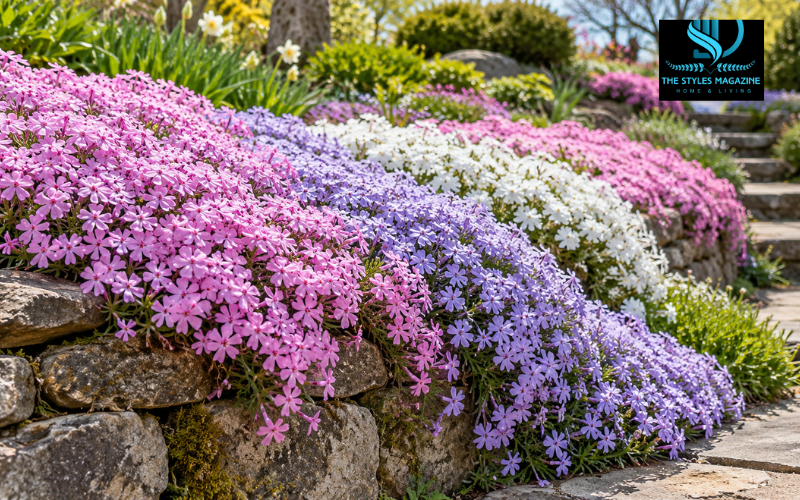
A patch of creeping phlox can turn an ordinary garden edge into a soft sweep of spring colour. Its small flowers appear so close together that, at their best, they almost hide the leaves beneath them. It spreads across bare soil and returns each year, making it a favourite for rock gardens and borders.
Creeping phlox is generally easy to look after, but it is worth knowing which type you are buying. Some enjoy sunshine and open, free-draining ground, while others prefer the cooler conditions of a lightly shaded bed. Getting that choice right makes more difference than any special feeding or pruning routine.
Whether you are starting with a few small plants or hoping to cover a larger area, this guide explains when to plant creeping phlox in the UK, how to care for it through the seasons and what to check before buying.
Quick Answer:
Creeping phlox is a low-growing perennial that spreads across the ground, producing colourful flowers in spring. It is popular in UK gardens for covering borders, rockeries, slopes, and stone walls.
Creeping Phlox Quick Guide and Comparison Table
| Feature | Phlox subulata | Phlox stolonifera |
| Common name | Moss phlox | Woodland creeping phlox |
| Sunlight | Full sun or light shade | Partial shade |
| Soil | Well-drained, often sandy or gritty | Moist but well-drained |
| Leaves | Narrow, needle-like | Broader, oval-shaped |
| Flower colours | Pink, purple, white, blue-purple | Pink, lavender, purple, white |
| Flowering season | Spring to early summer | Spring to early summer |
| Winter foliage | Generally evergreen | Generally evergreen |
| Best garden use | Rockeries, walls, sunny borders | Shaded borders, woodland edges |
| Maintenance | Low | Low |
How to Plant Creeping Phlox: 5 Simple Steps
- Choose a suitable location: Select a sunny spot for moss phlox or partial shade for woodland phlox.
- Prepare the soil: Remove weeds, loosen the ground, and ensure proper drainage.
- Space the plants: Allow approximately 30–45cm between many moss phlox varieties, adjusting for their mature width.
- Plant carefully: Place each root ball at the same depth it was growing in its pot.
- Water thoroughly: Water after planting and maintain suitable moisture while the roots establish.
What Is Creeping Phlox and How Does It Grow?
Creeping phlox describes several low-growing phlox. Unlike taller summer-flowering types, they grow sideways into mats of foliage. They are perennials, so healthy plants live for several years rather than needing to be replaced each spring.
The two names gardeners are most likely to meet are Phlox subulata and Phlox stolonifera. Phlox subulata, often called moss phlox, has very narrow, pointed leaves and typically makes a dense cushion about 10–15cm high. Depending on the cultivar and growing conditions, it can spread roughly 30–60cm or more over time. It is particularly useful in sunny, well-drained places.
Phlox stolonifera, sometimes called woodland creeping phlox, looks softer. Its leaves are broader and oval-shaped, and its flowering stems rise above the spreading foliage. It sends out runners that take root where they touch suitable soil. This type generally prefers some shade and moisture that does not become stagnant.
Both may retain winter foliage, depending on the variety and weather. Allow time for them to fill gaps.
Creeping Phlox Colours, Varieties, and Flowering Season
One reason gardeners choose creeping phlox is the range of colours. You can find flowers in white, soft pink, vivid rose, lavender-blue and purple, along with varieties that have contrasting centres. Combining two colours can look striking, but a single variety often creates a calmer, more continuous display.
For a bright pink accent, Phlox subulata ‘McDaniel’s Cushion’ is a compact choice with deep pink flowers. ‘Emerald Cushion Blue’ offers lavender-blue blooms, while ‘Apple Blossom’ has pale pink petals with darker pink centres. White-flowered selections, including those sold as Fabulous White, work well beside stone or gravel. Always check the label, because plant names and colours can be confusingly similar.
In many UK gardens, the main flowering period falls between April and early June. A mild spring can bring flowers earlier; colder areas may see them later. The show normally lasts several weeks rather than throughout the whole summer. A healthy plant can remain attractive afterwards, but do not expect a second full carpet of flowers every year.
The Best Places to Grow Creeping Phlox in Your Garden
Think about where the plant’s low shape will be easy to see. Moss phlox is particularly effective near the front of a sunny border, between rocks or beside a path. It can soften the hard edges of paving and spill gently over the top of a low stone wall. On a slope, several plants can eventually form connected patches that help cover exposed soil.
Raised beds and broad containers are other good options, provided excess rainwater drains away. Planting near an edge allows stems to trail naturally. Leave room for their spread.
Creeping phlox can also make a useful ornamental alternative to a strip of grass that is awkward to mow. However, it is not a replacement for a lawn that people use regularly. Even though P. stolonifera may tolerate occasional light contact, repeated footsteps can crush stems and spoil the display. Keep it beside stepping stones, not underfoot.
For companions, try spring bulbs such as small daffodils or tulips, with enough space for their leaves to die back naturally. Choose neighbouring plants that like similar light and soil conditions.
Sunlight, Soil, and Drainage Requirements
The best position depends on the species. Phlox subulata generally flowers most freely in full sun, although it can grow in some light shade. A sunny rockery or open border with good drainage is often ideal. If it sits in heavy shade, growth may become thin and flowers less plentiful.
Phlox stolonifera is better suited to dappled or partial shade, such as the edge of a shrub bed. It appreciates soil that holds some moisture while still allowing excess water to escape. Slightly acidic, organic-rich soil is often a good match, although its tolerance varies with local conditions.
Neither plant benefits from roots sitting in waterlogged ground. If you have heavy clay that stays wet in winter, consider a raised bed or container rather than simply putting a plant into a soggy planting hole. For moss phlox, improve overall bed drainage with suitable grit or a freer-draining mix. For woodland phlox, aim for soil that stays gently moist, not dry and dusty or constantly saturated.
It is easier to choose the right plant for the site than to fight the site’s natural conditions every season.
When to Plant Creeping Phlox in the UK
Spring is generally the best time to plant creeping phlox, ideally before it reaches its main flowering period. Warming soil gives young roots a growing season to establish, helping plants settle before winter arrives.
Early autumn can also work if the ground is still warm, drainage is good and there is enough time for roots to establish before prolonged cold, wet weather. Avoid planting into frozen soil, waterlogged beds or during a spell of unusually hot, dry weather. Container-grown plants offer some flexibility, but they still need careful watering after planting.
If you buy a flowering plant in late spring, you can plant it out when conditions are suitable. Water it well during the first few weeks and accept that its best display may come the following year. A strong root system matters more than immediate coverage.
How to Plant Creeping Phlox for Healthy, Spreading Growth
Remove weeds and loosen the soil across the planting area. Check that water can drain away after rainfall. Improve compacted ground before planting; moss phlox dislikes wet pockets in heavy soil.
Water the plant while it is still in its pot. Dig a hole about as deep as the root ball and a little wider, then ease the plant out carefully. Set it at the same soil level it occupied in the pot. Fill around the roots, press the soil gently and water thoroughly to settle everything in place. Do not bury the leafy centre under extra soil.
Spacing depends on the mature width shown on the label. For many spreading moss phlox cultivars, approximately 30–45cm between plants is a reasonable starting point; adjust this for smaller or larger selections. Closer planting covers ground sooner but reduces airflow.
On a bank or wall, make sure roots sit securely in soil rather than loose stones alone. In containers, use a pot with drainage holes and a free-draining, peat-free mix. Newly planted phlox needs attention until its roots move into the surrounding soil.
Watering, Feeding, and Everyday Creeping Phlox Care
Check freshly planted phlox regularly. Feel below the surface and water when needed, soaking the roots rather than the leaves. During its first growing season, a dry spell can quickly affect a small plant with limited roots.
Once established, Phlox subulata usually copes with short dry periods better than it copes with persistently wet soil. It may still need a thorough watering during extended summer drought. Woodland P. stolonifera generally appreciates more consistent moisture, especially beneath trees or shrubs where roots compete for water.
Feeding should be modest. In reasonably fertile garden soil, creeping phlox often needs little or no extra fertiliser. Too much high-nitrogen feed may encourage leafy growth without improving the flowers. In poor soil, use a light balanced feed according to instructions.
Pull out weeds while they are small, before they become tangled in the stems. A thin layer of grit around sunny rock-garden plants can keep the surface tidy. For woodland phlox, a light organic mulch helps hold moisture, but keep it away from the crowns.
Pruning Creeping Phlox After Flowering
Creeping phlox does not need heavy annual pruning. Once the main flowers have faded, you can lightly trim straggly tips to neaten the edges and encourage a more compact shape. Use clean, sharp scissors or small shears, and work gently so you do not pull rooted stems from the soil.
Avoid cutting far back into old, bare or woody growth, particularly on moss phlox. A severe trim can leave gaps that are slow to recover. If the plant already looks neat, there is no need to cut it simply because the flowers have finished.
Remove clearly dead or damaged pieces whenever you notice them. Older plants with bare centres may be better refreshed by taking cuttings and planting young replacements than by drastic pruning.
Growing Creeping Phlox from Seeds, Cuttings, and Division
Creeping phlox seeds offer a low-cost way to raise plants, but growing from seed requires patience. Sow species phlox in spring or autumn, following packet instructions. Use clean seed compost, keep it lightly moist and protect young seedlings from drying out or becoming waterlogged. They may not flower until their second year.
Seed is not always the best way to reproduce a favourite named variety. Seedlings can differ from their parent in flower colour or growth habit. If you want more plants exactly like ‘McDaniel’s Cushion’, for example, cuttings from healthy growth are a better approach.
Take short sections of non-flowering, healthy stems in spring, remove the lowest leaves and place them into a suitable free-draining propagation mix. Keep the cuttings sheltered from strong sun and evenly moist until roots develop. Ventilate any humidity cover to prevent rot.
Phlox stolonifera can also be divided in spring or autumn. Lift a healthy clump gently and separate rooted sections, making sure each piece has shoots and roots before replanting. Where runners already have roots, these sections may be useful for filling nearby gaps. Always use vigorous, disease-free parent plants.
Creeping Phlox in Winter: What to Expect and How to Protect It
Many creeping phlox varieties are evergreen or semi-evergreen, so they may keep a low covering of foliage through winter. Do not be alarmed if some leaves darken, lose their fresh colour or look flattened after frost. New spring growth often improves the appearance once temperatures rise.
Both P. subulata and P. stolonifera include forms rated hardy for UK conditions. The greater risk, particularly for sun-loving types, is often cold, saturated soil rather than low temperature alone. Good drainage at planting time is therefore the most useful winter protection.
Clear away thick layers of fallen leaves that might smother the mats and trap moisture. Check containers after heavy rain to make sure drainage holes have not become blocked. Avoid wrapping established outdoor plants unnecessarily, and do not keep winter soil permanently wet through routine watering.
Common Creeping Phlox Problems and How to Fix Them
If creeping phlox produces plenty of leaves but few flowers, start with the light. Moss phlox in too much shade may bloom poorly. Check for overshadowing neighbours or excessive feeding. Remember that a recently planted specimen may simply need another growing season.
Yellowing foliage and soft, dark stems can indicate soil that stays too wet. Inspect drainage before adding water. If the base is rotting, remove damaged material and improve the growing conditions; badly affected plants may need replacing. Dry, crispy patches suggest a different problem, especially during prolonged hot weather or in containers. Check soil moisture a few centimetres down instead of guessing from the surface.
Powdery mildew can show as a pale, dusty coating on leaves, while leaf spot may produce marked or discoloured patches. Give plants space, avoid crowding and remove badly affected growth. Slugs may trouble tender young shoots, especially in damp sites, and spider mites can occur during hot, dry conditions. Identify the problem before treating it.
Sometimes an older mat develops an empty centre. Rather than trying to revive every brown stem, take healthy cuttings from the edges and use the new plants to renew the patch. Many problems become easier to manage once the plant is in the right light and soil.
Where to Buy Creeping Phlox and How to Choose Healthy Plants
If you are looking for creeping phlox for sale in the UK, begin with local garden centres, independent nurseries and specialist alpine-plant growers. Online nurseries can offer a wider selection of named cultivars, particularly in spring. Availability varies, so search with the botanical name too.
Searching for “creeping phlox near me” may lead to garden centres that stock only one colour or species. Before travelling, check whether the plant is P. subulata or P. stolonifera. Ask about its mature spread, preferred light and flowering colour. These matter more than sales photographs.
Young plug plants are often less expensive, but may need growing on in pots before they are sturdy enough for outdoor planting. Larger potted plants cost more initially yet give a clearer idea of their shape. Choose healthy plants without mould, pests or soggy compost. Buy seeds when you enjoy raising plants yourself and are flexible about the eventual colour.
You may also encounter searches for “creeping phlox Home Depot”, but Home Depot is mainly a US retailer. UK buyers will usually find more relevant stock and growing advice through British nurseries and garden centres. Check delivery details and plant labels before ordering.
Conclusion
Creeping phlox earns its place in a garden by doing something simple very well: bringing a wide splash of colour close to the ground when spring arrives. Its flowers suit stone, gravel and garden edges, while the spreading foliage gives the planting a useful shape after blooming ends.
The key is choosing the right type. Give moss phlox a bright, free-draining position and woodland creeping phlox a cooler spot with some moisture. Plant at the right depth, water young roots while they establish and resist the urge to overfeed or overprune. With a suitable home and a little seasonal attention, creeping phlox can become a lasting part of your spring garden.
Frequently Asked Questions
Does Creeping Phlox Come Back Every Year?
Yes, creeping phlox is a perennial that returns each year when grown in suitable conditions. With proper drainage, enough light, and basic care, established plants can survive many UK winters.
How Quickly Does Creeping Phlox Spread?
Creeping phlox spreads gradually through its low-growing stems. Many varieties can reach around 30–60cm across when mature, although the growth rate depends on the species, soil, sunlight, and care.
Can Creeping Phlox Grow In Shade?
Some types can. Phlox stolonifera prefers partial shade and moist, well-drained soil. Phlox subulata generally flowers more freely in sunshine and may produce fewer blooms in heavily shaded areas.
Can You Grow Creeping Phlox From Seeds?
Yes, species creeping phlox can be grown from seeds, although germination and flowering take time. Named varieties are usually propagated through cuttings to preserve their original flower colours and growth characteristics.
Does Creeping Phlox Stay Green In Winter?
Many creeping phlox varieties retain their foliage throughout winter. However, leaves may become dull, brownish, or damaged during severe weather. Good drainage helps protect the plants from winter moisture problems.
Disclaimer: The information in this article is intended as general gardening guidance for growing creeping phlox in the UK. Plant growth, flowering times, and care requirements may vary depending on the species, local climate, soil conditions, and garden location. Always check the specific plant label and adjust your care routine to suit your growing conditions
Enjoyed it? Find more exclusive content on The Styles Magazine.