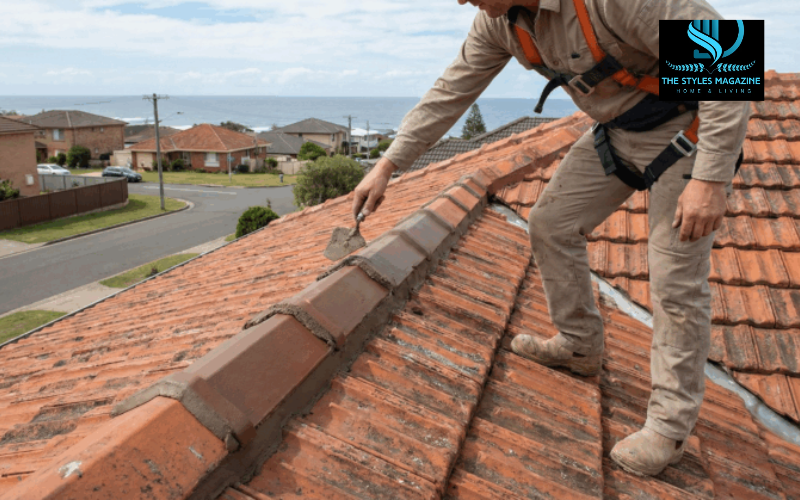
The first clue is often a rust-coloured stain on the chimney breast, or a dark patch on the loft timber right against the stack. The roof covering can look perfectly even from the street. Water has a habit of choosing the joint between masonry and slate, and of sitting there for a long time before anyone notices.
We see this a lot on Victorian terraces and Tyneside flats, where chimneys, valleys and lead details do more of the weatherproofing than the middle of the slope. Here’s what to look for around Newcastle, when a repair is enough, and what the work typically costs in 2026.
Where Chimneys and Lead Usually Fail
Lead is still the right material for a lot of this work: stepped flashings around a stack, soakers between slates, and the gutters that sit in a valley. It lasts, but it doesn’t last for ever. It can split at a crease, pull out of a mortar joint, or get dressed so tightly that it tears when the building moves. Felt or self-adhesive flashings used as a shortcut fail earlier, and they fail less honestly: they look tidy on day one and open quietly later.
On the stack itself, the usual problems are cracked flaunching (the cement cap around the pots), loose or leaning pots, and washed-out pointing. Unused chimneys stay damp and get ignored, which is why a sealed-up fireplace downstairs can still be the source of a stain upstairs.
Valleys and abutment flashings (where the roof meets a wall or a neighbouring wing) collect leaves and silt. Once the water can’t run, it looks for a way under the lead.
Please don’t go up to inspect it. From the ground, binoculars will show lifted flashings, a lean on a pot, and missing pointing. A torch in the loft, around the chimney and along the valley line, is the safer way to see staining and daylight.
What a Proper Look Should Decide
A useful split:
- Sound masonry, tired or lifted lead, and a dry loft except at that joint: replace or re-dress the lead, and renew the flaunching if it’s cracked. That’s the majority of the jobs.
- Pots loose and pointing gone, but the stack still upright: repair the top, and do the flashings at the same time so you only pay for access once.
- The stack is leaning, the brickwork is soft, or there’s movement at the roof line: that’s a rebuild, or a partial rebuild down to sound work, not another smear of cement.
Redundant chimneys in poor condition can sometimes be taken down below the roof and slated over. On a Tyneside flat or a terrace, that decision isn’t only yours: flues, party walls and the neighbour’s roof all have a say, and Building Control may need to be involved.
When owners ask about roof repairs in Newcastle, the useful visit is one that comes back with photos of the flashing, the pot and the loft, and a clear recommendation. A lead replacement on a sound stack is a very different job from rebuilding the chimney, and the quote should read that way.
What the Work Typically Costs
Typical 2026 prices for a two-storey house or a Tyneside flat, including labour and materials. Access on a mid-terrace, or a house that fronts the pavement, will sit at the higher end.
- Inspection with photos, including the loft: £80 to £180
- Re-dressing or renewing lead flashings at a chimney: £250 to £1,000
- Soakers and a short run of abutment flashing: £200 to £800
- A valley cleared, or a short length relined: £150 to £1,500
- New flaunching, pots or cowls: £200 to £650
- Repointing a sound stack: £300 to £1,200
- Rebuilding the top of a chimney: £800 to £2,500
- Full rebuild of a single stack: often £2,000 to £5,500
- Taking a redundant stack down and making the roof good: £1,200 to £3,500
- Scaffold: £600 to £1,800, more with a pavement licence
A quote should say whether the lead is new or re-dressed, the code of lead to be used, and whether pots are being reused. “Repair flashing” on one line isn’t enough.
Housing, Weather and a Few Local Habits
Jesmond, Gosforth, Heaton and Sandyford are full of late Victorian and Edwardian houses in slate, with original stacks and, quite often, conservation rules that expect a like-for-like repair. Fenham, Elswick and Byker have a mix of terraces and Tyneside flats, where a valley gutter or a shared flashing can be the real problem, and where responsibility for the work is not always obvious from the deeds at first glance. If you only own one floor, get that clear before anyone starts, or you can end up paying to fix a joint that is shared, or leaving a leak that simply runs to the other side.
The weather is wind as much as rain. A south-westerly or a blow off the North Sea will lift a loose edge of lead that sits happily through a calm shower. That’s why a leak can seem intermittent, and why the middle of the slate slope can look perfect.
Newcastle City Council is the planning authority. Ordinary like-for-like repairs on an unlisted house are usually fine. Listed buildings, conservation areas (there are several in Jesmond and Gosforth) and taking a stack down should be checked before anyone books the scaffold.
Hiring a Roofer for Lead and Chimney Work
This is skilled work. You want a firm that still uses proper lead, not a felt patch, and that will show you similar jobs. Ask for public liability insurance of at least £2 million, a written quote, and a deposit of no more than 20 to 30 percent. NFRC or TrustMark membership is a helpful sign. A waste carrier licence matters if debris is coming off the stack.
Be careful after high winds. A caller who has noticed a loose pot “while passing” is a well-worn routine. Get the roof made safe if it’s open, then choose your own contractor for the repair.
Huckleberry Roofing will look at the lead, the stack and the loft and tell you whether it’s a flashing job, a rebuild, or something that can wait a little while being watched. Short guarantees on flashings and flaunching are normal. A longer guarantee should be a document, not a sentence in the chat.
Got a stain around a chimney, or a valley that overflows in heavy rain, and you’re not sure what the job really is? Get in touch with Huckleberry Roofing.
Frequently Asked Questions
How Much Do Chimney And Lead Repairs Cost In Newcastle?
Flashings at a stack typically run from £250 to £1,000. Flaunching and pots are often £200 to £650. A partial rebuild of the top of a chimney is usually £800 to £2,500, and a full rebuild can be £2,000 to £5,500. Scaffold is commonly £600 to £1,800.
Can A Felt Flashing Be Used Instead Of Lead?
It can be used, and it is sometimes offered because it’s quicker. It doesn’t last as well, particularly at a chimney or a valley that takes a lot of weather. If you’re already paying for access, lead is the better spend on a house you mean to keep.
Do I Need Permission To Take A Chimney Down?
You may need Building Control, and listed or conservation properties can need planning consent. On a terrace or a Tyneside flat, the neighbour’s structure and any shared flues have to be considered. Check with Newcastle City Council, or ask the roofer to, before work starts.
Why Does The Leak Only Appear When It’s Windy?
Wind-driven rain is being pushed under a lifted edge of lead, or into a cracked flaunching, that a calm shower never reaches. The covering further down the slope can be perfectly sound. That’s a flashing or a stack problem, not a reason to re-roof the whole house.
Should I Go Into The Loft After Heavy Rain?
Yes, with a torch, if it’s safe to walk there. Look around the chimney and along valley lines for new staining or drips. Don’t get on the roof itself. Photos of what you find will help a roofer decide whether it needs an urgent sheet or a booked repair.
Enjoyed it? Find more exclusive content on The Styles Magazine.