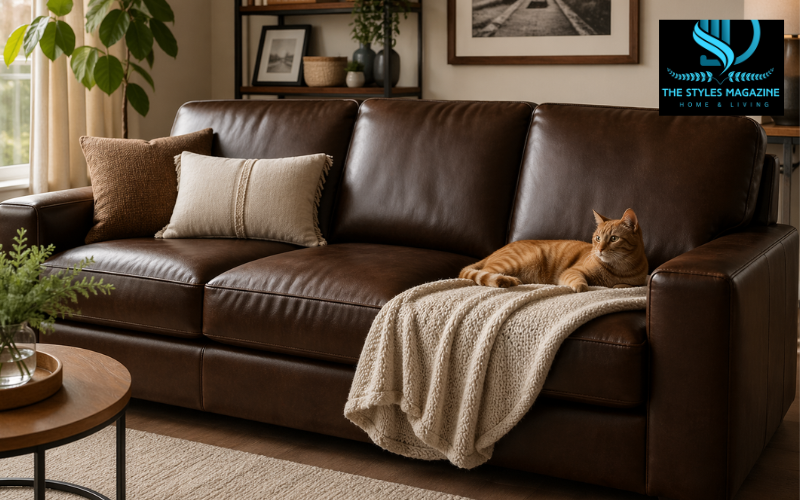
A leather sofa with cats in the home might sound like a risky combination, but for many pet owners, it’s actually one of the most practical choices available. Leather furniture has become popular among cat owners because it doesn’t trap fur, dust, or odors the way fabric sofas do. A quick wipe is often enough to keep it clean, which makes daily maintenance simple and stress-free.
At the same time, there are some real concerns. Cats naturally scratch surfaces, and leather can show puncture marks or light scratches more clearly than fabric. This makes many people wonder whether a leather sofa is truly suitable for a home with pets.
The good news is that with the right type of leather, proper care, and a few smart habits, a leather sofa with cats can work very well. In this guide, you’ll learn how to choose the right leather, understand your cat’s behavior, protect your furniture, and keep everything looking stylish for years.
Best Choices for Leather Sofa with Cats
| Feature | Best Option | Why It Works |
| Leather Type | Top-grain distressed leather | Hides scratches naturally |
| Protective Finish | Pigmented (finished) leather | Resists stains and minor damage |
| Budget Option | Faux leather (temporary use) | Affordable but less durable |
| Scratch Management | Scratching post near sofa | Redirects cat behavior |
| Protection Accessories | Self-adhesive protectors & covers | Prevents visible damage |
| Maintenance | Leather conditioner | Keeps leather soft and reduces scuffs |
Why Leather Sofa with Cats Can Be a Practical Choice
When comparing leather to fabric, leather often comes out ahead for cat owners. One of the biggest advantages is how easy it is to clean. Cat hair doesn’t stick to leather the way it does to fabric, so you won’t need to vacuum constantly. Instead, a simple cloth wipe can remove fur, dust, or small messes in seconds.
Another benefit is odor resistance. Fabric sofas tend to absorb smells over time, especially in homes with pets. Leather, on the other hand, has a smooth surface that doesn’t hold onto odors as easily, making your living space feel fresher.
Durability is another reason why many people prefer a leather sofa with cats. High-quality leather can last for many years if it’s properly maintained. While it may show minor marks over time, these often blend into the natural look of the material rather than ruining it. In fact, some types of leather even develop a richer appearance as they age, giving your sofa more character.
Do Cats Scratch Leather or Fabric More? Understanding Cat Behavior
Cats don’t scratch furniture because they want to damage it. Scratching is a natural behavior that helps them stretch their muscles, mark their territory, and keep their claws healthy. Whether you have a leather or fabric sofa, your cat may still feel the urge to scratch.
When comparing materials, fabric often suffers more visible damage over time because threads can be pulled out easily. Once a cat starts scratching fabric, it can quickly lead to fraying and tearing. Leather behaves differently. Instead of unraveling, it may show small surface scratches or marks.
However, some cats are attracted to leather because of its texture. A smooth surface can feel satisfying to scratch, especially if there are no better alternatives nearby. This is why understanding your cat’s behavior is just as important as choosing the right furniture.
By giving your cat proper scratching options and guiding their habits early, you can reduce the risk of damage to your leather sofa.
Types of Leather That Work Best for Cat Owners
Not all leather is the same, and choosing the right type makes a big difference when you have cats at home. One of the most recommended options is top-grain distressed leather. This type already has a slightly worn or textured look, so small scratches blend in naturally instead of standing out.
Pigmented or finished leather is another excellent choice. It has a protective coating that makes it more resistant to moisture, stains, and minor scratches. This added layer helps protect the surface from everyday wear, making it ideal for pet owners.
A genuine leather sofa with cats can still be a great option, but expectations should be realistic. Genuine leather is durable, but it can show marks over time. These marks often become part of the sofa’s natural aging process rather than a flaw.
A waxed leather couch is also worth considering. It has a soft finish that can hide light scratches and develop a unique patina over time. While it may not be completely scratch-proof, it tends to age gracefully and maintain its visual appeal.
What Is Cat Scratch Leather and How It Handles Damage
Cat scratch leather is designed with pet owners in mind. It usually features a textured or treated surface that helps reduce the appearance of scratches. Instead of showing sharp marks, the material softens or blends them into its overall look.
The texture plays an important role. Slight variations in the surface help scatter light, which makes small scratches less noticeable. This means your sofa can handle everyday wear without looking damaged.
This type of leather is a smart choice for households where pets are active and furniture needs to be both functional and attractive. While no material is completely immune to scratches, cat scratch leather offers a balance between durability and style.
Is Faux Leather a Good Option for Homes with Cats?
Faux leather may seem like a budget-friendly alternative, but it comes with some drawbacks when you have cats. Many people ask, do cats scratch faux leather? The answer is yes, and in many cases, the damage can be more noticeable.
Unlike real leather, faux leather doesn’t have the same flexibility or strength. Once it is punctured by a claw, it may start to peel or crack over time. This can lead to larger areas of damage that are difficult to repair.
However, faux leather might still be considered if you’re looking for a temporary or low-cost solution. It can work in spaces where your cat doesn’t spend much time or if you plan to use protective covers. Still, for long-term durability, real leather is usually the better investment.
How to Choose the Best Leather Sofa with Cats in Mind
Choosing the best leather sofa with cats involves more than just picking a style you like. The finish, color, and texture all play important roles in how well the sofa will hold up over time.
Darker colors are often more forgiving because they hide scratches and marks better than lighter shades. Textured finishes can also help reduce the visibility of small imperfections, making the sofa look newer for longer.
The structure of the cushions matters as well. Firm, well-built cushions are less likely to sag or wear unevenly, which helps maintain the overall look of the sofa. Strong stitching and solid construction add to the durability, ensuring your furniture can handle daily use.
When you combine these features, you create a sofa that not only looks good but also works well in a home with pets.
Simple Ways to Make Your Sofa Cat Proof
Making a leather sofa with cats more secure doesn’t require complicated solutions. The key is to guide your cat’s behavior rather than trying to stop it completely.
Placing a scratching post or a sisal mat near the sofa is one of the most effective strategies. Cats often scratch in areas they already use, so giving them a better option nearby can quickly redirect their attention.
Training also plays a role. Gently encouraging your cat to use the scratching post and rewarding them for good behavior can make a big difference over time. Consistency is important, as cats learn through repeated experiences.
Creating a cat-friendly environment helps reduce stress and unwanted habits. When your cat feels comfortable and has proper outlets for its natural instincts, it is less likely to damage your furniture.
Best Leather Furniture Protector for Cats That Actually Works
Protecting your sofa doesn’t mean hiding it completely. There are simple and effective ways to keep it safe while still showing its style.
Self-adhesive furniture protectors are a popular option. These clear covers can be placed on areas where cats tend to scratch, such as corners or sides. They are designed to protect the surface without changing the look of the sofa.
Throws and pet-friendly covers offer another layer of protection. They can be placed on high-use areas like seats and armrests, making it easy to remove and clean them when needed.
Corner guards and scratch shields provide targeted protection for vulnerable spots. By combining these solutions, you can significantly reduce the risk of damage while keeping your living space comfortable.
Daily Care and Maintenance for Leather Sofas with Cats
Regular care is essential for keeping a leather sofa with cats in good condition. Simple cleaning routines can prevent buildup and maintain the sofa’s appearance.
Wiping the surface with a soft cloth helps remove dust and fur before it becomes a problem. This quick habit keeps the leather looking clean and fresh.
Using a leather conditioner from time to time can improve the material’s flexibility and reduce the appearance of minor scratches. Conditioned leather is less likely to dry out, which helps it stay strong over the years.
Handling small scuffs early also makes a difference. Gentle buffing or applying a suitable product can reduce their visibility and prevent them from becoming more noticeable.
Common Mistakes Cat Owners Make with Leather Furniture
Many problems with leather furniture come from simple mistakes that can be avoided. One common issue is ignoring scratching behavior early on. If a cat develops the habit of scratching the sofa, it can become difficult to change later.
Choosing delicate leather types is another mistake. Softer, untreated leather may look beautiful, but it is more vulnerable to damage. Selecting a more durable finish can save you trouble in the long run.
Lack of protection is also a key factor. Without scratching alternatives or protective measures, your sofa becomes an easy target for your cat’s natural instincts.
By addressing these points early, you can prevent most common issues and enjoy your furniture without stress.
Conclusion
A leather sofa with cats is not only possible but can be a smart and stylish choice when handled correctly. By understanding your cat’s behavior, choosing the right type of leather, and taking simple protective steps, you can enjoy both comfort and durability in your home.
The key is balance. Leather offers easy maintenance and a clean look, while your cat needs space to express natural behaviors like scratching. When these needs are managed together, both your furniture and your pet can coexist peacefully.
With the right approach, your leather sofa can remain a beautiful part of your home for years, proving that style and practicality can go hand in hand—even in a pet-friendly space.
FAQs
Is A Leather Sofa With Cats A Good Idea?
Yes, leather sofas can work well with cats because they don’t trap fur or odors. However, choosing the right leather type and using protective measures is important to prevent scratches.
Do Cats Damage Leather Sofas Easily?
Cats can scratch leather, but the damage is usually surface-level. Unlike fabric, leather doesn’t tear easily, and certain types can hide scratches better over time.
What Is The Best Leather Sofa For Cat Owners?
Top-grain distressed and pigmented leather are the best options. They are durable, resistant to minor damage, and better at hiding scratches compared to softer leather types.
Do Cats Scratch Faux Leather More Than Real Leather?
Yes, faux leather can get damaged more easily. Once scratched, it may peel or crack, while real leather is more durable and ages better over time.
How Can I Make My Leather Sofa Cat Proof?
You can’t make it fully cat-proof, but you can reduce damage by using scratching posts, protective covers, and training your cat to avoid the sofa.
Enjoyed it? Find more exclusive content on The Styles Magazine.
Disclaimer: This content is for informational purposes only. Results may vary depending on your cat’s behavior, leather quality, and maintenance routine. Always test products or methods before applying them to your furniture.